Shimano Sephia XR Review: Is This JDM Eging Series Worth Importing to Australia?
ちゃんま
マイボ!

Cast a small, weighted prawn imitation toward a weed bed, twitch it back in sharp little hops, and watch a Southern Calamari rise out of the ribbon weed to wrap its arms around it. That’s eging, a Japanese squid-fishing style that has quietly become one of the most rewarding light land-based games you can play around the Australian coast. No bait, no mess, just a rod, a handful of artificial squid jigs, and a bit of rhythm.
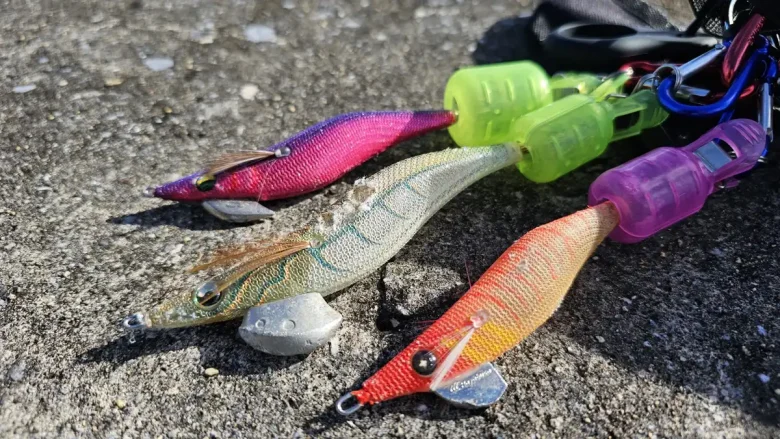
Eging (エギング) is the art of catching squid on an “egi” (餌木), a lure shaped like a prawn or baitfish with a crown of upward-facing barbs at the tail. It grew out of an old Japanese folk lure and turned into a huge dedicated scene, complete with purpose-built rods, reels, and a colour-coded world of egi. A lot of that knowledge maps straight onto Australian waters, where calamari and arrow squid haunt the same kind of weedy, structure-rich ground that Japanese anglers target back home.
This guide is a Japanese angler’s take on eging for an Aussie audience, and it follows the shape of an actual session. We’ll start with what the take feels like, then read the water for where and when squid show up, size up the Southern Calamari you’re chasing, work through the jerk-and-fall itself, and finish with the outfit to do it and why the Japanese gear is worth importing. By the end you’ll have a setup you can buy with confidence and a plan for your first session on the squid.
Eging is lure fishing for squid with an egi. The lure is fished on a slack-line “jerk and fall” rhythm: you snap the rod tip to dart the egi forward and upward, then let it sink back down on a controlled slack line. Squid almost always grab it on the fall, so the sink is the part that matters most. When the line jumps, tightens, or goes heavy, you wind down and lift into the fish.
The egi itself is the heart of the method. Its weighted keel makes it dart and then settle nose-down in a slow, gliding descent that mimics a fleeing or injured prawn. The cloth body, the rattle, the glow of the underbody, and the sink rate are all tuned to trigger a squid’s grab. Instead of hooks that pierce, an egi carries a fan of fine barbs that the squid’s tentacles tangle into when it clamps down.
What makes eging so addictive is the take. There’s rarely a violent strike. More often the line just stops falling, or you feel a soft, spongy weight, like you’ve hooked a wet sock. Reading that subtle pause is the whole skill, and once it clicks, you start spotting takes everyone else misses. It’s an active, visual, finesse style that rewards attention over muscle.
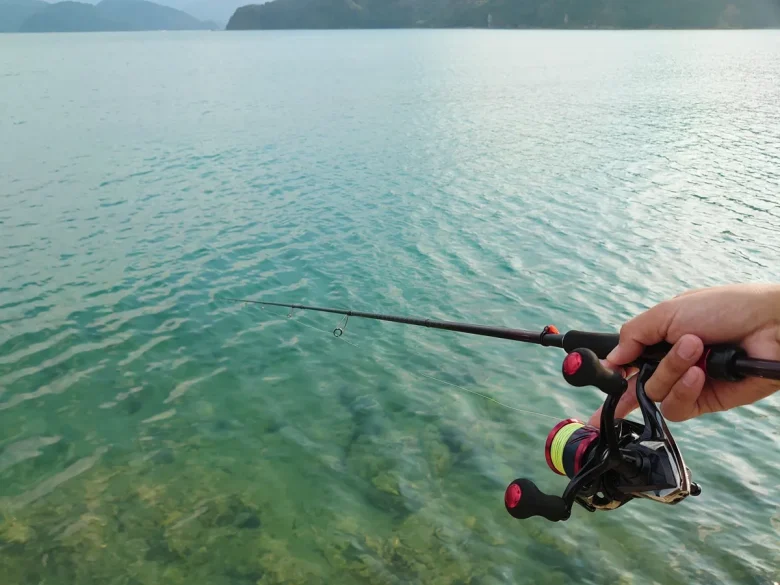
Squid love structure and clean water, and that gives you plenty of land-based options around the Australian coast. Look for seagrass and ribbon weed beds in clear, sheltered bays, rocky points and reef edges, jetties and breakwalls, and the margins of estuaries where the water stays salty. The common thread is a mix of weed or reef for the squid to ambush from and enough water clarity for them to find a lure. A lit jetty at night is a classic squid magnet, because it draws baitfish and prawns.
By region, the southern states are the calamari heartland. Victoria, Tasmania, South Australia, and southern New South Wales all hold strong Southern Calamari numbers around bays, weed flats, and rocky coast. Western Australia’s southern and lower-west coasts fish well too. The cooler months through into spring are often prime as squid move onto the weed beds to feed and breed, though you can find them through much of the year in the right spots. Dawn, dusk, and the first hours of dark are the standout windows, and a bit of clean water beats a dirty, churned-up swell.
Squid have minimum size and bag limits that vary by state, and some areas carry extra rules, so check your local fisheries regulations before you keep a feed. A quick measure across the hood (the mantle) is the usual reference, and returning small or breeding squid keeps the weed beds productive for next season.
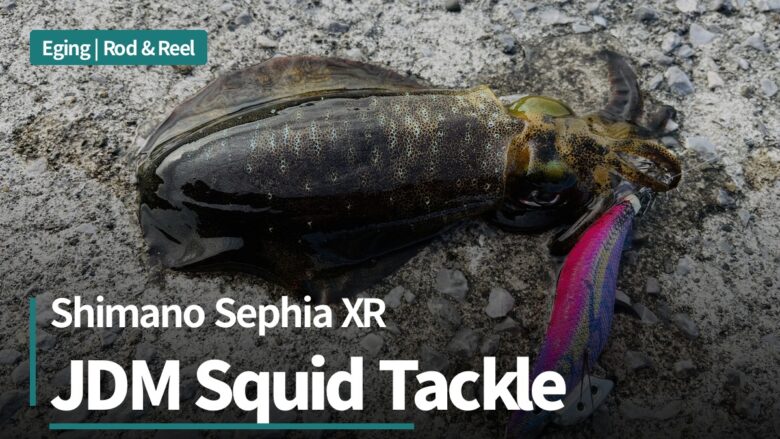
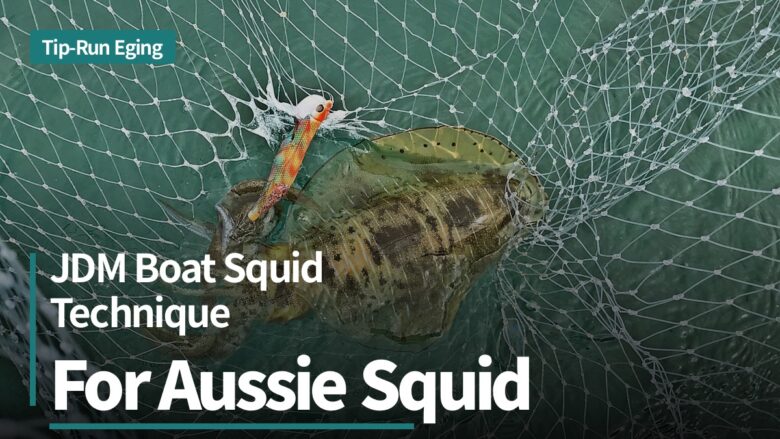
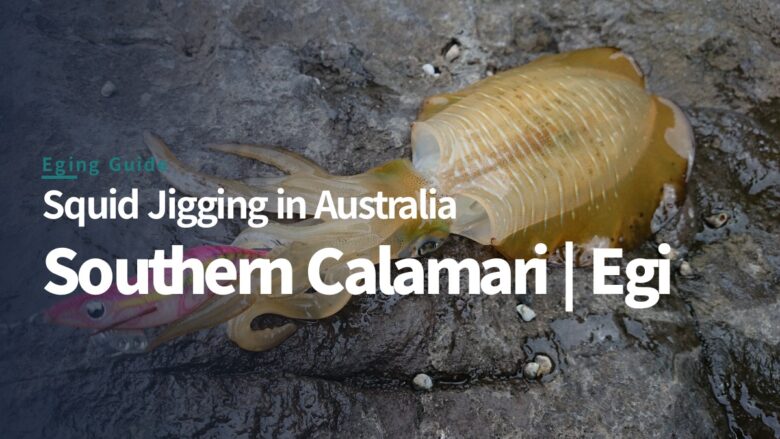
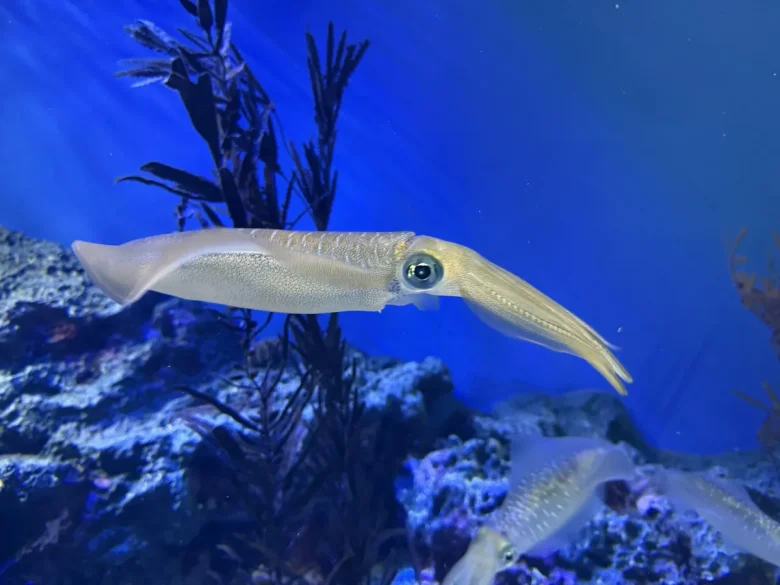
The headline eging target in Australia is the Southern Calamari (Sepioteuthis australis), a broad-finned squid that loves the weed beds and rocky coast of the southern states. They’re prized eating, pull surprisingly hard for their size, and respond beautifully to a worked egi. In Japan, the equivalent star is the Aori squid (Sepioteuthis lessoniana, アオリイカ), a close cousin, which is why Japanese eging tackle and tactics translate so cleanly to Aussie calamari.
For calamari, focus your effort over and around weed beds in clean water, working the egi back across the edges and gaps where squid ambush prey. They often hold in small groups, so a hookup usually means more are nearby. Keep your egi in the strike zone just above the weed, and slow everything down on a tough day: a longer pause on the fall and a smaller egi will often tempt a cautious squid that ignored a faster presentation.
You’ll also run into Arrow Squid (Nototodarus gouldi) in some areas, especially around deeper jetty lights at night. They’re a different shape and fight, more torpedo than broad-finned, but they’ll happily take an egi worked through the light line. Whatever you land, lift squid carefully, point the mantle away from your gear, and be ready for the ink. Check the size and bag limits for squid in your state before you keep any.
By now you know where the squid are holding and what you’re chasing, so here’s how to actually make one grab. The good news is that the basic eging rhythm is simple to learn and catches squid from day one. Master the cast, the jerk, and the fall, and everything else is refinement. Here’s the core sequence.
Cast and sink: Cast out over weed or reef and let the egi sink on a controlled line, counting it down so you know how deep you are. Squid often sit close to the bottom or just above the weed, so let it get down before you start. If the line twitches or stops falling early, a squid has grabbed it on the initial sink, so stay alert even before the first jerk.
The jerk: Once the egi is down, make two or three sharp upward snaps of the rod tip, taking up slack as you go, to dart the egi forward and up in short hops. This is the move that mimics a fleeing prawn and draws the squid in. The snaps should be crisp and clean, not a slow sweep, which is exactly where a dedicated eging rod earns its keep.
The fall: Now stop and let the egi glide back down on a slightly slack line. This is when almost all the takes happen. Watch your line where it enters the water and keep light contact: if it jumps, tightens, goes slack early, or just feels heavy when you lift, wind down and lean into it with a smooth, firm sweep. Don’t strike hard, because the barbs only need to tangle, not drive home, and a violent set can pull them free of a soft grip.
From time on the water, the anglers who consistently fill a bag aren’t the ones jerking hardest. They’re the ones who count the egi down to the right depth, keep the fall clean, and notice the one soft take in a slow session. Vary your sink count and the number of jerks until something responds, then repeat what worked. When you do hook up, keep steady pressure and let the soft rod tip cushion the squid’s pulses so the barbs stay buried.
Eging is a light, finesse style, so the whole outfit stays small and sensitive. You don’t need much: one balanced combo, thin braid, a fluoro leader, and a handful of egi will get you squid. Here’s what each piece does.
A dedicated eging rod is long and light, usually around 8 to 8 and a half feet, with a fast, crisp tip and a responsive blank. That length helps you cast a small egi a long way and pick up slack quickly to set the rhythm, while the tip lets you snap the lure sharply and then feel the soft take on the fall. A light spin or general lure rod can stand in while you try the style, but a purpose-built eging blank makes the jerk action far easier. The dedicated models in our JDM eging rod guide show what the specialist blanks offer.
Match the rod with a small spinning reel, typically a 2500 to 3000 size with a shallow, braid-ready spool. You want it light to balance a long rod, smooth on the drag for thin line and a squid’s soft grip, and quick on the line pickup so you can stay in contact through the slack-line work. There’s no need for heavy capacity or brute power here. Compact, smooth, and light is the brief, and the small JDM eging reels are built around exactly that.
Egi are sized in Japanese units written as a number followed by 号 (go). A 3.0 (sometimes labelled “No. 3.0”) is the all-round starting size and casts well in most conditions; go up to 3.5 for distance, depth, or wind, and down to 2.5 for shallow, calm water and fussy squid. Carry a small spread of colours, because squid can be choosy: natural prawn and brown for clear water and bright sun, pink and orange as confidence colours, and a glow or chartreuse pattern for low light and night sessions. The cloth colour and the foil base both matter, so a few options cover most days.
Thin braid makes eging work. PE 0.6 to 0.8 (roughly 12 to 16 lb) is the standard, because a fine line casts the light egi a long way, cuts the wind, and telegraphs the faintest take. Add a fluorocarbon leader of about 8 to 12 lb, two or three rod-lengths long, joined with an FG knot. Fluoro is near-invisible and handles the abrasion from weed and reef. Don’t go too heavy, or you’ll dull the feel and slow the egi’s fall, which is exactly the part you can’t afford to mute.
Eging is a Japanese invention, and Japan still sets the standard for the gear. Decades of tournament eging have pushed Japanese makers to build rods, reels, and egi specifically for this one technique, with a level of refinement that general-purpose tackle rarely matches. The whole system is engineered around the slack-line jerk: light, crisp, and tuned to throw a small lure a long way and feel a squid’s gentle grab.
Dedicated eging rods are a good example. A blank built for eging has the precise tip action you need to snap an egi sharply, then the recovery to settle it into a clean fall, all in a package light enough to fish all day. Reels follow the same logic: shallow spools, fine drags, and low weight balance a long, whippy rod. You can catch squid on a general lure outfit, but JDM eging gear makes the technique easier to learn and a lot more fun once you’ve got it.
The catch for Aussie anglers is availability. Many of the best eging-specific models are sold mainly in Japan, and they ship internationally from Amazon Japan, so check availability and shipping cost at checkout. The upside is access to gear that local tackle shops rarely stock. For a full rundown of dedicated blanks, our guide to the best eging rods from Japan breaks down the options by budget and target, and the matching best JDM reels for eging covers the spinning reels that pair with them.
Is eging hard to learn? No. The basic cast, jerk, and fall rhythm catches squid quickly, and most beginners hook up within a session or two. The finesse, like reading subtle takes and dialling in egi size and colour, comes with time on the water.
What size egi should I start with? A 3.0 is the best all-rounder for Australian calamari. Add a 3.5 for casting distance, depth, or wind, and a 2.5 for shallow, calm, clear-water situations where squid are fussy.
Do I really need a dedicated eging rod? You can start with a light spin or lure rod, and plenty of people do. A dedicated eging blank makes the sharp jerk action and the soft take detection much easier, so it’s worth the upgrade once you’re hooked on the style.
What’s the best time of day to go? Dawn, dusk, and the first hours of dark are prime. Squid feed actively in low light, and jetty lights at night concentrate both bait and squid.
Here’s a no-fuss starting point. An eging rod around 8 to 8 and a half feet, a 2500 to 3000 spinning reel with a smooth drag, PE 0.6 to 0.8 braid with an 8 to 12 lb fluorocarbon leader, and a handful of egi in 2.5, 3.0, and 3.5 across a few colours. That kit will handle Southern Calamari comfortably and give you everything you need to learn the rhythm.
Plenty of capable gear fits this brief, and many of the best dedicated eging rods and reels are Japanese models. JDM-only items ship internationally from Amazon Japan, so check availability and shipping cost at checkout. Orders over A$59 may qualify for free international delivery. Prices for JDM products are shown in JPY (tax excluded) with approximate AUD conversion at the time of writing.
In Japan, eging is one of the most popular light saltwater styles going, and the lessons carry across to Australian waters surprisingly well. The biggest one: time on the weed beats any single piece of gear. Find clean water over structure, count your egi down, work a clean jerk-and-fall, and watch your line on the drop. Do that consistently and the squid will come.
Picture your first session: clean water over a weed bed at first light, a 3.0 egi counting down into the green, then two sharp snaps and a slow glide back. Somewhere on that fall the line goes heavy, and you lean into your first calamari. That’s the whole appeal of eging, a finesse style with a visual, on-the-fall take, gear that’s a pleasure to use, and a genuinely good feed at the end of it. Get one balanced combo, a small spread of egi, and that jerk-and-fall rhythm, fish clean water over weed in good light, and it’ll reward you for years.
Ready to kit up? These guides cover the gear in detail, and you’ll find more Japanese-style fishing for Aussie waters across the rest of the site: