Eging in Australia: A JDM Angler's Guide to Squid Jigging
ちゃんま
マイボ!

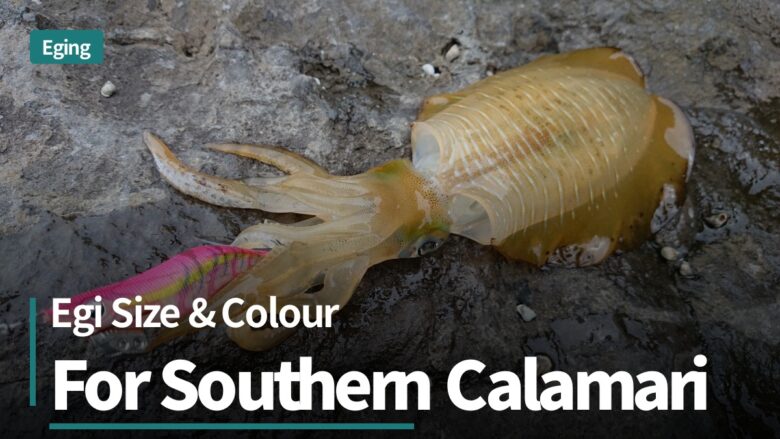
Once you have a rod, a reel and a handful of Japanese egi (餌木 / エギ, the prawn-shaped squid jigs the whole game is built around), the next question is the one that actually fills the bag: which size, and which colour, do you tie on right now? Walk into any tackle shop that carries a serious squid range and the wall is a blur of goh numbers and finishes, and most English-language advice stops at “try pink.” That is a fine start, but our southern calamari change their mind with the tide, the light and the water clarity, so a bit of a system beats a lucky colour.
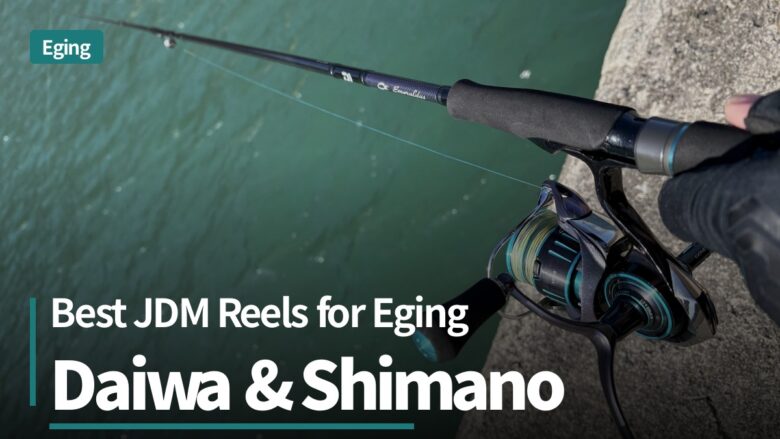
This is a selection guide rather than a product list. If you want the shortlist of jigs worth owning, we cover that separately in our pick of the best Japanese egi for Australia. Here the job is to help you read the water in front of you and reach for the right size and colour with some confidence, using the same logic Japanese aori-ika anglers apply back home. If you are still building the setup, start with our complete guide to eging in Australia, then match your jigs to a proper JDM egi rod and a light eging reel.
Timing note: this is written in the middle of the Australian winter, which is prime time. Southern calamari fire hardest from autumn through winter into spring, and the biggest spawning squid push into the shallows in the cooler months, so the size and colour calls below matter most right now. A note on links and pricing: globally sold jigs link to Amazon.com (available with international shipping to Australia), and JDM-focused models link to Amazon Japan, which ships internationally. Always check your local state regulations for current squid size and bag limits before you head out.
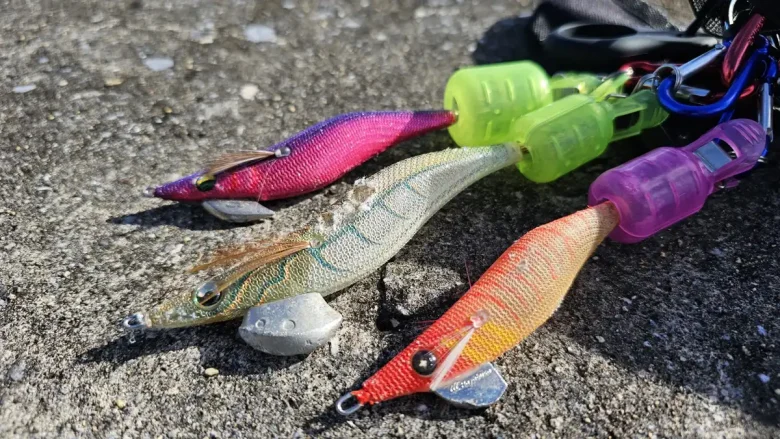
Egi are graded in Japanese goh (号) numbers, not grams, and the number is really a proxy for length, weight and how fast the jig falls. For our southern calamari, the #2.5 to #3.5 band does almost all the work, with the odd #2.0 or #4.0 for extremes. Bigger is not for bigger squid so much as for deeper water, more wind, stronger current and longer casts. A hungry calamari will happily grab a jig its own body length or more, so let depth and conditions pick the size, not the size of the squid you are hoping for.
| Size (goh) | Approx. weight | Length | Where it shines |
|---|---|---|---|
| #2.0 | ~6–8 g | ~64 mm | Very shallow, ultra-clear, heavily pressured water; small squid |
| #2.5 | ~10 g | ~75 mm | Shallow flats, calm or spooky water, finesse days |
| #3.0 | ~15 g | ~90 mm | The everyday all-rounder for most rocks and jetties |
| #3.5 | ~20–22 g | ~105 mm | Depth, distance, wind, current and big winter calamari |
| #4.0 | ~25 g+ | ~125 mm | Deep water, strong current, trophy squid off the rocks |
The dial most beginners never touch is sink rate, quoted in seconds per metre. A basic #3.5 falls at roughly 3 sec/m, while a Shallow or slow model of the same size might take 5 to 6 sec/m. Because squid take the egi on the fall, not the retrieve, matching that drop to the depth is often more important than the exact colour. Over shin-deep weed you want a slow fall that hangs in the strike zone; in deep water or run you want to get down before the squid loses interest.
Colour on an egi is really two decisions, and separating them is what turns a guess into a plan. The outer cloth (base) colour is the body you see, and it is driven by water clarity and how switched-on the squid are. The tape (undertape or foil) colour sits under the cloth and flashes through it, and it is driven by the light: time of day, cloud and how much brightness is in the water. Yamashita’s own guidance splits the two the same way, and it is the single most useful thing to borrow from the Japanese scene.
For the cloth, the rule of thumb is natural and darker tones in clear water, brighter and louder tones in dirty water. A dark, natural silhouette looks real and does not spook wary squid in gin-clear conditions, while pink, orange or chartreuse help a jig stand out when the water is stained or the squid are aggressive. For the tape, think of it as the lighting rig: silver, gold and rainbow foils sparkle in daylight, while red and glow come into their own in low light and after dark, where a bright metallic foil can look unnatural.
| Cloth (base) colour | Water and squid mood |
|---|---|
| Natural, brown, olive, blue | Clear, calm, heavily fished water; cautious squid |
| Pink, orange (all-round) | Normal to slightly stained water; the safe searching starters |
| Bright pink, orange, chartreuse | Dirty or coloured water, or fired-up, actively feeding squid |
| Tape (undertape) colour | Light conditions |
|---|---|
| Silver, rainbow, holo | Bright, clear, sunny daytime |
| Gold, marble | Overcast, low sun, lightly stained water |
| Red, glow (490) | Dawn, dusk, night and dirty water |
One more seasonal wrinkle worth knowing: midsummer and midwinter water tends to run clear and blue, spring and autumn water often carries a green, plankton-stained tinge, and morning and evening light throws a red cast over everything. That is why a red or gold tape earns its keep so often at the edges of the day, which is exactly when calamari feed hardest.
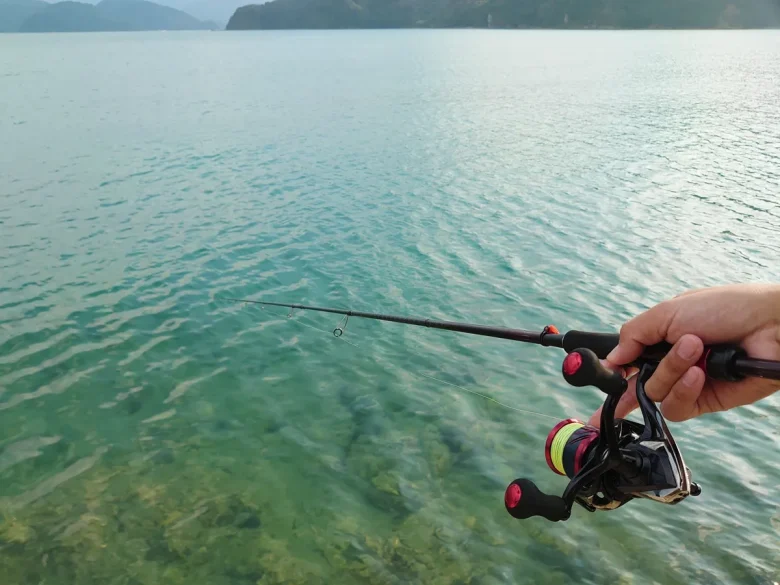
Skinny, gin-clear water over white sand and weed under a high sun is the trickiest scene, because the squid can see everything and a loud jig gets a long, hard look and then a refusal. This is finesse territory. Drop a size to #2.5, lean on a slow fall, and pick a natural cloth over a silver or holo tape so it flashes like a real baitfish rather than a fluoro billboard. A translucent, sight-style jig such as the Daiwa Emeraldas Nude is built for exactly this, and a quiet, silent egi usually out-fishes a rattling one when the squid are this spooky. Keep your leader long and light, and let the pauses stretch out.
The first and last hour of light, and the hours after dark around jetty lights, are when calamari drop their guard and feed. Here the flash of a metallic tape fades, so switch to a red or glow tape and give the glow a good charge with a torch before you cast. A #3.0 is the natural all-round size for this window; step up to #3.5 if there is depth or current. A proven glow-finished searcher like the Yamashita Egi-Oh LIVE in 490 glow works right through this period, and a little rattle helps the squid find the jig in the dark. Around lit jetties, cast to the shadow line at the edge of the light rather than into the brightest patch.
When a swell or run of rain has stirred the water green or brown, the squid cannot see far, so your job flips from “look natural” to “be found.” Go bright and loud: a pink, orange or chartreuse cloth, a gold or glow tape, and a rattle to pull squid in from further out. This is the moment for a high-appeal rattling jig such as the Yamashita Egi-Oh SEARCH or a beginner-friendly noisy caster like the Yo-Zuri Duel EZ-Q Cast Rattle. Slow everything down: in coloured water the squid needs more time to track the jig, so longer pauses and a deliberate, exaggerated dart do better than fast, tidy work.
Off deeper rock ledges, in a running tide, or when the wind is pushing a big bow in your line, a light jig never reaches the squid or gets swept out of the zone. The fix is weight and speed. Step up to a #3.5, and choose a basic or fast fall rather than a shallow one so the egi punches down and holds bottom contact. Colour matters less here than getting down at all, so a bright, easy-to-track finish is fine. A heavier searcher like the Egi-Oh SEARCH #3.5 or the durable, keenly priced Yo-Zuri Aurie-Q RS handles the depth and the rocks without costing a fortune when the ground eats a jig.
The trophy scene, and a timely one right now: the biggest spawning calamari move onto shallow weed beds through the cooler months, sitting in only a metre or two of water where a fast jig crashes past them. This is where a #3.5 with a genuinely slow fall shines, hanging over the grass long enough for a big squid to commit. A jig with tunable fall speeds, like the Daiwa Emeraldas Dart II in Type S, or a premium finesse rattle such as the Emeraldas Peak RV, lets you keep the size for casting distance while slowing the drop right down. Do not swing too hard on the strike: big calamari have soft flesh around the beak, and a smooth lift sets the barbs better than a rod-snapping hookset.
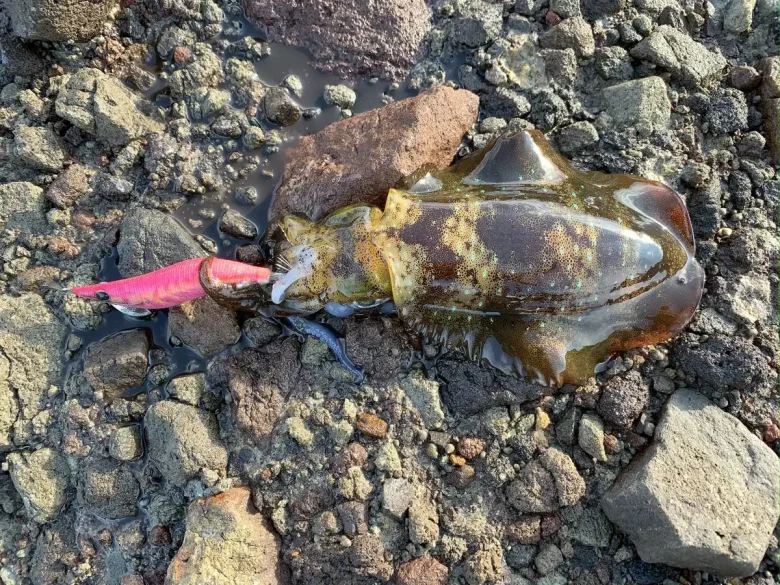
Back home in Japan, the habit we have carried across to Australian squid is to change one thing at a time and to treat sink rate as the first dial, not colour. We will start a session with a #3.0 all-rounder in a pink or orange cloth, count the jig down to read the depth, and fish it properly for a few casts before touching anything. If we mark squid following but not committing, the first change is almost always to slow the fall, either by dropping to a Shallow or Type S model or by feeding more slack on the drop, rather than reaching straight for a new colour.
Colour comes next, and we change it in the order the conditions suggest: tape first if the light has shifted (say, clipping on a glow model as the sun drops), cloth next if the water clarity is the problem. It is a slower, more deliberate way to fish than swapping jigs every cast, but it teaches you what actually made the difference, and over a season that read on the water is worth far more than any single “magic” colour in the box.
Here is the whole system on one page: pick the row that matches what is in front of you.
| Scene | Size | Fall | Cloth / tape | A jig that fits |
|---|---|---|---|---|
| Clear, calm, sunny | #2.5 | Slow | Natural cloth / silver tape | Emeraldas Nude |
| Dawn, dusk, night | #3.0–3.5 | Standard | Any cloth / red or glow tape | Egi-Oh LIVE 490 glow |
| Dirty or coloured | #3.0 | Standard, rattle | Bright cloth / gold tape | Egi-Oh SEARCH |
| Deep or strong current | #3.5–4.0 | Fast / basic | Bright, easy to track | Aurie-Q RS |
| Big winter squid, shallow weed | #3.5 | Very slow (Type S) | Natural or pink / glow | Emeraldas Dart II Type S |
You do not need one of everything. A small, smart box that covers the scenes above will out-fish a tackle-shop haul that is all bright #3.5s. Here is where we would spend first.
Cover the everyday: Yamashita Egi-Oh LIVE #3.0 and #3.5
One natural and one bright, ideally including a 490 glow. The sharp tin-sinker dart searches water fast, the finishes are proven on our calamari, and these two sizes cover most rock and jetty situations from daylight into dusk. If you buy one family and learn it, make it this.
Add a slow-fall specialist: Daiwa Emeraldas Dart II Type S #3.5
The jig that unlocks big winter squid over shallow weed, where a standard fall drops too fast. The tunable fall speeds let you slow the drop right down while keeping the size for casting distance, so one jig covers the trophy scene that a basic egi misses.
Keep it cheap on rocky ground: Yo-Zuri Aurie-Q RS #3.0
A durable, keenly priced classic to buy in a couple of colours as your searching and snag-off jigs. It will not out-fish a top Yamashita or Daiwa on a fussy day, but it catches squid, survives the rocks, and is cheap enough to lose without wincing.
The #2.5 to #3.5 range covers almost all Australian southern calamari fishing. Use #2.5 for shallow, calm or pressured water, #3.0 as the everyday all-rounder, and #3.5 for depth, distance, current and the big squid that move shallow to spawn in the cooler months. Pick the size by depth and conditions, not by the size of squid you are hoping to catch, because a calamari will grab a jig its own length or bigger.
Split the choice in two. The cloth (base) colour follows water clarity: natural, darker tones in clear water, and bright pink, orange or chartreuse in dirty or coloured water. The tape (undertape) colour follows the light: silver, gold and rainbow foils in bright daylight, and red or glow finishes at dawn, dusk, at night and in stained water. If in doubt, start with a pink or orange cloth over a gold tape and change one at a time from there.
Sink rate usually matters more. Squid take the egi on the fall, so a jig that hangs in the strike zone at the right depth will out-fish a better colour that falls too fast or too slow. Match the fall to the water first, slow it down when squid follow but do not commit, and treat colour as the second adjustment rather than the first.
For the jigs themselves, see our pick of the best Japanese egi for Australia, and for the rest of the setup, our full guide to eging in Australia, the best JDM egi rods and the matching best JDM reels for eging.
Egi sizes, weights and sink rates are referenced from the makers’ official product information (Yamashita, Daiwa and Yo-Zuri/Duel) and vary between Basic, Shallow and Slow versions of the same size. Colour guidance follows Yamashita’s published cloth-and-tape approach and general eging practice. Prices are approximate street prices, tax excluded, with an approximate AUD conversion at the time of writing, because squid jigs are not sold at a fixed RRP. Affiliate links may earn us a commission at no extra cost to you. Always check your local state fishing regulations for current squid size and bag limits.