Best Eging Rods from Japan: Why JDM Models Are Worth Importing
ちゃんま
マイボ!

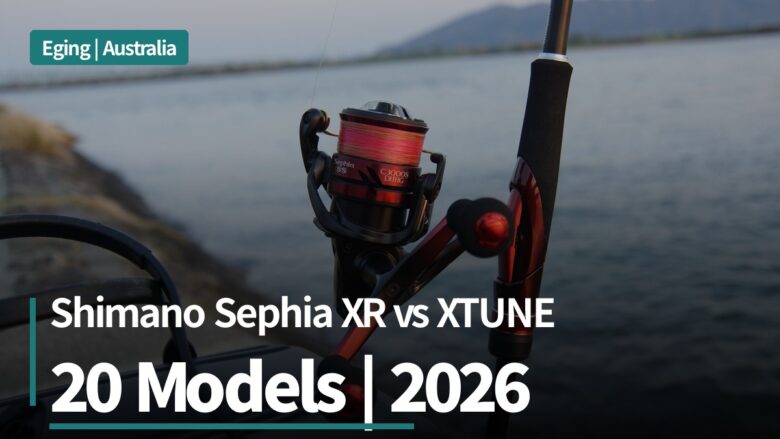
If you have gone looking for a Japanese squid rod, you have probably ended up staring at these two. The Sephia XR is the rod most keen Japanese egists actually own. The Sephia XTUNE sits a tier above it and costs roughly A$250 more per rod. Both are Japan-only, both ship here, and the English-language material on the difference between them runs to about one marketing paragraph.
I fish and buy this gear in Japan, not in Australia, so treat what follows as the view from the shop counter here rather than from your local weed bed. What I can do is put Shimano’s own numbers for all 20 models next to each other, which answers the question more bluntly than either brochure does. At matched lengths the XTUNE is not lighter, and it is not rated for bigger or smaller egi. The money buys construction.
There is also a trap in the search results, and it is worth clearing up before any of the specs mean anything. Shimano replaced the XTUNE in July 2026, and its English product page has not caught up. Compare an XTUNE you read about in English against an XR, and you are comparing rods six model years apart without knowing it.
Prices are Japanese RRP in JPY, tax excluded, with approximate AUD conversion at A$1 ≈ ¥113 (7 September 2026). Both series are JDM only, so every buy link goes to Amazon Japan. Ships internationally from Amazon Japan: check availability and shipping cost at checkout, and orders over A$59 may qualify for free international delivery. Squid size and bag limits are set state by state, so check your local regulations.
Shimano’s global English pages still describe the 20 Sephia XTUNE, a twelve-model range built around Nanopitch, Softube Top tips and an Active Ferrule. The Japanese page now shows something else entirely: five models, released July 2026, with a cork fore grip, Toray M40X carbon and an inro joint. Five of the model codes are shared across both generations, so a used listing that says “Sephia XTUNE S86ML” tells you almost nothing on its own.

| 20 Sephia XTUNE (English page) | 26 Sephia XTUNE (current) | |
|---|---|---|
| Models | 12 | 5 |
| Weight range | 99-108 g | 95-105 g |
| Carbon | Not specified by grade | Toray M40X with Nanoalloy resin |
| Joint | Active Ferrule (spigot) | Inro joint |
| Fore grip | Reel seat only, Perfection Seat XT | Side-flat cork, plus cork on the locking nut |
| Guides | X Guide, Aero Titanium in the butt | Full X Guide: 3D Titanium Top, 3D Titanium, Aero Titanium |
| Tips | Softube Top on six models | Not listed among the technologies |
If you are shopping the secondhand market or a grey-market shop that has not updated its listings, the old lineup below is what you are looking at. Weight is the cleanest tell: every 2020 rod is heavier than the 2026 rod that shares its code.
| Code (20 XTUNE) | Length | Weight | Egi | PE |
|---|---|---|---|---|
| S82L | 8’2″ / 2.49 m | 102 g | 1.5-3.5 | 0.3-0.8 |
| S86L | 8’6″ / 2.59 m | 106 g | 1.5-3.5 | 0.3-0.8 |
| S79ML | 7’9″ / 2.36 m | 99 g | 1.8-3.8 | 0.4-1 |
| S82ML | 8’2″ / 2.49 m | 102 g | 1.8-3.8 | 0.4-1 |
| S86ML | 8’6″ / 2.59 m | 104 g | 1.8-3.8 | 0.4-1 |
| S810ML | 8’10” / 2.69 m | 106 g | 1.8-3.8 | 0.4-1 |
| S92ML+ | 9’2″ / 2.79 m | 107 g | 1.8-3.8 | 0.4-1 |
| S79M | 7’9″ / 2.36 m | 100 g | 2-4 | 0.5-1 |
| S82M | 8’2″ / 2.49 m | 104 g | 2-4 | 0.4-1 |
| S86M | 8’6″ / 2.59 m | 107 g | 2-4 | 0.5-1 |
| S90M | 9’0″ / 2.74 m | 108 g | 2-4 | 0.5-1 |
| S86MH | 8’6″ / 2.59 m | 107 g | 2.5-4.5 | 0.6-1.2 |
The XR has no equivalent problem. It carries Shimano’s 21 model-year naming, the Japanese and English spec tables agree, and the range has grown rather than changed: S79M, S89ML and S93ML were added after launch. Worth knowing that it is now the older design of the two, and the tier above it has just been rebuilt. Everything from here is the 21 XR against the 26 XTUNE.
Most Australian squid fishing happens with a size 3 or 3.5 egi on an 8’3″ to 8’6″ ML, and both series build for it. This is also where the price question gets sharpest, because the two rods are dimensionally the same object.

| Model | Series | Length | Weight | Tip | Egi | PE | Price |
|---|---|---|---|---|---|---|---|
| S83ML | XR | 8’3″ / 2.51 m | 99 g | Softube Top, 1.6 mm | 1.8-3.8 | 0.4-1 | ¥43,900 (~A$388) |
| S86ML | XR | 8’6″ / 2.59 m | 100 g | Softube Top, 1.6 mm | 1.8-3.8 | 0.4-1 | ¥44,100 (~A$390) |
| S86M | XR | 8’6″ / 2.59 m | 100 g | Tubular, 1.6 mm | 2-4 | 0.5-1 | ¥44,500 (~A$394) |
| S86ML | XTUNE | 8’6″ / 2.59 m | 100 g | 1.6 mm | 1.8-4 | 0.4-1 | ¥74,000 (~A$655) |
| S88L+ | XTUNE | 8’8″ / 2.64 m | 100 g | 1.6 mm | 1.5-4 | 0.3-1 | ¥74,000 (~A$655) |
Line up the two S86MLs and the spec sheet runs out of differences. Same 8’6″, same 2.59 m, same 133 cm closed, same 100 g, same 1.6 mm tip, same PE 0.4 to 1. The XTUNE takes a size 4 egi where the XR stops at 3.8, which in practice is the same box of jigs. The gap between them is ¥29,900, or about A$265, for two rods that weigh and measure identically.
So where does the money go? Not into carbon content: the XR S86ML is 99.3 percent against the XTUNE’s 98.7. It goes into the carbon itself, and into how the rod is put together.
| Sephia XR | 26 Sephia XTUNE | |
|---|---|---|
| Blank structure | Spiral X Core plus Hi-Power X | Spiral X Core plus Hi-Power X |
| Carbon grade | Not specified | Toray M40X with Nanoalloy resin |
| Joint | Reverse put-over | Inro, which Shimano says carries load from tip to butt like a one-piece rod |
| Guides | X Guide, 3D Titanium Top plus Aero | Full X Guide, 3D Titanium Top plus 3D Titanium plus Aero Titanium |
| Rear grip | Carbon Monocoque, round | Carbon Monocoque |
| Fore grip | Reel seat only | Side-flat cork, cork locking nut |
| Tips | Softube Top or Taftec Infinity solid, depending on model | No named tip technology listed |
M40X is the real line item. It is a stiffer, faster-recovering carbon than the unspecified fibre in the XR, and in a rod you jerk a few thousand times a session that shows up as less blank wobble after each stroke rather than as a number on the label. The inro joint and the cork fore grip are refinements you notice within about ten casts and then stop thinking about. None of it changes what egi you can throw or what squid you can land.
Southern calamari in gin-clear shallows on a bright day will follow an egi and mouth it without ever loading the rod. Japan builds for that with ultra-light powers and solid tips, and this is the part of the range where the two series stop being comparable.

| Model | Series | Length | Weight | Tip | Egi | PE | Price |
|---|---|---|---|---|---|---|---|
| S73SUL-S | XR | 7’3″ / 2.21 m | 89 g | Taftec Infinity, 0.9 mm | 1.5-2.5 | 0.2-0.5 | ¥44,500 (~A$394) |
| S76UL-S | XR | 7’6″ / 2.29 m | 89 g | Taftec Infinity, 0.9 mm | 1.5-3 | 0.2-0.6 | ¥44,900 (~A$397) |
| S83L | XR | 8’3″ / 2.51 m | 98 g | Softube Top, 1.6 mm | 1.8-3.5 | 0.3-0.8 | ¥43,700 (~A$387) |
| S86ML-S | XR | 8’6″ / 2.59 m | 100 g | Taftec Infinity, 0.9 mm | 1.8-3.8 | 0.4-1 | ¥46,300 (~A$410) |
| S86M-S | XR | 8’6″ / 2.59 m | 100 g | Taftec Infinity, 1.3 mm | 2-4 | 0.5-1 | ¥46,700 (~A$413) |
| S88L+ | XTUNE | 8’8″ / 2.64 m | 100 g | 1.6 mm | 1.5-4 | 0.3-1 | ¥74,000 (~A$655) |
The XTUNE has one entry here and it is not really an answer. S88L+ is an L-plus at 8’8″ rated PE 0.3 to 1, which makes it a light all-rounder rather than a finesse rod. There is no SUL, no UL and no solid tip anywhere in the 2026 XTUNE range. Want to fish a size 2 egi on PE 0.3 for calamari picking at it in a metre of water? The XR is the only one of the two that builds the rod.
| Tip | What you get | What it costs you |
|---|---|---|
| Taftec Infinity solid (-S models) | A visible tip. The rod bends before the squid feels resistance, so a touch shows as a bend rather than a feeling. Shimano rates it at three times the bend strength of standard solid | Slower to pop an egi hard, and Shimano advises a long-drop pendulum cast to protect the tip |
| Softube Top (tubular) | Solid-tip sensitivity at hollow-tip weight, so the jerk stays crisp while small takes still register | Less visual bite detection than a true solid |
| Plain tubular | The sharpest jerk and the most direct transmission on the strike | Fussy squid that only touch the egi go unnoticed |
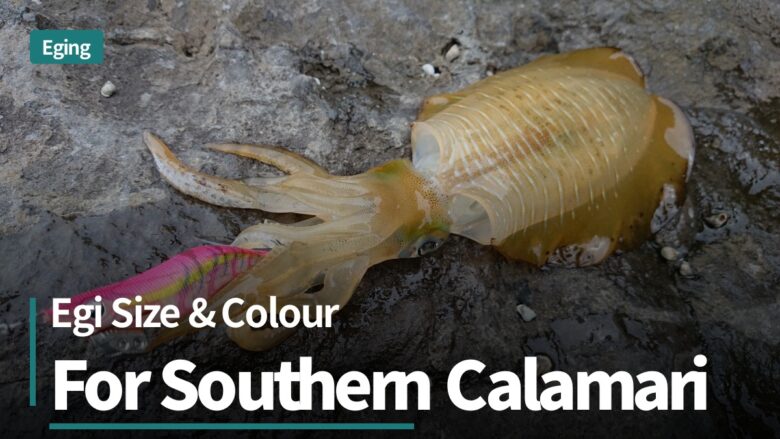
Which tip suits your water is worth settling before you pick a model, and it interacts with jig choice more than most people expect. Our guide to egi size and colour for southern calamari covers the jig half of that.
Long rods do two jobs here. They buy casting distance over shallow weed you cannot walk out onto, and they keep line off the water when you are standing well above it. Both series go past nine feet, and this is the one length bracket where the XTUNE’s weight advantage is real.

| Model | Series | Length | Weight | Closed | Egi | PE | Price |
|---|---|---|---|---|---|---|---|
| S89ML | XR | 8’9″ / 2.67 m | 101 g | 137 cm | 1.8-3.8 | 0.4-1 | ¥44,300 (~A$392) |
| S93ML | XR | 9’3″ / 2.83 m | 110 g | 145 cm | 1.8-3.8 | 0.4-1 | ¥44,700 (~A$396) |
| S90H | XR | 9’0″ / 2.74 m | 113 g | 140.5 cm | 3-5 | 0.8-1.5 | ¥46,300 (~A$410) |
| S92ML+ | XTUNE | 9’2″ / 2.80 m | 105 g | 143.5 cm | 1.8-4 | 0.4-1 | ¥76,000 (~A$673) |
| Going longer | What you gain | What you pay for it |
|---|---|---|
| 8’9″ to 9’0″ | Noticeably more distance over weed, and enough tip height to keep line clear from a raised ledge | Slower to work an egi in close, and it starts to feel long on a jetty with people on it |
| 9’2″ to 9’3″ | The most reach either series offers, and the best line control across a cross-current | 105 to 113 g in the hand all session, and a closed length over 140 cm that some couriers surcharge |
Five grams, minus an inch of length, for ¥31,300. That is the honest read on S93ML against S92ML+, and after four hours of jerking a size 3.5 into an onshore breeze, five grams at the tip of a nine-foot lever is not nothing. If long rods are what you fish, this is the strongest case in the whole comparison for the XTUNE.
It is also the bracket where the XR does something the XTUNE cannot. S90H is rated to a size 5 egi on PE 1.5, and the XTUNE range tops out at size 4 on PE 1. Big winter calamari over deep weed, or an egi heavy enough to hold bottom in current, is XR-only territory. Freight deserves a thought too: both long rods close at over 140 cm, which pushes some couriers out of standard parcel rates.
The other end of the range: rods short enough to work under a cliff face, tight against a jetty pylon, or off a boat where a nine-footer is a liability. Here the XTUNE holds a slot the XR leaves empty.

| Model | Series | Length | Weight | Closed | Egi | PE | Price |
|---|---|---|---|---|---|---|---|
| S79ML | XR | 7’9″ / 2.36 m | 96 g | 121.5 cm | 1.8-3.8 | 0.4-1 | ¥43,700 (~A$387) |
| S79M | XR | 7’9″ / 2.36 m | 98 g | 121.5 cm | 2-4 | 0.5-1 | ¥44,100 (~A$390) |
| S73MH | XR | 7’3″ / 2.21 m | 96 g | 114 cm | 2.5-4.5 | 0.6-1.2 | ¥44,100 (~A$390) |
| S86MH | XR | 8’6″ / 2.59 m | 107 g | 133 cm | 2.5-4.5 | 0.6-1.2 | ¥44,900 (~A$397) |
| S72ML+ | XTUNE | 7’2″ / 2.18 m | 95 g | 112.5 cm | 1.8-4 | 0.4-1 | ¥72,000 (~A$637) |
| S85M | XTUNE | 8’5″ / 2.57 m | 100 g | 132 cm | 2-4.5 | 0.5-1 | ¥75,000 (~A$664) |
| Power | Egi and PE range | Available in |
|---|---|---|
| ML | Egi 1.8 to 4, PE 0.4 to 1 | Both series. XR from 7’9″, XTUNE from 7’2″ |
| M | Egi 2 to 4.5, PE 0.5 to 1 | Both series. XR from 7’9″, XTUNE only at 8’5″ |
| MH | Egi 2.5 to 4.5, PE 0.6 to 1.2 | XR only, at 7’3″ and 8’6″ |
The XR’s shortest rods are both 7’3″, and both are MH. Its shortest ML is the 7’9″ S79ML. A 7’2″ ML at 95 g simply does not exist in the XR range, and it is the lightest rod either series makes in that power. For boat eging over an inshore reef, or ledge work where you cannot take a full swing, that is a real reason to buy the dearer rod rather than a nicer version of a rod you could already have.
At the heavier end it goes the other way again. S85M covers size 2 to 4.5 in one rod, a useful spread, but MH power exists in two lengths on the XR and in none on the XTUNE. Closed lengths in this bracket run 112 to 121.5 cm, which keeps everything inside normal international parcel dimensions. The nine-footers above do not.
Every model in both series, sorted by egi rating within each range.
| Model | Series | Length | Closed | Weight | Tip | Egi | PE | Carbon | Price |
|---|---|---|---|---|---|---|---|---|---|
| S73SUL-S | XR | 7’3″ | 114 cm | 89 g | Solid 0.9 | 1.5-2.5 | 0.2-0.5 | 97.9% | ¥44,500 (~A$394) |
| S76UL-S | XR | 7’6″ | 118 cm | 89 g | Solid 0.9 | 1.5-3 | 0.2-0.6 | 98.3% | ¥44,900 (~A$397) |
| S83L | XR | 8’3″ | 129 cm | 98 g | Softube 1.6 | 1.8-3.5 | 0.3-0.8 | 99.3% | ¥43,700 (~A$387) |
| S79ML | XR | 7’9″ | 121.5 cm | 96 g | Softube 1.6 | 1.8-3.8 | 0.4-1 | 99.3% | ¥43,700 (~A$387) |
| S83ML | XR | 8’3″ | 129 cm | 99 g | Softube 1.6 | 1.8-3.8 | 0.4-1 | 99.3% | ¥43,900 (~A$388) |
| S86ML | XR | 8’6″ | 133 cm | 100 g | Softube 1.6 | 1.8-3.8 | 0.4-1 | 99.3% | ¥44,100 (~A$390) |
| S86ML-S | XR | 8’6″ | 133 cm | 100 g | Solid 0.9 | 1.8-3.8 | 0.4-1 | 99.2% | ¥46,300 (~A$410) |
| S89ML | XR | 8’9″ | 137 cm | 101 g | Softube 1.6 | 1.8-3.8 | 0.4-1 | 99.0% | ¥44,300 (~A$392) |
| S93ML | XR | 9’3″ | 145 cm | 110 g | Tubular 1.6 | 1.8-3.8 | 0.4-1 | 99.2% | ¥44,700 (~A$396) |
| S79M | XR | 7’9″ | 121.5 cm | 98 g | Tubular 1.6 | 2-4 | 0.5-1 | 98.8% | ¥44,100 (~A$390) |
| S86M | XR | 8’6″ | 133 cm | 100 g | Tubular 1.6 | 2-4 | 0.5-1 | 99.2% | ¥44,500 (~A$394) |
| S86M-S | XR | 8’6″ | 133 cm | 100 g | Solid 1.3 | 2-4 | 0.5-1 | 99.2% | ¥46,700 (~A$413) |
| S73MH | XR | 7’3″ | 114 cm | 96 g | Tubular 1.6 | 2.5-4.5 | 0.6-1.2 | 99.2% | ¥44,100 (~A$390) |
| S86MH | XR | 8’6″ | 133 cm | 107 g | Tubular 1.6 | 2.5-4.5 | 0.6-1.2 | 99.4% | ¥44,900 (~A$397) |
| S90H | XR | 9’0″ | 140.5 cm | 113 g | Tubular 1.6 | 3-5 | 0.8-1.5 | 99.4% | ¥46,300 (~A$410) |
| S88L+ | XTUNE | 8’8″ | 135.5 cm | 100 g | Tubular 1.6 | 1.5-4 | 0.3-1 | 98.7% | ¥74,000 (~A$655) |
| S72ML+ | XTUNE | 7’2″ | 112.5 cm | 95 g | Tubular 1.6 | 1.8-4 | 0.4-1 | 98.4% | ¥72,000 (~A$637) |
| S86ML | XTUNE | 8’6″ | 133 cm | 100 g | Tubular 1.6 | 1.8-4 | 0.4-1 | 98.7% | ¥74,000 (~A$655) |
| S92ML+ | XTUNE | 9’2″ | 143.5 cm | 105 g | Tubular 1.6 | 1.8-4 | 0.4-1 | 98.8% | ¥76,000 (~A$673) |
| S85M | XTUNE | 8’5″ | 132 cm | 100 g | Tubular 1.6 | 2-4.5 | 0.5-1 | 98.7% | ¥75,000 (~A$664) |
One number worth sitting with: the entire 15-rod XR range spans ¥43,700 to ¥46,700. Every XR model costs less than the cheapest XTUNE, by a margin of at least A$224. Choosing a first serious squid rod, that shapes the decision more than any construction difference does. The wider field, Daiwa’s Emeraldas range included, sits in our roundup of the best JDM eging rods.
For years one rod did everything for me. A Shimano Dialuna, bought for seabass, ended up covering tachiuo tenya, shore jigging, eging, bass, light bottom fishing for whiting and even sabiki for mackerel and sardines. Seven different fisheries, one blank, and I caught in all of them. Fish a proven spot in the right season and tackle that isn’t purpose-built still catches, which is a thing tackle articles are oddly reluctant to say.
A dedicated eging rod catches more, and it’s more fun. No argument there. But if eging is a thing you do a few times a season, or a thing a mate drags you along to, a rod you already own will get you into it. The moment to buy the dedicated rod is when you go often enough that you start thinking “I want to catch more of these”, I think. That’s when the specialised blank pays for itself, and not much before.
The other half of my buying rule came out of light shore jigging rather than eging, so take the transfer for what it is. I bought cheap early on and it cost me, repeatedly. Beginners are the people who benefit most from buying something properly made with a good reputation, because gear at this level holds its resale value if the fishing turns out not to be your thing. Cheap gear does not, and you end up buying the good one anyway, having already paid for the bad one.
Put those two together and the XR is where they land. It is the cheapest rod in this comparison that nobody would call a compromise, it holds value, and every model is under A$420. The XTUNE earns its money on a narrower brief: squid is already a serious part of your fishing, you know which length you want, and you want the version of it with the least wobble left in the blank.
Across 20 models these three cover almost everything Australian squid fishing asks for.
The 8’6″ ML that Japanese egists default to, and dimensionally identical to the XTUNE model costing A$265 more. Spiral X Core and Hi-Power X blank, X Guide, carbon monocoque grip, Softube Top tip, 100 g. Size 1.8 to 3.8 egi on PE 0.4 to 1 is the whole southern calamari game in one rod.
Same length, same weight and the same egi window as the S86ML, with a 0.9 mm Taftec Infinity solid tip instead. In clear shallow water where calamari mouth the jig without ever loading the rod, a visible tip turns touches into hook-ups. The XTUNE range has no solid tip at any price.
7’2″ ML at 95 g, the shortest and lightest ML across both series, closing at 112.5 cm for easy freight. Built for boat decks and ledges where a full swing isn’t on. The only pick here where XTUNE money buys something the XR genuinely cannot do.
For most Australian squid anglers, no. At matched lengths the two rods weigh the same and take the same egi, so the roughly A$265 difference buys Toray M40X carbon, an inro joint and a cork fore grip rather than any change in what the rod can fish. The exceptions are the 7’2″ S72ML+, which the XR range has no answer to, and the 9’2″ S92ML+, which is 5 g lighter than the nearest XR.
The S86ML at ¥44,100. At 8’6″ and 100 g it casts a size 2.5 to 3.5 egi comfortably off rocks, jetties and weed edges, and the Softube Top tip keeps the jerk crisp while still showing small takes. Go to the S86ML-S if your water is clear and shallow, or the S90H if you fish size 4 and 5 egi over deep weed for big winter squid.
No. Shimano’s en-SG page still shows the twelve-model 20 Sephia XTUNE with Nanopitch, Softube Top and an Active Ferrule. The current rod was released in July 2026, has five models, and uses Toray M40X carbon with a cork fore grip and an inro joint. Five model codes appear in both generations, so check the listed weight: every 2020 rod is heavier than the 2026 rod sharing its code.
Shimano builds a Sephia XTUNE MB multi-piece range, a separate lineup from the five rods here. The XR and XTUNE shore models are all two-piece, closing between 112.5 cm and 145 cm. If you are flying with it, the short models in the previous section are the practical choices, since anything closing over 140 cm attracts oversize handling with a lot of couriers.
A C3000-class shallow-spool spinning reel, ideally a high gear ratio so you pick up slack fast between jerks. Shimano’s own Sephia XR reel is the natural match, and the 2026 Sephia BB is the value option. Our look at the 2026 Sephia BB and Xtune release covers the reel side of the same range.
Buy the XR. Fifteen models covering size 1.5 to size 5 egi and PE 0.2 to 1.5, four of them with solid tips, none over A$420 at catalogue price. It brackets the XTUNE at both ends of the range and matches it gram for gram at 8’5″ to 8’6″. The tier gap here is a construction gap, not a capability gap, and construction is the part you stop noticing.
Buy the XTUNE for the 7’2″ ML the XR does not build, or if you fish a nine-footer often enough that 5 g matters, or if squid is already the reason you go fishing and you want the best version of a length you have settled on. What nobody should do is buy it on the strength of an English page describing a rod Shimano stopped making. For the seasons, species and spots side of local squid fishing, our guide to eging in Australia ties it to the calendar, and the full XR family including the matching reel is in our Sephia XR review.