Japanese Boat Fishing Techniques Australia Hasn't Picked Up Yet: Which Ones Can You Actually Try?
ちゃんま
マイボ!

Japan Post will carry an EMS parcel up to 1.5 m long to most of the world. Australia is one of the exceptions. The limit here is 1.05 m, with length plus girth capped at 3 m and weight at 20 kg, and ordinary international parcel post is tighter again. Of the roughly 2,500 JDM rods with a published closed length in our spec database, not one two-piece shore, surf or eging rod of 8 ft or more packs down that short. If you’ve been pricing a Japanese rod on the assumption that it’ll come by post, that’s the number to check first.
We live and fish in Japan and buy our own tackle here, used reels off Yahoo! Auctions included. GST is the easy part. At A$1,000 or less, a GST-registered seller, marketplace or proxy collects 10% at checkout, and over it the parcel waits for an import declaration. How much importing saves on a given reel, model by model, is in our JDM vs Australian reel price comparison.
Amazon Japan ships internationally: check availability and shipping cost at checkout, and orders over A$59 may qualify for free international delivery.
It will if it’s clean. The Department of Agriculture, Fisheries and Forestry (DAFF) asks that footwear, sporting, fishing and camping equipment sent by mail be clean, dry and free from soil, seeds or plant material. Anything that doesn’t meet the conditions is treated, sent back overseas or destroyed, depending on the risk. Since 1 July 2026 DAFF charges A$100 per treatment on an international mail item, and the importer pays. On a ¥3,000 box of second-hand jigs, that’s more than the jigs.
New tackle in a sealed box isn’t the worry. Used gear is, and fishing gear gets dirty in predictable places:
You can’t clean something that’s still in Japan, so the cleaning has to happen before the seller posts it. Yahoo! Auctions Japan and Mercari Japan both let buyers put a question to the seller before bidding or buying. Ask whether the old line is still on the spool, and ask for a photo of the line roller. A seller who took care of a reel usually has an answer ready.
The customs description matters too. DAFF wants a detailed description of what the item is and what it’s made of. If your proxy lets you edit the declaration, “used spinning fishing reel, metal and plastic” tells the inspector far more than “fishing goods” does. A bulk lot of 30 used lures (まとめ売り, matome-uri) is where we’d be most careful. One lure with dried weed on the hook can hold up the whole parcel.
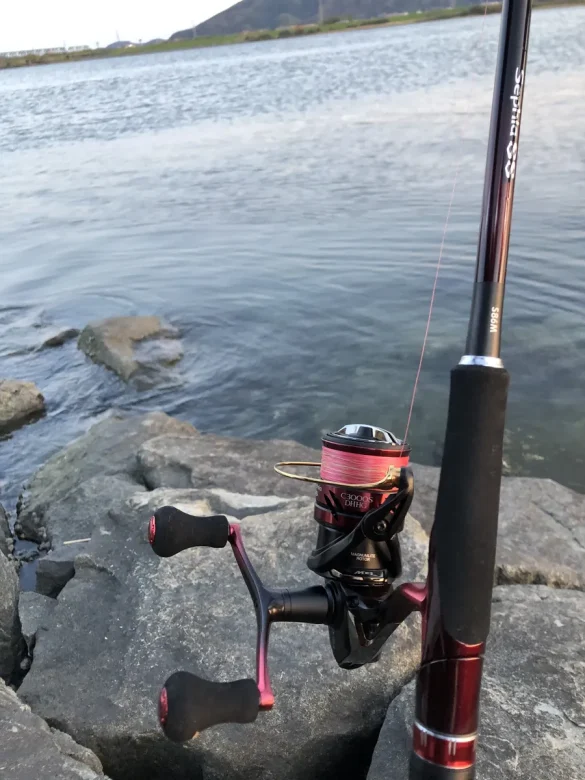
Japan Post publishes separate limits for each destination, and Australia’s are shorter than most.
| Japan Post to Australia | Maximum length | Length + girth | Maximum weight |
|---|---|---|---|
| EMS | 1.05 m | 3 m | 20 kg |
| International parcel (air or sea) | 1.05 m | 2 m | 20 kg |
A two-piece rod closes to a little over half its length. The median in our database is 52%, so a 9’6″ rod comes out around 1.5 m. Once you need the rod to close to 1.05 m, the longest two-piece left in the database is 2.03 m (6’8″), and what fits is almost all trout, light-game, bass and boat rods. One-piece rods don’t fit at all. For a beach or rock rod, the post only works if it’s a three-, four- or five-piece, and the box needs a few centimetres on top of the rod’s own closed length.
Daiwa’s Japanese lineup makes the choice easy to see, because several series sell the same model in two builds.
| Model | Length | Pieces | Closed | Weight | JDM RRP (excl. tax) | Fits 1.05 m? |
|---|---|---|---|---|---|---|
| Daiwa Lateo 96M・K | 2.90 m | 2 | 149 cm | 147 g | ¥32,500 (~A$285) | No |
| Daiwa Lateo 96M-4・K | 2.90 m | 4 | 78 cm | 151 g | ¥37,000 (~A$325) | Yes |
| Daiwa Overthere 109ML/M・K | 3.28 m | 2 | 168 cm | 175 g | ¥30,500 (~A$268) | No |
| Daiwa Overthere 109ML/M-4・K | 3.28 m | 4 | 88 cm | 187 g | ¥36,000 (~A$316) | Yes |
| Daiwa Dragger SX 100H | 3.05 m | 2 | 157 cm | 358 g | ¥57,500 (~A$504) | No |
| Daiwa Dragger SX 98H-3 | 2.95 m | 3 | 105 cm | 360 g | ¥63,000 (~A$553) | No, the rod alone is 105 cm |
The four-piece versions cost ¥4,500 to ¥5,500 more (about A$39 to A$48) and weigh 4 to 12 g more. The Lateo pair is the cleanest comparison: same 2.90 m, same 10 to 50 g lure rating, same PE 0.8 to 2.0, and 78 cm against 149 cm when broken down. The Dragger SX shows the trap on the other side. Its three-piece spinning models close to 103 to 105 cm, which reads like a pass until you remember the box. The 98H-3 carries the same 100 g plug and 130 g jig rating as the 100H, 10 cm shorter, and it still ends up with a courier.
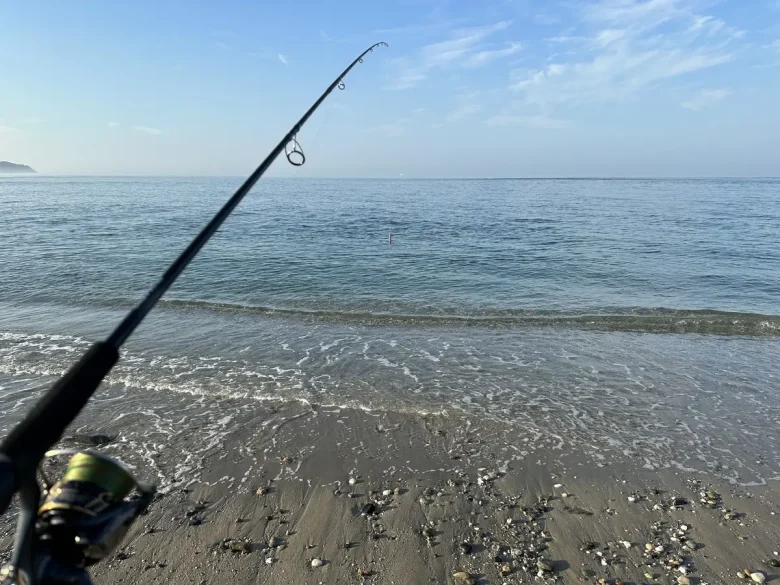
Couriers will take the long box, and they bill it by size. DHL Express charges on whichever is higher of the actual weight and the volumetric weight, which is length times width times height in centimetres, divided by 5,000. A 155 × 10 × 10 cm box for the two-piece Lateo counts as 3.1 kg, with a 147 g rod inside it. ZenMarket also notes that a rod and a reel can’t always be packed together, so the two go out as separate parcels with separate shipping charges. If you’re weighing a two-piece against a multi-piece, get the courier quote before you decide the ¥4,500 is the expensive part.
A heavier kingfish rod is a different call, because the action and power matter more than the box. Our JDM shore jigging rod guide covers those, and the Lateo range as an Australian mulloway rod is in our JDM rods and reels for mulloway.
For a new item that Amazon Japan lists and will ship abroad, start there. A proxy adds its own costs before your reel leaves the warehouse, and on a single purchase all of them land on one item.
| Added by a proxy, one boxed reel | JPY | Approx. AUD |
|---|---|---|
| Service fee (Buyee per order; ZenMarket per item, ¥800 on Mercari and Yahoo! Auctions) | ¥500-800 | A$4-7 |
| Seller to proxy warehouse, inside Japan | ¥150-1,500 | A$1-13 |
| EMS to Australia, packed weight up to 1 kg | ¥4,400 | A$39 |
| Total before GST | ¥5,050-6,700 | A$44-59 |
GST comes on top of that, and the base is wider than people expect. Japanese shop prices already include Japan’s 10% consumption tax, and Buyee states that the 10% Australian GST it collects is calculated on the item price, its fees, the shipping and the Japanese consumption tax. Amazon Japan shows its shipping charge at checkout, and GST applies on that side too. So the proxy only wins if the Japanese shop is cheaper than Amazon Japan by more than about ¥5,000 to ¥6,700, minus whatever Amazon charges to ship.
The proxy starts to earn its fees in three situations. The first is a model Amazon Japan doesn’t list, or a listing that won’t ship abroad. The second is buying more than one thing: EMS to Australia is ¥4,400 up to 1 kg and ¥6,700 up to 2 kg, so the second kilo costs ¥2,300 (about A$20). A reel and a few packets of jigs in one box share the fees and the first kilo. The third is used gear, which Amazon doesn’t cover at all.
For a rod, the length decides before the price does. A four-piece in its box goes EMS like a reel, somewhere in the ¥5,550 (1.5 kg) to ¥6,700 (2 kg) brackets depending on packing. A two-piece goes by courier from a proxy, and the volumetric weight above is what you’ll be quoted on.
Keep an eye on the A$1,000 line when you combine things. A parcel valued over A$1,000 gets a First Notice from Australia Post, then an import declaration, any duty and taxes and an import processing charge, and it isn’t delivered until those are paid. The Australian Border Force won’t split one parcel into separate items for the assessment. Two high-end spinning reels in one box can cross it on their own.
This is the one case where a proxy has no competition. We buy used reels on Yahoo! Auctions ourselves, here in Japan, and the listings that turned out well were nearly always the ones where the seller had written that the reel had seen little use: 使用回数が少ない (used only a few times) or 使用年数が少ない (only a short time in service). Put either phrase through a translator and search for it in the listing text. A good seller rating is what gets a listing onto our shortlist, but on its own it isn’t enough to make us bid.
Marks are the other thing people worry about from the other side of the world. We’ve had a reel turn up with scratches the photos didn’t show, and it made no difference once it was on a rod. A reel picks up scratches soon enough anyway, so they’re not a big deal. Sand and weed are what we’d chase with questions before bidding from Australia, because those are what DAFF looks at.
No, and both distributors spell it out. Daiwa Australia covers its rods for one year from purchase for the original owner, and its warranty excludes products bought from non-approved stockists or bought overseas. Shimano Australia gives ten years on all its fishing reels and one year on everything else, rods included, but only on products bought in Australia from Shimano Australia or a dealer it has authorised, with proof of purchase.
On a rod, importing costs you a year of cover, and that year has limits even when you buy locally: Daiwa Australia doesn’t cover a rod broken by line heavier than its rating or a cast heavier than its rated weight. On a Shimano reel you give up ten years, which is a much bigger trade. The reel-by-reel version of that sum, per year of cover, is in our JDM vs Australian reel comparison.
Used gear has no warranty from anyone. Many Yahoo! Auctions listings say ノークレーム・ノーリターン (no claims, no returns) outright, which is one more reason to ask the questions before the bid rather than after.
| What you’re buying | Japan Post to Australia? | Usually cheapest route | Biosecurity | Local warranty |
|---|---|---|---|---|
| New reel, listed on Amazon Japan with international shipping | Yes | Amazon Japan direct | Sealed and new, low risk | None from Daiwa or Shimano Australia |
| Used reel from Yahoo! Auctions or Mercari | Yes | Proxy, the only option | Ask about sand, salt and old line first | None |
| Rod closing well under 1.05 m (3 to 5 pieces, short boat rods) | Yes, EMS or parcel post | Compare Amazon Japan and proxy totals | Reel seat and grip if used | None; one year given up if sold locally |
| Two-piece shore, surf or eging rod, or any one-piece | No | Courier, priced by volumetric weight | Rod bag and reel seat if used | None; one year given up if sold locally |
| Bulk lot of used lures or egi | Yes | Proxy | Highest risk: weed on hooks, grit in egi cloth | None |
Top pick for the post: Daiwa Lateo 96M-4・K
¥37,000, about A$325. It closes to 78 cm, so it sits inside the 1.05 m limit with room for a proper tube, and it gives up only 4 g to the two-piece 96M. Daiwa pitches it for heavy lures cast long, from sea bass to flatfish and light shore jigging, at 10 to 50 g on PE 0.8 to 2.0.
Budget pick: Daiwa Overthere 109ML/M-4・K
¥36,000, about A$316, the lowest price of the rods above that fit. At 3.28 m it’s also the longest, and it still closes to 88 cm. It’s a surf rod rated for 7 to 45 g plugs and 7 to 50 g jigs, a lighter job than the Lateo.
If you haven’t settled on the fishing yet, pick the method before the rod. Our shore jigging guide for Australia goes through what a first outfit needs, and once you know the rod, the closed length on its spec sheet tells you how it’ll travel.