Metal Jig Weight & Colour Selection for Australian Conditions
ちゃんま
マイボ!

If you want one land-based fishing style to learn first, make it shore jigging: hurl a metal jig as far as you can, wind it back fast, and feel a fish smash it on the run. It’s one of the most accessible ways to tangle with hard-fighting pelagics straight off the rocks, the beach, or a breakwall, no boat, no charter, just you, a rod, and a pocket of metal jigs.
The fastest way in is a 9 to 10 foot rod matched to a 4000 to 5000 spinning reel, braid to a fluorocarbon leader, and a handful of jigs from 30 to 60 grams, a kit spelled out in full just below. Everything after that, the fish you’ll actually catch, the full gear breakdown, how to work the jig, where to cast, and how to stay safe, fills in the reasoning behind each choice.
The technique was refined in Japan, where casting metal jigs from the shore (ショアジギング, “shore jigging”) grew into a huge scene with its own dedicated rods, reels, and jigs. A lot of that Japanese gear travels beautifully to Australian conditions, where salmon, tailor, bonito, and kingfish are all fair game from the stones. Where you’ll want a deeper dive, like ranked reels or rod picks, I’ll point you to a dedicated guide along the way.
Here’s the no-fuss starting kit: a 9 to 10 foot rod rated around 20 to 60 grams, a 4000 to 5000 size spinning reel with a strong sealed drag, PE 2.0 braid, three or four rod-lengths of 30 to 40 lb fluorocarbon leader joined with an FG knot, and jigs in 30, 40, and 60 grams in silver and blue-pink. That kit handles salmon, tailor, and bonito comfortably and gives you a real shot at a kingfish.
Plenty of capable global gear fits this brief, and many of the best dedicated rods, reels, and jigs are Japanese models. JDM-only items ship internationally from Amazon Japan, so check availability and shipping cost at checkout. Orders over A$59 may qualify for free international delivery.
In Japan, shore jigging is one of the first saltwater lure styles a lot of anglers learn, and the lessons carry across to Australian waters surprisingly well. The biggest one: time on the rocks beats any single piece of gear. The anglers who do well aren’t the ones with the priciest reel, they’re the ones who turn up at first light, read the water, and keep a jig in the strike zone. Get the casting and the FG knot dialled, fish safe spots in good conditions, and the fish will come.
Shore jigging means casting a metal jig from land and working it through the water column to imitate a fleeing or wounded baitfish. The jig does the heavy lifting: it’s dense, so it casts a mile, sinks fast, and flashes like a panicked baitfish when you rip it back. Predators that hunt by sight and speed find that very hard to ignore.
In Japan the style splits into weight classes. Heavy shore jigging throws 60 to 100 gram jigs at big amberjack, while light shore jigging (LSJ) uses 20 to 40 gram jigs on lighter tackle for smaller, more numerous fish. For a beginner in Australia, that lighter-to-medium range is the sweet spot. It casts well, it’s comfortable to fish all day, and it covers the species most of us actually catch from the shore.
The appeal is that it’s active and visual. You’re casting, retrieving, and covering water rather than waiting on a bait. When a school of salmon or tailor moves through, a jig lets you reach them and get bites fast. It’s also cheap to get into compared with most lure styles, because a handful of jigs and one good rod-and-reel combo will keep you fishing for years.
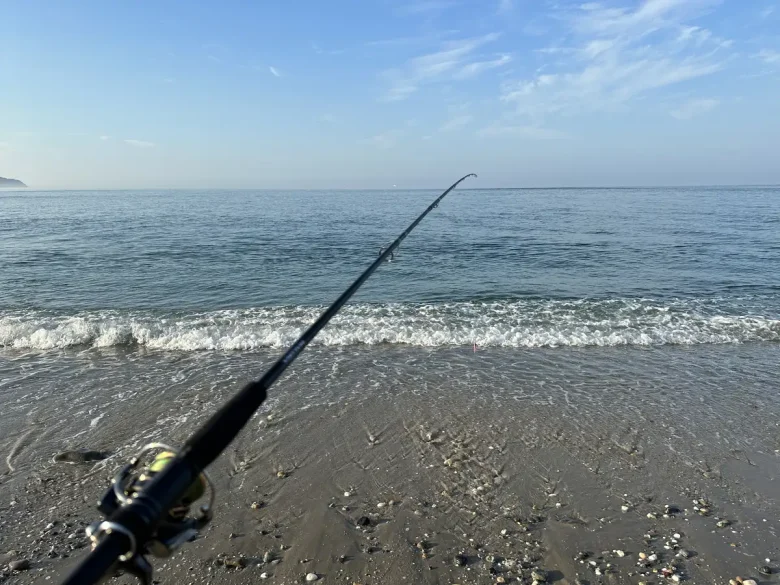
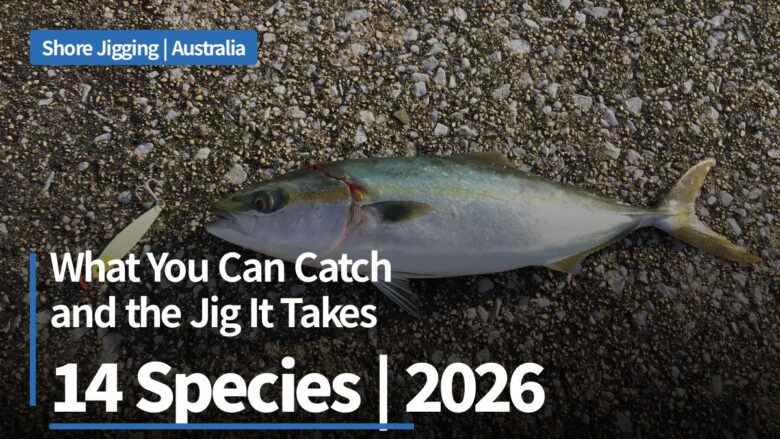
The headline targets around the Australian coast are the fast, schooling predators that chase baitfish into casting range. Australian salmon (Arripis trutta) are the classic beginner’s fish: hard-pulling, widespread along the southern coast, and often feeding in big surface schools. Tailor (Pomatomus saltatrix) are aggressive, toothy, and love a fast-moving jig. Bonito and small tuna show up in the warmer months and pull well above their weight.
Then there’s the fish that keeps everyone coming back: the yellowtail kingfish (Seriola lalandi). Kingies hold around rock ledges, breakwalls, and harbour structure, and a well-worked jig is one of the best ways to tempt one from the shore. They’re a big step up in power, so if kings are on your list you’ll want to lean toward the heavier end of the gear. Just know going in: a hooked kingfish near the rocks will test every knot and every drag setting you own.
Bag limits, size limits, and closed seasons for these species vary from state to state, and some spots have extra rules. Before you keep anything, check your local fisheries regulations for where you’re fishing.
You don’t need a garage full of tackle to start. One balanced combo, a spool of braid, some leader, and a small jig collection covers it. Here’s what each piece does and how to choose it, now that you’ve seen the quick-start version above.
A shore jigging rod is long, so you can cast a long way and steer fish away from the rocks. For a versatile first rod, look at something around 9 to 10 feet rated for jigs in the 20 to 60 gram range. That covers light and medium work and handles everything from salmon to a modest kingfish. A faster action helps you flick the jig and drive a hookset, while the length and butt give you leverage in a fight.
Japanese makers build excellent dedicated blanks for this, and many import cleanly to Australia. If you want to compare specific models and power ratings, our guide to the best JDM shore jigging rods breaks down the options by target fish and budget.
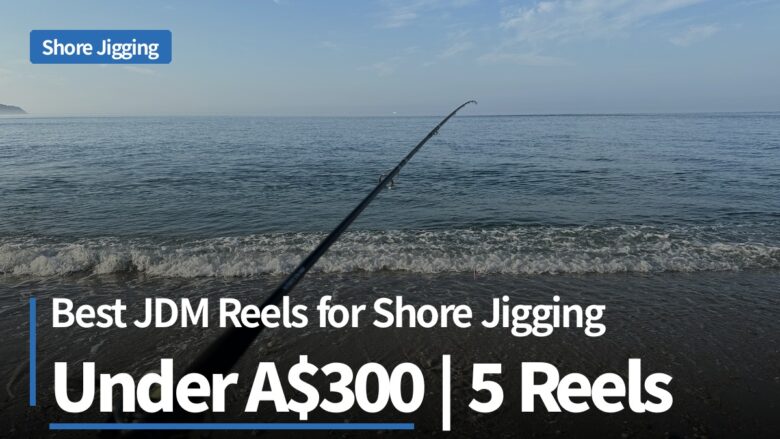
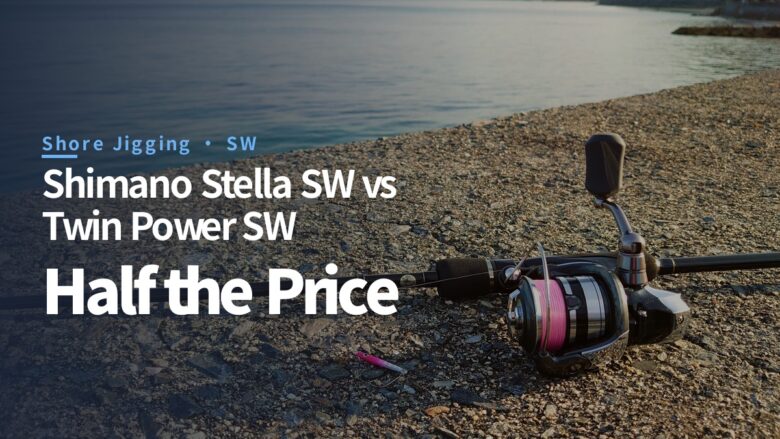
Match the rod with a saltwater spinning reel in the 4000 to 5000 size. That range balances a long rod nicely, holds enough braid for a screaming run, and has the drag to slow a hot fish. Look for a sealed, corrosion-resistant body, because shore jigging soaks your gear in spray and the odd wave. A smooth, strong drag matters more than raw speed for a beginner.
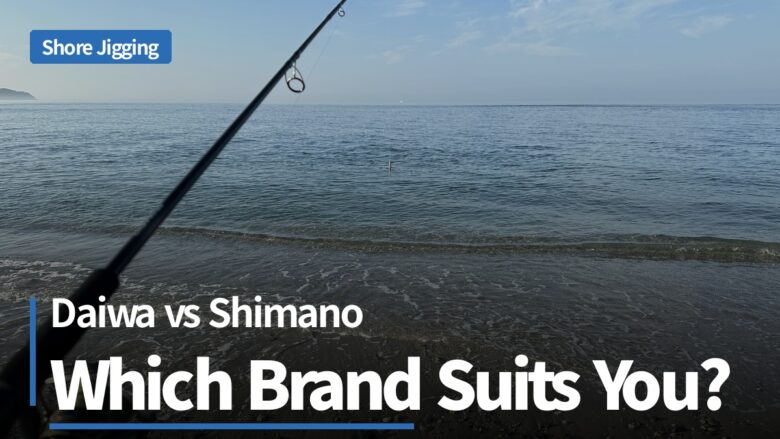
If kingfish are a real possibility at your spot, lean to the 5000 size with a heavier drag rating. For a full rundown of Daiwa and Shimano options across price points, see our best JDM spinning reels for shore jigging, and if you’re torn between the two brands, Daiwa vs Shimano for shore jigging lays out how each one approaches it.
Braid is non-negotiable for shore jigging. It’s thin, has almost no stretch, and lets you cast far and feel everything. PE 1.5 to 2.0 (roughly 20 to 30 lb) is a solid all-round choice for salmon, tailor, and bonito; step up to PE 3 or heavier if you’re chasing kingfish around structure. To the braid, add a few rod-lengths of fluorocarbon leader, around 30 to 40 lb, joined with an FG knot. The leader takes the abrasion against rocks and the punishment from toothy fish.
That FG knot is worth practising at home before you go. It’s slim enough to shoot through the guides on a cast and strong enough to trust on a big fish. Tie a few until it’s second nature, and your shore jigging will get a lot less frustrating.
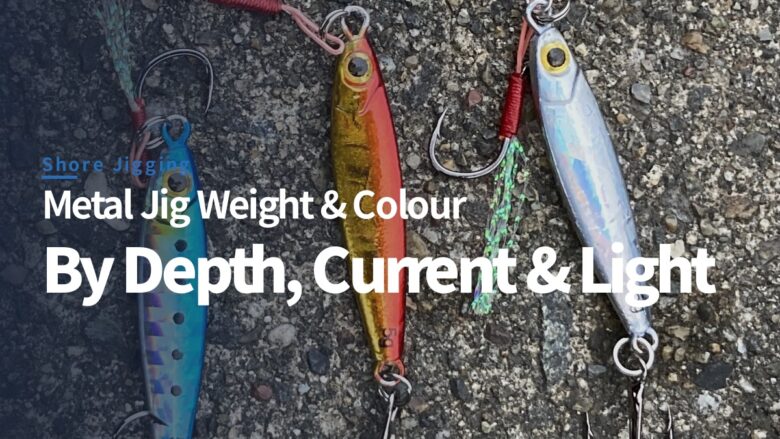
Jigs are where shore jigging lives. Start with a small spread covering 30, 40, and 60 grams so you can match conditions and casting distance. Long, slim “knife” jigs cast furthest and suit clean water and salmon. Wider, more compact jigs flutter more on the drop and work well when fish want a slower fall. Silver and blue-pink are reliable starting colours; add a darker pattern for low light.
Japanese jigs have a strong reputation for casting and action, and several import-friendly ranges are easy to find. We rank the standouts in our guide to the best Japanese metal jigs for shore jigging in Australia. One tip for tailor: their teeth shred assist cords and light leaders, so carry spares and check your rig often.
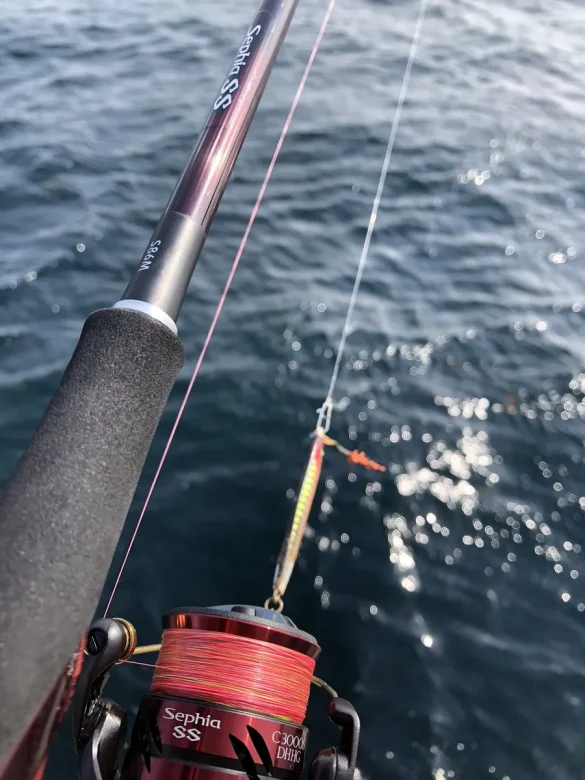
The good news for beginners is that a fast, steady retrieve catches a lot of fish. The rest is refinement. Here are the three retrieves to learn first.
High-speed wind: Cast as far as you can, let the jig sink a few seconds, then wind back fast and steady while gently pumping the rod tip. The jig darts and flashes near the surface. This is deadly on salmon and tailor schools, and it’s the easiest retrieve to get right on day one.
Jig and flutter: Let the jig sink toward the bottom, then sweep the rod up and wind down as you lower it, letting the jig flutter back on a semi-slack line. A lot of strikes come on that flutter, so stay alert as the jig falls. This covers deeper water and tempts fish that won’t chase a fast jig.
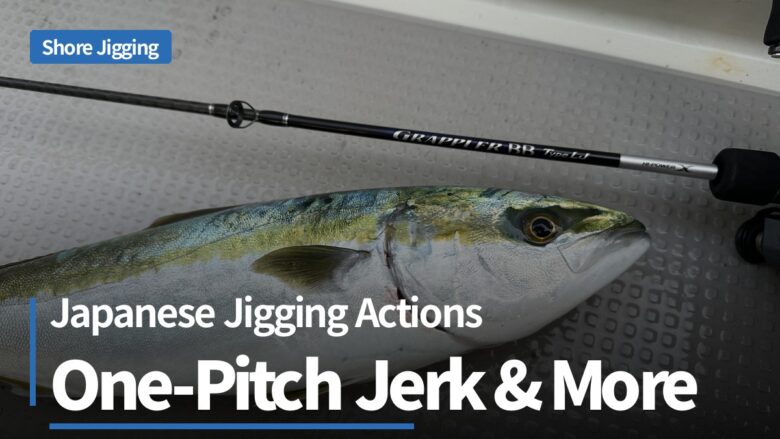
One-pitch jerk: The Japanese staple. One sharp lift of the rod for every single turn of the reel handle, in a steady rhythm. It makes the jig hop and flutter over and over, and it’s a great searching retrieve when you don’t know where in the column the fish are sitting. Vary your speed until something responds, then repeat what worked.
When a fish hits, keep winding and let the rod load before you lean into it, then keep steady pressure and let the drag do its job. Don’t high-stick the rod or pump too hard near the rocks, or you’ll pull the hook or get cut off. Land fish on a wave where you can, and never put yourself in a dangerous spot to grab one.
Shore jigging works anywhere baitfish gather within casting range and predators come looking for them. Rocky headlands and ledges, ocean breakwalls and moles, deep beaches and gutters, and harbour structure are all worth a cast. Look for current lines, white water, bait flicking on the surface, and birds working: those are the signs fish are about.
By region, the southern states produce reliable salmon along surf beaches and rock platforms, with Victoria, Tasmania, and South Australia all strong through the cooler months. New South Wales offers a bit of everything around Sydney, from harbour kingfish to salmon and tailor on the open coast. Queensland’s headlands and seaways fire up for tailor and pelagics in the warmer half of the year, and Western Australia’s rock walls and groynes around Perth hold tailor and the odd kingfish. Dawn and dusk are prime, and a bit of moving water and swell usually beats a flat, dead tide.
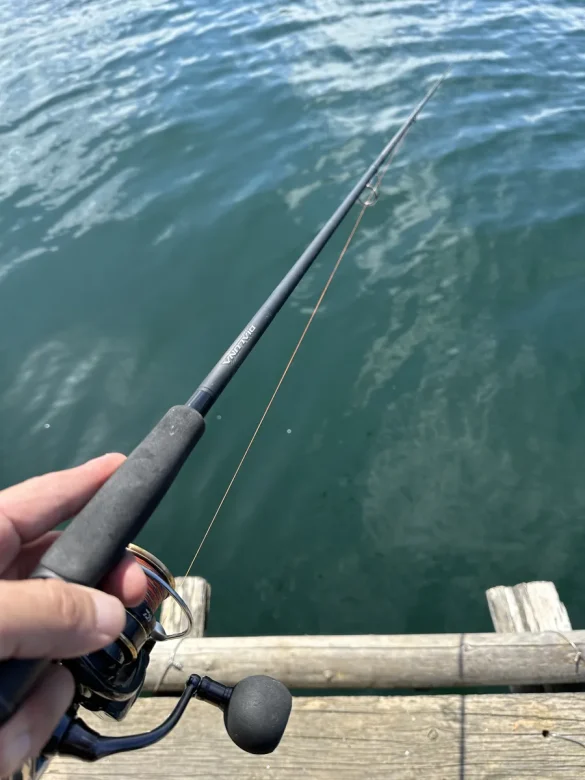
This part matters more than any tackle choice. Rock fishing claims lives in Australia every year, and shore jigging often puts you on exposed ledges with your attention on the cast instead of the sea. Never turn your back on the water. Watch the swell for at least ten minutes before you commit to a spot, and pick a ledge that sits well above the wash with an easy escape route behind you.
Wear a life jacket and appropriate footwear, fish with a mate, and tell someone where you’re going and when you’ll be back. In several parts of New South Wales a life jacket is a legal requirement for rock fishing, so check the rules where you are. If the swell is up or a spot feels wrong, walk away. A breakwall, jetty, or sheltered beach is a far better place to learn than a washy ocean ledge, and the fish are just as catchable.
Shore jigging is about as much fun as land-based fishing gets: cheap to start, active to fish, and capable of serious pulls from salmon, tailor, bonito, and kingfish. Grab the setup above, learn the three retrieves, respect the ocean, and you’ve got a style that’ll reward you for years. Prices shown in JPY (tax excluded) with approximate AUD conversion at the time of writing.
Ready to go deeper? These guides cover each part of the setup in detail: