Shimano Stella SW vs Twin Power SW: Which One for Aussie Shore Jigging?
ちゃんま
マイボ!

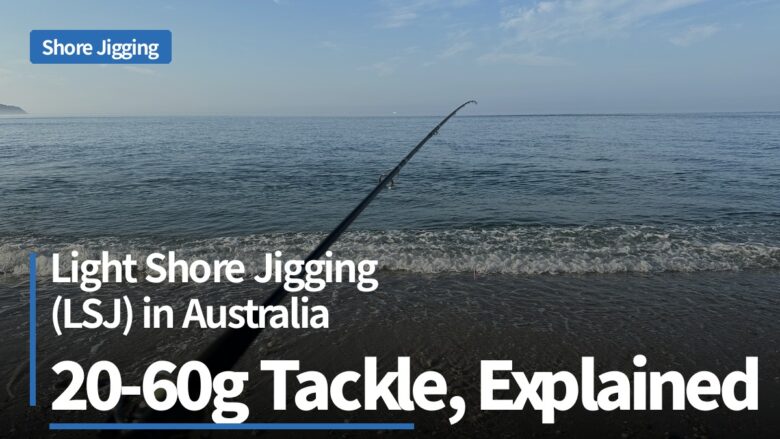
There’s a moment most shore anglers know well. Bait is flicking at the surface off the rocks or along a beach gutter, something is clearly feeding under it, and the 60 or 80 gram slug on the end of your line is either too big to get bitten or too heavy to fish all day. Light shore jigging, or LSJ, is the answer to that moment. It sits between the finesse micro-jig game and full-blown heavy shore jigging, and for a huge slice of Australian shore fishing it’s the most enjoyable, most productive way to throw metal.
LSJ is a Japanese idea at heart. Anglers there built a whole category around casting lighter, more castable metals on balanced tackle to chase mid-sized pelagics from breakwalls and beaches, and the approach carries straight across to Australian salmon, tailor, bonito, small kingfish and more. This guide is the technique-focused companion to our shore jigging beginner’s guide for Australia: it defines exactly where the LSJ line falls, sets out the outfit that fishes it, and shows how to work a jig by target. We’ll point you to dedicated gear guides for the buying detail so this one can stay about the fishing.
A note before we start: this is a how-to guide rather than a buyer’s list, so gear is described in general terms and linked out to our dedicated reviews. Australian salmon, tailor, bonito, kingfish, flathead and snapper all carry size and bag limits that differ between states, so always check your local regulations before you keep a fish.
If you just want to get going, here it is. Light shore jigging means casting metal jigs of roughly 20 to 60 grams from the shore, on a rod around 8’6″ to 9’6″ long and braid of about PE 1.0 to 1.5. It’s lighter and far more comfortable than heavy shore jigging, but it still has the reach and backbone to cover water and stop a decent fish. That single weight window is what separates LSJ from everything around it.
To start tomorrow, pair a fast-action 9-foot rod rated to about 60 grams with a 4000-size spinning reel, load PE 1.2 braid and a 20 to 30 lb fluorocarbon leader, and tie on a 40 gram metal jig as your all-round go-to. That combination casts a long way, gets down in most conditions, and handles the great majority of what swims within range of an Australian shore angler. For the reel side of that outfit, our pick of value options is in the best JDM shore jigging reels under A$300, and if you’re brand new to casting metal, start at the beginner’s guide first. Everything below is the detail behind that short answer.
Metal-jig shore fishing is really three overlapping games, and the cleanest way to tell them apart is by jig weight, because that one number drags the rod, the line and the target species along with it. On this site we draw the lines the same way Japanese anglers do, and it’s a genuinely useful split rather than a rulebook.
The reason the 20 to 60 gram window matters so much is that it hits a sweet spot. A 30 to 40 gram jig is small enough to look like real bait yet heavy enough to cast into a breeze and fish deeper gutters, which is exactly where most shore pelagics feed. Go lighter and you lose reach and get bullied by wind and current; go heavier and the fun drains out of an average fish, and fussy schools start to ignore the bigger profile. If you’re mostly chasing big kingfish off deep ledges, LSJ tackle will be undergunned, so step up. For everything else within casting range, this is the band to live in.
| Game | Jig weight | Braid | Typical Australian targets |
|---|---|---|---|
| SLSJ | Under 20 g | PE 0.4 to 0.8 | Bream, whiting, flathead, pinky snapper, small salmon |
| LSJ | 20 to 60 g | PE 1.0 to 1.5 | Salmon, tailor, bonito, school kingfish, bigger flathead |
| Full shore jigging | 60 g and up | PE 2.0 to 4.0 | Large kingfish, tuna, big pelagics off deep rock |
An LSJ outfit is a balancing act. You want enough length and stiffness to cast a 40 gram jig a long way and drive a hook home at distance, without the outfit being so heavy that a two-hour session wrecks your arms. Get the four pieces below matched and the fishing becomes easy.
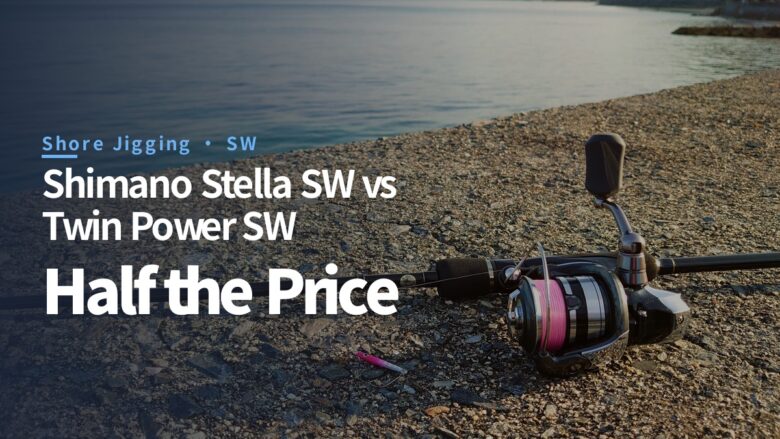
For the rod, look for something around 8’6″ to 9’6″ with a fast action and a cast rating that tops out near 60 grams. A fast tip loads and flicks a light jig well, while a firm lower section gives you the leverage to cast far and control a fish in the wash. Longer rods buy distance and lift line over rocks and gutters; shorter ones are easier to fish from tight ledges and jetties. The reel that balances this is a 4000-size spinning reel, ideally in a high-gear ratio so you can wind a jig quickly and pick up slack fast when a fish eats on the drop.
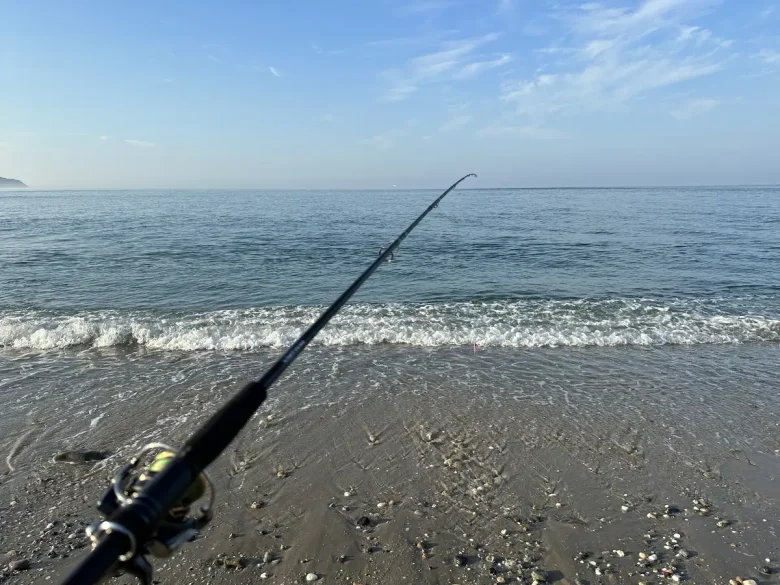
For line, run PE 1.0 to 1.5 braid. It’s thin enough to cast a light jig a mile and low-stretch enough to feel a soft take at range, yet strong enough for the fish LSJ puts in front of you. Finish with a 20 to 30 lb fluorocarbon leader of a rod length or so, stepped up where sharp rocks or toothy tailor demand it. Don’t run mono straight through: the stretch kills your hook-set at distance and the feel of the jig on the drop. If you want the buying detail on reels that suit this class without costing a fortune, our reels under A$300 guide does the legwork.
| Component | LSJ guideline | Why it matters |
|---|---|---|
| Rod | 8’6″ to 9’6″, fast action, to ~60 g | Casts far, loads a light jig, controls fish in the wash |
| Reel | 4000-size spinning, high gear ratio | Fast line pick-up and balance without nose weight |
| Braid | PE 1.0 to 1.5 | Long casts, sensitivity, and enough strength for pelagics |
| Leader | 20 to 30 lb fluorocarbon | Abrasion resistance and low visibility near structure |
The gear only earns its keep if you move the jig well. LSJ is an active technique, and the fish key on a jig that darts and flutters like a panicked baitfish rather than one that swims in a straight line. A handful of retrieves cover almost every situation.
The single biggest mistake is winding at one dull speed. If a retrieve isn’t producing, change something before you change spots: speed up, add sharper jerks, or let the jig sink deeper before you start. Fish also switch on and off with the tide and light, so a spot that’s dead at slack water can come alive on the run-out. Keep moving the jig, keep varying the tempo, and let the takes tell you what the fish want that day.
One of the joys of LSJ is that the same outfit covers a wide spread of fish if you match the jig and retrieve to what you’re chasing. Here’s how the common Australian shore targets break down.
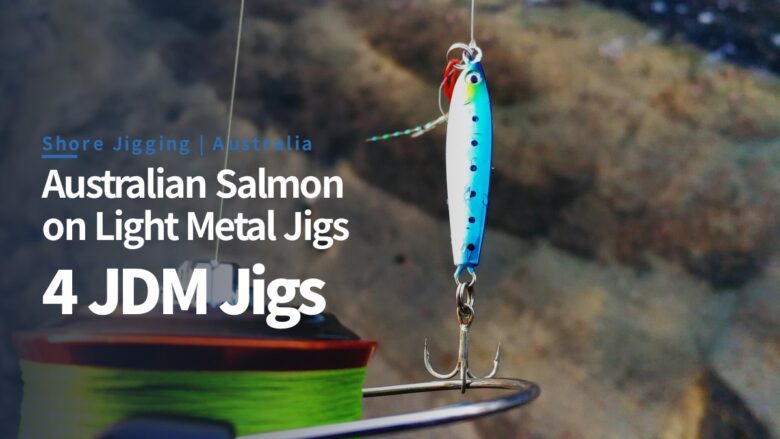
Australian salmon and tailor. Australian salmon (Arripis trutta) and tailor (Pomatomus saltatrix) are the bread and butter of LSJ off beaches, rocks and washes. A 30 to 40 gram jig worked fast and high is the standard approach, and they’ll often chase it right to your feet. For the jig detail, our guide to the best metal jigs for Australian salmon digs into shapes and colours. Tailor have teeth, so lean toward the heavier end of your leader when they’re thick.
Bonito. Australian bonito (Sarda australis) are a fast, fickle target that love a slim jig ripped at speed. When they’re up and busting, a compact 30 to 40 gram metal cast into the school and burned back is hard to beat. They can be leader-shy, so a cleaner, thinner leader often gets more bites.
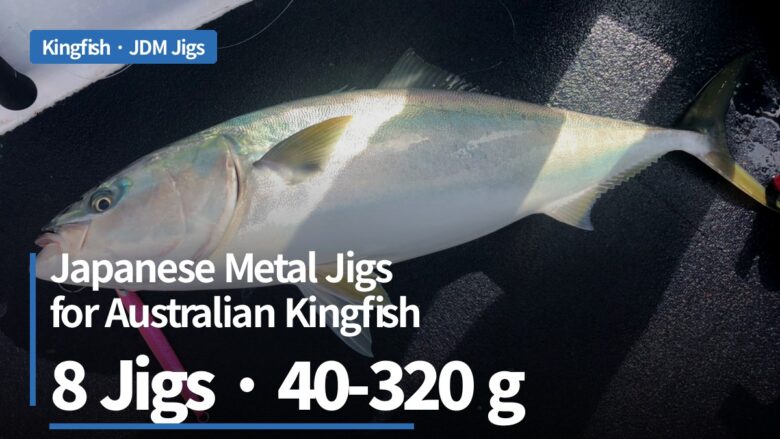
School kingfish. Yellowtail kingfish (Seriola lalandi) are the top of the LSJ tree. Rat and school-sized kings are well within range of 40 to 60 gram jigs and the lift-and-flutter retrieve, especially around wash, current lines and structure. A better king will test light tackle to its limit, so step up your leader and be ready to lock up and steer it away from the rocks. If the fish are consistently big, that’s your cue to move up to heavier shore jigging gear.
Flathead and trevally over sand. Dusky flathead (Platycephalus spp.) and silver trevally (Pseudocaranx georgianus) hold near the bottom over sand and in gutters. Drop a 20 to 30 gram jig, then hop it back with short lifts and long pauses, keeping it close to the deck where these fish feed. It’s a slower, more deliberate game than chasing surface pelagics, and a great way to bend the rod on a quiet day.
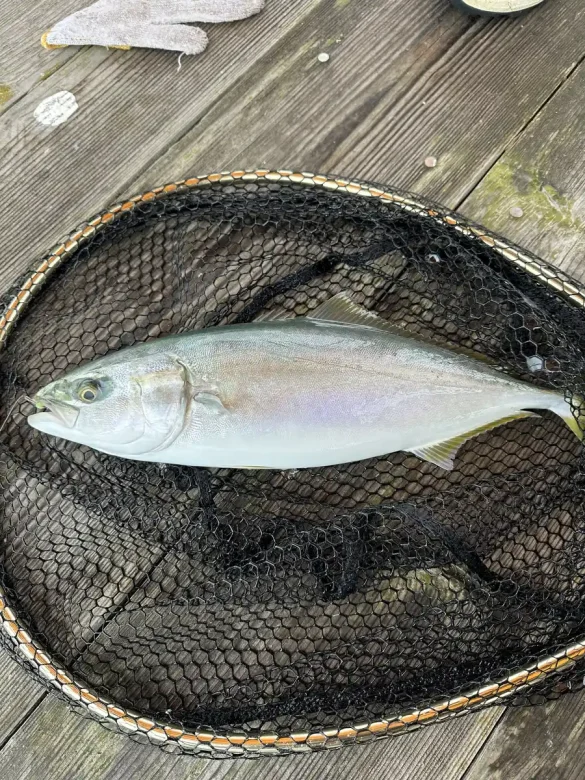
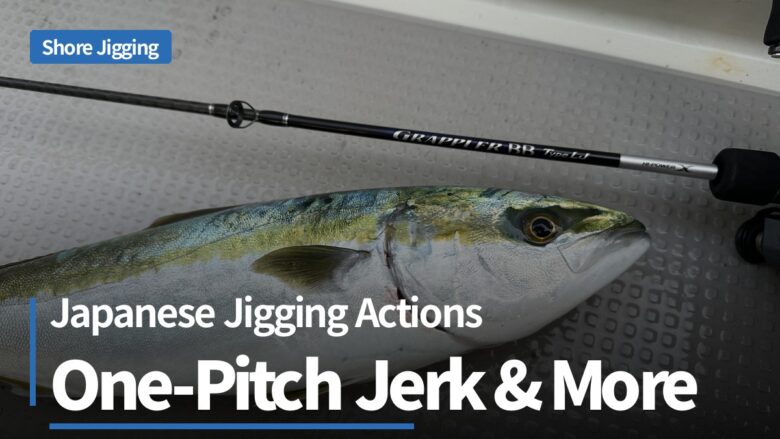
Salmon and tailor don’t swim in our home waters, but the LSJ situation is identical. On the breakwalls and open beaches around Osaka Bay we throw the same 30 to 40 gram jigs at hamachi (young yellowtail), sagoshi (juvenile Spanish mackerel) and mackerel that herd baitfish against the structure, and the habits carry straight over to Australian rocks and gutters.
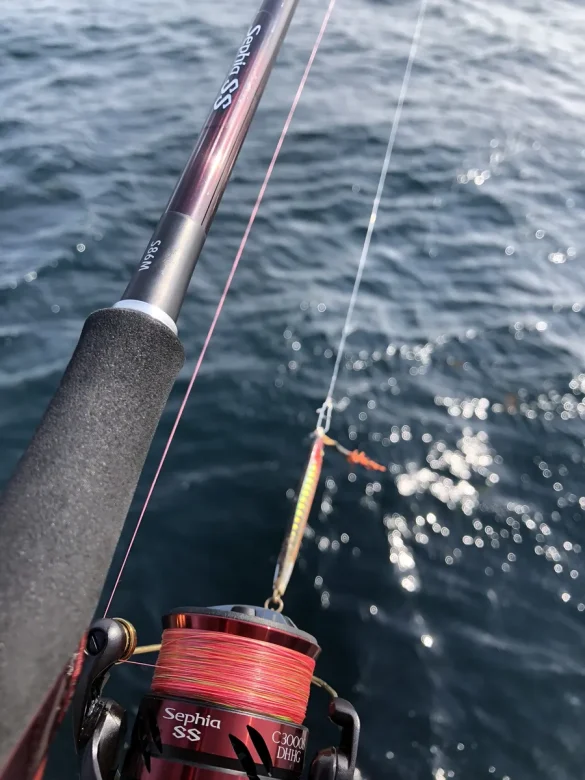
Three things we’ve learned matter most, and none of them are Australia-specific. First, we cover water: LSJ rewards casting, so fan out across a spot and keep the jig moving rather than waiting on one line. Second, we fish first light and the hardest of the tide changes, because that’s when pelagics push bait against the shore. Third, we carry a small range of weights, a 30, a 40 and a 50 gram, so we can match the wind and depth without ever being underweight. Get those habits right and the specific jig on the end matters a lot less than most anglers think.
The questions we get asked most about getting into light shore jigging.
A 40 gram jig is the best all-round starting weight for Australian shore anglers. It casts well, gets down in most conditions and suits a typical LSJ rod. Add a 30 gram for calm days and a 50 or 60 gram for wind and depth once you’ve found your feet.
Weight, mostly. LSJ runs 20 to 60 gram jigs for salmon, tailor, bonito and school kings; super light shore jigging (SLSJ) uses jigs under 20 grams on much lighter tackle for bream, whiting and other estuary fish. Our SLSJ guide covers the finesse end.
No. Any sealed, smooth 4000-size saltwater spinning reel with a decent drag will do the job. JDM reels are popular because they pack a lot of quality into the weight and price, which is why we round up the value picks in our reels under A$300 guide.
Yes, rat and school kingfish are a realistic LSJ target on 40 to 60 gram jigs and a beefed-up leader. Genuinely big kings off deep rock are a different job that calls for heavier shore jigging tackle, so read the water and the size of the fish and step up when you need to.
Light shore jigging is the most versatile way to throw metal from the Australian shore. Stay in the 20 to 60 gram window, build a balanced 9-foot outfit around a 4000 reel and PE 1.2 braid, keep the jig moving, and you can cover salmon, tailor, bonito, school kingfish and flathead with one kit. Start with a 40 gram jig, learn to read the water, and let the fish fine-tune the rest.
When you want to go smaller and finesse pressured fish, drop down to our super light shore jigging (SLSJ) guide. For the metal itself, browse the Japanese metal jig round-up and our salmon jig guide. New to it all? Begin at the shore jigging beginner’s guide, or see all of our Australia fishing guides.
Species facts in this article are drawn from Australian state fisheries information, and the gear guidance reflects widely used light shore jigging practice rather than any single product’s specifications. Size and bag limits differ between states, so always check your local regulations before keeping a fish.