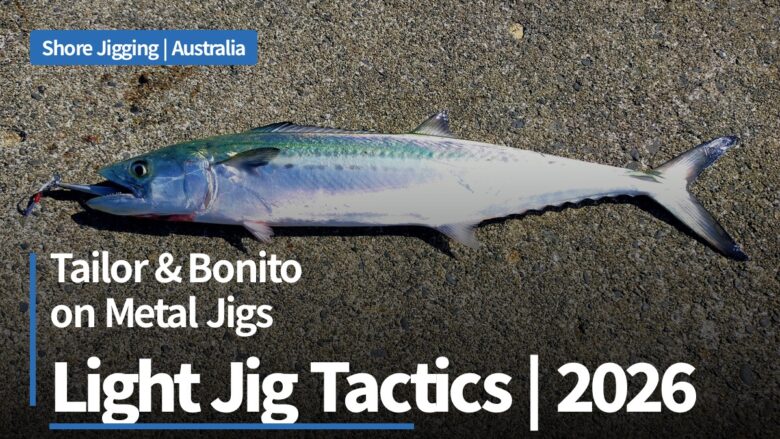
Tailor & Bonito on Metal Jigs: Light Jig Tactics for AU Pelagics
ちゃんま
マイボ!


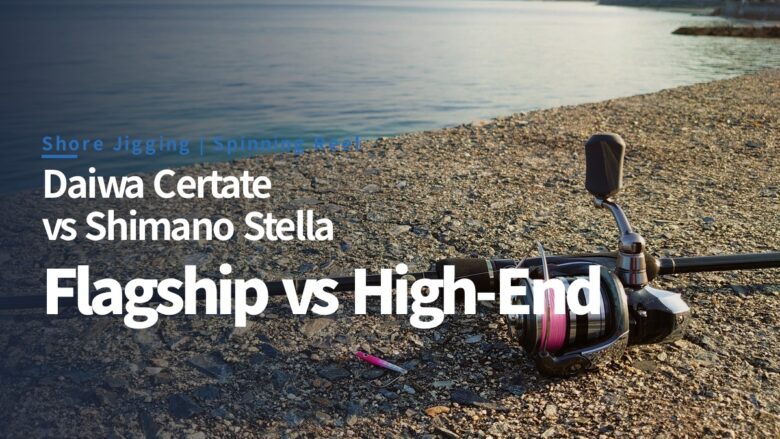
Daiwa or Shimano for shore jigging? It’s the question every Australian angler hits the moment they’re ready to spend real money on a reel and rod that’ll take a hammering in the salt. Both brands are Japanese, both are brilliant, and both will land you kingfish, tuna, and salmon off the rocks for years, so the honest question was never “which is better” but which brand suits the way you fish. This guide answers it the way anglers actually ask it: one real question at a time.
Shore jigging (ショアジギング) is the Japanese style of casting and working metal jigs from rocks, breakwalls, and beaches for aomono (青物, the jacks and amberjacks) and other hard-pulling fish. In Australia that means yellowtail kingfish (Seriola lalandi), tuna, salmon, and tailor. It’s tough on gear: big casts, long fights, and constant saltwater. Both brands have spent decades building tackle for exactly this, and they’ve arrived at the same goal by slightly different roads.
One thing to set expectations first: this is a brand-level guide, so for the deep, model-by-model spec breakdowns you’ll want our dedicated guides to JDM spinning reels for shore jigging, JDM shore jigging rods, and Japanese metal jigs. The job here is narrower and more useful up front: helping you pick a side.
A note on links and pricing: many flagship models are sold globally, so those buy links point to Amazon US (which ships to Australia). JDM-only models link to Amazon Japan, which also ships internationally; check availability and cost at checkout. Tier positions are general guidance, not live prices, so always check current pricing before you buy.
Yes, though it’s a difference of philosophy rather than quality. The fastest way to see it is to line up each brand’s signature technologies side by side. These are the engineering ideas each brand keeps coming back to, and they explain why the two feel so different in the hand.
| Area | Daiwa | Shimano |
|---|---|---|
| Body | Monocoque (MQ): a one-piece frame that fits a larger, stronger drive gear | HAGANE Body: a rigid metal frame that resists flex for a planted feel |
| Waterproofing | Magsealed: a magnetic oil seals the bearings against salt and grit | X-Protect: a water-repellent labyrinth guards the gear bearings without adding drag |
| Drag | ATD: an automatic drag that starts smoothly and follows the fish’s pull | Cross Carbon / heat-sink drags tuned for smooth, fade-resistant pressure |
| Winding feel | HyperDrive / Tough Digigear: durable gearing that holds smoothness over time | Infinity Drive + MicroModule Gear II: low-effort, silky retrieve under load |
| Overall character | Light, sealed, gadget-forward | Rigid, smooth, planted |
Read down that table and the personalities jump out. Daiwa keeps inventing ways to seal and lighten; Shimano keeps refining rigidity and smoothness. Neither is wrong. They’re just two answers to the same brief, and the right one depends on what you value in your hand.
Daiwa’s design language is built around its LT concept, short for Light and Tough, and you feel it the moment you pick up one of their reels. Daiwa chases low weight and gadget-forward engineering. Their signature Magsealed system uses a magnetic oil to seal the bearings against salt and grit, the Monocoque body fits an oversized drive gear into a one-piece frame, and ATD (Automatic Tournament Drag) is tuned to start smoothly and stay smooth under a screaming kingfish run. If you like feeling that you’ve got the cleverest, lightest tool on the rocks, Daiwa speaks your language.
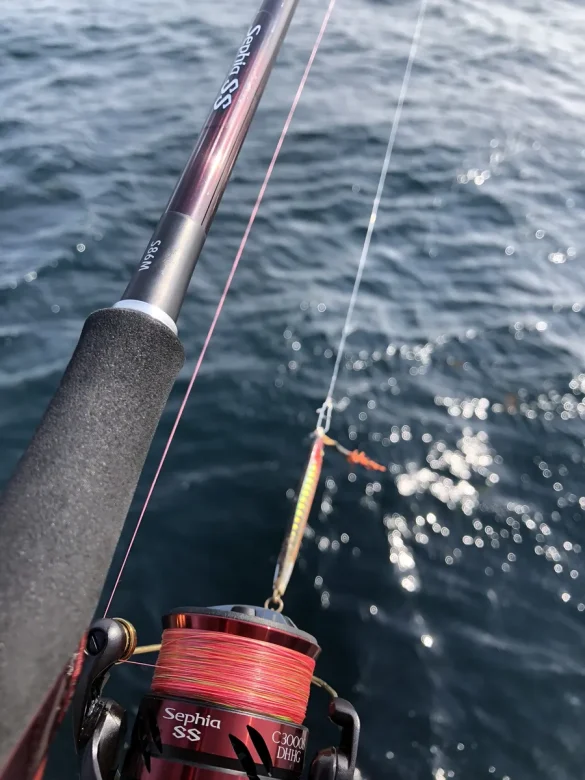
For Australian shore jigging, Daiwa’s saltwater spinning ladder runs from the wallet-friendly BG SW, a long-time favourite for its bulletproof value, up through the Certate SW to the flagship Saltiga, which is about as serious a shore jigging reel as exists. On the rod side, the Daiwa Dragger family covers the casting-and-jigging job. The one knock some anglers raise is that Daiwa’s lightweight, tech-dense builds can feel less reassuringly solid than Shimano’s metal-bodied reels, though in practice the SW models are built to take a beating.
Shimano comes at the same problem from the opposite direction. Their headline is the HAGANE Body, a high-rigidity metal frame that refuses to flex under load, and the whole brand identity is built on that rock-solid, planted feel. Add Infinity Drive for low-effort winding under heavy load, X-Protect water resistance, and the silky MicroModule Gear II in the upper models, and Shimano reels feel like they’re carved from one piece. Where Daiwa sells you clever and light, Shimano sells you stiff and smooth. For grinding a big kingfish away from the rocks, that planted feel inspires real confidence.
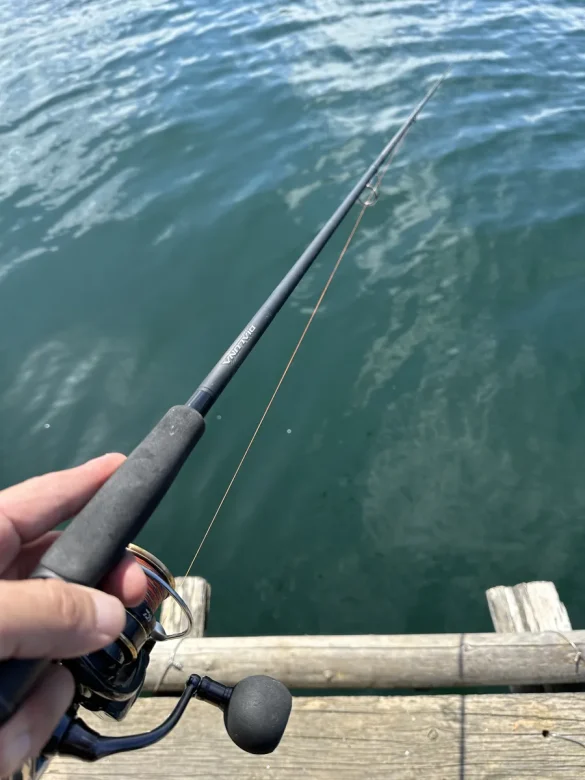
Shimano’s saltwater spinning ladder mirrors Daiwa’s, from the value Spheros SW, a staple for budget-minded AU shore jiggers, through the Stradic SW and Twin Power SW to the flagship Stella SW. Rods come from the Coltsniper family, which is everywhere on Australian rocks for good reason. The honest counterpoint to all that metal is weight: Shimano’s rigid bodies can run a touch heavier than the equivalent Daiwa, which you notice after a few hundred casts.
Both brands build a near-parallel ladder of saltwater spinning reels, so it’s easy to compare like for like by tier. Here’s how the shore jigging-relevant models match up. For the full size-by-size spec breakdown and our picks, see the dedicated JDM spinning reels for shore jigging guide.
| Tier | Daiwa | Shimano | Best for |
|---|---|---|---|
| Flagship | Saltiga | Stella SW | Serious anglers chasing big kingfish and tuna |
| High-end | Certate SW | Twin Power SW | Most of the flagship toughness for less money |
| Mid | Caldia SW | Stradic SW | The value sweet spot for regular shore jiggers |
| Entry / value | BG SW | Spheros SW | First saltwater reel or a no-fuss workhorse |
The pattern to notice: at every tier the two are remarkably close on real-world performance. The Caldia SW and Stradic SW, for instance, are both the reel most regular shore jiggers should actually buy. The choice usually comes down to whether you prefer Daiwa’s lighter, sealed feel or Shimano’s stiffer, smoother one.
On rods, the headline lines are the Daiwa Dragger family and the Shimano Coltsniper family. Both run from affordable entry blanks up to high-modulus flagships, and both cover the full shore jigging range, from lighter models for tailor and salmon to heavy sticks for big kingfish off the stones. The deep model-by-model comparison lives in our JDM shore jigging rods guide; here’s the brand-level shape.
| Tier | Daiwa | Shimano |
|---|---|---|
| Flagship | Saltiga / Dragger top models | Coltsniper XTUNE |
| High / mid | Dragger SX | Coltsniper XR |
| Entry / value | Dragger MX | Coltsniper SS / BB |
Honestly, you can build a superb shore jigging outfit by mixing brands: a Shimano rod with a Daiwa reel, or the reverse. Plenty of anglers do exactly that. But matching brand to brand often gives the nicest balance, and it makes the buying decision simpler.
Both brands make excellent metal jigs too, and here the gap narrows to almost nothing. Shimano’s Coltsniper jig range and Daiwa’s Samurai and Saltiga jigs are all proven fish-catchers in Australian water. Jigs are cheap enough that most anglers carry both brands regardless of which reel and rod they run, so this rarely decides anything. If you want our specific jig picks and the colours and weights that work, the best Japanese metal jigs guide covers it. The takeaway: don’t let jigs sway your brand choice, because you’ll end up owning both.
Tier for tier, the two brands price almost identically, so value rarely separates them. What matters more is where you jump in. Here’s the sensible way to think about it for shore jigging.
For most Australian shore jiggers, the mid tier from either brand is the honest recommendation. It’s where the law of diminishing returns kicks in, and a Caldia SW or Stradic SW will handle big kingfish without complaint.
You came here for a straight answer, so here it is: neither brand will let you down, and the call comes down to feel and priorities. In one line each:
| Go Daiwa if… | Go Shimano if… |
|---|---|
| You want the lightest reel for all-day casting, you like sealed, gadget-forward engineering, and the Magsealed-and-Monocoque story appeals to you. Daiwa rewards the angler who values finesse and low weight. | You want a rock-solid, planted feel under a big fish, you value a metal body and the smoothest possible retrieve, and you’d rather have stiffness than save a few grams. Shimano rewards the angler who values reassurance and refinement. |
Still torn? Buy by tier, not badge. A mid-tier reel from either brand, paired with a matching rod, is the right call for the vast majority of shore jiggers, and handling both in a shop will settle it faster than any spec sheet, because the feel in your hand tends to decide it.
From here it’s just picking the right models for your water, so put the rest of your energy into jig selection and reading the water, which catch more fish than any badge on the reel. Our guides to shore jigging reels, rods, and metal jigs turn the brand call into specific sizes, lengths, and picks.
Technology descriptions are from the Daiwa (daiwa.com) and Shimano (fish.shimano.com) official sites. Affiliate links are provided for models available via Amazon US (international shipping to Australia) and Amazon Japan; we may earn a commission at no extra cost to you. Always check local bag and size limits for kingfish and other species before you fish.