Shimano Stella SW vs Twin Power SW: Which One for Aussie Shore Jigging?
ちゃんま
マイボ!

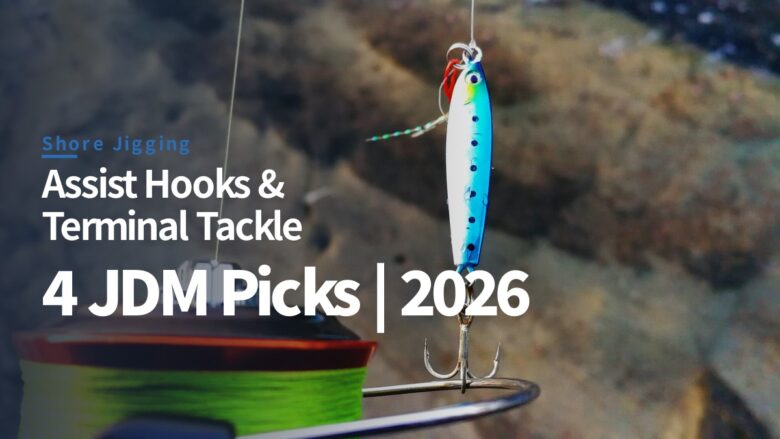
Jigs get all the attention. Hooks do all the landing. Australian tackle shops stock walls of metal, yet the assist hook rack is usually a thin row of generic imports, and that’s a strange place to save money, because the assist hook is the only part of your shore jigging setup that ever touches the fish. In Japan, where shore jigging grew up, anglers treat hooks and rings as a tuning decision: a specific model, in a specific size, matched to the jig and the target. This guide brings that logic to Australia with four JDM (Japan Domestic Market) hook and ring picks, every spec pulled from the makers’ official pages, and buying routes that work from an Aussie postcode.
If you’re still choosing the metal itself, start with our Japanese metal jig round-up for shore jigging, or the shore jigging beginner’s guide for Australia if the whole technique is new. This one is about everything between your leader knot and the hook point.
A note on links and pricing: these are JDM catalogue items, so buy links point to Amazon Japan, which ships internationally (check availability and shipping cost at checkout; orders over A$59 may qualify for free international delivery). Some lines also circulate on Amazon.com via importers, available with international shipping to Australia. Prices are maker list prices shown in JPY (tax excluded) with an approximate AUD conversion at the time of writing (A$1 = ¥100, July 2026).
Two products cover most Australian shore jigging. For 20-40 g jigs thrown at tailor (Pomatomus saltatrix), Australian salmon (Arripis trutta) and bonito, rig a Decoy DJ-88 Twin Pike twin assist on the front eye: the fine-wire, wide-gap hooks convert the half-hearted slaps and falling-jig bites that trebles miss. When the jigs get heavier and the target turns into yellowtail kingfish (Seriola lalandi), switch to the Owner WH-02 Nagewaza Power Aomono single, because Owner publishes a jig-weight range for every hook size, which removes the guesswork entirely. Add a pack of Decoy Split Ring EX to replace the weak stock rings and you’ve upgraded the whole business end for less than one premium jig.
Light work pick: Decoy DJ-88 Twin Pike
The Japanese standard for light shore jigging. Twin fine-wire hooks on an elastic braid loop, sized #2 to #4/0, that turn short bites into two-point hooksets on tailor, salmon and bonito. ¥600-700 (~A$6-7) per pack, tax excluded.
Heavy work pick: Owner WH-02 Nagewaza Power Aomono
A reinforced single assist with an official size-to-jig-weight chart running from 10 g up to 100 g jigs. Built for the small-jig, big-fish game, which is exactly what rock-hopping for kingfish is. ¥630 (~A$6.30) per pack, tax excluded.
That’s the two-minute version. The rest of the article covers why those two, what to run when your fishing sits outside their lanes, and the rings that hold it all together.
Decoy is the lure-hook brand of Katsuichi, a Japanese hook maker from Hyogo’s hook-forging heartland, and the DJ-88 Twin Pike is its purpose-built assist for light shore and offshore jigging. The concept is simple: two thin-shaft, wide-gap “Pike” hooks on a short elastic braid loop, fished from the front eye of the jig. Katsuichi’s CF process (patented) reinforces the hook bend to compensate for the fine wire, so you get the easy penetration of a light-gauge hook without the usual straightening problem. The official target list reads seabass, snapper, tachiuo (太刀魚, largehead hairtail) and aomono (青物, the Japanese catch-all for pelagic speedsters), which translates neatly to tailor, salmon, bonito and small kingfish over here.
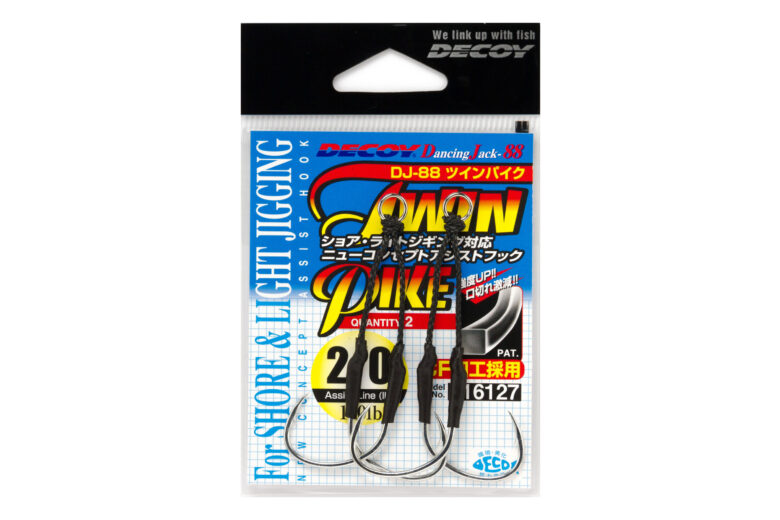
| Feature | Detail |
|---|---|
| Type | Twin assist for light shore / offshore jigging |
| Hook | Pike AS-03, thin shaft, wide gap, long taper point |
| Reinforcement | CF process (patented) strengthens the bend |
| Cord | Elastic original braid line, twin-hookup design |
| Hook colour | TIN (Aqua Block) |
| Size | Sets per pack | Price (JPY, tax excl.) |
|---|---|---|
| #2 | 3 | ¥600 (~A$6) |
| #1 | 3 | ¥600 (~A$6) |
| #1/0 | 3 | ¥600 (~A$6) |
| #2/0 | 2 | ¥600 (~A$6) |
| #3/0 | 2 | ¥600 (~A$6) |
| #4/0 | 2 | ¥700 (~A$7) |
The verdict: our default on 20-40 g jigs for tailor and salmon work, where fish swipe at the jig on the drop and a rear treble mostly collects the bites it’s given. On jigs that size we run #1 to #1/0 and let the twin points do the converting. Two cautions. Fine wire is not the tool for locked-drag kingfish fights, and tailor teeth will eventually shred any braid loop, so check the cord after every toothy fish and swap the set at the first fray. For the jigs these hooks belong on, see our tailor and bonito metal jig guide.
Owner (オーナーばり) is Japan’s best-known hook maker, and its C’ultiva lure arm builds the Nagewaza (投技, literally “casting technique”) hook series as the factory-matched partner to its shore casting jigs. Two models matter for Australia, and they split the job by fish size rather than by jig size.
The WH-01 Hayagake (早掛, “quick hooking”) is a light shore jigging specialist: thin, light and, in Owner’s own words, sharp enough to hook fish that only brush the jig. The clever detail is a flasher tied so it flips the hook point away from the bottom, and that hook-reversing flasher meaningfully cuts snag-ups when your jig is bouncing across reef and rubble, which describes most Australian rock platforms. Owner also kept the whole assembly’s water resistance low so it doesn’t deaden the jig’s action.
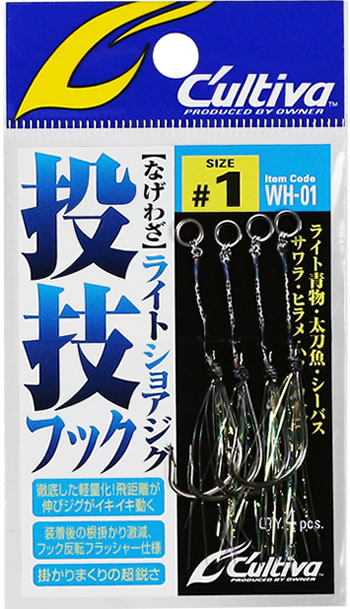
| Feature | Detail |
|---|---|
| Type | Single assist for light shore jigging |
| Design brief | Native match for Owner’s Nagewaza jig series; thin, light, sharp |
| Snag control | Flasher flips the hook point over to resist bottom snags |
| Action | Minimal-drag build to preserve jig movement |
| Size | Price (JPY, tax excl.) |
|---|---|
| #2 | ¥520 (~A$5.20) |
| #1 | ¥520 (~A$5.20) |
| #1/0 | ¥520 (~A$5.20) |
Best suited for: single-hook purists fishing snaggy ground for salmon, tailor and flathead by-catch, where a twin rig donates too much metal to the rocks. It’s a light-gauge hook by design, so when double-figure fish are a real chance, step up to its big brother below.
The WH-02 Power Aomono exists because of a very Japanese problem that is also a very Australian one: schools of fish eating 30 g bait profiles, with the odd 7-10 kg unit mixed in. It uses the tough-wire Jigger Light Hayagake hook, and the spec sheet is the best part, because Owner publishes a rated strength and a recommended jig-weight range for every single size. No other maker in this article hands you the size decision that cleanly.
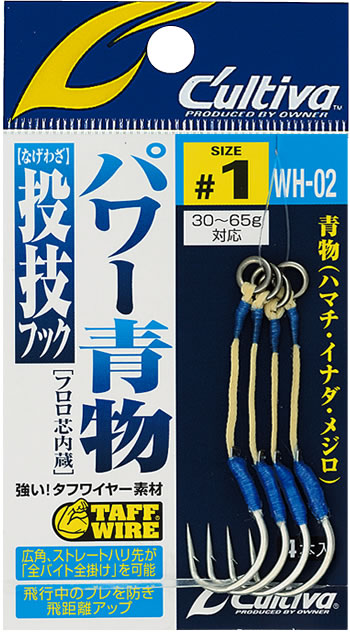
| Feature | Detail |
|---|---|
| Type | Reinforced single assist for light jigs, heavy fish |
| Hook | Jigger Light Hayagake in tough-wire material |
| Concept | Built for 30 g jig, 10 kg fish scenarios (Owner’s brief) |
| Size logic | Official strength and jig-weight range per size |
| Size | Rated strength | Jig weight guide | Price (JPY, tax excl.) |
|---|---|---|---|
| #4 | 3.5 kg | 10-20 g | ¥630 (~A$6.30) |
| #2 | 4.9 kg | 20-40 g | ¥630 (~A$6.30) |
| #1 | 6.4 kg | 30-65 g | ¥630 (~A$6.30) |
| #1/0 | 6.7 kg | 50-85 g | ¥630 (~A$6.30) |
| #2/0 | 7.6 kg | 60-100 g | ¥630 (~A$6.30) |
Should you buy it? If kingfish or longtail country is on your radar, yes, and buy two sizes: match one to your everyday 40 g jig (#2 or #1) and one to your heavy 60-80 g metal (#1/0 or #2/0). Read the rated strength honestly, though. 7.6 kg of hook strength won’t save you from a 15 kg king in the washing machine; past that class of fish you’re into welded-eye offshore territory.
Shout is the jigging brand of Sasame, another old-line Japanese hook house, and the Kudako (クダコ) is its famous heavy single. The Single Kudako 330SK packages that hook on a 200-300 lb PE loop with a pressed ring, officially designed for attaching to topwater plugs for hiramasa (Japanese yellowtail kingfish), GT and tuna. Shout’s pitch is that a slightly long single assist gets inhaled on short bites and drops far fewer fish after hook-up than a treble. If your rock sessions alternate between a stickbait and a big jig for the same kingfish, this is the one set of hooks that services both lures.
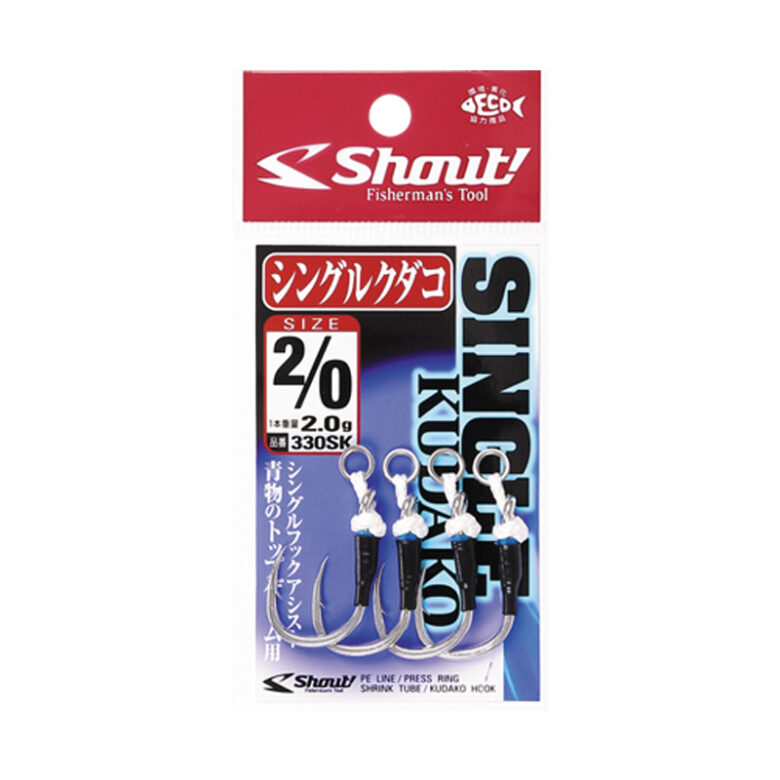
| Feature | Detail |
|---|---|
| Type | PE-rigged single assist for plugs and big-fish casting |
| Hook | Kudako heavy single, silver finish |
| Official targets | Hiramasa (kingfish), GT, tuna topwater games |
| Hook-up logic | Longer assist improves hooking response on short bites |
| Size | Per pack | Weight per assist | PE cord rating |
|---|---|---|---|
| 1/0 | 4 | 1.5 g | 200 lb |
| 2/0 | 4 | 2.0 g | 200 lb |
| 3/0 | 4 | 2.5 g | 200 lb |
| 4/0 | 4 | 3.3 g | 300 lb |
| 5/0 | 3 | 4.4 g | 300 lb |
| 6/0 | 2 | 7.2 g | 300 lb |
Who is it for? The land-based game crowd: heavy spin sticks, 60 g-plus metal and stickbaits off deep ledges for kings and longtail tuna. Note the assist weights in that table, because a 7.2 g hook set changes how a light plug swims. On 20-40 g jigs it’s simply the wrong tool; that water belongs to the DJ-88 and WH-01.
Assist hooks attach to jigs through a split ring, sometimes with a solid ring in between, and this hardware fails more often than the hooks do. Cheap stock rings open up under kingfish pressure or after a dozen lure changes. The Japanese habit is blunt: re-ring every jig the day you buy it, with rings one grade stronger than the packet came with.
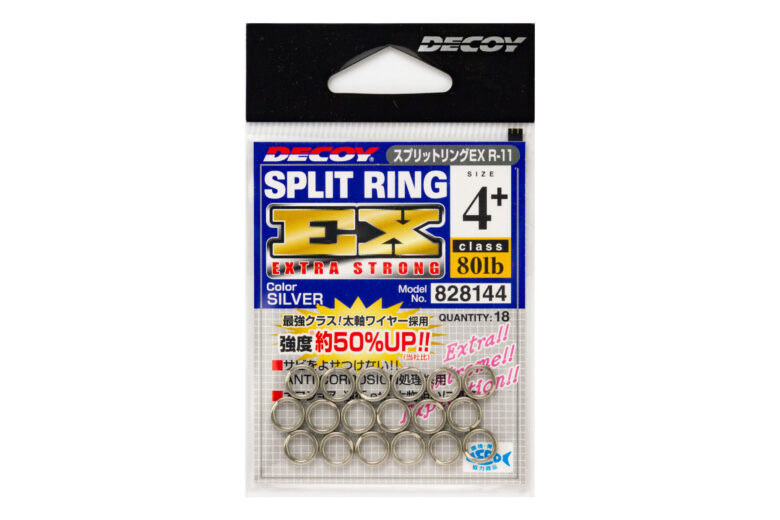
Decoy’s R-11 Split Ring EX is the working answer. It’s an EX thick-wire ring that Katsuichi rates at roughly 50% stronger than its normal rings of the same size (maker’s comparison), flat-forged, with an inner-cut opening that makes hook and lure swaps easy with pliers, plus an anti-corrosion passivation finish for salt work.
| Size | Per pack | Price (JPY, tax excl.) |
|---|---|---|
| #1+ / #2+ / #3+ | 18 | ¥250 (~A$2.50) |
| #4+ | 18 | ¥500 (~A$5) |
| #5+ | 16 | ¥500 (~A$5) |
| #6+ | 12 | ¥500 (~A$5) |
For the leader connection, the partner piece is the R-6 GP Ring, a pressed seamless solid ring with no welded joint to fail. Tie your leader to the solid ring, hang the split ring and jig off it, and hook changes stop involving your knot.
| Size | Per pack | Price (JPY, tax excl.) |
|---|---|---|
| #3 / #4 / #5 / #6 | 12 | ¥500 (~A$5) |
One warning on mixed hardware: never let the ring become the weakest link below a strong leader. If you fish 40 lb leader for kings, a bargain-bin ring rated well under that is exactly where the rig will fail, and you won’t find out until the fish is on.
Brand aside, four decisions size any assist hook correctly, and they’re worth internalising before the tackle page opens.
Hook position also changes how a jig behaves on the fall, and a front assist is half of why Japanese slide-style jigs work at all. If that’s unfamiliar territory, our guide to Japanese jigging actions and how to work a jig explains what the hardware needs to survive.
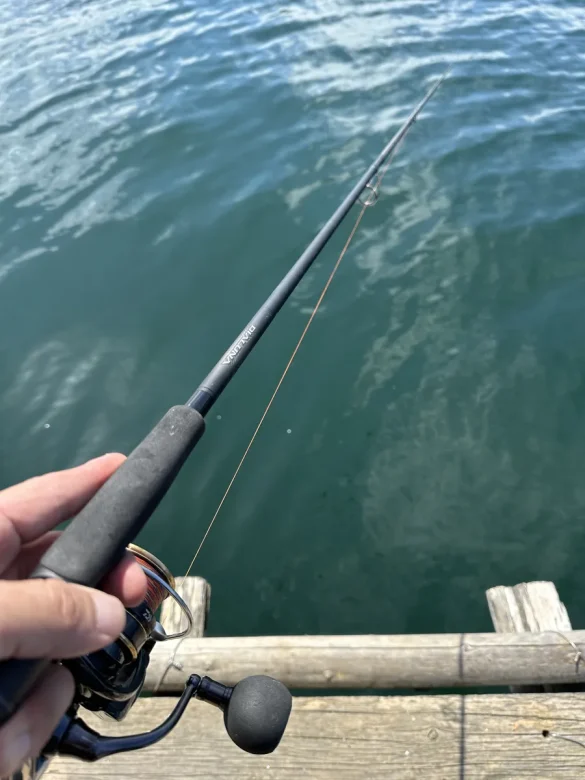
The rigging habits in this article come from Japanese light shore jigging, where breakwall anglers chase sagoshi (juvenile Spanish mackerel) and small yellowtail, and the routine is unglamorous. A front assist goes on before the jig is ever fished; rear trebles come off entirely on snaggy ground. Hooks are treated as consumables the way soft plastics are here: points get thumb-checked between casts, and anything that has met a rock or grown a freckle of rust gets swapped on the spot, because a ¥600 pack of hooks is cheap insurance on a day that produces three bites.
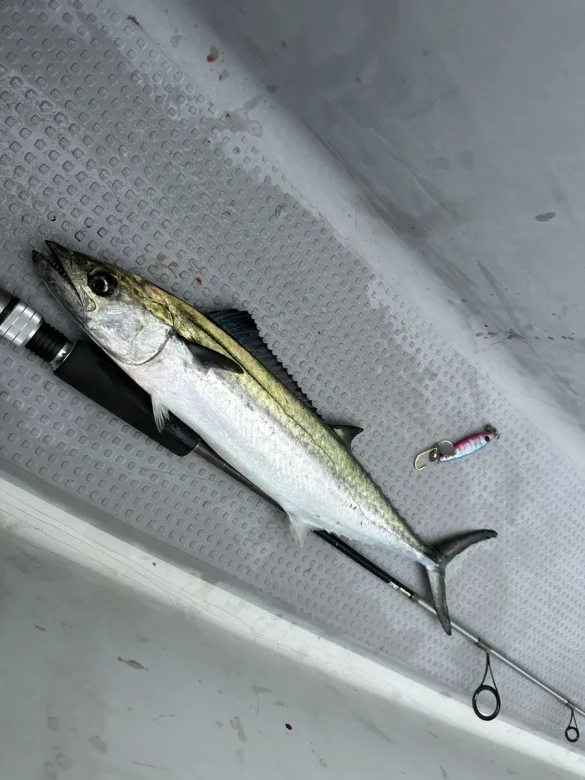
The other habit worth stealing is writing the hook size on the jig wallet slot. It sounds fussy until the school shows up at dusk and you need the 40 g jig with the #1 single, not a rummage through six identical zip bags.
The picks side by side, matched to the job each one does best.
| Product | Best job | Sizes | Strength data | Price (JPY, tax excl.) |
|---|---|---|---|---|
| Decoy DJ-88 Twin Pike | Twin assist, 20-40 g jigs, tailor / salmon / bonito | #2 to #4/0 | CF-reinforced fine wire (no kg rating published) | ¥600-700 (~A$6-7) |
| Owner WH-01 Hayagake Single | Light single, snaggy ground | #2 to #1/0 | Light gauge (no kg rating published) | ¥520 (~A$5.20) |
| Owner WH-02 Power Aomono | Reinforced single, 10-100 g jigs, kingfish class | #4 to #2/0 | 3.5-7.6 kg rated per size | ¥630 (~A$6.30) |
| Shout 330SK Single Kudako | Plugs and heavy jigs, land-based game | 1/0 to 6/0 | 200-300 lb PE cord | Varies by size |
| Decoy R-11 Split Ring EX | Jig-to-hook connection upgrade | #1+ to #6+ | About 50% over standard rings (maker’s comparison) | ¥250-500 (~A$2.50-5) |
Yes. Assist hooks attach by split ring, which is universal, so brand mixing is normal: a Decoy hook on a Major Craft jig with an Owner ring is an everyday combination in Japan. The only fit questions are the sizing rules above, gap wider than the jig body and cord inside the front third.
Amazon Japan is the simplest route: hooks and rings are small, light parcels, international shipping is available on many listings, and orders over A$59 may qualify for free international delivery. Some Decoy and Owner items also appear on Amazon.com via importers, with international shipping to Australia, though selection and pricing swing around a lot more there.
Given enough fish, yes, any braid or PE cord loop will get chewed. The practical fix isn’t wire, which kills the jig’s action; it’s inspection. Check the cord after every toothy fish and carry spare sets, which is exactly why packs of two or three complete assists at ¥520-700 make sense as consumables.
Match your most-used jig weight. For a typical Australian 30-40 g shore outfit, that means a DJ-88 in #1/0 for the twin-hook school, or a WH-02 in #2 for the single-hook school, since Owner’s own chart puts #2 against 20-40 g jigs. Buy the second size the day you buy your first 60 g jig.
All specifications in this article were taken from the official product pages of Katsuichi (Decoy), Owner and Shout, checked in July 2026. Prices are maker list prices in JPY (tax excluded) with approximate AUD conversions at the time of writing. Product images are from the makers’ official pages. Affiliate links may earn us a commission at no extra cost to you.