Metal Jig Weight & Colour Selection for Australian Conditions
ちゃんま
マイボ!

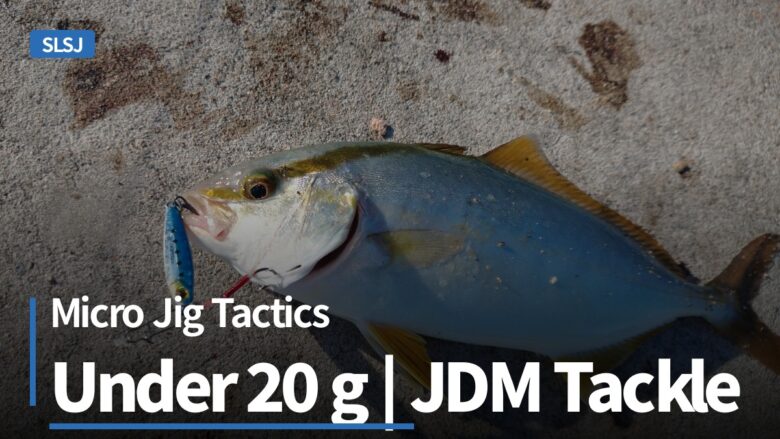
Most shore anglers reach for a metal jig when they want to cast a long way and connect with something that pulls hard. Super light shore jigging, or SLSJ, flips that thinking. It’s the finesse end of the metal-jig game, built around tiny jigs under 20 grams, a wispy rod and light braid, and it opens up a whole class of fish that a 40 g slug simply flies past. If you’ve ever watched bream, whiting, small salmon and pinky snapper feeding on bait the size of a matchstick and had nothing small enough to throw, this is the technique that fixes it.
SLSJ came out of Japan’s crowded urban breakwalls, where anglers had to tempt pressured fish with the smallest, most natural metals they could cast. Those same jigs and habits transfer beautifully to Australian estuaries, harbours, beaches and rock ledges. This guide sets out where SLSJ sits against ordinary light shore jigging, the micro jig tactics that actually catch by target, and the JDM tackle that makes it work. It’s a companion to our light shore jigging (LSJ) guide and our shore jigging beginner’s guide for Australia.
A note on links and pricing: the Daiwa Dragger X rod price is the Australian RRP, and the rod is stocked by Australian Daiwa dealers as well as on Amazon Japan, which ships internationally (check availability and shipping at checkout; orders over A$59 may qualify for free international delivery). The Major Craft jigs are shown at Major Craft America’s price and are available on Amazon.com with international shipping to Australia; Australian tackle stores stock them too. The Shimano jig is a JDM item, available from Amazon Japan. Prices are approximate at the time of writing (July 2026). Bream, whiting, salmon, tailor and snapper all carry size and bag limits that differ between states, so always check your local regulations before you keep a fish.
The quickest way to place super light shore jigging is by jig weight, because that single number changes the rod, the line and the fish you’ll catch. On this site we draw the line the same way Japanese anglers do: SLSJ is jigs under 20 g, LSJ is roughly 20 to 60 g, and full shore jigging climbs from there. It isn’t a rulebook, but it’s a genuinely useful split because the gear and the targets change as you cross 20 g.
Fishing under 20 g does two things. It lets you cast and control a jig small enough to match the tiny baitfish, prawns and glass minnows that estuary and inshore fish actually eat, and it makes an average-sized fish feel like a good one on the light outfit. The trade-off is reach: a 7 g jig won’t punch through a stiff onshore wind or get down a deep, fast ledge, which is exactly where LSJ takes over. If you’re mostly chasing bigger pelagics off deep rocks, you want LSJ weights, not SLSJ, so read the two guides side by side and pick by the water in front of you.
Because the same location can hold both, plenty of SLSJ sessions end with a fish you didn’t expect. That’s part of the fun, and it’s why the outfit below is built light but not fragile.
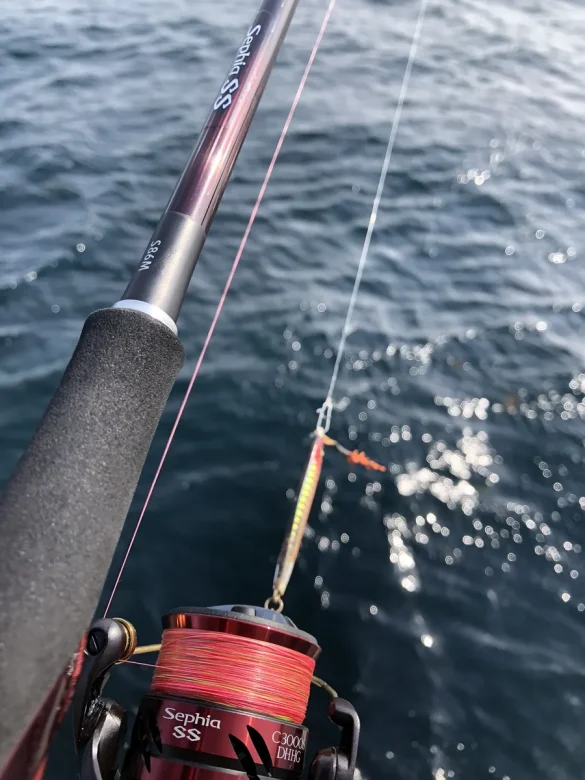
An SLSJ outfit is closer to a heavy bream or light rock rig than to a broomstick shore jigging combo. You want a rod that casts 3 to 20 g cleanly and still has the backbone to turn a surprise kingfish, a small, smooth spinning reel, and thin braid that lets a tiny jig fly. Get those three right and everything else is jig choice.
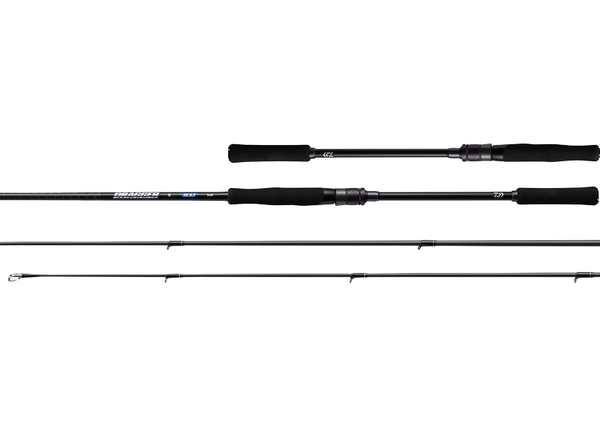
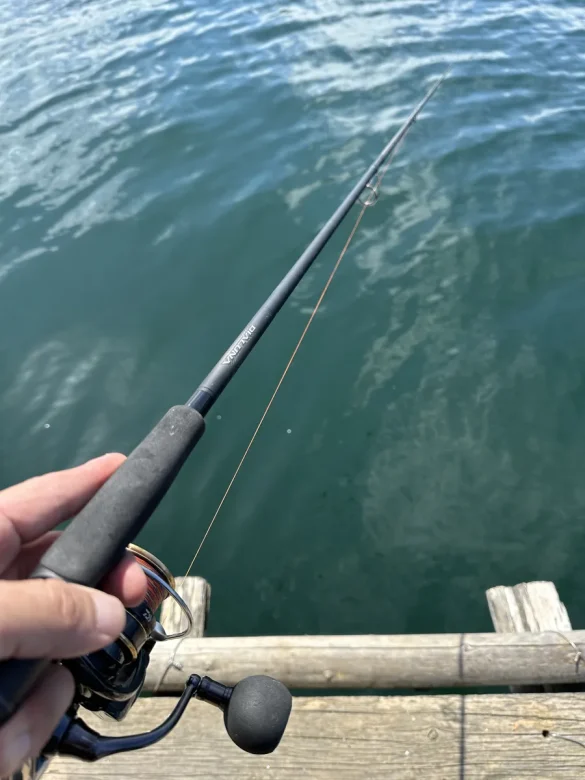
Daiwa’s decision to bring dedicated SLSJ blanks into the Australian Dragger X range is the single reason this technique is now easy to kit out here. The standard Dragger X models are entry-level shore jigging rods, but the three SLSJ variants are purpose-built for sub-20g work: light, sensitive tips that load with a tiny jig, K guides that shed line tangles, and a Braiding X blank that still has the grunt to stop a better fish. All three cast up to 30 g, giving you a touch of headroom over a pure 20 g ceiling. They’re two-piece, so they travel.
| Feature | Detail |
|---|---|
| Blank | Braiding X reinforced carbon, 2-piece |
| Guides | K guides (reduced line-over tangles) |
| Max lure | 30 g (comfortable home is sub-20g jigs) |
| Line class | PE #0.4 to #1.0 |
| Grade | Entry to mid, Australian lineup |
| Best for | Finessing fish off stones, breakwalls and beaches |
| Model | Length | Weight | Max jig | PE |
|---|---|---|---|---|
| SLSJ 84M | 2.54 m | 109 g | 30 g | #0.4-1.0 |
| SLSJ 93M-S | 2.82 m | 115 g | 30 g | #0.4-1.0 |
| SLSJ 94M | 2.84 m | 127 g | 30 g | #0.4-1.0 |
The verdict: the 84M is the pick for close-range estuary and breakwall work, the 94M adds cast for beaches and reaching fish holding wide, and the solid-tip 93M-S is the most forgiving for smaller mouths and shy takes. Any of them handles the whole SLSJ jig range with margin to spare. Available from Australian Daiwa dealers at A$299 RRP, and on Amazon Japan for those comparing or importing.
Pair the rod with a compact 2500 to C3000 spinning reel and PE #0.4 to #0.8 braid, with an 8 to 14 lb fluorocarbon leader. A Daiwa LT2500 or a Shimano C3000-class reel balances the Dragger X nicely without adding nose weight. Keep the leader short and light: it lets the little jig work naturally and stays invisible to fussy estuary fish. Step the leader up only where teeth or rock demand it.
Shallow sand and weed flats, harbour edges and the mouths of estuaries are where SLSJ shines and where most anglers should start. The fish here, bream, whiting, flathead and pinky snapper, are picking off tiny prawns and baitfish close to the bottom, so you want a small jig with a slow, fluttering fall and a lift-and-drop retrieve rather than a fast wind. Most flat-water bites come on the drop, so stay in contact with the jig as it sinks and set the moment you feel the line tick or go slack.
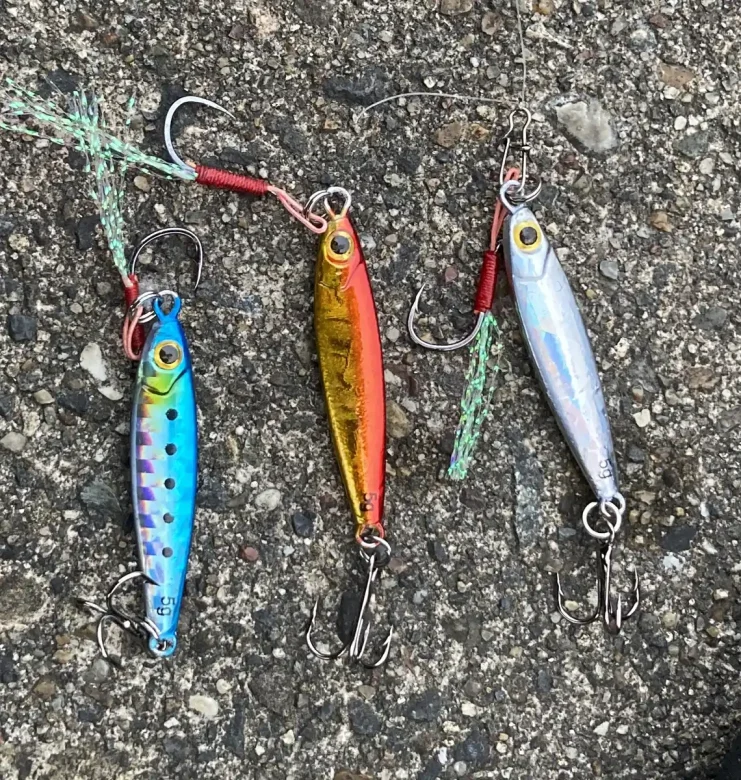
The Jigpara Micro is the jig that made SLSJ a mainstream Japanese technique, and the Standard is the fatter-bodied version built for exactly this flutter game. Major Craft describe it plainly as a jig “for super light shore casting game,” and it does the job with a slow, wide, wounded-baitfish fall that the fussiest flat fish struggle to ignore. It carries a tough 5-layer coating and sharp Japanese hooks, and from 7 g up it comes with a tinsel front assist that pins short-biting fish. The 3 g and 5 g sizes ship with only a rear treble, so add a front assist yourself if you’re missing bites on the drop.

| Feature | Detail |
|---|---|
| Type | Casting micro jig (lead), standard body |
| Action | Slow, wide fluttering fall |
| Coating | 5-layer coating for durability |
| Hooks | Rear treble on 3-5 g; front assist plus rear treble on 7 g and up |
| Targets (JP) | Horse mackerel, rockfish and other light shore species |
| Best for | Flats, harbours, close-range finesse in calm water |
| Weight | Length | Hooks (standard) |
|---|---|---|
| 3 g | 30 mm | Rear treble x1 |
| 5 g | 35 mm | Rear treble x1 |
| 7 g | 40 mm | Front assist + rear treble |
| 10 g | 50 mm | Front assist + rear treble |
| 15 g | n/a | Front assist + rear treble |
Who is it for? Anyone starting SLSJ on estuary and harbour flats. Carry 5 g and 7 g for calm days and 10 g when there’s a bit of tide or breeze, in a silver-sardine, pink and one glow pattern, and you can fish practically any flat in the country. It’s the softest-falling jig here, which is the whole point on pressured, close-range fish.
Step out onto low rock ledges, breakwalls and the white water of a wash and the SLSJ game speeds up. Here you’re covering more water for small salmon, tailor, bonito and the odd rat kingfish, fish that chase rather than sip. You still want a sub-20g jig to match the bait, but you need it to cast further and cut a breeze, which is where a slimmer body earns its place. Work it faster, with sharper lifts and a quick wind, and let the jig flutter on the pause. Our species-specific guides to Australian salmon metal jigs and tailor and bonito metal jigs go deeper on those fish.
The Slim is the Jigpara Micro’s distance-and-wind answer. It shares the 5-layer coating, the Japanese hooks and the same weights as the Standard, but the body is drawn out longer for every gram: a 7 g Slim runs 55 mm against the Standard’s 40 mm. That longer, thinner shape casts noticeably further, sinks a little faster and holds its line better in a crosswind, which is exactly what you need off a rock ledge or an open wash. It still flutters on the drop, just with a tighter, more darting action than the fat Standard. On calm, close flats the Standard’s slower fall usually out-fishes it, so the two jigs genuinely complement each other rather than overlap.
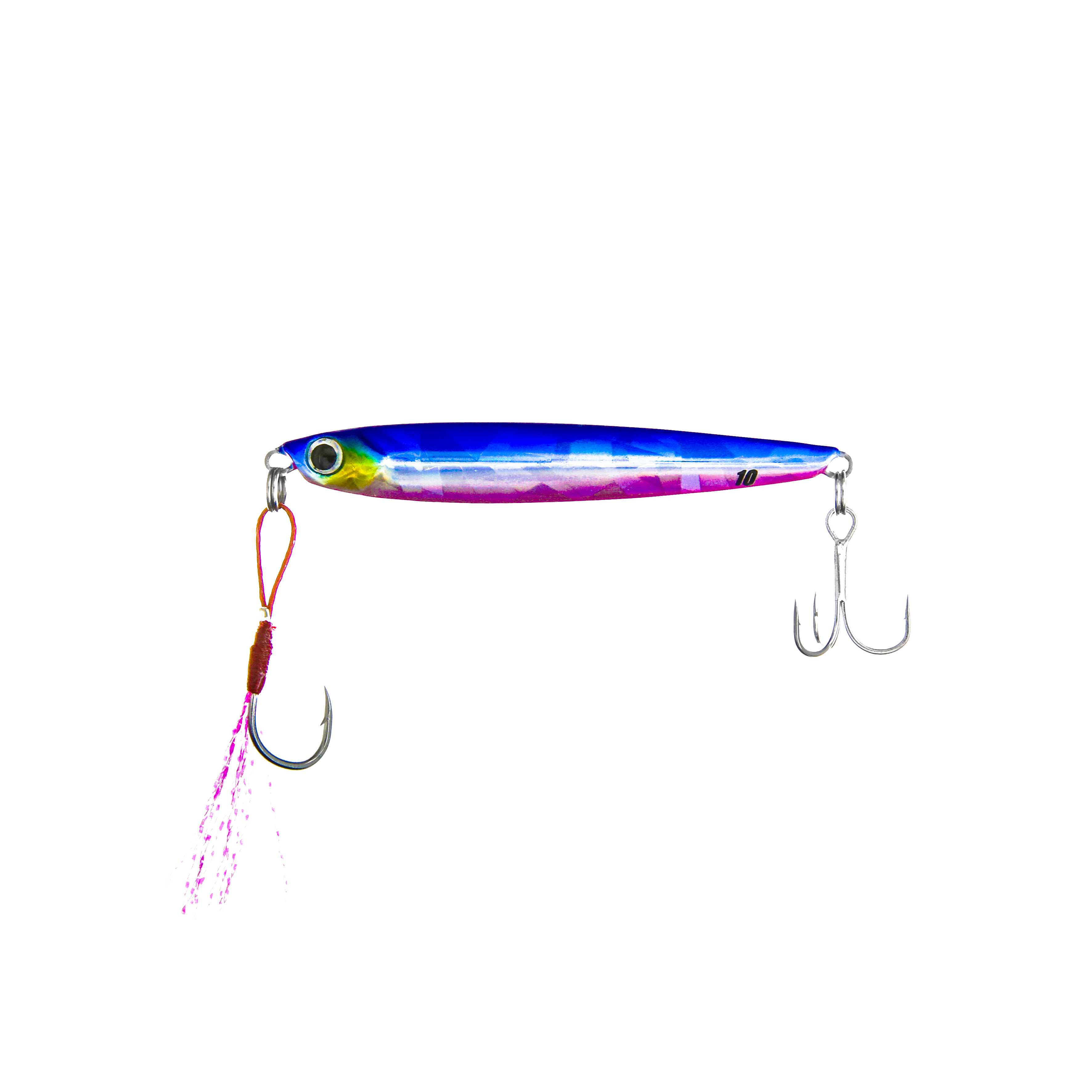
| Feature | Detail |
|---|---|
| Type | Casting micro jig (lead), slim body |
| Action | Tighter, darting flutter; longer cast and faster sink |
| Coating | 5-layer coating for durability |
| Hooks | Rear treble on 3-5 g; front assist plus rear treble on 7 g and up |
| Edge | Cuts crosswind and reaches fish holding wide |
| Best for | Rock ledges, breakwalls, washes and windy beaches |
| Weight | Length | Hooks (standard) |
|---|---|---|
| 3 g | 35 mm | Rear treble x1 |
| 5 g | 43 mm | Rear treble x1 |
| 7 g | 55 mm | Front assist + rear treble |
| 10 g | 55 mm | Front assist + rear treble |
| 15 g | n/a | Front assist + rear treble |
Best suited for: anglers fishing rock ledges, walls and washes, or anyone who wants more distance out of a sub-20g jig. Lean on the 10 g and 15 g here for range, keep the retrieve quick with sharp rips, and be ready for a better fish, because a slim jig ripped off the rocks is exactly what a passing salmon or small kingfish wants to eat.
There’s one situation that beats even a slim lead jig: a hard onshore wind, or fish holding deep and wide in current. A lead micro jig at 10 g just gets blown around and never gets down. The answer is tungsten. A tungsten jig is roughly 1.7 times denser than lead, so a bite-size body still casts like a heavier jig and punches through wind, while keeping the tiny silhouette the fish want.
Shimano’s Soare Metal Shot TG is the JDM tungsten micro built for this. It runs from 3 g right up to 40 g, so the 7 g to 18 g sizes cover SLSJ perfectly, and its slightly forward centre-balance gives a long cast and a natural drift after each jerk. Shimano pitch it straight at microbait patterns and reaction bites, targeting young horse mackerel, barracuda and other migratory fish, which is the same job it does off an Australian wall or beach when the breeze is up. Keep a couple of 10 g and 14 g Metal Shot TGs in the box as your bad-weather problem-solvers. It’s a JDM item, so it comes from Amazon Japan, and it costs several times what a lead jig does, so treat it as a specialist rather than your everyday jig.
Bream and whiting don’t swim in our home waters, but the SLSJ situation is identical. On the breakwalls around Osaka Bay we throw the same sub-20g jigs at sagoshi (juvenile Spanish mackerel), small hamachi, aji and mackerel that herd glass baitfish against the walls, and the habits carry straight across to Australian estuaries and rocks.
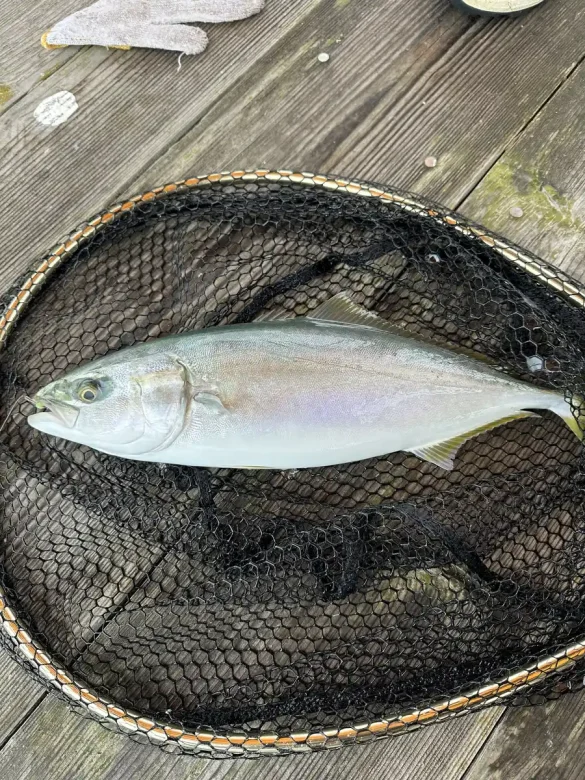
Three things we’ve learned matter most. First, we fish the fall: most bites come as the jig sinks, so we count it down and stay in contact rather than winding straight away. Second, we go smaller and denser before we go faster when fish are fussy, which is why a tungsten jig always lives in the box. Third, we carry three colours, a silver or sardine, a pink, and one glow or zebra, and rotate those before reaching for anything exotic. None of that is Australia-specific, and that’s the point: SLSJ is a portable habit, not a local trick.
The three micro jigs side by side, matched to where each one belongs in an SLSJ box.
| Jig | Best job | Weights | Material | Buy |
|---|---|---|---|---|
| Major Craft Jigpara Micro Standard | Flats, harbours, slow-fall finesse | 3-15 g | Lead | Amazon.com |
| Major Craft Jigpara Micro Slim | Rocks, walls, wind, distance | 3-15 g | Lead | Amazon.com |
| Shimano Soare Metal Shot TG | Hard wind, deep or fast water | 3-40 g (7-18 g for SLSJ) | Tungsten | Amazon Japan |
If you want the short version, start with these two jigs and add the rod when you’re hooked on the technique.
Top Pick: Major Craft Jigpara Micro Standard (5 g & 7 g)
The jig that defined the technique and the easiest way in. A slow, wide flutter that flat-water bream, whiting, flathead and pinkies find hard to refuse, tough coating, sharp hooks, and cheap enough to fish anywhere. Around US$8.99 each and stocked across Australia.
Distance Pick: Major Craft Jigpara Micro Slim (10 g & 15 g)
The same jig drawn out longer for cast and wind. Reach fish off the rocks and washes, cut a crosswind, and stay ready for a salmon or small kingfish. The natural partner to the Standard rather than a replacement for it. Around US$8.99 each.
Super light shore jigging isn’t a scaled-down version of shore jigging so much as a different game with the same tools. Stay under 20 g, fish the fall, and let a light rod turn ordinary estuary fish into a genuinely fun session. Carry a fat Jigpara Micro Standard for slow flats work, a Slim for distance off the rocks, and a tungsten Soare Metal Shot TG for the windy days, put them on a Dragger X SLSJ with a small reel and thin braid, and you’ve covered practically every SLSJ scenario in the country.
When the fish get bigger or the water gets deeper, step up to our light shore jigging (LSJ) guide, or browse the wider Japanese metal jig round-up. New to casting metal from the stones? Start at our shore jigging beginner’s guide and see all of our Australia fishing guides.
All specifications in this article were taken from the manufacturers’ official pages (Daiwa Australia, Major Craft America and Shimano), checked in July 2026. The Daiwa Dragger X price is the Australian RRP; the Major Craft jigs are shown at Major Craft America’s price and are also stocked in Australian tackle stores; the Shimano Soare Metal Shot TG is a JDM item from Amazon Japan. Species facts are from Australian state fisheries information. Product images are from the makers’ official pages. Affiliate links may earn us a commission at no extra cost to you. Size and bag limits differ between states, so always check your local regulations before keeping a fish.