Importing Fishing Tackle from Japan to Australia: Used Gear at the Border, the 1.05 m Rod Limit, Proxy vs Amazon Japan and Warranty
ちゃんま
マイボ!

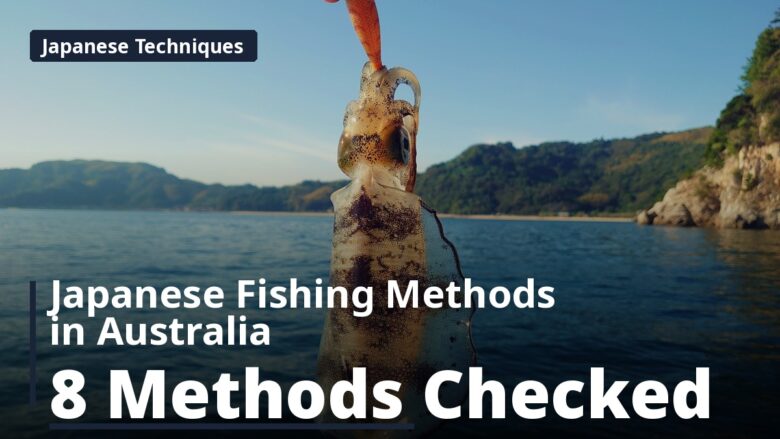
In Japan, ika metal squid fishing and tachiuo tenya for hairtail aren’t fringe methods. Each has its own rods, lures and rigs. Search for them in Australia and very little comes back.
For seven of the eight techniques below, a few rounds of searching turned up no how-to written by an Australian angler or shop. A search like that can’t show who is fishing them without writing about it.
Plenty has crossed over already. Tai rubber is the clearest case. Australians know it as kabura or sliders, and local brands sell their own, such as Berserker’s sliding kabura jig. Micro jigging, slow pitch jigging, inchiku and shore jigging have all arrived too, or are well on the way. If snapper on sliders is your thing, our tai rubber guide for Australian snapper covers the setup.
One product shows how far the rest still have to travel. Elite Tackle sells an “Ika Metal Jig” in 140g. It’s a squid-shaped metal jig with rubber skirt tentacles, listed for red emperor, nannygai and other reef fish. In Japan, ika metal means the opposite: a lure for catching squid, not one shaped like a squid. The name is in use here, but for a different thing.
Ika metal (イカメタル) is vertical squid fishing with a small weighted lure called a sutte. The lead sutte sits at the bottom of the rig and does the sinker’s job. A second, floating sutte hangs off a short dropper above it. Both go down to wherever the squid are sitting. A few lifts of the rod, then a pause. When squid are active, Sunline’s English guide says, the sutte stops sinking before it should, and that’s the moment to strike.
The omori rig (オモリグ) puts the weight somewhere else. The main line ends in a plain sinker (omori), and a small egi or sutte trails behind on a long leader. Because the lure isn’t carrying the weight, it drifts and falls more slowly. Sunline’s ika metal guide has related advice for quiet squid: lengthen the upper leader, or cast away from the boat so the lure falls in a curve.
Every English how-to we found came from a Japanese maker: Sunline, Geecrack, Tailwalk. Nothing from an Australian author turned up. Gear is easier to find than instructions. Maguro Pro Shop lists a Yamashita ika metal leader and a Major Craft ika metal rod, and ika metal sets show up on eBay.com.
Opens eBay Australia search results for ika metal sutte; listings come from independent sellers.
Hitotsu tenya (ひとつテンヤ) is about as simple as bait fishing gets. A tenya is a weighted head with a large fixed hook and a small trailing hook on a short cord. You thread a whole prawn onto it, tie it straight to a fluorocarbon leader on light spinning tackle, and drop it. Lift the rod, let the prawn sink back on a tight line, and watch for the line to stop or jump. Japanese anglers use it for madai (red sea bream, Pagrus major).
This is the odd one out, because the hardware is already on Australian shelves. Fergo’s Tackle World sells Catch tenya jig heads, and so do The Bait Shop Gold Coast and Berley Pro. Coastal Fishing has a whole category called Rubber Lure & Tenya. What we couldn’t find was a single locally written piece on how to fish one. The product pages point towards snapper, but we found no Australian account of anyone doing it, so treat that as the seller’s suggestion and nothing more.
The how-tos in English were written in Singapore, France and Japan. Ours is on the /en/ side of this site: hitotsu tenya technique and rigging.
Tip-run is boat eging with a heavier egi. The boat drifts side-on to the wind, the egi goes to the bottom, and after a few sharp jerks you hold the rod dead still. As the boat keeps moving, the egi tracks along level behind it. A squid grabbing it either pulls the fine tip down or lets it spring back straight. That tip movement gives the method its name.
Of the eight, this is the only one with Australians writing about it. eging.com.au stocks a tip-run range under its RUI brand, with 26g tip-run egi and add-on sinkers from 3g to 10g. In April 2026 it published a piece on tip-run at Flinders and Queenscliff built around leaving the rod in a holder while the boat drifts, an approach it says “gets dismissed unfairly”. The article names the target only as squid.
Coastal Fishing also sells the Yamashita Egi-Oh TR, a purpose-built tip-run egi. We’ve written up the Japanese side in tip-run eging in Australia, and the shore basics are in our Australian eging guide.
Tachiuo (タチウオ) is the Japanese name for hairtail (Trichiurus lepturus), a popular boat target in Osaka Bay and elsewhere. There are two ways to do it. Tachiuo tenya uses a lead head with a long hook shank. A whole sardine is laid along the shank and bound on with fine wire, then the rig is worked up through the water in short lifts and pauses on a baitcaster. Hairtail often take the bait from below and keep swimming up, so the bite can show as the rod tip lifting. Tachiuo jigging swaps the bait for a metal jig fished the same vertical way.
Hairtail are a recognised target in New South Wales. NSW DPI lists the species, and Fishing World has run video of Hawkesbury hairtail. We found no Australian source describing a tenya for them.
We fished both methods on the same morning in Osaka Bay. The count came out about even. The difference was in the size: the fish ran three to four fingers wide, which is how Japanese anglers measure hairtail, and the tenya fish were the bigger ones on average. On the jig, a quicker action got the better response if anything, though the gap was small. That’s one trip, so we wouldn’t read a rule into it.
Dedicated gear exists in English-language shops. Asian Portal Fishing lists an Alphatackle tachiuo tenya rod, and Yamashita has an English page for a luminous tachiuo tenya in its lighter, land-based form. For the jig side, the lift-and-fall basics are in Japanese jigging actions explained.
A tako egi (タコエギ) is a squid jig built much heavier. It has a stout body, a ring of heavy upturned hooks and a clip for a sinker, and boat anglers often fish two at once. You drop it to the bottom and keep it there, shaking the rod so the lure dances on the spot without lifting off. An octopus doesn’t strike. It climbs on, and you stop feeling the sinker knock on the bottom. Then you set the hook and wind steadily, on a stout rod and very heavy braid.
We found no local how-to for this in Australia, the US or the UK. Tako egi are listed on eBay Australia, and tackle shops in Italy and Greece now carry Daiwa’s tako egi, so it may be spreading through the Mediterranean first.
Octopus rules differ from state to state. Check your local regulations with your state fisheries agency before you put one of these in the water.
Opens eBay Australia search results for tako egi; listings come from independent sellers.
Take a compact, heavy jig, put a small spinning blade and the hook at the tail, and wind it back flat out. That’s blade jigging (ブレードジギング). There’s no jerking at all. The rod stays still, a high-speed reel does the work, and the blade flashes behind the jig the whole way. In Japan it’s used for sawara (Japanese Spanish mackerel) and other fast fish.
The English write-ups we found were all Japanese in origin. Major Craft Europe lists a dedicated blade jigging rod, and JDM Tackle Heaven lists Shimano’s Grappler BB Type Blade. We found nobody reporting on it against Australian mackerel.
Bachikon (バチコン) is short for “vertical contact”. It takes ajing, the light jig head and soft plastic game for aji (Japanese horse mackerel), and moves it onto a boat. A sinker goes on the bottom of the rig and the jig head hangs from a branch line above it, so a featherweight lure can be held in water far deeper than you could reach by casting from shore. It’s often fished at night.
We found no English how-to at all. What exists is export listings: a Daiwa Gekkabijin bachikon set on eBay.com and an Issei rig at fishingshop.kiwi. The lures themselves are ordinary ajing fare, which we cover in ajing jig heads, rigs and lures.
Check Daiwa bachikon rigs on eBay
Opens eBay Australia search results for Daiwa bachikon rigs; listings come from independent sellers.
Otoshikomi (落とし込み) means “dropping in”. You lower a string of bare or lightly dressed hooks through a bait school marked on the sounder. Small fish hook themselves on the way down. You don’t wind them up. You keep lowering, live baits and all, to the bottom, where yellowtail and other predators are waiting under the school. One rig catches the bait and fishes it.
In English this one barely exists. A few blogs written from Japan were all we found.
Tip-run. It’s the only one of the eight with both the lures in Australian shops and an Australian how-to, written around Flinders and Queenscliff. Hitotsu tenya comes second on gear alone. The heads are in local shops, but the instructions come from overseas.
For the other six, the gear comes from Japan or from export sellers, and we found no Australian source that has tried them on local fish.
This article contains affiliate links. As an eBay Partner Network affiliate, we may also earn from qualifying purchases made through eBay links.