Japanese Soft Plastics for Snapper: JDM Picks for Australian Waters
ちゃんま
マイボ!

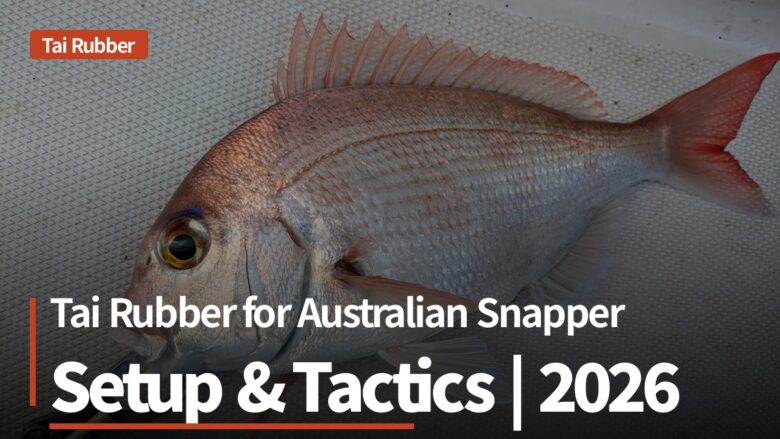
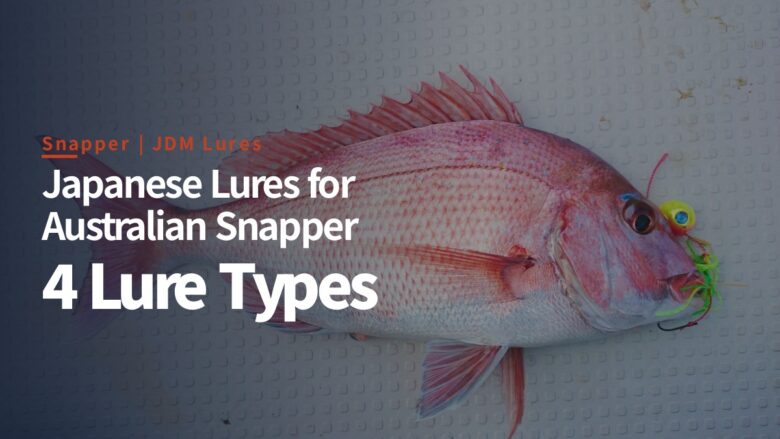
Drop a lure to the bottom, wind it back up slowly, and a snapper eats it. That’s the whole pitch behind tai rubber (鯛ラバ / tairaba, sometimes called madai kabura), the weighted head-and-skirt lure that quietly dominates snapper fishing in Japan. No jerking, no soft plastics to re-rig, no bait to buy. Just a slow, even retrieve that big wary snapper find strangely hard to refuse.
Here’s the part that should interest an Australian angler: the fish this lure was invented for, the Japanese madai (Pagrus major), is a close cousin of our snapper (Chrysophrys auratus) in the same sea bream family. Same habits, same reefy ground, same soft-mouthed way of mouthing a lure before committing. The method transfers to Australian snapper almost unchanged, and yet you’ll rarely see a tai rubber on an Aussie boat. That’s a gap worth exploiting.
This guide covers the Australian application: how the retrieve works, which head weights suit which water, and a sensible JDM starter setup for the southern snapper states. If you want the full deep-dive on the technique itself, our complete tairaba fishing guide covers the Japanese method from the ground up; this page is about making it work here.
A note on links and pricing: the gear here is Japanese-domestic (JDM), so prices are in Japanese yen (tax excluded) with an approximate AUD conversion at A$1 ≈ ¥100, the rate used at the time of writing. JDM items link to Amazon Japan. Ships internationally from Amazon Japan — check availability and shipping cost at checkout. Orders over A$59 may qualify for free international delivery. Snapper rules differ sharply between states right now, so always check your local regulations before you go.
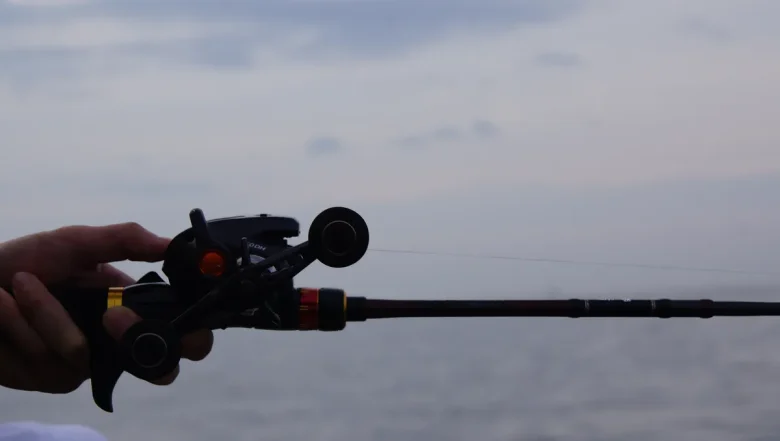
A tai rubber is two parts: a heavy sliding head, and a hook unit dressed with a rubber skirt and a few wavy ties. Drop it to the bottom, and the moment it touches down, start winding. Slow and dead even, about one handle turn per second. Wind it 10 or 15 turns up off the bottom, drop it back down, and repeat along the drift. The retrieve itself is the action: the skirt pulses at constant speed, and any twitch or pause you add generally makes it worse, not better.
The hard part is what happens when a fish shows up. Snapper rarely smash a tai rubber. They peck at the skirt on the way up, tap-tap-tap, and every instinct tells you to strike. Don’t. Striking at the first tap is the fastest way to lose the fish. Keep winding at exactly the same speed, let the taps build until the rod loads over under real weight, and only then lift smoothly. The small hooks find their hold in the jaw as the fish turns. It feels wrong for the first trip, then it becomes the best part of the game.
Head weight is the one variable you actively manage. The Japanese rule of thumb is simple: start with roughly one gram per metre of depth, then step up until you can feel the head touch bottom on a slack-free line. Deeper water, wind, or a fast drift all push you heavier.
| Water & drift | Head weight | Typical scene |
|---|---|---|
| Bays and inshore, under ~25 m, easy drift | 45–80 g | Port Phillip, Western Port, sheltered gulf water |
| 25–45 m, moderate drift | 80–120 g | Open coastal snapper grounds |
| 45 m+, wind or strong current | 120–150 g+ | Deep reefs, hard-running tide lines |
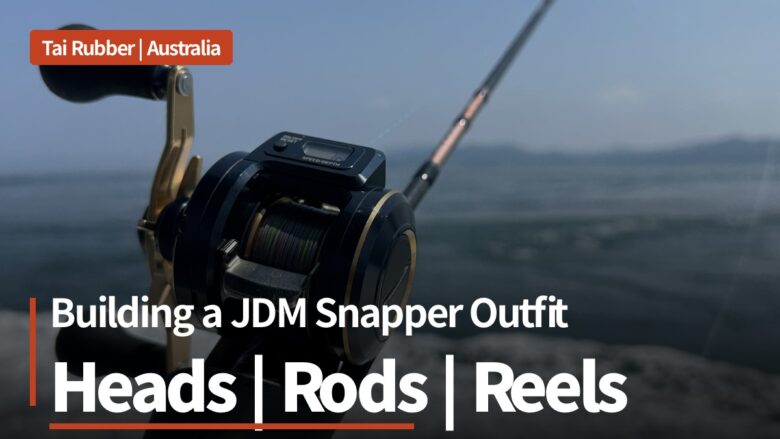
Line matters more than in most Aussie snapper fishing. Thin PE (braid) in the 0.8 to 1.0 range cuts the current so the head fishes light, with a rod length or two of 14–16 lb fluorocarbon leader. The rod is a soft solid-tip model that folds away as the fish taps, and the reel is a small low-profile baitcaster, because the drop-wind-repeat cycle is vertical work. If that sounds like a whole new tackle category, it is, and it’s exactly what the JDM makers have spent twenty years refining.
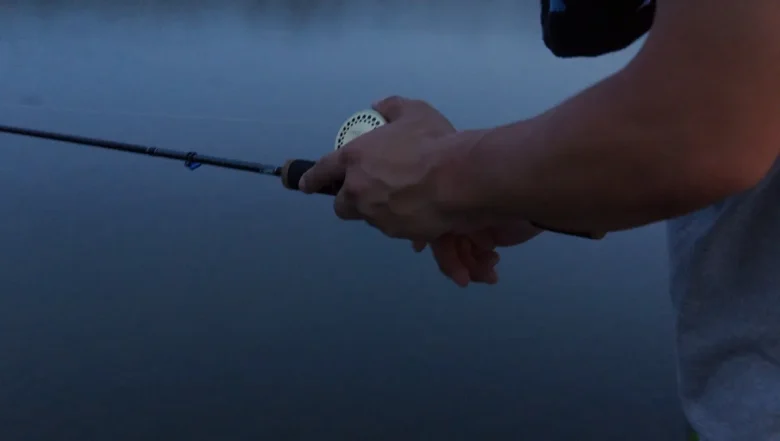
We fish tai rubber for madai in Japan, and the education you get on a Japanese tairaba boat is mostly about restraint. The skippers drill the same points every trip. Set the drag light, around a kilo, so a taking fish feels no resistance and the small hooks aren’t torn free. Hold the rod still and low, no rod work at all. When the taps start, the only job is to not change anything: same speed, same angle, same breathing, until the rod is properly bent.
The other lesson is that bites often come well off the bottom. Madai follow the lure up and eat it five, even ten winds into the retrieve, which is why the boats teach you to keep winding to a count rather than dropping back the moment you clear the reef. Australian snapper school and feed through the water column the same way, especially over the flat mud of a bay, so the habit carries over directly. It’s a patient, quiet, almost meditative way to fish. Then the rod loads up, and it isn’t.
If tai rubber has an obvious home in Australia, it’s the Victorian bays. Every spring, roughly October through December, big snapper flood into Port Phillip and Western Port to spawn, and thousands of boats meet them with baits and soft plastics. The water is mostly 12 to 24 metres deep with gentle drifts over mud and scattered rubble, which is textbook light tai rubber water: a 45 to 80 gram head reaches bottom easily and fishes with a natural, unhurried pulse.
The drill is exactly the basic one. Set a slow drift across the marks, drop, and wind evenly for 10 to 15 turns before dropping again. Orange, red and gold skirts are the Japanese standards for stained inshore water and they translate well to the bay. When the sounder shows fish sitting metres off the bottom, extend the retrieve and let the lure climb through them.
For this scene, an entry JDM combo is honestly all you need, and it costs less than many local snapper outfits. The tech and specs below are from the maker catalogues.
| Model | Adopted tech |
|---|---|
| Shimano Engetsu BB (rod) | Hi-Power X anti-twist blank, Tafteckα solid tip, spiral guide layout for baitcasters |
| Daiwa Kohga X IC (reel) | Digital depth counter, 35 mm spool, 100 mm long handle, 5+1 bearings |
| Bay outfit | Key specs | Price (ex-tax) |
|---|---|---|
| Shimano Engetsu BB B69M-S (rod) | 2.06 m, 137 g, lure 40–150 g, PE max 1.2, Tafteckα solid tip | ¥20,200 (~A$202) |
| Daiwa Kohga X IC (reel) | 240 g, gear 4.9, 54 cm per crank, PE 0.8–300 m, drag 5 kg, depth counter | ¥16,000 (~A$160) |
Victorian rules for snapper are worth restating: minimum size 28 cm, bag limit 10, and no more than 3 of those fish may be 40 cm or over. Snapper also can’t be filleted in or on Victorian waters, so they come home whole or as carcasses. That’s per the Victorian Fisheries Authority’s current guide; check it before the season fires up.
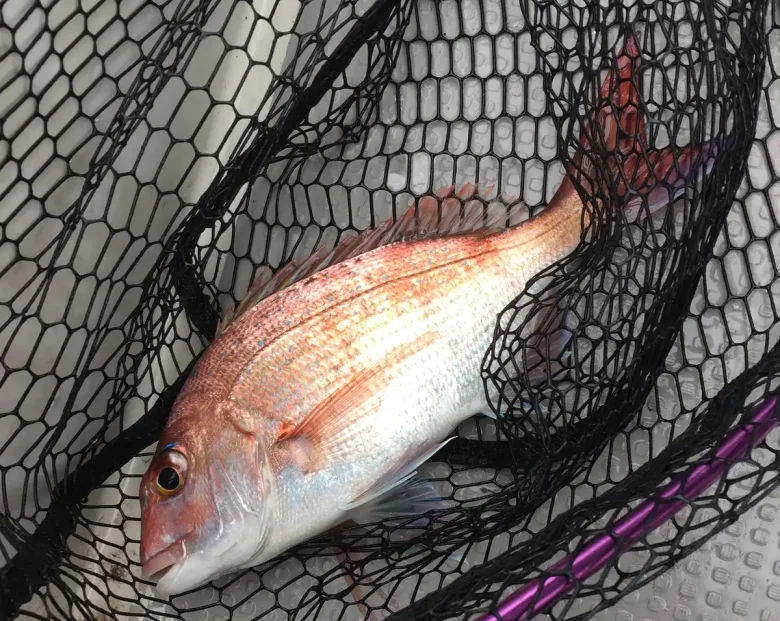
Outside the sheltered bays, the game scales up rather than changes. On open coastal grounds in 30 to 60 metres, with wind and real tide, you’ll fish 100 to 150 gram heads to hold bottom contact, and the depth counter stops being a luxury. Marking a school 8 metres off the bottom and putting the lure through it on the numbers is the kind of precision that turns a slow day around. Tungsten heads, common in the JDM ranges, sink faster and fish a size smaller for the same weight, which helps when the drift is ugly.
One important note for South Australian readers before planning a trip around this section: snapper fishing remains closed in SA’s West Coast, Spencer Gulf, and Gulf St Vincent/Kangaroo Island zones until 30 June 2027 under PIRSA’s rebuilding plan. Only the South-East fishing zone is open, it’s managed under a total allowable catch, and every snapper catch must be reported via the SA Fishing app or the Fishwatch hotline. The famous gulf snapper grounds are off the table for now, so SA-based tai rubber fishing means the South-East zone, or a road trip to Victoria.
For deeper, harder water, step the outfit up. A slightly stouter rod keeps its composure with a 150 gram head, and a counter reel with a stronger drag and more line capacity earns its keep.
| Model | Adopted tech |
|---|---|
| Shimano Engetsu SS (rod) | Spiral X + Hi-Power X blank, Tafteck∞ solid tip, spiral guide layout |
| Shimano Engetsu CT (reel) | Fall Lever drop-speed control, digital counter, S-ARB anti-rust bearings |
| Deep-water outfit | Key specs | Price (ex-tax) |
|---|---|---|
| Shimano Engetsu SS B68M-S (rod) | 2.03 m, 147 g, lure 40–150 g, PE max 1.2, Spiral X blank, Tafteck∞ solid tip | ¥32,600 (~A$326) |
| Shimano Engetsu CT 150PG (reel) | 230 g, gear 5.8, 58 cm per crank, PE 0.8–400 m, drag 6 kg, counter + Fall Lever | ¥34,800 (~A$348) |
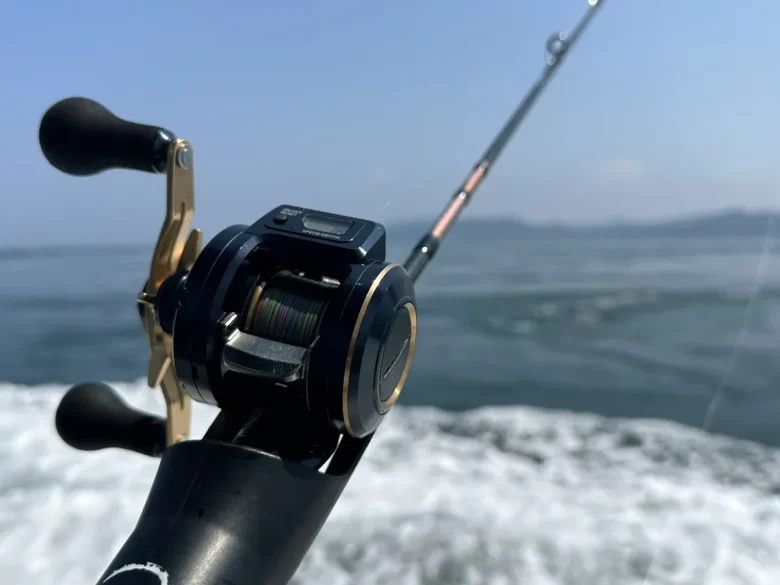
For the lures themselves, the two JDM benchmark ranges cover Australia comfortably: Shimano’s Engetsu heads run 45 to 200 g and Daiwa’s Kohga Bayrubber Free runs 45 to 250 g, both with interchangeable skirt units. We rank the full lure lineup, weights and skirt logic in our guide to the best tairaba heads and skirts, so we won’t repeat it here.
You’re not entirely dependent on imports. A handful of Australian and NZ brands now sell “kabura” or “slider” style jigs through local tackle shops, and they’ll catch fish on the same retrieve. The JDM originals still offer a deeper range of weights, tungsten options and replacement skirt systems, which is why we link them here, but if you want to test the method this weekend with whatever’s on the local shelf, a locally sold kabura jig on your lightest overhead outfit is a fair first experiment.
One of the quiet virtues of the lure is that snapper are only the headline act. In Japan the “guest fish” list is long, and Australia’s version is arguably better: flathead ambush it off the mud, gurnard and latchet climb all over it, and morwong, trevally, pearl perch and even the odd kingfish will take a swipe. A tai rubber fishes year-round, not just through the spring run, which makes it an easy lure to justify keeping rigged. Drift any broken ground with one down the back of the boat and see what the sounder didn’t tell you.
The recommended gear on one page. One rod and one reel from each pair makes a complete outfit; add heads in the weights for your water and you’re fishing.
| Gear | Model | Role | Price (ex-tax) |
|---|---|---|---|
| Rod, value | Shimano Engetsu BB B69M-S | Bay-weight all-rounder, soft solid tip | ¥20,200 (~A$202) |
| Rod, step-up | Shimano Engetsu SS B68M-S | Stiffer blank for deep water and current | ¥32,600 (~A$326) |
| Reel, value | Daiwa Kohga X IC | Counter reel at an entry price | ¥16,000 (~A$160) |
| Reel, step-up | Shimano Engetsu CT 150PG | Counter + Fall Lever for deep drifts | ¥34,800 (~A$348) |
Two clean ways to buy into the method, depending on how deep you expect to fish.
Starter combo: Engetsu BB B69M-S + Kohga X IC, ¥36,200 (~A$362)
Everything the bay scene asks for at the lowest sensible price: a soft solid-tip rod that hides the taps, and a genuine depth-counter reel. If your snapper fishing is Port Phillip, Western Port or similar sheltered water, this is the whole kit. Add a handful of 60 and 80 gram heads and go.
Step-up combo: Engetsu SS B68M-S + Engetsu CT 150PG, ¥67,400 (~A$674)
The outfit for deep reefs and hard drifts. The Spiral X blank stays composed under a 150 gram head, and the CT’s Fall Lever and counter let you fish the drop as deliberately as the retrieve. If you already know you’ll fish the method beyond one bay season, buy once and buy this.
Both combos take the same heads and skirts, so you can start light and upgrade later without re-buying lures.
If you’d rather assemble your own combination, our full JDM roundups of the best tairaba rods and best tairaba reels compare every tier from entry to flagship, including models we’ve left out here for space.
Time it right and the method sells itself. The southern snapper calendar peaks with the spring spawning run, roughly October to December in the Victorian bays, and the fish stay catchable on deeper coastal ground either side of it. Book the calm mornings, drift slow, and let the constant retrieve do the talking.
| State | Key snapper rules (recreational) |
|---|---|
| Victoria | Min size 28 cm; bag 10 (max 3 fish 40 cm or over); no filleting on the water (VFA guide) |
| South Australia | Closed in West Coast, Spencer Gulf and Gulf St Vincent/KI zones until 30 June 2027; South-East zone only, with mandatory catch reporting (PIRSA) |
| Other states | Rules differ; check your state fisheries authority before fishing |
Tai rubber isn’t a gimmick import. It’s the mainstream way an entire nation catches the same genus of fish we chase every spring, refined over decades into a method that’s cheap to run, easy to learn and genuinely deadly on pressured snapper. Start with one head, one skirt and the discipline to keep winding. The first time the taps turn into a bent rod, you’ll understand why Japanese boats fish almost nothing else.
Rod and reel specifications are referenced from Shimano and Daiwa official catalogue data. Prices are approximate street prices, tax excluded, in JPY with an approximate AUD conversion at A$1 ≈ ¥100 at the time of writing, and will vary. Snapper regulations are summarised from PIRSA and the Victorian Fisheries Authority as of July 2026 and may change; always check current rules for your state. Affiliate links may earn us a commission at no extra cost to you.