Best JDM Lures for European Seabass: Japanese Suzuki Lures That Work
ちゃんま
マイボ!

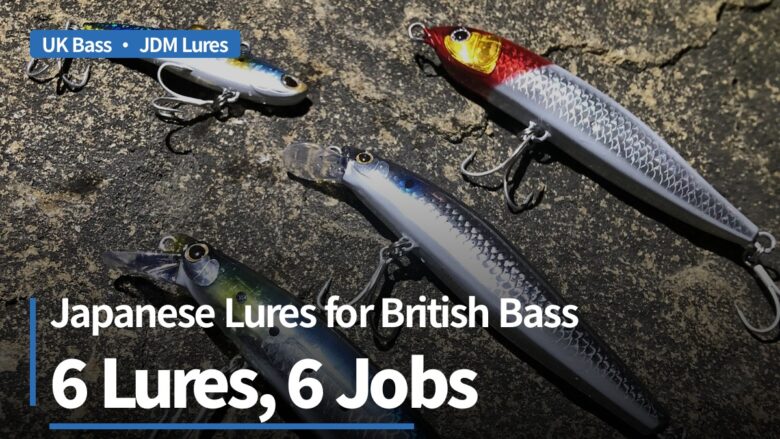
UK bass fishing changes shape every few miles. One session is a kelp-covered reef on a spring low, the next is a creek the colour of stewed tea, then a beach where the fish are sixty metres out and you can’t see why. A lure that saves you on one of those marks is dead weight on the next. So this guide is sorted by where you’re standing, not by lure category.
The Japanese angle needs a word of explanation. At home I fish for suzuki (鱸 / スズキ), the Japanese seabass, Lateolabrax japonicus. It isn’t your fish, Dicentrarchus labrax, but it lives more or less the same life: current seams, structure, baitfish, a lot of darkness. Japanese makers have spent three decades building lures around that behaviour, which is why so many of them cross over without modification. Our companion piece on JDM lures for European seabass handles the classic minnow shortlist. This one is about matching Japanese tools to British ground.
A note on prices and links. These are Japan Domestic Market lures, so buy links point at Amazon Japan, which ships internationally (check availability and shipping cost at checkout). Prices are the maker’s Japanese RRP, tax excluded, with rough conversions at 4 September 2026 rates of $1 to about ¥156 and £1 to about ¥211. Treat both as ballpark. If importing is new to you, our guide to buying JDM tackle from overseas covers the logistics.
One thing I should be straight about. I’ve never fished for bass in the UK. What follows is a Japanese suzuki angler reading your conditions and saying which Japanese lures should fit them, and why. Every number below comes off the maker’s own product page.
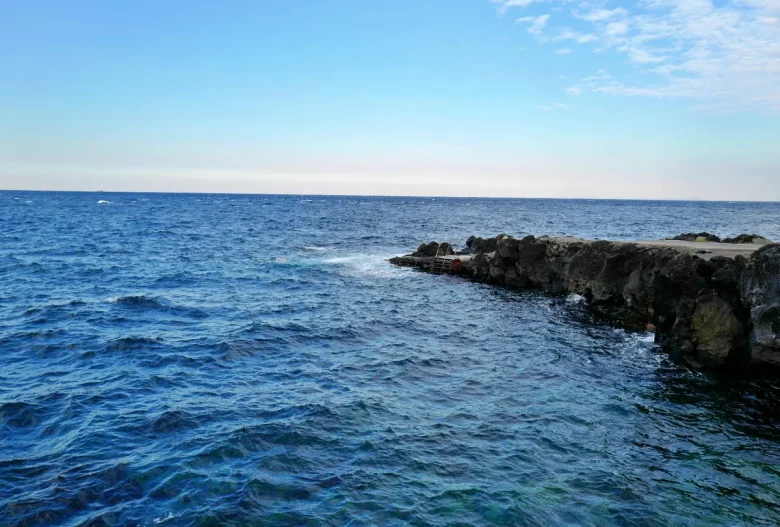
Spring tides here move a lot of water, and on the west coast the drop can be five metres or more. That leaves you casting over boulders, weed and standing kelp with a metre of water on top at best. Two things end sessions early: a lure that swims too deep, and a lure that won’t hold its line when the surface is broken. Anything running below about half a metre spends the evening collecting salad.
The komomo SF-125 arrived in 1998 and has been through two full redesigns since, but the job description hasn’t moved: cast it, wind it, and it holds a lane between 5 and 50 cm below the surface. That band is the whole point. You steer it with rod position, so a high tip keeps it skimming over a shallow reef, and dropping the tip a foot puts it deeper on the same cast.
What makes it work over rough ground is how it behaves at a crawl. It still swims properly when you’re barely turning the handle, which matters at night above kelp fronds you can’t see. The current version carries ima’s MRD moving-weight system and a redesigned head, so it starts swimming almost the moment it lands rather than sinking into trouble first.
The limitation is honest enough. Eighteen grams of floating minnow is not a distance weapon: put a headwind on it and the casts fall apart. There are better tools for that further down. On a calm evening over kelp, this is what I’d have tied on.

| How it fishes | Detail |
|---|---|
| Type | Floating lipless minnow, MRD moving weight |
| Action | Wobble and roll, holds at very low speed |
| Swim depth | 5 to 50 cm, adjustable by rod position |
| Maker’s recommended water | Tidal flats, estuary, river, surf |
| Model | Length | Weight | Type | Depth | Price (excl. tax) |
|---|---|---|---|---|---|
| ima komomo SF-125 | 125 mm | 18 g | Floating | 5 to 50 cm | ¥2,400 (~$15 / ~£11) |
The other answer to this ground is to fish above it completely. The Silent Salt Skimmer walks left and right on a slack-line twitch and sits still between moves, which is what you want over standing weed at first light. No lip, no rattle, nothing to snag. Its slim profile is deliberate: ima built it for pressured shallow fish that spook off a fatter, noisier popper, and the silent part of the name is the design brief.
Thirteen grams flies further than you’d guess for a topwater. Committing to one is still a decision. You will miss fish, and a bass that boils at a walking pencil without connecting often won’t come back for a second look. Keep a sinking lure ready to swap.

| How it fishes | Detail |
|---|---|
| Type | Topwater pencil, no rattle |
| Action | Dog walk on slack line, horizontal rest posture |
| Swim depth | Surface |
| Maker’s recommended water | Harbours, flats, estuary, river, rocky shore, offshore |
| Model | Length | Weight | Type | Depth | Price (excl. tax) |
|---|---|---|---|---|---|
| ima Silent Salt Skimmer | 110 mm | 13 g | Topwater | Surface | ¥2,100 (~$13 / ~£10) |
Estuary bass feed in dirty water more often than clean. Rain pushes silt down, the ebb drags it across the flats, and visibility drops to a foot. A tight rolling minnow is a lovely thing and largely invisible in that. You want something a fish can feel.
The VJ-16 is a jighead and a soft shad sold as one unit, and in Japan it has a reputation for being almost unfair. The head is shaped so the whole assembly shudders as you wind. Not a wide wobble: a fast, fine vibration that carries through coloured water and reaches fish that would never see a minnow.
Coreman gives it 95 mm overall, a 16 gram head and a 3 gram Alkali Shad body. Sixteen grams covers roughly the top three metres, and it casts a long way for its size because there’s no lip and almost no air resistance. On a creek mouth over a dropping tide you can fan casts across the flow and cover water quickly.
Two honest problems. The worm tears and you’ll get through them, so buy spares at the same time. And it’s a loud lure by design: over gin-clear water on sand it can be too much presence, which is exactly where a slim rolling minnow earns its keep instead. Those are covered in the European seabass lure guide.

| How it fishes | Detail |
|---|---|
| Type | Jighead plus soft shad, sold assembled |
| Action | Whole-body vibration on a straight retrieve |
| Working zone | Best in shallow water down to about 3 m |
| Supplied with | Alkali Shad 75 mm worm, Gamakatsu Treble 13 #10 |
| Model | Length | Head weight | Worm | Ring | Price (excl. tax) |
|---|---|---|---|---|---|
| Coreman VJ-16 | 95 mm | 16 g (worm 3 g) | Alkali Shad 75 mm | Coreman original #1 | ¥1,400 (~$9 / ~£7) |
| Coreman VJ-22 | 110 mm | 22 g (worm 4 g) | Alkali Shad 90 mm | Coreman original #1 | ¥1,500 (~$10 / ~£7) |
| Coreman VJ-28 | 113 mm | 28 g (worm 4 g) | Alkali Shad 90 mm | Coreman original #2 | ¥1,500 (~$10 / ~£7) |
Surf fishing is a distance problem with a swimming problem bolted on. You have to reach a gutter you can’t see, then keep the lure tracking in water that’s trying to roll it over. Floating minnows get thrown out of the wave face.
Blue Blue set out to make the furthest-casting 140 mm minnow they could, and said so openly at launch. The result is a 23 gram sinking minnow that traces about a metre down, which is the right window for a shallow surf gutter on a making tide. A body that dense also stays pinned in a wave instead of skating out of it.
Because it sinks, you get to choose your depth by counting. Cast, count to three, start winding, and you’re up high. Count to eight and you’re down among the bar. On a beach where the sand rearranges itself every week, that beats a lure locked to one running depth.
It is not a shallow-water lure. In a foot of water over the top of the tide, the komomo is the better call. A 140 mm minnow at 23 grams also wants a proper nine to ten foot rod rather than a light lure wand, and thin braid to get the distance the design promises. If you’re assembling the rest of the outfit, our notes on JDM PE line and leader ratings translate the Japanese numbers into pound test.

| How it fishes | Detail |
|---|---|
| Type | Sinking minnow, long-cast design |
| Action | Swims steadily in broken water; depth set by count |
| Swim depth | About 100 cm on a straight retrieve |
| Hardware | Three #4 trebles on #3 rings |
| Model | Length | Weight | Type | Depth | Price (excl. tax) |
|---|---|---|---|---|---|
| Blooowin! 140S | 140 mm | 23 g | Sinking | 100 cm | ¥2,680 (~$17 / ~£13) |
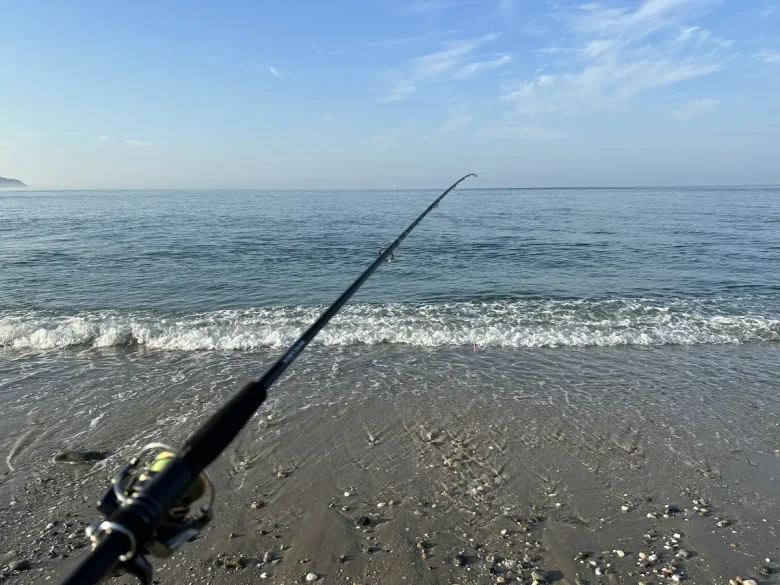
If the surf goes flat and the bass move out past casting range, that’s a metal jig situation rather than a minnow one. We’ve written that up separately in our guide to choosing JDM metal jigs.
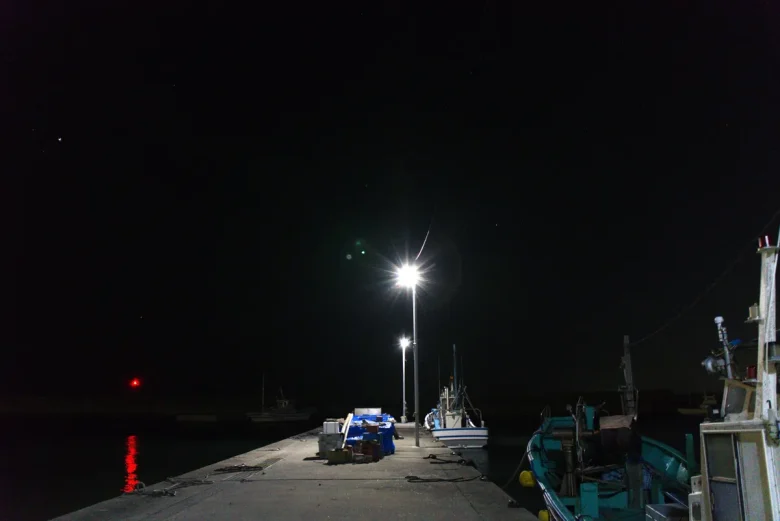
Night fishing under harbour lights is where the smallest lure here earns its place. Bass sitting in a light line eat small things: whitebait, tiny sandeel, sometimes worm. A 130 mm minnow ploughing through that scatters the lot.
DUO calls the Manic’s action a fine-vibration tight roll, and the design exists to strip out the snaking wobble most sinking pencils carry. It fishes the top 10 cm on a slow wind, so you can hold it right along the edge of the light where fish sit. Its reputation in Japan comes from the spring worm hatch, when nothing with an obvious action gets touched. An angler on a lit UK harbour wall in October is facing the same problem in a different coat.
It’s a quiet lure and it does nothing to help you: no thump through the rod tip, no obvious feedback, so you have to fish it deliberately and trust it. If the whitebait have moved on and the bait is bigger, the 115 and 155 do the same job with more presence. This sits in the same family as the Apia Punch Line Slim from our European seabass guide, tuned finer and lighter, which is the point under lights.

| How it fishes | Detail |
|---|---|
| Type | Fixed-weight sinking pencil |
| Action | Fine-vibration tight roll, minimal side-to-side |
| Swim depth | 0 to 0.1 m on a slow retrieve |
| Hardware | #10 trebles, #1.5 hook-eye rings |
| Model | Length | Weight | Type | Depth | Price (excl. tax) |
|---|---|---|---|---|---|
| Bay Ruf Manic 95 | 95 mm | 8 g | Sinking | 0 to 0.1 m | ¥1,600 (~$10 / ~£8) |
| Bay Ruf Manic 115 | 115 mm | 16 g | Sinking | 0 to 0.2 m | ¥1,780 (~$11 / ~£8) |
| Bay Ruf Manic 155 | 155 mm | 27.5 g | Sinking | 0.2 to 0.3 m | ¥1,980 (~$13 / ~£9) |
Hard lures are wonderful until you feed three of them to a boulder field in one session. That’s roughly £40 gone. A soft plastic on a jighead or a weedless hook costs a fraction and comes back through ground a treble can’t survive.
Keitech is a Japanese company based near Mount Fuji, and the Easy Shiner is its most travelled shape. European bass anglers adopted it years before anyone was using the letters JDM, which is why it rarely gets filed as an import. It’s a ribbed paddle-tail built to swim at genuinely slow speeds, with a low centre of gravity from extra salt loaded into the belly, so it holds a level posture instead of rolling onto its side when you crawl it.
Four inches is the size I’d start with for bass. Seven to a pack, and Keitech specifies a 2/0 offset worm hook, which also lets you rig it weedless over rock. At about ¥740 a pack you can afford to lose them, and over the kind of ground where you’d never risk a ¥2,680 minnow, that changes what you’re willing to fish.
It’s a freshwater bass lure by origin, so nothing about it is built around saltwater hardware, and the tails don’t survive many fish. Pair it with a decent jighead and accept that it’s a consumable. This is also the one lure here with a live Amazon US listing, which reaches UK buyers without going through Japan.

| How it fishes | Detail |
|---|---|
| Type | Ribbed paddle-tail soft plastic |
| Action | Tail kicks at very low retrieve speeds |
| Design note | Salt-loaded belly for a low centre of gravity |
| Rigging | Offset worm hook (2/0 for the 4 in), jighead, or weedless |
| Model | Length | Per pack | Recommended hook | Price (excl. tax) |
|---|---|---|---|---|
| Easy Shiner 4 in | 4 inch | 7 | Offset worm hook #2/0 | ¥740 (~$5 / ~£3.50) |
| Easy Shiner 3 in | 3 inch | 10 | Offset worm hook #2 or #1 | ¥740 (~$5 / ~£3.50) |
| Easy Shiner 5 in | 5 inch | 5 | Offset worm hook #4/0 or #5/0 | ¥840 (~$5 / ~£4) |
Here’s a habit I’ve never properly justified, and it keeps catching. In Japanese light shore jigging (LSJ), the accepted way to fish a metal jig or a hard lure is with rod action: jerks, pauses, a rhythm you build. I regularly ignore all of that and wind the thing back at one flat speed. Nobody on the rocks near me does it. It catches anyway, and it’s caught often enough that I’ve stopped calling it luck.
That’s an LSJ observation from the Seto Inland Sea and Osaka Bay, not a bass observation from Cornwall, so take it as a suggestion rather than a rule. If the same logic carries across, it’s cheap to test. Take the lure you’ve been told to work, the Salt Skimmer or the Easy Shiner, and just wind it straight for ten casts before you go back to doing it properly. Finding out costs nothing.
One row each, lined up so the gaps in your own box show up fast.
| Lure | Size / Weight | Type | Zone | Where it earns its place | Price (excl. tax) |
|---|---|---|---|---|---|
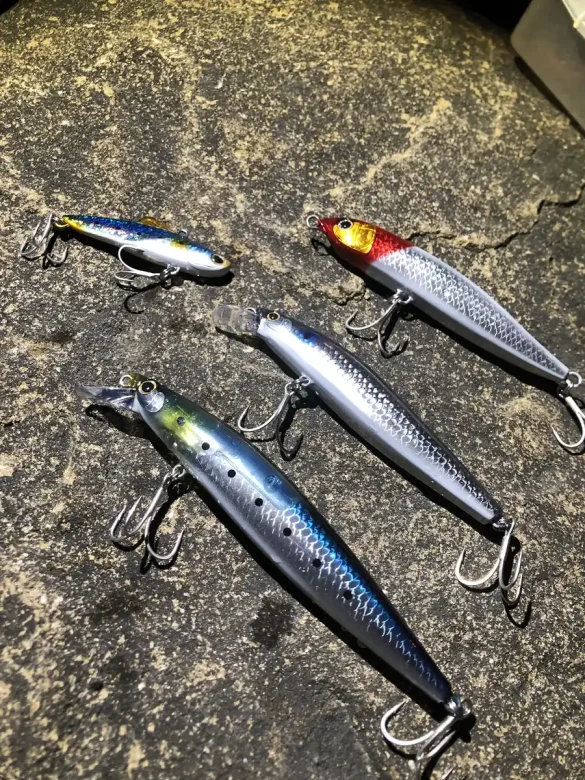
| ima komomo SF-125 | 125 mm / 18 g | Floating | 5 to 50 cm | Shallow reef, kelp, calm evenings | ¥2,400 (~$15 / ~£11) |
| ima Silent Salt Skimmer | 110 mm / 13 g | Topwater | Surface | First light over standing weed | ¥2,100 (~$13 / ~£10) |
| Coreman VJ-16 | 95 mm / 16 g head | Vibrating jighead | To about 3 m | Coloured estuary water, moving tide | ¥1,400 (~$9 / ~£7) |
| Blue Blue Blooowin! 140S | 140 mm / 23 g | Sinking | About 100 cm | Surf gutters and long casts | ¥2,680 (~$17 / ~£13) |
| DUO Bay Ruf Manic 95 | 95 mm / 8 g | Sinking pencil | 0 to 0.1 m | Lit harbour walls, tiny bait | ¥1,600 (~$10 / ~£8) |
| Keitech Easy Shiner 4 in | 4 inch / 7 per pack | Soft plastic | Set by your jighead | Rock, weed and anywhere you lose lures | ¥740 (~$5 / ~£3.50) |
Six is a shopping list, not a starting point. Buying three? Buy these three.
Top pick: ima komomo SF-125
The most useful single lure for British bass ground. It holds a lane between 5 and 50 cm, keeps swimming when you slow right down, and covers reef, estuary and shallow surf on rod height alone. Around ¥2,400 excl. tax (~$15 / ~£11).
Distance pick: Blue Blue Blooowin! 140S
For beaches, wind, and fish further out than you’d like. A 23 gram sinking body designed around casting range, and you set the depth by counting it down. Around ¥2,680 excl. tax (~$17 / ~£13).
Budget pick: Keitech Easy Shiner 4 in
Seven baits for a third of the price of one minnow. Rig it weedless and fish the rocky, weedy, snag-ridden water you’ve been walking past. Around ¥740 excl. tax per pack (~$5 / ~£3.50).
Check Keitech Easy Shiner on Amazon Japan / Amazon US listing
Bass are a managed stock in UK waters and the recreational rules are not advisory. According to the Marine Management Organisation’s bass fishing guidance published on GOV.UK, current as of February 2026: from 1 February to 31 March, recreational bass fishing in the relevant ICES divisions is catch and release only, rod and handline. Outside that window there’s a bag limit of three fish per angler per day. The minimum conservation reference size is 42 cm, and anything under that goes back. Bass nursery areas can carry further restrictions of their own.
Those numbers get renegotiated annually, so check the current rules before you fish. The source is the MMO bass fishing guidance on GOV.UK. I’m writing from Japan and I’m not the person to take enforcement advice from.
Do I have to import, or can I buy these here? Mixed, and it changes with the season. ima and Blue Blue do turn up at UK sea-lure specialists, and Keitech is widely stocked. Coreman and the smaller DUO sizes are much harder to find outside Japan, which is where the Amazon Japan links above come in. Check UK retailers first.
Will Amazon Japan actually ship to the UK? Most of these listings do, but availability and cost vary by seller and colour, so confirm both at checkout before you commit. Import charges are on you, not the seller. Our JDM importing guide goes through what to expect.
Do I need to upgrade the hooks and rings? Often, yes, on the hard lures. Stock trebles are set up for suzuki, which fight hard but rarely alongside the standing rock a UK reef mark throws at you. Fishing structure, or expecting a double? Inspect the split rings and step up.
Is the Manic 95 just a duplicate of the sinking pencil in your European seabass guide? Same family, different tuning. The Apia Punch Line Slim 90 is 12 grams and fishes the mid to bottom layers; the Manic 95 is 8 grams and holds in the top 10 cm. Under harbour lights that difference decides whether you get bites.
An honest note to finish on. Every trip I promise myself I’ll test properly: work the box, find the pattern, write it down. It never survives contact with the water. One January at a stocked trout fishery in Hyogo I’d planned exactly that, then spent the day throwing the same spoons and cranks that had worked before. The popper never left the box. I packed up in the early afternoon instead of fishing to the evening limit, because hunger won. Four fish, and a drive home full of what-ifs.
Which is why the first lure matters more than the sixth. You’ll buy six and throw one. So buy the one that fits the ground you actually stand on: the komomo SF-125 if that’s reef and estuary, the Blooowin! 140S if it’s open beach, the Manic 95 if it’s a lit wall at midnight. Then check the current bass rules, and go and prove me wrong. Chasing the same fish from the American side? Our notes on JDM tackle for striped bass cover that crossover.