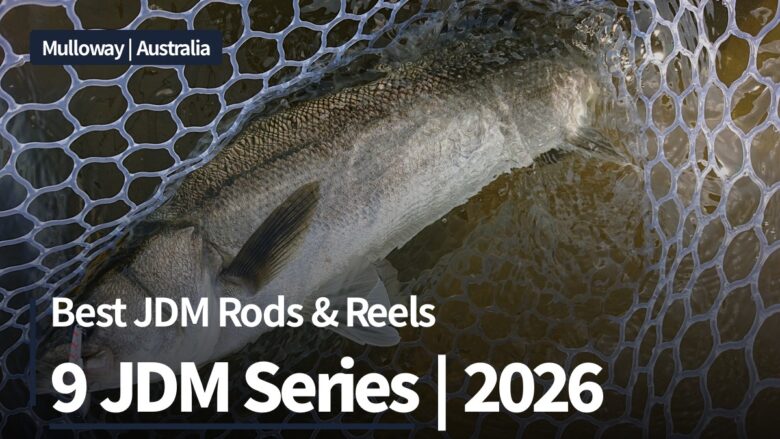
Best JDM Lures for Dusky Flathead in Australia: Soft Plastics and Vibes
ちゃんま
マイボ!

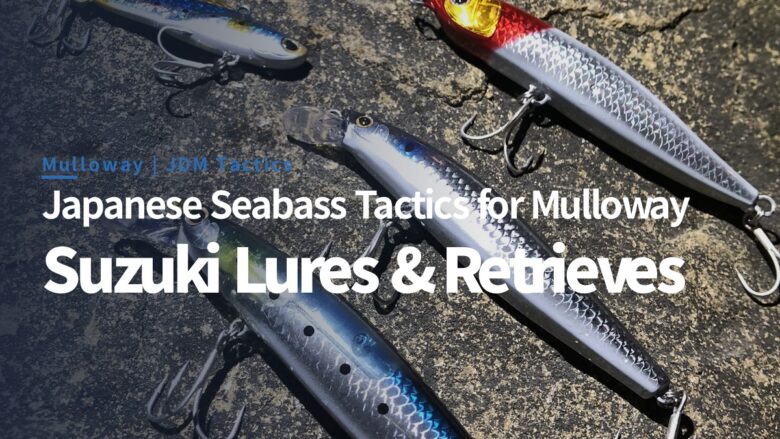
Can lure tactics built for Japanese seabass really fool an Australian mulloway? That’s the question this whole guide hangs on, so let’s answer it straight away: yes. Swap a Japanese estuary for an Australian one and the game barely changes. Same ambush water, same low-light bite windows, same slow, deliberate take that loads the rod into something heavy and unhurried.
Mulloway (Argyrosomus japonicus) and Japanese seabass, or suzuki (鱸 / スズキ, Lateolabrax japonicus), aren’t the same fish. But they hunt the same way, in the same kind of water, and they fall for the same lures worked with the same rhythm. Decades of Japanese suzuki lure fishing has produced tactics and tackle that map almost perfectly onto chasing mulloway from the bank. That’s the whole idea behind this guide.
This is a hub piece, a Japanese angler’s take on applying suzuki methods to Aussie mulloway, and it’s organised around the questions anglers actually ask. Why does the crossover work? Which Japanese (JDM) lure categories earn a spot in your box, and how do you work them? Where and when do you find the fish, and what gear ties it all together? Each one gets its own section below. Two companion guides on the best JDM lures and rods for mulloway are on the way, and I’ll point to them as we go.
Yes, and the overlap runs deeper than a passing resemblance. Start with the fish itself.
Mulloway are a large, silver, soft-mouthed predator from the croaker family, found right around the southern half of Australia. Anglers know them by a pile of names: jewfish, jewies, river kings, and “soapies” for the small juveniles. They hold around structure, hunt by ambush, and switch on hard in low light and moving water. A good one is a genuine prize, and they have a reputation for being moody, which is exactly why a thoughtful, finesse-led approach pays off.
Here’s the neat part. The mulloway’s species name, japonicus, comes from the fact that it was first described from specimens found near Nagasaki, Japan. The fish literally carries Japan in its scientific name. So while suzuki and mulloway are different animals, the Japanese connection isn’t a stretch we invented. Both are big estuary and coastal predators that the Japanese tackle world has spent a long time learning to fool.
Suzuki fishing in Japan is one of the country’s biggest lure scenes, built around shore-based anglers working rivers, harbours, surf and bay structure for a soft-mouthed predator that feeds on the tide and the dark. Sound familiar? The Japanese have refined minnows, vibration baits and soft plastics, plus the retrieves to match, specifically for a fish that behaves a lot like a mulloway. You don’t have to reinvent anything. You borrow a proven system and point it at a new target.
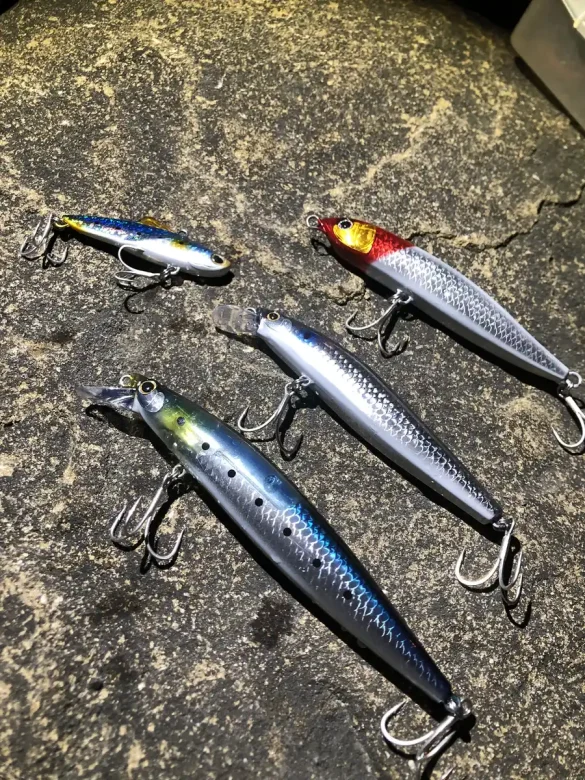
This is where Japanese tackle really earns its keep. Suzuki fishing has driven makers to refine four broad lure types, and each one has a clear job on mulloway too. Think in categories first, then in specific lures. I’ll name a few representative JDM series so you know what to search for, but the dedicated lure guide will go deeper on models, sizes and colours.
Slim, baitfish-profile minnows are the backbone of suzuki fishing, and they shine on mulloway working shallow flats, current seams and the surf edge. A suspending or slow-floating minnow can be swum, twitched, or simply drifted in the current right past a fish’s nose. The Japanese market is deep here, with long-casting and finely tuned designs like the Daiwa Shoreline Shiner and Megabass Vision range built for exactly this kind of land-based predator fishing. For mulloway, lean toward larger sizes in natural baitfish patterns.
Soft plastics are arguably the most consistent mulloway lure going, and they’re a natural fit for the Japanese finesse mindset. A paddle-tail or jerk-shad in the four to seven inch range, rigged on a jighead matched to the depth and current, covers most situations. The plastic thumps on the drop and the swim, and the slow fall is often where the bite comes. If you only carry one lure type for mulloway, make it a box of paddle-tails in natural baitfish colours. Match jighead weight to the water, heavy enough to hold the bottom in current, light enough to fall naturally.
When fish hold deep, in holes, channels and around heavy structure, a vibration bait is the tool. Soft vibes and metal blades sink fast, put out a tight, high-frequency thump, and let you fish the bottom of a deep hole on a lift-and-drop. This is a core suzuki tactic for cold, deep, or pressured fish, and it carries straight across. A 90 to 100mm soft vibe is a great mulloway size. Japanese makers offer plenty of refined options, and the category is one of the most underrated weapons for a tough day.
Topwater isn’t the first thing most anglers reach for on mulloway, but in shallow estuaries on a calm, dark, high tide it can be magic. A wake bait or a big pencil drawing a V across the surface taps into the same low-light, shallow-water aggression that suzuki anglers exploit. It won’t be your everyday choice, but on the right night, a surface eat from a mulloway is one of the best things in land-based fishing. Keep one or two in the box for those flat, glassy sessions.
Choosing the lure is half the job. The other half is how you move it, and this is where the Japanese suzuki playbook gives you a real edge. The common thread across all of it: let the current do the work, keep things slow, and make the lure look like easy, struggling prey.
Slow, steady swim. The simplest retrieve, and often the best. Cast across or up-current, then wind just fast enough to feel the lure working, no faster. A minnow or paddle-tail swimming dead-slow through a seam triggers a lot of mulloway. The mistake almost everyone makes is winding too quickly. Slow it down until you think it’s too slow, then slow it a touch more.
Twitch and pause. Borrowed straight from jerkbait suzuki fishing: short, sharp twitches of the rod tip to dart the lure, then a pause to let it hang or sink. The pause is critical. Most takes come on the pause or the drop, when the lure looks wounded and helpless. Feel for the load, then sweep into the fish rather than striking hard against that soft mouth.
Drift and swing. A river and estuary classic. Cast up-current and let the lure drift down naturally on a tight line, sweeping it across the current seam in front of holding fish. You’re not really retrieving, you’re steering. The lure comes past the structure looking like a baitfish that lost its footing in the flow. This drift presentation is one of the most effective and most overlooked ways to catch a mulloway.
Lift and drop. For vibes and plastics in deep water. Lift the rod to hop the lure off the bottom, then let it flutter back down on a controlled line, staying in contact so you feel the tap. Work it back in measured hops through the deep hole. Vary the height and speed of the lift until something responds, then repeat exactly what got the bite.
From years of suzuki fishing in Japan, the lesson that carries hardest is patience. The anglers who do well aren’t ripping lures back. They’re working a likely seam slowly, changing the retrieve in small ways, and reading the bite on the pause. Point that same patience at a mulloway and you’ll out-fish a faster, busier approach most days.
A box full of the right lures won’t do much if you’re casting at empty water. Mulloway are structure-and-tide animals, and a Japanese seabass angler reads water the same way: look for the spot where bait gets funnelled and a predator can sit out of the current and pounce. Get the location right and the rest follows.
Estuaries are the classic mulloway ground, and they’re where the suzuki crossover is strongest. School mulloway run the system on the tide, holding around bridge pylons, rock walls, deep edges, drop-offs and current seams where bait stacks up. Work the down-current side of structure, where a fish can hang in the slack and ambush anything swept past. This is textbook Japanese seabass water, and it fishes almost identically.
Bigger mulloway prowl the surf, hunting along gutters, holes and the edges of the white water where waves stir up baitfish, worms and pipis. A deep gutter running parallel to the beach, or a hole behind a sandbar, is prime. The fish use the churn as cover, so the messy water that looks unfishable is often exactly where they sit. Japanese suzuki anglers fish the surf the same way, casting into the wash and letting the lure work the turbulent edge.
In the heat of the day, or when fish go quiet, mulloway drop into deep holes, channel edges and the shadow under bridges and jetties. These spots hold fish through the tide and are worth a cast even when nothing’s showing on the surface. A vibe or a soft plastic hopped along the bottom of a deep hole is one of the most reliable ways to pull a mulloway out of cover. Wharves, moored boats and bridge shadow lines all do the same job: they give an ambush predator somewhere to hide.
If there’s one rule, it’s this: fish the change. Mulloway feed best around moving water and dim light, so the run-up to dark, the first hours of night, and dawn are the standout windows, especially when they line up with a tide change. A run-out tide that drains bait off the flats and past a structure edge is a classic mulloway bite. A flat, slack, midday tide in bright sun is the hardest time to tempt one, so don’t judge a spot by a session fished at the wrong moment. This low-light, tide-driven pattern is the exact same one suzuki anglers live by back in Japan.
Mulloway gear spans a wide range, from a light estuary outfit for schoolies to a heavy surf rod for big fish in the wash, so here’s the high-level picture. A dedicated rod-and-reel breakdown is coming in a separate guide, but this will get you in the right ballpark.
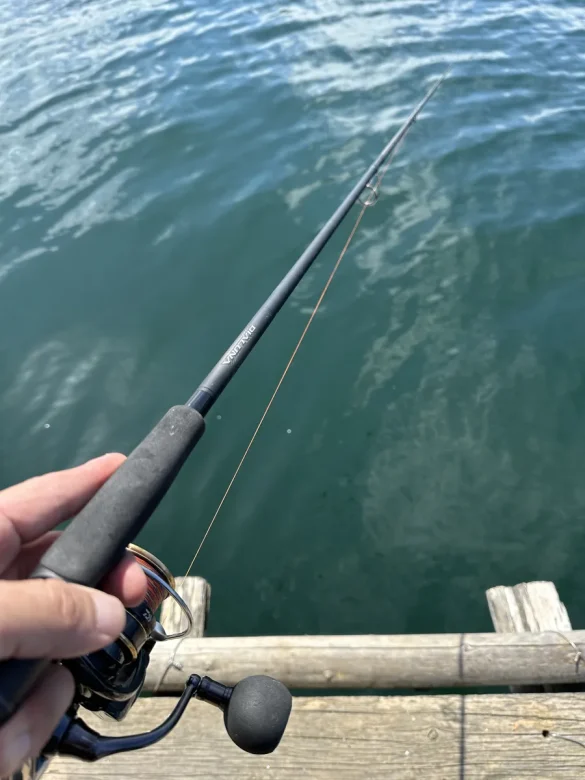
For estuary and river mulloway, a longer spin rod around seven to eight feet rated roughly 2 to 5 kg, paired with a 2500 to 4000 size spinning reel, covers most school fish. That outfit casts a minnow or plastic a long way and has the soft tip to protect a mulloway’s mouth. For the surf and bigger fish, you’ll step up to a longer, heavier rod and a larger reel with more drag and line capacity. Japanese seabass rods translate well to the estuary end of this; longer, parabolic blanks designed to cast far and cushion a head-shaking fish are exactly what mulloway demand.
For line, braid is the standard: thin, low-stretch, and great for bite detection and distance. Something in the 10 to 20 lb range suits most estuary work, heavier for the surf and big-fish structure. Add a fluorocarbon leader, because mulloway live around abrasive rock walls, pylons and oyster-encrusted structure that’ll cut you off in a heartbeat. Don’t skimp on leader strength around structure; a thick fluoro leader is cheap insurance against a heartbreaking bust-off. Run it long enough to take the rubbing, joined to the braid with a solid knot like an FG. The dedicated rod and reel guide will get specific on JDM models worth importing.
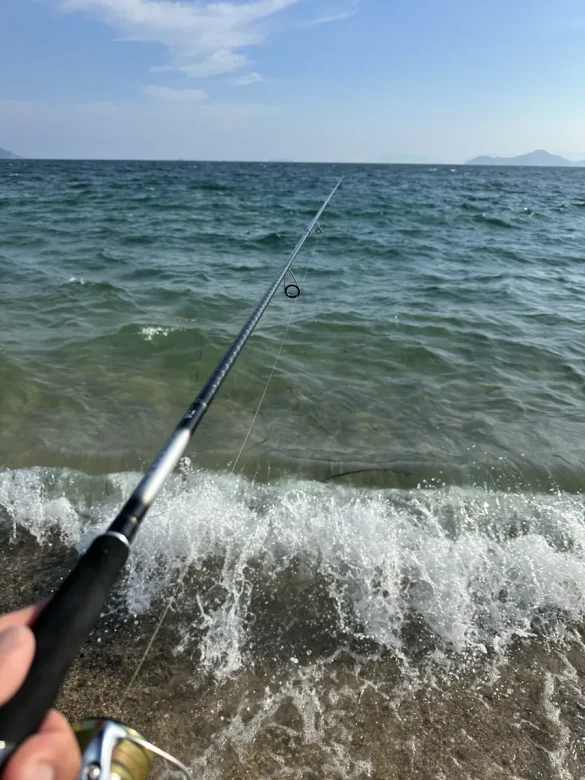
If you’re new to chasing mulloway, here’s a no-fuss starting point built on the suzuki approach. Pick an estuary with structure: a bridge, a rock wall, a deep hole near current. Fish the run-up to dark and the first hour of night, ideally over a tide change. Tie on a four to five inch paddle-tail on a jighead, or a slim minnow, and work it slow through the seam beside the structure. That single plan accounts for a huge share of land-based mulloway.
Keep your lure box simple to begin with: a handful of paddle-tail plastics in natural baitfish colours, a couple of suspending minnows, and one soft vibe for the deep holes. Match the weight to the water, fish slowly, and put your time in at the right end of the day. Time on the water during the prime low-light window beats any single piece of gear. Many of the most refined minnows, vibes and plastics for this fishing are Japanese, and JDM models ship internationally from Amazon Japan, so check availability and shipping cost at checkout.
One last thing before you keep a fish. Mulloway have minimum legal sizes and bag limits that vary by state, and some areas carry extra rules, so check your local state regulations for current size and bag limits before you head out. They’re a slow-growing, prized fish, and releasing the smaller ones keeps the estuaries producing for next season.
Do suzuki tactics work on mulloway? Yes: different fish, same thinking. Which lures? Match the category to the depth, minnows and paddle-tails up top, vibes and blades down deep. How do you work them? Slow, on the pause, with a suzuki angler’s patience. Where and when? Structure and current seams, fished through the low-light, tide-change windows. Borrow a system the Japanese have spent decades sharpening, and a moody, hard-to-tempt fish starts to feel a lot more catchable.
This guide is the hub for our mulloway content. Dedicated companion guides to the best JDM lures for mulloway and the best JDM rods and reels for mulloway are on the way, and they’ll get specific on the models, sizes and combos worth importing. In the meantime, you’ll find more Japanese-style fishing adapted for Australian waters across the rest of the site.