Best Tairaba Rods: JDM Picks for Offshore Bottom Fishing
ちゃんま
マイボ!

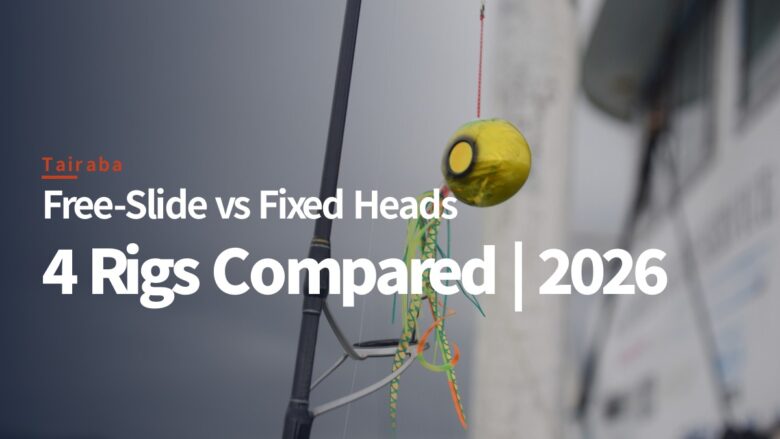
Buy a tairaba (鯛ラバ, the Japanese sea bream jig) in Japan today and it will almost certainly be a free-slide model. The head isn’t tied to anything. Your leader runs straight through it, and the skirt-and-hook unit hangs below on the same piece of line. Older kabura jigs, and most of the ready-rigged ones sold outside Japan, keep the head locked to the skirt instead.
Anglers coming to this fishery from the US usually meet the fixed version first, then wonder whether the JDM free-slide stuff is worth the import hassle. Short version: the sliding head does something real for you when a big madai starts shaking its head. It also has one weak point that the manufacturers themselves design around. This piece walks through the mechanics, the situations where a fixed rig is the better tool, and four lures you can actually buy right now. If tairaba is new to you, our complete guide to tairaba fishing covers the basics first.
Pricing note: Japanese products are shown at maker suggested prices in JPY with an approximate USD conversion at roughly ¥155 = $1 at the time of writing. Daiwa and Shimano list prices excluding tax; Hayabusa lists them including tax. JDM links point to Amazon Japan, which ships internationally (check availability and cost at checkout).
If you’re buying one tairaba for boat fishing over sand, gravel or broken reef, buy a free-slide rig. The head separating from the hook on the hookset is the single biggest reason to choose it, and every major Japanese brand builds its main tairaba line this way now.
Default pick: Daiwa Kohga Bayrubber Free β
A complete free-slide rig with Daiwa’s β unit, sold in eight weights from 45 g to 250 g. The nectie unit pops off and back on in seconds, which matters more over a season than any single feature on the head. ¥1,150 to ¥1,800 excl. tax (about $7 to $12).
Two jobs still go to a fixed, one-piece jig. The first is casting and covering water in the shallows, where a rig that stays as a single unit through the air and on the drop simply gives you fewer problems. The second is buying locally: if you want to fish tairaba style in the US this weekend, a Shimano Lucanus off the shelf beats waiting three weeks for a parcel from Japan.
Fixed-style pick you can buy today: Shimano Lucanus Jig
Shimano describes it as its standard, easy-to-use tai-rubber style slow jig. It arrives assembled with twin assist hooks and a replaceable silicone skirt, in 60 g, 80 g, 100 g and 150 g.
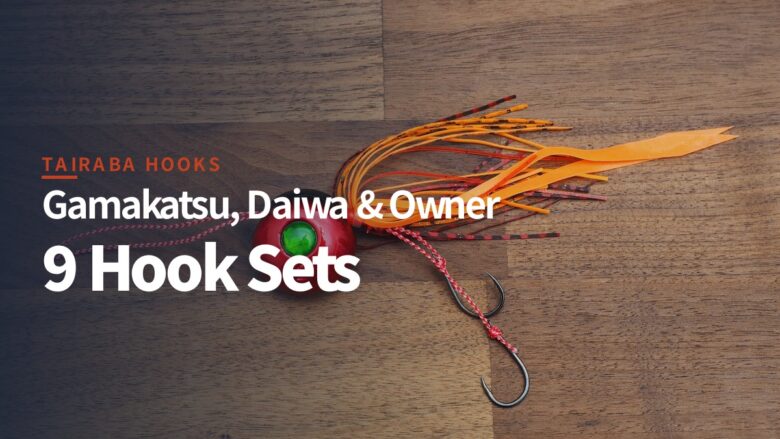
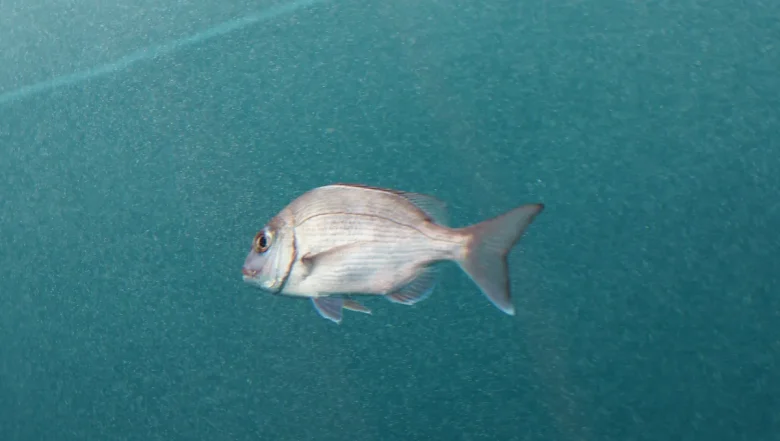
Look at the head of any current Japanese tairaba and you’ll find a pipe moulded through the middle. Shimano calls the one in the Engetsu Tiger Bakubaku a “line-break prevention POM pipe” made from abrasion-resistant material, and its instructions say to tie the leader directly to the lure. Hayabusa fits what it calls a low-friction pipe whose stated job is to let the head slide smoothly. Daiwa’s β head uses a wide-mouthed resin pipe designed so the leader knot and the nose of the skirt unit tuck up inside it.
All three describe the same architecture: the leader passes through the head and terminates at the hook unit, so the lead is a free passenger on the line rather than part of the hook assembly.
Three things follow from that. On the drop, the dense head falls faster than the silicone, so the skirt and nectie trail behind and flutter instead of dropping like a stone. Daiwa’s own tairaba coaching page, written with charter skipper and field tester Shunya Hirata, puts it bluntly: the fall is when you gather fish, the wind is when you feed them. Second, when a fish eats and turns, the head rides up the leader instead of hanging off the hook. Hayabusa’s description of its Free Slide system says exactly this: with head and hook separated, leverage has less to work with, and fewer fish come off. A madai fights by slamming its head from side to side, and a 100 g weight swinging on a small hook hold is how that fight gets won by the fish.
Third, and less often mentioned, the leader now has a hard object running up and down it all day. That’s why the pipe exists at all. Shimano named the part after the problem it solves. Check the last metre of your leader after a session on the rocks, and retie more often than you would with a jig that never touches the line.
| Moment | Free-slide rig | Fixed rig |
|---|---|---|
| On the drop | Head outruns the skirt; nectie trails and flutters behind | Whole lure falls as one silhouette, head first |
| At the bite | Head can move independently of the hook unit | Fish feels the full weight of the head immediately |
| Head-shaking fight | Weight slides up the leader, away from the hook hold | Weight stays on the hook and pivots against it |
| Leader wear | Head runs on the leader, so an abrasion-resistant pipe is fitted | Leader never passes through the head |
| Rigging | Head and skirt unit are separate parts you combine | Comes assembled, usually with a replaceable skirt |
“Fixed is obsolete” gets repeated a lot in English-language forums, and it isn’t true. A one-piece jig has no separate unit to tangle around itself, nothing to reseat after a bad drop, and no wear point inside the head. Cast one at a shallow reef edge and it flies and lands as a single object, which is the whole reason casting-oriented tairaba fishing keeps its rigs simple.
Shimano’s own notes on the Lucanus point at a second advantage. The jig carries a dual attaching eye-loop, so in fast current you can tie an extra sinker to the lower eye rather than swapping the whole lure. On a free-slide system the equivalent fix is carrying a heavier head, which means carrying more heads.
There’s also the plain matter of supply. Free-slide heads, units, spare necties and hooks add up to a small parts collection, and every one of those parts is easiest to buy in Japan. A fixed jig from a US tackle shop needs a leader knot and nothing else.
Daiwa’s β system is about swapping parts fast. The nectie and skirt are bound into one unit that snaps onto the hook line, the hook itself tucks down inside that unit, and the head’s pipe is opened wide enough to swallow both the leader knot and the nose of the unit. In practice that means changing colour or nectie shape takes seconds with cold hands, which is the difference between actually experimenting during a drift and telling yourself you’ll do it next trip.

| Feature | What it does |
|---|---|
| β system unit | Nectie and skirt held together as one replaceable unit, with the hook sitting inside it for a cleaner hookset |
| New-shape resin pipe | Wide-mouthed pipe in the head that accepts the leader knot and the tip of the unit, keeping the nectie seated on the retrieve |
| SaqSas hooks (サクサス) | Fluorine-based plating that Daiwa rates at up to 40% better penetration than its painted hooks (about 20% on average, in-house testing) |
| Adel holo finish | Holographic finish Daiwa developed from the study of fish skin |
| Model | Weight | Head type | Material | Recommended leader | Price (excl. tax) |
|---|---|---|---|---|---|
| Bayrubber Free β 45 g | 45 g | Round | Lead | Fluoro #4 to #5 | ¥1,150 (~$7) |
| Bayrubber Free β 80 g | 80 g | Round | Lead | Fluoro #4 to #5 | ¥1,250 (~$8) |
| Bayrubber Free β 100 g | 100 g | Round | Lead | Fluoro #4 to #5 | ¥1,300 (~$8.4) |
| Bayrubber Free β 150 g | 150 g | Round | Lead | Fluoro #4 to #5 | ¥1,400 (~$9) |
| Bayrubber Free β 250 g | 250 g | Round | Lead | Fluoro #4 to #5 | ¥1,800 (~$11.6) |
Anyone planning to fish tairaba more than a handful of times a year. The parts ecosystem behind the β system is the real purchase: replacement units in straight, curly and thin-nectie versions all fit the same heads. If you only ever want one lure and never intend to tune it, you’re paying for flexibility you won’t use.
Shimano went a different way with the head shape. The Tiger Bakubaku is square rather than round, with flat faces that grab water and swim the lure wide on a slow retrieve. It ships complete, with a thick nectie chosen partly because it fouls the hook less, and a change stopper that keeps two necties from interfering with each other when you swap them.
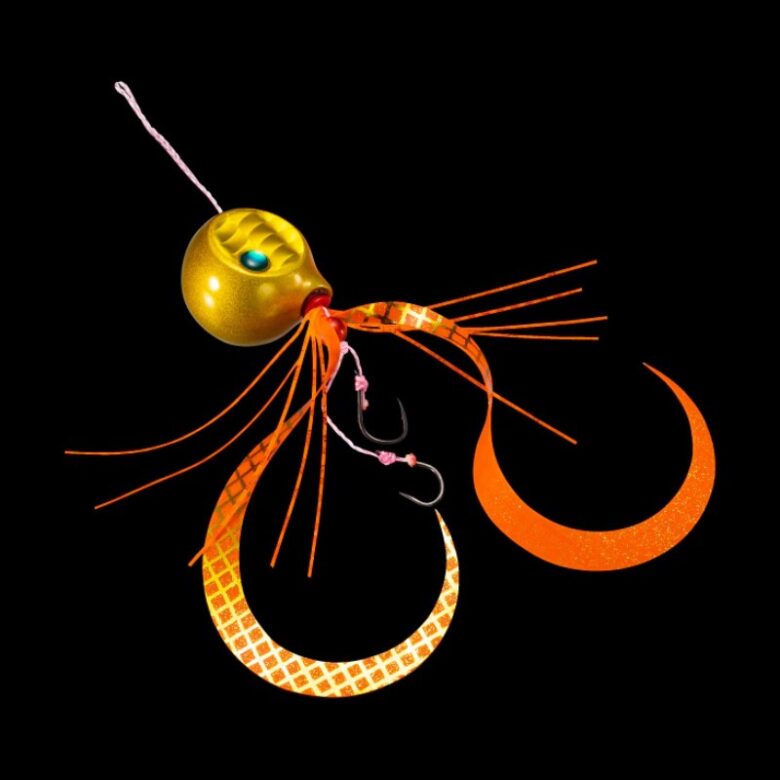
| Model | Weight | Head shape | Stock hook | Price (excl. tax) |
|---|---|---|---|---|
| Tiger Bakubaku 45 g | 45 g | Square | Bakugake #11 | ¥1,200 (~$7.7) |
| Tiger Bakubaku 80 g | 80 g | Square | Bakugake #11 | ¥1,200 (~$7.7) |
| Tiger Bakubaku 120 g | 120 g | Square | Bakugake #11 | ¥1,350 (~$8.7) |
| Tiger Bakubaku 150 g | 150 g | Square | Bakugake #11 | ¥1,450 (~$9.4) |
| Tiger Bakubaku 200 g | 200 g | Square | Bakugake #11 | ¥1,550 (~$10) |
| Feature | What it does |
|---|---|
| Line-break prevention POM pipe | Abrasion-resistant pipe through the head, shaped to also accept Shimano’s Surusuru clip |
| Square head | Flat faces catch water so the head swims wide rather than tracking straight |
| Bakugake hook #11 (ED-T11T) | Jigger Light Madai hooks on cored assist cord |
| Thick nectie | Heavier gauge rubber that fouls the hooks less |
| Change stopper | Compact stopper that keeps necties from interfering with each other and speeds up swaps |
Buy it if you want a complete rig that fishes with a bit more movement out of the box. The square head is a deliberate choice, and it’s not a neutral one: a wide-swimming head is more presence in the water, which some days is what the fish want and other days is exactly what they don’t. Colour choice is also thinner here than in Daiwa’s range, at six per size.
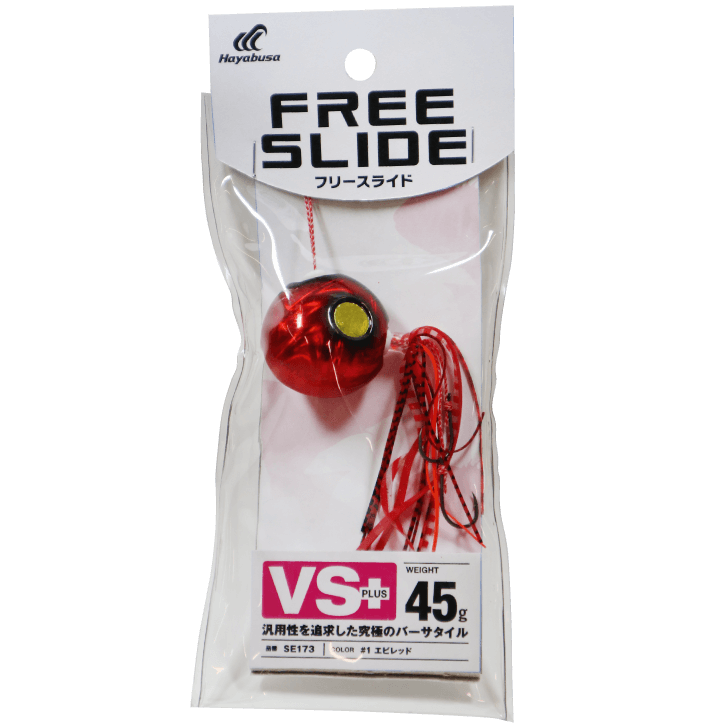
¥924 for a complete, ready-to-fish 45 g rig. That’s around six dollars, and it explains why the Musou Madai Free Slide range has been a fixture in Japanese tackle shops for years. Hayabusa sells the same head two ways: as this complete model, and as a bare head (product code P567) from ¥715, which runs all the way up to 300 g since the 2026 additions.
The head shape is called the VS form. Hayabusa describes edged machining that cuts through current, combined with a bulged lower body that throws a complicated wake behind the head to help the nectie move, and it claims a stable posture through lift and fall. Inside sits the low-friction pipe that gives the range its name.
| Feature | What it does |
|---|---|
| VS form head | Edged, bulged shape that cuts current and creates flow behind the head to assist the nectie, holding posture on lift and fall |
| Low-friction pipe | Lets the head slide smoothly on the leader |
| Polarised mirror eye | Reflective eye intended to trigger bites |
| Natural skirt | A micro-vibration straight nectie paired with a subdued curly for balanced appeal |
| Fluorine-coated hook | Coated hook on Seahunter cord, which is stiff enough to resist tangling |
| Model | Weight | Format | Colours | Price (incl. tax) |
|---|---|---|---|---|
| VS Head Plus Complete 45 g | 45 g | Complete rig | 5 | ¥924 (~$6) |
| VS Head Plus Complete 80 g | 80 g | Complete rig | 5 | ¥968 (~$6.2) |
| VS Head Plus Complete 120 g | 120 g | Complete rig | 5 | ¥1,111 (~$7.2) |
| VS Head Plus Complete 180 g | 180 g | Complete rig | 5 | ¥1,298 (~$8.4) |
| VS Head Plus (head only, 45 to 300 g) | 45 to 300 g | Head only | 5 to 8 | ¥715 to ¥1,540 |
Stocking up. At these prices you can carry the same weight in three colours and not think about it, and the head-only version goes heavier than either Daiwa’s or Shimano’s complete rigs, up to 300 g for deep water and hard drift. The trade is that Hayabusa’s unit is not cross-compatible with Daiwa’s β fittings, so mixing brands means keeping two sets of spares.
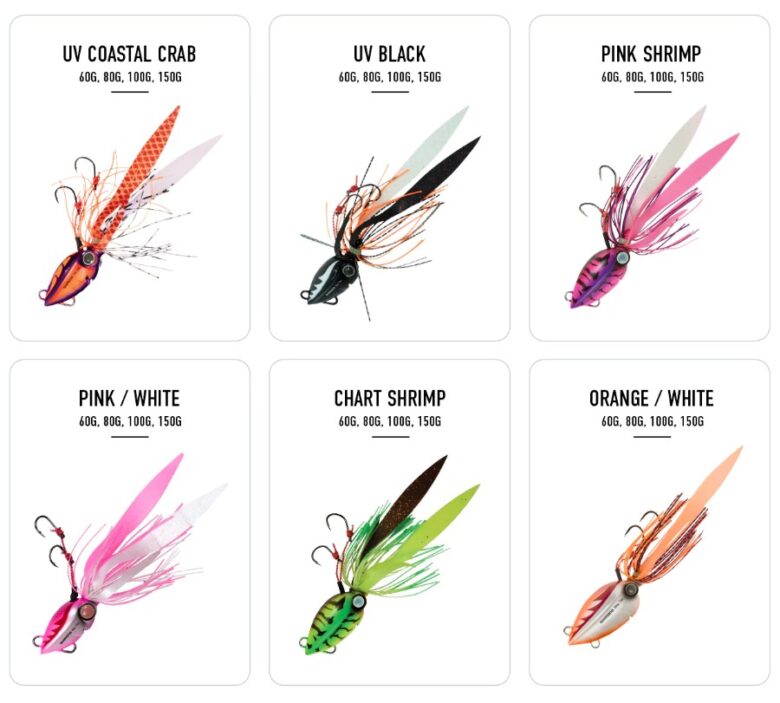
The Lucanus is how a lot of American and Australasian anglers met this style of fishing in the first place. Shimano’s New Zealand listing calls it the standard easy-to-use tai-rubber style slow jig, and the recipe hasn’t changed much: a hydrodynamic head that drops fast and hangs straight, glow eyes, UV and high-contrast colours, and a silicone skirt over twin assist hooks. Sink it, then wind slowly with small rod movements and let the skirt do the work.
What makes it useful in a comparison like this is what it doesn’t do. There’s no unit to reseat, no pipe wearing at your leader, and no separate parts to buy. Shimano sells replacement skirts, and the second eye-loop takes a sinker when the current gets up. It is also the only lure here you can have delivered domestically in the US this week.
| Feature | What it does |
|---|---|
| Hydrodynamic head | Stable falling posture and a quick drop to the fish |
| Glow eyes | Added visibility in deep or dirty water |
| Replaceable silicone skirt | Skirt and trailer pulse on a slow retrieve; spares sold separately so a worn jig can be refreshed |
| Dual attaching eye-loop | Second eye takes an extra sinker for deep water or fast current |
| UV and high-contrast colours | Colour range built around glow and contrast rather than natural finishes alone |
| Model | Weight | Buoyancy | Hook | Official RRP (NZ) |
|---|---|---|---|---|
| Lucanus 60 g | 60 g | Sinking | Twin assist, medium | NZ$18.99 |
| Lucanus 80 g | 80 g | Sinking | Twin assist, medium | NZ$19.99 |
| Lucanus 100 g | 100 g | Sinking | Twin assist, medium | NZ$21.99 |
| Lucanus 150 g | 150 g | Sinking | Twin assist, medium | NZ$23.99 |
A sensible first tairaba-style lure for a US angler, and a fine second rig to keep tied on a casting rod. On a big fish in open water it gives up the one advantage the sliding designs were built for, and no amount of skirt colour fixes that.
Weight comes first, before the fixed-versus-sliding question. Daiwa’s guidance is blunt about it: pick a head heavy enough that you feel the bottom every single drop, because in tairaba, missing the moment of touchdown is throwing away the bite. Under a dotera drift, where the boat slides sideways and your line runs at an angle, that usually means going heavier than the depth alone suggests.
Head weight and colour are their own rabbit hole, and we’ve written that up separately in how to choose tairaba head weight and colour, along with a wider look at tairaba heads and skirts.
| Lure | Rig type | Weights | Sold as | Price | Where to buy |
|---|---|---|---|---|---|
| Daiwa Kohga Bayrubber Free β | Free-slide | 45 to 250 g | Complete, β unit | ¥1,150 to ¥1,800 excl. tax | Amazon Japan |
| Shimano Engetsu Tiger Bakubaku | Free-slide | 45 to 200 g | Complete | ¥1,200 to ¥1,550 excl. tax | Amazon Japan |
| Hayabusa Free Slide VS Head Plus | Free-slide | 45 to 180 g complete, 45 to 300 g head only | Complete or head only | ¥924 to ¥1,298 incl. tax | Amazon Japan |
| Shimano Lucanus Jig | One-piece, fixed style | 60 to 150 g | Assembled jig | NZ$18.99 to NZ$23.99 RRP | Amazon US and tackle stores |
🥇 Best overall: Daiwa Kohga Bayrubber Free β
The β unit makes nectie changes fast enough that you’ll actually make them, the head pipe is built around the leader knot, and the range covers 45 g to 250 g. If you’re buying one free-slide system and building spares around it, build around this one. ¥1,150 to ¥1,800 excl. tax (about $7 to $12).
🥈 Best value: Hayabusa Musou Madai Free Slide VS Head Plus
Six dollars for a complete free-slide rig with a fluorine-coated hook, and the bare head goes to 300 g for deep drifts. The cheapest sensible way to find out whether you like this style of fishing. ¥924 to ¥1,298 incl. tax (about $6 to $8.4).
🥉 No-import pick: Shimano Lucanus Jig
One-piece, assembled, and stocked in the US. Four weights from 60 g to 150 g, replaceable skirts, and a second eye-loop for adding lead in current. Start here if you’d rather fish this weekend than wait on a parcel. NZ$18.99 to NZ$23.99 RRP.
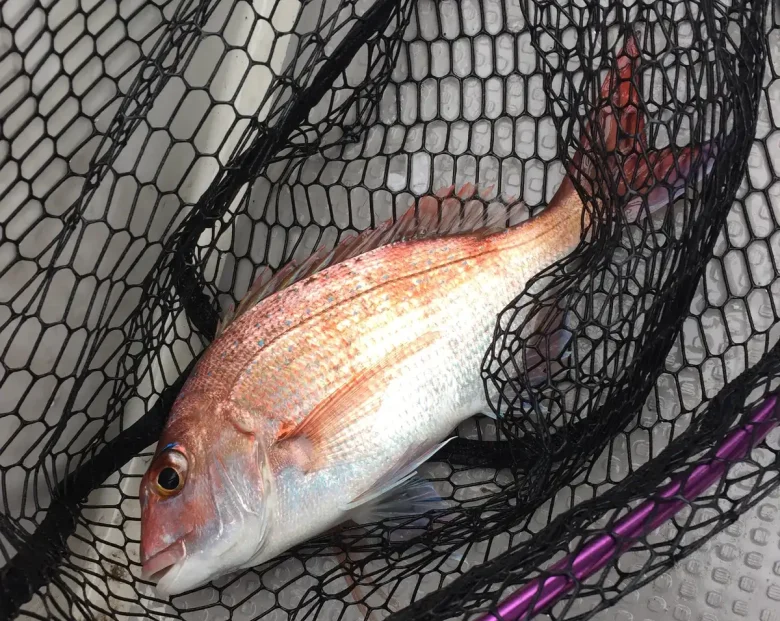
That’s the claim Hayabusa makes for its Free Slide system, and the reasoning holds up: when the head isn’t attached to the hook, a shaking fish has less leverage to work with. Nobody publishes controlled landing-rate data, so treat it as sound engineering rather than a measured number. The design has been standard in Japan for well over a decade, which counts for something.
Two heads, 80 g and 120 g, cover most inshore boat trips between about 20 and 60 metres. Add a 150 g or 200 g if you fish a dotera drift or heavy tide. Buy the weight you need to feel bottom, not the weight you wish you needed.
Yes, and that’s largely how the Lucanus earned its US following. The technique travels better than the fish names do: drop, wind slowly at a constant speed, don’t set the hook hard. Check your state and federal regulations for hook and gear rules before you go.
Per lure, no. Per order, often yes. These heads cost six to twelve dollars each in Japan, so the shipping maths only works if you buy several at once, or add them to an order with a reel or rod in it.
Free-slide is the default for a reason, and the Japanese market has voted with its shelf space: Daiwa, Shimano and Hayabusa all build their core tairaba around a head that runs on the leader. Choose that if you’re fishing vertically for good fish and want the weight out of the equation once you’re hooked up.
Keep a fixed, one-piece jig for casting, for shallow work where simplicity wins, and for the trips where you’d rather not think about spare units at all. Both catch fish. Only one of them stops a 70 cm madai using your own lead against you.