Best Tairaba Reels: JDM Models Explained
ちゃんま
マイボ!

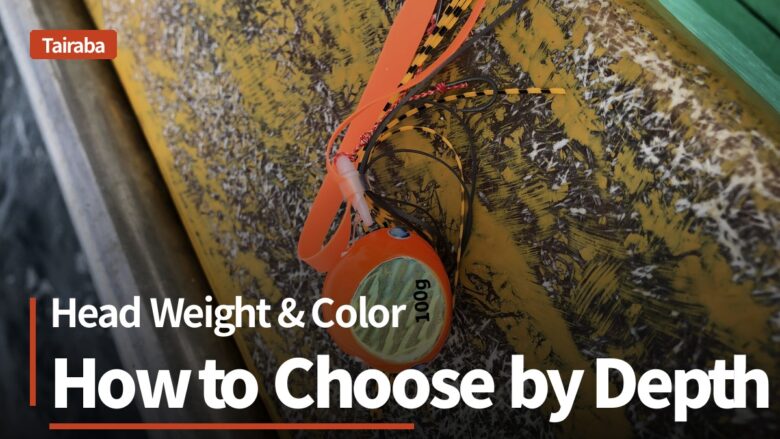
Picture the moment before the first drop of the day. The boat has slid over a rocky ledge in about 60 meters of water, there’s a steady drift pushing you sideways, and the sun’s just clearing the horizon. Your rod’s rigged, the reel’s spooled, and the only real question left is the one sitting in your tackle tray: which head do you tie on? Weight and color. Two small decisions that quietly decide how many madai come over the rail. Most days, they matter more than the rod or reel ever will.
Tairaba (鯛ラバ / タイラバ) is a Japanese bottom-fishing method built around a sliding, rubber-skirted jig head, originally developed for madai (真鯛, red sea bream). The head does two jobs at once: it carries the rig to the strike zone and it sets the tempo of the whole presentation. Get it right and the skirts pulse naturally just off the bottom where the fish are feeding. Get it wrong and you’re either dragging bottom in the mud or hanging in midwater, out of the zone entirely. Weight controls where your lure is; color controls how the fish sees it.
I fish tairaba from a small boat in Japanese coastal waters, and after enough sessions you stop guessing and start reading conditions. This guide walks through exactly that: how to pick head weight from depth and current, how to think about color for water clarity and light, and how to adjust both when the fish tell you something isn’t working. No rankings, no hype. Just the logic I actually use on the water.
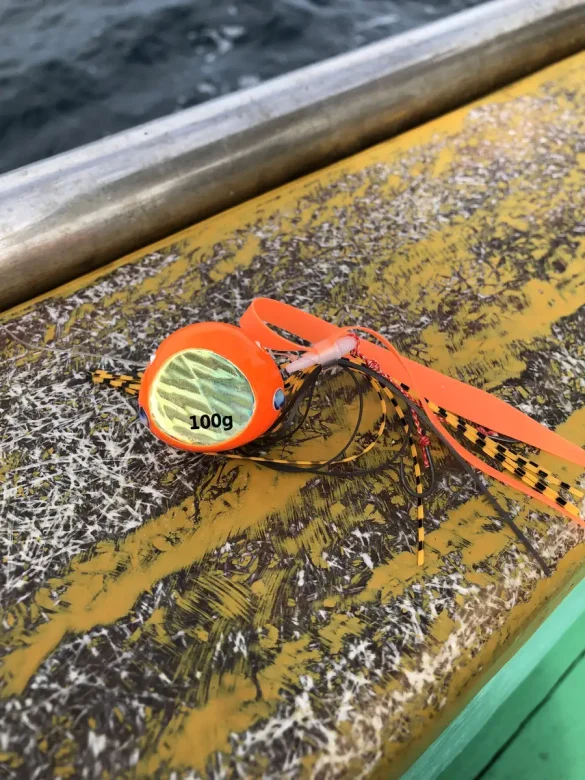
Weight is the decision you make first, because it’s the one that has to work before anything else can. The goal is simple to state and harder to do: keep the head in steady contact with the bottom zone, dropping close to vertical and staying there as you reel. If the head can’t reach bottom cleanly, or if it swings out at a shallow angle behind the boat, the whole presentation falls apart. Everything below is about hitting that window.
A common starting point is roughly one gram of head weight per meter of water depth. It’s not a law of physics, just a sensible baseline. In 40 meters, you’d reach for something around 40 grams. In 80 meters, around 80. From there you adjust for the two things that actually move the number: current and wind. A rough guide many boats work from looks like this.
| Water depth | Calm, light drift | Moderate current / wind | Strong current / fast drift |
|---|---|---|---|
| 20–40 m | 30–45 g | 45–60 g | 60–80 g |
| 40–60 m | 45–60 g | 60–80 g | 80–100 g |
| 60–80 m | 60–80 g | 80–100 g | 100–120 g |
| 80–100 m | 80–100 g | 100–120 g | 120–150 g+ |
Notice how much a strong drift shifts the numbers. On a windy day in 60 meters, you might be reaching for 100 grams to hold a rig that a calm morning would fish beautifully at 60. That’s not an exception, it’s the norm. Current and wind are the variables that override the depth rule, and on many days they matter far more than the depth itself. When the boat is being pushed hard, go heavier without hesitation.
Charts are a starting guess. The real feedback comes from your line. After the head touches down, glance at the angle your braid makes as it enters the water. If the line runs close to straight down, your weight is dialed in and the head is fishing where it should. If it streams out at a sharp angle behind the boat, the current is sweeping the rig up and away from the zone. A line angled far behind the boat means your head is too light for the conditions. Step up 20 grams and check again.
Two more feel-based cues seal it. First, count how long the head takes to reach bottom. If the drop feels sluggish and the head seems to hang and drift on the way down, it’s too light. Second, on the retrieve you should feel the head “working,” a faint, steady thrum through the rod tip as it climbs. Lose contact with the bottom entirely and you’ve likely gone too light for the drift; feel it plow and stick, and you may be too heavy. The right weight is the lightest one that still keeps you honestly in the zone.
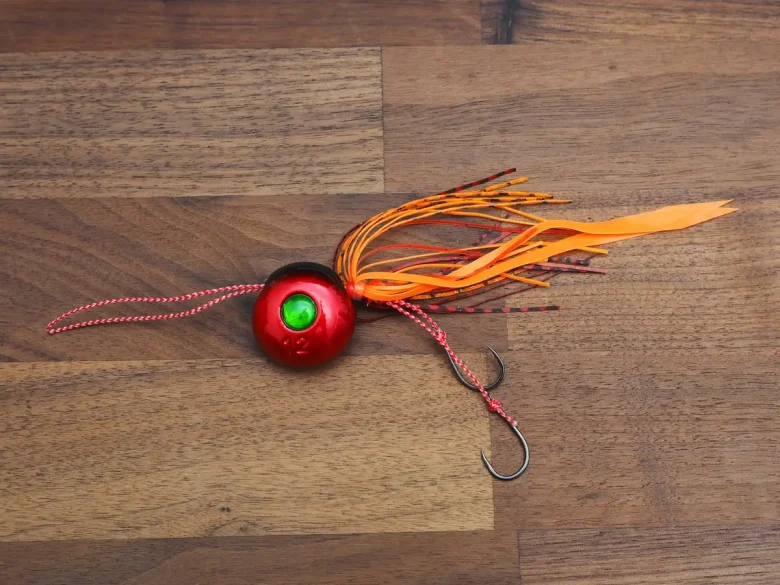
There’s a common instinct that a lighter head is more “finesse” and always better for wary fish. Sometimes true, often not. A lighter head does fall more slowly and can look more natural, which helps when madai are cautious in cold, clear water. But a light head in strong current never reaches the zone at all, and a rig that isn’t in front of fish catches nothing, however subtle it looks. On the other side, a heavier head reaches bottom fast and cuts through current, but it can drop too aggressively and look unnatural to a spooked fish. The art is matching weight to conditions first, then thinking about finesse second.
A practical tip: tungsten heads are worth the extra cost precisely here. Tungsten is denser than lead, so a tungsten head is physically smaller for the same weight. That smaller profile drops faster, cuts current better, and gives a tighter, less bulky silhouette, which is a real edge when you need weight but don’t want a chunky lure spooking fish in clear water. If you fish a lot of deep water or strong drifts, a few tungsten heads earn their keep.
Once the head is holding the zone, color is the lever you pull to fine-tune the bite. Here’s the honest framing up front: color theory in tairaba is real, but it’s a set of starting points, not gospel. Madai can be maddeningly moody. A color that’s untouchable at dawn can go cold by mid-morning for no reason you’ll ever know. So treat the guidance below as a smart first choice, and let the fish edit it.
If you strip tairaba color down to what genuinely earns a place in your box, it’s a short list. Orange and red sit at the center of it. In Japan these are the undisputed standards, the colors most anglers tie on first and the ones that produce day in and day out. There’s a long-running theory that these tones read as small shrimp and crustaceans, the core of a madai’s diet, and whatever the reason, an orange or red head is the safest first choice on the vast majority of days. If you own one color, own orange.
Around that anchor, three supporting roles cover most situations:
| Color group | When it tends to shine | The rough idea behind it |
|---|---|---|
| Orange / Red | The default, most days and conditions | Reads as shrimp and small crustaceans; the proven baseline |
| Gold / Natural / Silver | Clear water, high sun, active fish | Flash and baitfish tones for a reaction bite in good visibility |
| Glow / Chartreuse | Deep water, dawn, low light, murky or stained water | Extra visibility where light and clarity are poor |
| Dark (black / purple / dark red) | Bright, clear, high-pressure days; strong silhouette | A crisp silhouette against a bright surface when flash fails |
You don’t need forty colors. You need a workable spread: an orange or red as your anchor, a gold or natural for clear active days, a glow for deep and dim conditions, and a dark option for those bright, tricky days when nothing flashy works. Three or four heads across those roles will cover far more situations than a tray stuffed with near-identical shades of orange.
The two conditions that should steer your color choice are water clarity and available light, and they often move together. In clear water with plenty of sun, fish can see well, so natural and flashy tones make sense: gold, silver, and baitfish patterns trigger reaction strikes, and a subtler, less garish head can out-fish a loud one. When the water is stained, murky, or churned up after wind, visibility drops and the job flips to being seen at all. That’s when glow and high-contrast chartreuse come into their own, throwing a signal a fish can track from farther off.
Light works the same way. Early morning, late evening, heavy overcast, and deep water all mean less light down where the fish are. Glow heads shine here, sometimes literally: many anglers charge them with a light between drops to keep them luminous through the darkest, deepest part of the water column. Under a high midday sun in clear water, the opposite logic applies, and a dark head can outperform everything by showing a hard, clean silhouette against the bright ceiling above. Bright day, dark lure is a counterintuitive rule that saves plenty of slow afternoons.
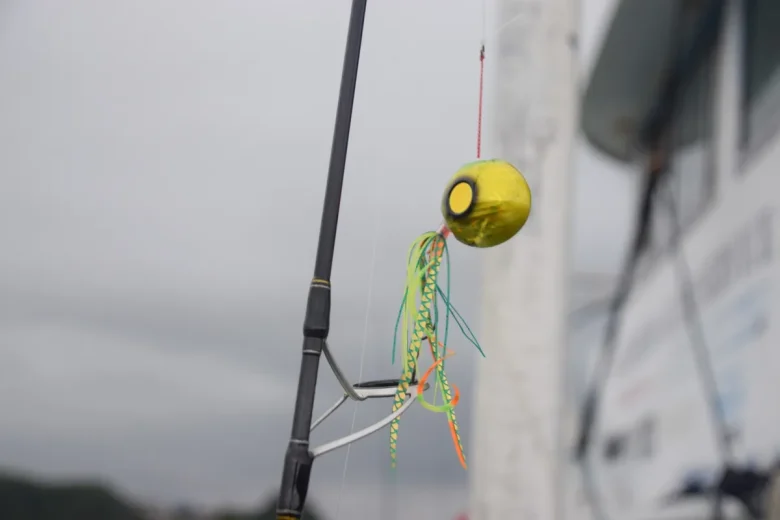
It’s easy to obsess over the head and forget that the skirt and the trailing “necktie” curl are doing at least as much visual work. On most days the fish are seeing the pulsing skirt first, so it pays to think of head and skirt as a package. A common approach is to keep them in the same family, an orange head with an orange or red skirt, so the whole rig reads as one unit. But mixing can pay off: a natural head with a bright chartreuse tail, or a dark head with a glowing accent, gives the fish a spot of contrast to key on. If bites are short or fish are following without committing, swapping just the skirt color is a fast, cheap experiment before you change the whole head.
Every angler has slow stretches where the “right” choices aren’t producing. The value of a system is that it gives you an order of operations instead of random panic-swapping. Here’s the sequence I run through before blaming the fish.
First, confirm you’re in the zone. Before touching color, make sure the weight is right and you’re actually fishing the bottom few meters where madai hold. Check the line angle. Feel for clean bottom contact on the drop. A huge share of “the color’s wrong” days are really “the head’s too light and I’m above the fish” days. Fix depth before you fix anything else.
Second, change retrieve speed. Still nothing? Try a slower or faster steady wind before you re-rig. Speed changes the action of the skirts and often unlocks a bite that no color swap would. It costs you nothing but a few cranks.
Third, swap the skirt, then the head color. Only now do you start editing color. Change the skirt or necktie first because it’s quick and it’s what the fish see most. If that doesn’t move the needle, switch the head color, working along the logic above: brighter or glow if the water’s dim or stained, more natural or darker if it’s bright and clear. Change one variable at a time so you actually learn what worked. When a combination suddenly connects, you’ll know exactly why, and you can repeat it.
This restraint is the whole game. It’s tempting to change weight, color, skirt, and speed all at once out of frustration, but then a fish tells you nothing. One change, a few drops, read the result. That patience is what turns a random tackle tray into a system you can trust.
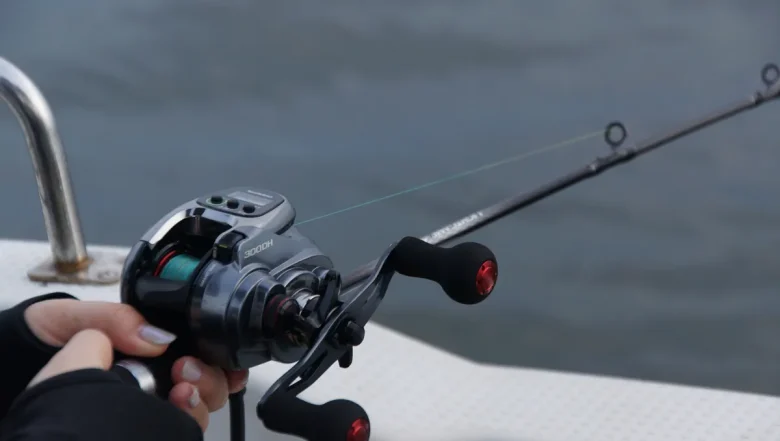
You don’t need a specific brand to catch fish on tairaba, but a handful of well-made JDM heads make dialing in weight and color much easier, mostly because their color ranges and tungsten options are built exactly for this. A few worth a look if you’re building a starter spread. Most of these are Japan-only models, so the links below go to Amazon Japan, which ships internationally; check availability and shipping cost at checkout.
Whatever you choose, the priorities are the same: cover a sensible weight spread for your local depths and drifts, get at least one tungsten head if you fish deep or fast water, and carry orange plus three supporting colors. The gear is the easy part. Reading the drift and the light is the skill.
Back to that first drop of the day. Now the decision isn’t a guess. You look at the depth and the drift and pick a weight that’ll hold the zone, leaning heavier if the wind’s up. You tie on orange because it’s the safe money, unless the water’s stained enough to want glow or bright enough to want something darker. You drop, watch the line angle, and adjust the weight if the head’s sweeping away behind the boat. Then you reel at a steady speed and let the rig do its work.
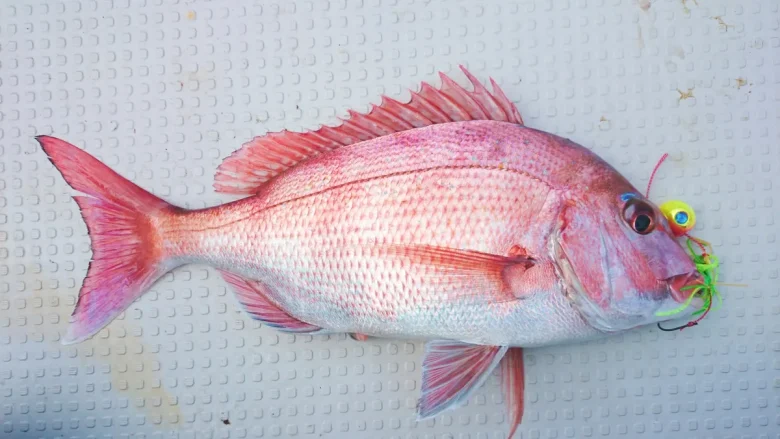
If the bites don’t come, you run the order: confirm depth, change speed, then edit color one step at a time. That’s the whole system, and it turns tairaba from a bag of lucky lures into a method you can actually reason about. The fish will still surprise you. They always do. But you’ll spend far more of your day fishing in the zone with something they can see, which is most of the battle.
For the bigger picture, our complete guide to tairaba fishing covers the whole method from rig to retrieve, and if you’re still building out your tackle, see our roundups of the best tairaba reels and best tairaba rods. Choosing between brands? Our Shimano vs Daiwa tairaba reels comparison breaks down where each maker’s strengths lie.
Prices for JDM products shown in JPY with approximate USD conversion at the time of writing. Check your local regulations before fishing new species or waters.