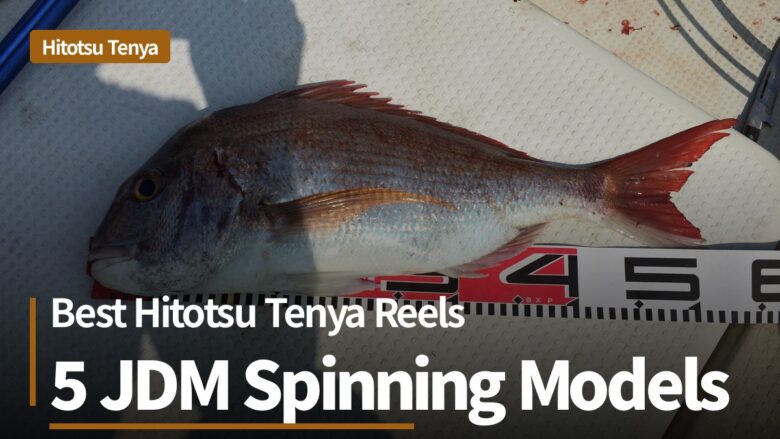
Best Hitotsu Tenya Reels: JDM Spinning Models
ちゃんま
マイボ!

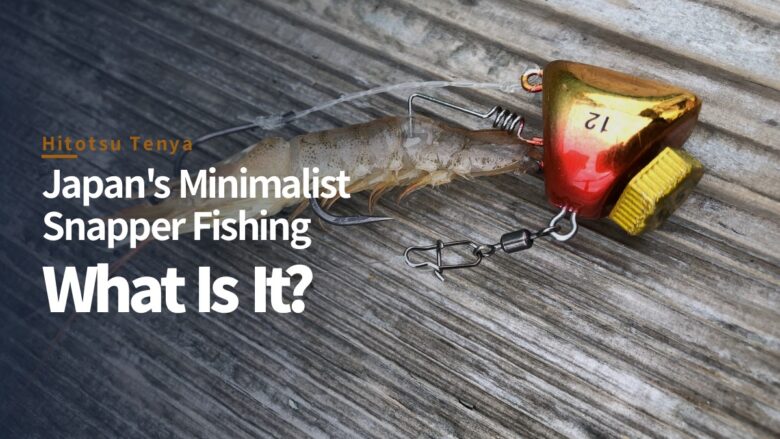
What if the simplest rig in your box was also the one that told you the most? That’s the promise of hitotsu tenya (ひとつテンヤ, literally “single tenya”): one small weighted hook, a piece of shrimp, and a thin braided line that carries every tap straight to your hand. Drop it, let it flutter down, and a red sea bream can inhale it on the fall, before it ever reaches bottom.
Hitotsu tenya is a light bait-jigging method built around a single tenya head on a leader, fished with a sensitive rod and your full attention. There are no swivels and droppers, no heavy sinkers. In Japan it’s a beloved way to target madai (真龟, red sea bream) from a boat, and it’s the gear-light, finesse cousin of heavier bottom techniques.
I fish out of small boats in Japanese coastal waters, and tenya is one of those methods that hooks you on feel alone. So instead of marching through a spec sheet, this guide works through the questions anglers actually ask: what tenya is, what you can catch, how it differs from tairaba, the rig and gear you need, and how to fish it. By the end you’ll know whether it’s worth trying in your own waters.
The tenya itself is an old Japanese idea: a shaped piece of lead with a long-shank hook, used to present bait on the bottom. Traditional tenya fishing for tai could involve heavier heads and a more static presentation. The modern “hitotsu” version stripped it back to the lightest possible weight that still reaches the fish, which turned a bait-soaking method into an active, hands-on game.
The mechanics are simple, and that’s the charm. You pin a shrimp on the tenya, cast slightly up-current or drop straight down, and let the head fall on a controlled line. The flat-bottomed head flutters and rocks as it sinks, which looks like a wounded shrimp drifting down. Madai feed heavily on the fall, so a huge share of bites come before the tenya ever touches bottom. When it lands, you lift it, let it fall again, and read the line for the lightest tap.
Because the weight is so light and the line so thin, you feel everything: the head ticking the bottom, a shrimp getting plucked, the soft “toc” of a sea bream taking the bait. That directness is the whole appeal. Where heavier rigs mute the bite, tenya hands it straight to you, and learning to interpret those signals is the skill that makes the method so rewarding.
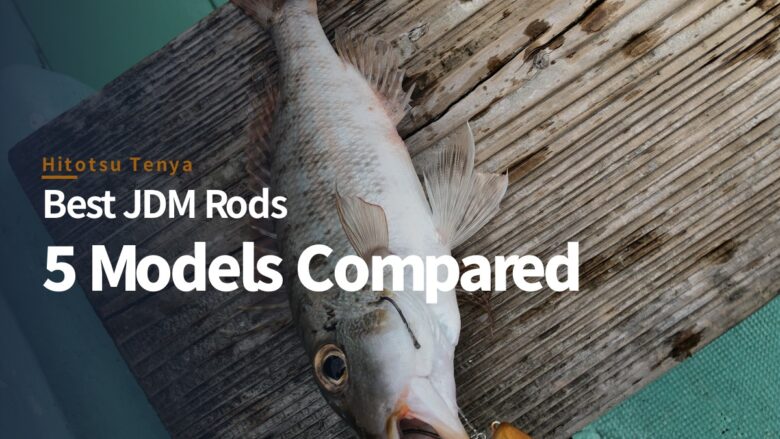
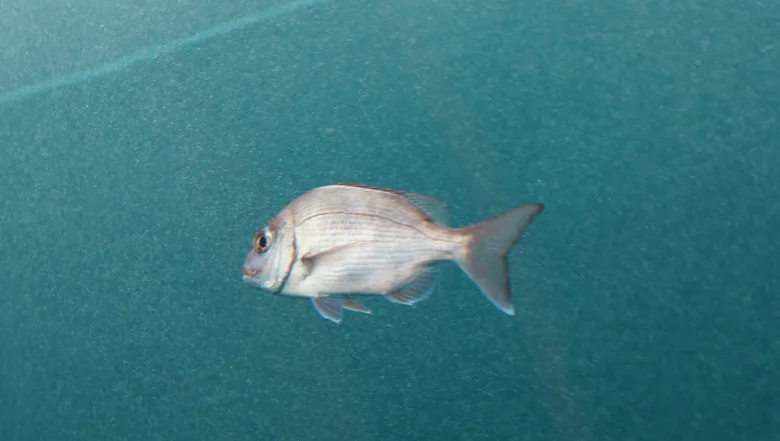
In Japan the star of hitotsu tenya is madai, the red sea bream, prized for its fight and its place on the table. But the method is far from a one-fish trick. Anything that hunts shrimp and small prey near the bottom is fair game: rockfish, flounder, gurnard, small grouper, and the occasional surprise are all part of the mix. That variety is a big reason tenya keeps boat anglers entertained on slow days.
The principle travels. Anywhere you have bottom-feeding fish that eat shrimp and crustaceans, tenya can work. Think snapper and sea bream, porgy and scup, sea bass, and assorted reef and structure fish in roughly 15 to 40 metres of water. One thing to confirm first: using live or natural bait, and targeting these species, is governed by local rules that vary widely, so check your regulations before you fish.
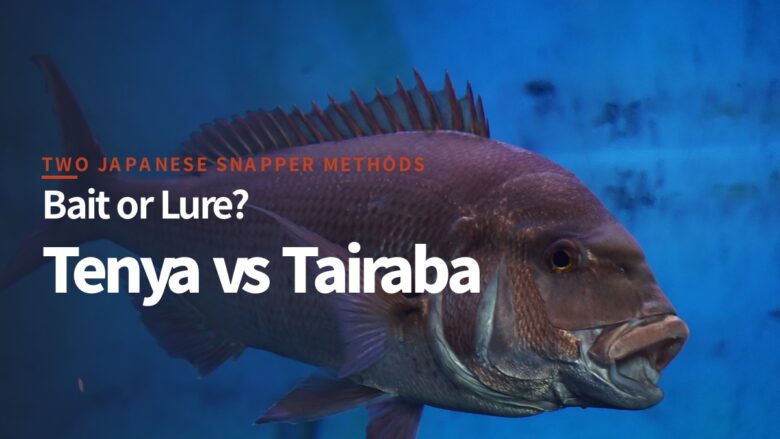
Tenya and tairaba both target madai from a boat, but they get there differently. Tairaba uses a weighted head with a rubber skirt and curly tendrils, fished on a constant, steady wind with no bait and no hookset. Tenya uses bait on a bare head and is all about the fall, the feel, and an active hookset. If you like reading subtle bites and working the rig, tenya will click; if you prefer a simple, almost hands-off retrieve, tairaba might suit you better. Our complete guide to tairaba fishing covers that method start to finish.
It’s also worth placing tenya next to light jigging. Light jigging uses metal jigs and a rhythmic lift-and-drop to chase aggressive, mid-water predators, while tenya is a gentler, bait-based bottom game for fish that feed on shrimp. Many Japanese boat anglers carry gear for more than one of these, because the bite can switch from day to day. If you want the active, metal-jig side of boat fishing, see our light jigging from a boat guide.
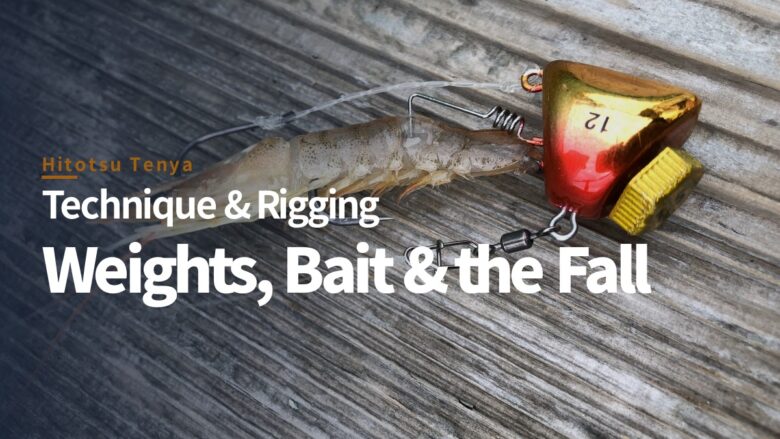
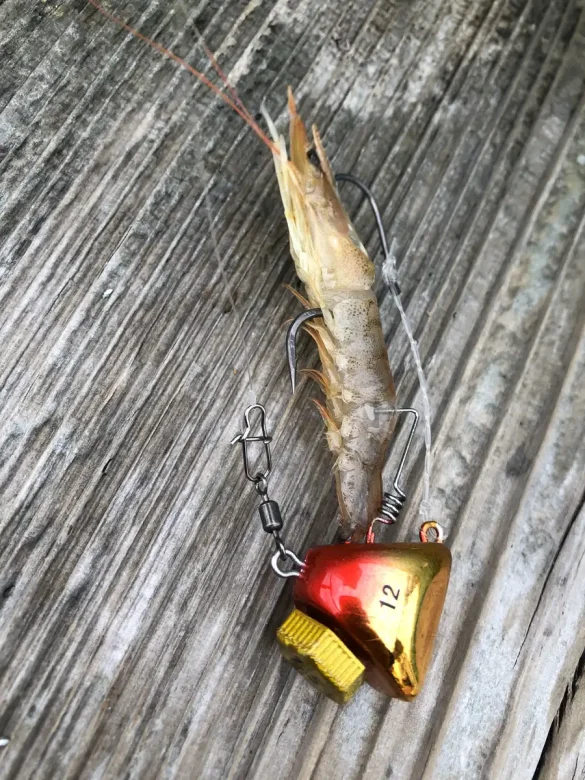
A tenya looks basic, but each part has a job. The body is a flat-bellied lead head, sized by weight, that controls how fast and how flat the rig falls. Out the back runs a long main hook that you thread the shrimp onto, keeping the bait straight and natural. Most tenya also carry a small “floating” assist hook on a short cord that sits near the head of the shrimp. That assist hook is what pins a lot of fish, because madai often nip at the front of the bait.
Rigging is quick. Run the main hook through the shrimp from underneath so the bait lies straight along the shank, then set the assist hook lightly into the head or back. You want the shrimp looking like it’s swimming, not balled up. Fresh or properly thawed shrimp stays on better and gets bitten more, so keep your bait cold and handle it gently. Carry plenty, because a session can chew through a surprising number.
Tenya is a finesse method, so the gear is light and sensitive throughout. The whole system is built to telegraph the bottom and the bite, and to let a small head fall naturally.
A dedicated hitotsu tenya rod is long for the class, usually around 8 to 8 and a half feet, with a soft, sensitive tip and enough backbone lower down to set the hook and fight a good fish. The tip does two jobs: it shows you the fall and the bite, and it loads to drive a hook on the lift. Many models use a solid-carbon tip for exactly that sensitivity. A light tairaba or light bottom rod can stand in if you’re experimenting, since the gear overlaps; our guide to the best tairaba rods covers blanks in that family.
Hitotsu tenya is fished with a small spinning reel, typically a 2500 to 3000 size. You want a smooth, finely adjustable drag for thin line and light hooks, plus quick line pickup for when a fish runs at the boat. There’s no need for high line capacity or brute power here. Compact, light, and smooth is the brief, and the small JDM spinning reels favoured for light bottom work fit it perfectly. The smaller models in our best tairaba reels roundup give you a sense of the quality on offer at each price.
Tenya are sold by weight, and in Japan you’ll see them rated in “go” (号). For reference, a number 8 tenya is roughly 30 grams. Carry a spread from about 10 to 40 grams so you can match depth and current: lighter heads for shallow, calm conditions, heavier ones when there’s depth or run. A handy rule is to use the lightest head that still lets you feel the bottom and keep a controlled fall. Colour matters less than weight, but gold, red, and orange heads are popular starting points.
Thin braid is what makes tenya work. PE 0.6 to 0.8 (roughly 12 to 16 lb) is standard, because a thin line cuts the current, sinks the light head, and transmits the faintest bite. Add a fluorocarbon leader of about 8 to 12 lb, a couple of rod-lengths long, joined with an FG knot. Go any heavier and you’ll dull the feel and slow the fall; go too light and a good madai will break you off. Match the whole system to the lightest tenya you can get away with.
Tenya is a fall game first and foremost. Master the fall and you’ve mastered most of the method. Here’s the basic sequence.
The fall: Drop or cast the tenya and let it sink on a controlled, slightly tensioned line. Watch your line and rod tip closely. If the line stops sinking early, jumps, or twitches, a fish has taken it on the drop. That’s your cue to set. A free, uncontrolled fall hides bites, so keep just enough tension to read what the head is doing without killing its flutter.
On the bottom: Once you feel the head tick down, lift it with a slow, smooth rise of the rod, then lower it and let it flutter back down. Repeat this gentle lift and fall, pausing on each drop. Most bottom bites come right as the tenya settles or just after the lift. Stay in the lowest few metres of the column, where madai usually feed.
The bite and hookset: Tenya bites range from a sharp tap to a soft, mushy heaviness. When in doubt, lift into it. Because the hooks are small and sharp and the line has little stretch, a firm, smooth sweep of the rod is usually enough. Don’t swing for the fences, or you’ll tear the hook out of a soft mouth. Then keep the rod loaded and let the light drag absorb the runs.
From time on the water: the anglers who clean up at tenya aren’t muscling fish, they’re paying attention. The method rewards a light touch, a sensitive setup, and the patience to read each fall. On slow days, the difference between a blank and a good feed often comes down to noticing one subtle tick that everyone else missed. That’s what keeps pulling me back to it.
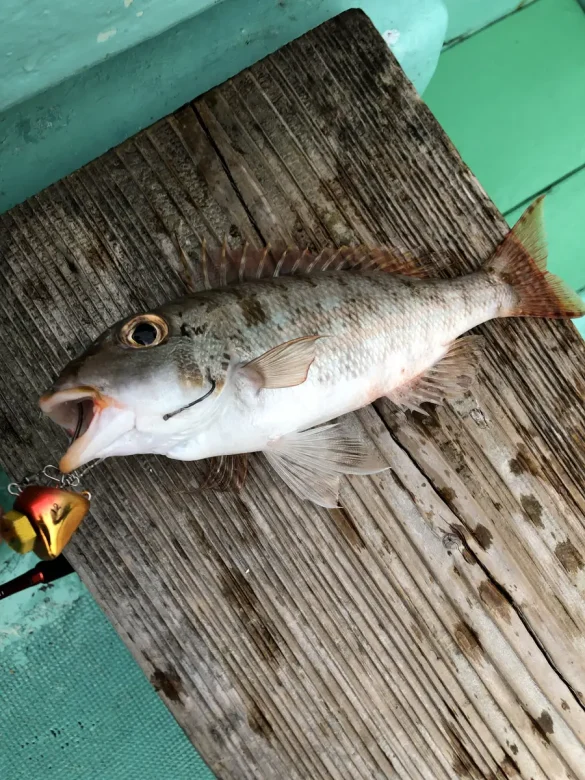
You can try tenya wherever boats fish over bottom and reef for snapper, sea bream, or similar species in roughly 15 to 40 metres. A bottom-fishing charter is the easiest entry point, and many skippers will happily let you work a baited tenya instead of a heavier rig. The light tackle makes it a great option on calmer days with manageable current.
A practical starter kit looks like this: a sensitive rod around 8 feet, a 2500 to 3000 spinning reel with a smooth drag, PE 0.8 braid with an 8 to 12 lb fluorocarbon leader, a handful of tenya from 10 to 40 grams, and fresh shrimp for bait. Dedicated tenya tackle is largely a Japanese specialty, and JDM-only gear ships internationally from Amazon Japan, so check availability and shipping cost at checkout. Light tairaba and bottom gear crosses over well if you’d rather start with what you can find locally.
So, should you try it? If you fish from a boat and like the idea of feeling every tick on the bottom, the answer is yes. One small head, a shrimp, thin line, and a sensitive rod add up to the most direct bite detection in light boat fishing, a method that’s as much about feel as it is about catching. It’s simple to rig, satisfying to learn, and it catches a genuinely wide range of bottom fish. Minimalism that fishes hard, in short.
Prices for JDM products shown in JPY (tax excluded) with approximate USD conversion at the time of writing. Want to keep going on Japanese boat fishing? These are the guides to read next: