Shimano Ocea Jigger CT: The New JDM Counter Jigging Reel Explained
ちゃんま
マイボ!

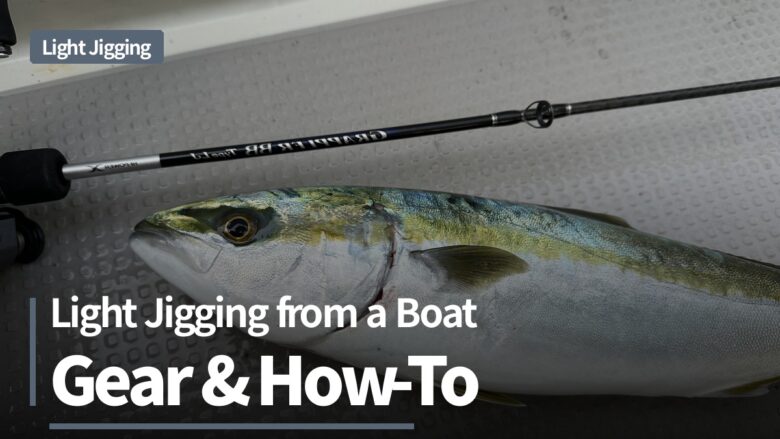
If you fish from a boat and want one method that is fun, forgiving and covers a huge range of predators, light jigging is the one I would learn first. It is the light-tackle version of offshore jigging: small metal jigs in the 40 to 150 gram range worked on a soft, responsive rod, light enough to fish all day and powerful enough to land a hard-running amberjack.
I fish light jigging from a small boat in Japanese coastal waters, and it has become my go-to when I want action without committing to a full day of heavy jigging. So this guide leads with the quick-start setup, then works through the gear, the technique and the background, with links to deeper gear comparisons for anyone who wants to dig in.
Here is the kit I would hand a first-timer: a rod rated to around 100g, a high-gear 4000-size spinning reel or a small baitcasting reel, PE 1.0 braid with a 20 to 30 lb fluorocarbon leader, and a handful of jigs from 60 to 120g in silver, blue and pink. That covers most boats fishing schooling or reef predators over structure in roughly 30 to 100 metres of water. Global tackle works fine, and many of the best dedicated rods and reels are Japanese models; JDM-only gear ships internationally from Amazon Japan, so check availability and shipping cost at checkout.
That is genuinely enough to start catching. The setup is light enough for all-day fishing yet still lands hard-running aomono, and the same outfit crosses over to tairaba and other styles. If that sounds like your kind of fishing, the rest of this guide fills in the detail behind each choice.
A light jigging rod is short and lively, usually around 6 to 6 and a half feet, with a responsive tip that loads the jig and a backbone that still has fighting power. Most are rated by the jig weight they cast best, so you will see ratings like “max 100g” or “60 to 120g.” Pick a rating that matches the jigs you will throw most.
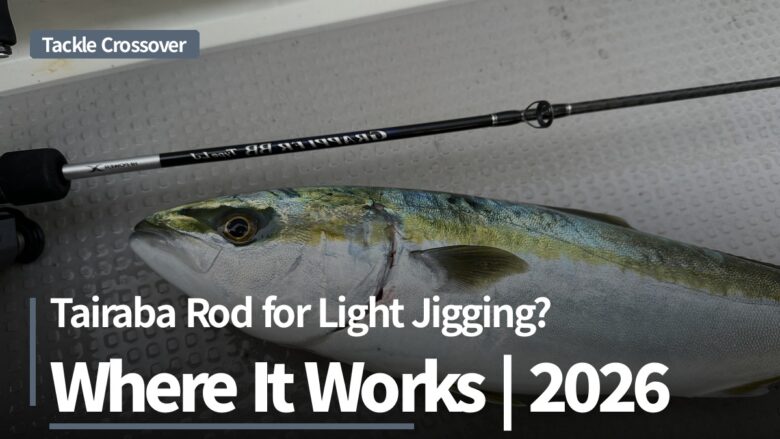
You will find both spinning and baitcasting (overhead) versions, and the choice usually follows your reel. Japanese makers build dedicated series for this style: Shimano’s Grappler and Game Type LJ, Daiwa’s offshore light jigging models, and Tenryu’s Horizon LJ are all purpose-built. If you are just starting, an affordable model like the Shimano Grappler BB Type LJ covers the basics without a big outlay. For the full picture, including which power rating suits your target fish, see our light jigging rod guidance linked at the end.
Light jigging is fished with both spinning and baitcasting reels, and each has a following. Spinning reels in the 4000 to 5000 size are popular for their casting range and quick line pickup. Baitcasting (overhead) reels shine for vertical work, because the lever or thumb control makes it easy to drop straight back to a productive depth. A good light jigging reel needs a strong, smooth drag and enough line capacity for a long run.
Gear ratio is a personal call. A higher ratio picks up line fast when a fish charges the boat, while a lower ratio gives you more cranking power on a heavy fish. For most light jigging, a high-gear reel is the versatile pick. You don’t need to spend a fortune here: there are excellent JDM options well under $300. For ranked picks, see Best JDM Light Jigging Reels Under $300 and the head-to-head in Shimano vs Daiwa Light Jigging Reels.
Metal jigs are the heart of the method. A handy rule of thumb in Japan is to match jig weight to roughly twice the water depth in meters, then adjust for current. So 60 meters of water with moderate current points to a jig around 100 to 120g, while calmer or shallower spots let you drop to 60g or lighter. Carrying a small spread, say 60g, 80g, 100g, and 120g, lets you stay in the strike zone as conditions shift.
Shape matters too. Semi-long jigs fall with an enticing flutter and suit aomono, while short, compact jigs sink fast and work well for tachiuo or strong current. Silver, blue, pink, and glow are reliable starting colors. One caution: for toothy fish like tachiuo and sawara, add a short wire or thick fluorocarbon bite section, or you’ll lose jigs to cut-offs.
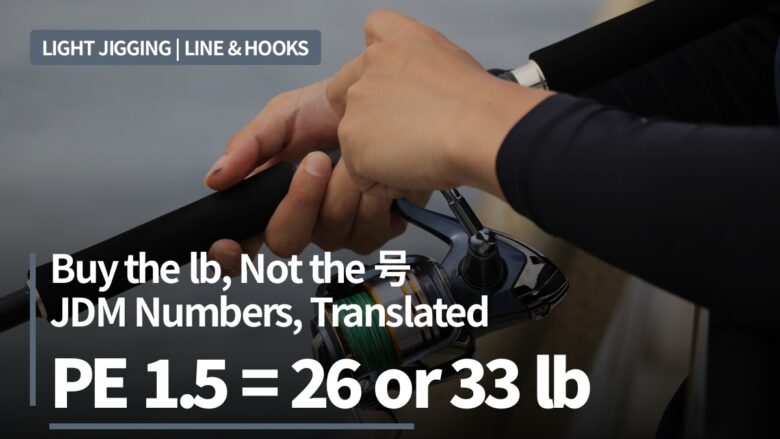
Light jigging runs thin, slick braid so the jig sinks fast and stays in contact. PE 0.8 to 1.5 (roughly 16 to 30 lb) covers most light jigging, with PE 1.0 a good all-round starting point. Connect it to a fluorocarbon leader of about 20 to 30 lb, two to three rod-lengths long, using an FG knot, the slim braid-to-leader connection that’s standard in Japan. Thinner line means less current drag, a faster drop, and crisper jig action. If you expect bigger amberjack, step up the whole system rather than fighting a heavy fish on line that’s too light.
The core rhythm is easy to learn and rewarding to refine. Here’s the basic sequence.
Drop: Free-spool the jig to the bottom, or to the depth where the captain marks bait. Keep a thumb or finger ready, because fish often hit on the fall. Watch your line: if it goes slack early, a fish may have grabbed the jig, or you’ve hit bottom.
Work the jig: The go-to retrieve is the one-pitch jerk. Lift the rod sharply while turning the reel once, then drop the tip to give slack as the jig flutters down. Find a steady tempo and repeat. Speed it up for fired-up aomono, slow it down when fish are sluggish. The flutter on the slack is the trigger, so don’t rush through it.
Cover the column: Most strikes come within the bottom 10 to 20 meters, but aomono will chase a jig well up off the bottom. Work the jig up 15 to 30 meters, then drop back down and repeat. When you get a bite, remember the depth and focus your next drops there.
Set and fight: Unlike tairaba, light jigging usually needs a hookset. When you feel the weight load up, sweep the rod to drive the hook home, then keep steady pressure and let the drag do its job. Keep the rod loaded through the whole fight, and don’t pump too aggressively, or you’ll open the hook hold.
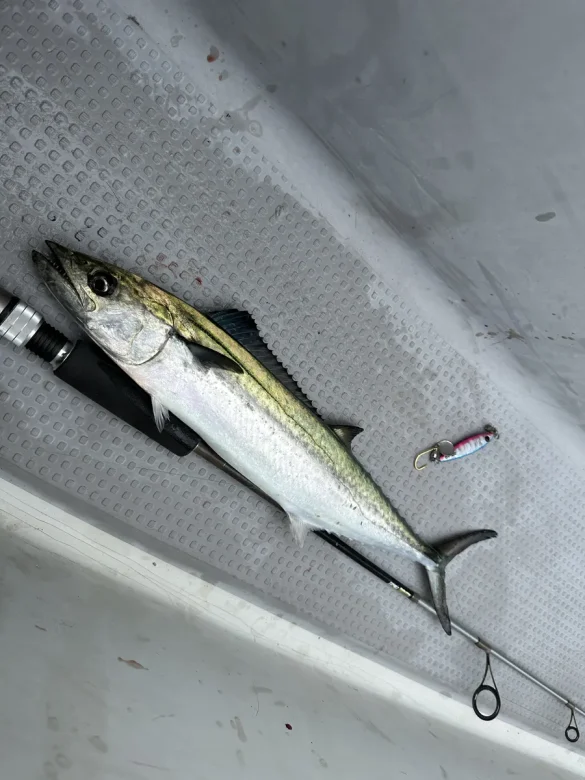
From my experience on the water: the days I remember most aren’t the fast ones. When aomono are blitzing, almost anything works. The real lesson comes on slow days, when changing one thing at a time, jig weight, color, or the speed of the lift, finally draws a bite. Light jigging rewards that kind of attention, and that’s a big part of why it keeps me coming back to it.
Offshore jigging arrived in Japan decades ago as a heavy-tackle game: big jigs, stout rods, and target fish measured in tens of kilos. It was effective, but it was also exhausting, and it shut out a lot of casual anglers. As tackle makers refined lighter blanks and smoother reels, a lighter style took shape. Anglers realized they could catch most of the same fish, just smaller on average, with gear that didn’t wreck their shoulders by noon. That is how light jigging (ライトジギング, often shortened to “light jig” or “LJ” in Japan) grew into one of the most popular ways to fish from a boat.
The mechanics are simple. You drop a metal jig to the bottom or to a marked bait school, then work it back up with rod and reel movements that make the jig dart and flutter like a fleeing baitfish. The standard cadence is the one-pitch jerk: one sharp lift of the rod for every single turn of the reel handle, repeated in a steady rhythm. The jig jumps on the lift and flutters on the slack, and that flutter is usually what draws the strike.
What makes light jigging so popular in Japan is how many fish it covers. The headline targets are aomono (青物), the running fish: buri and hamachi (Japanese amberjack / yellowtail), kanpachi (greater amberjack), and sawara (Japanese Spanish mackerel). But the same setup catches tachiuo (タチウオ, hairtail), madai (red sea bream), rockfish, and more. In your own waters, think yellowtail, amberjack, bonito, snapper, sea bass, and most reef or schooling predators that chase baitfish.
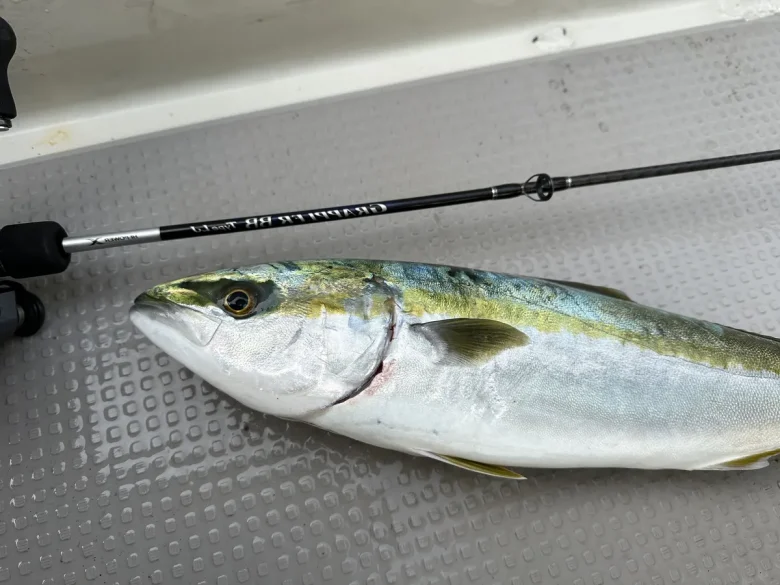
If you already know conventional jigging, light jigging is the same idea on lighter tackle. You trade some ability to handle giant fish and deep, fast current for all-day comfort and sharper sensitivity. For the fish most of us actually catch from a boat, that’s a great trade.
It’s worth separating light jigging from a couple of close cousins. Super-light shore jigging, or LSJ, uses similar small jigs but is cast from the bank rather than dropped from a boat. If you’re curious how that shore-based style works, see What Is LSJ (Light Shore Jigging)?. Tairaba, the Japanese bottom technique for madai, is even gentler: you just drop and reel at a constant speed, with no jerking and no hookset. For the full rundown on that method, our Complete Guide to Tairaba Fishing covers it start to finish.
The short version: light jigging is active and rhythmic, tairaba is passive and constant, and conventional jigging is the heavy-duty option. Many Japanese boat anglers carry gear for more than one, because conditions and target fish change through the day.
This is where light jigging tackle earns its keep. A light jigging rod and reel combo is one of the most versatile setups you can own, and it overlaps heavily with other Japanese boat techniques.
The clearest overlap is with tairaba. A light jigging rod has a slightly firmer tip than a dedicated tairaba rod, but it’ll handle a tairaba head just fine, and a tairaba rod can throw light jigs in return. If you’re weighing that crossover, we cover it in detail in Can You Use a Tairaba Rod for Light Jigging? and Light Jigging Rod vs Tairaba Rod: Can You Use Both?
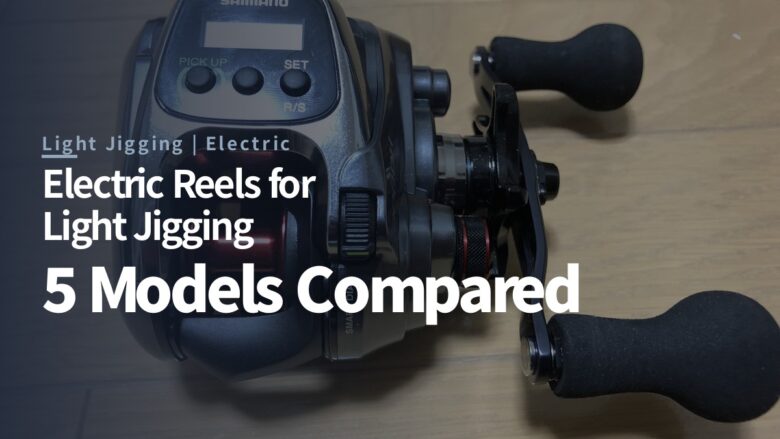
There’s also a powered-up version of the method. Some anglers run an electric reel for light jigging in deep water or when targeting tachiuo at depth, letting the motor handle the lift-and-drop. It’s a niche but real approach, and we look at whether it’s worth it in Electric Reels for Light Jigging: Are They Worth It? The takeaway across all of these: one well-chosen light setup can cover several styles, which saves money and rod-holder space on the boat.
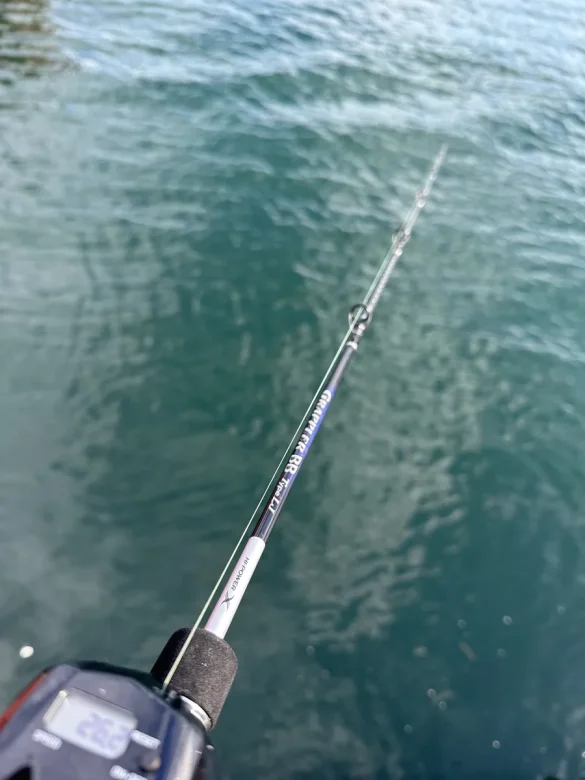
Anywhere boats target schooling or reef predators over structure in roughly 30 to 100 meters of water. A local bottom-fishing or jigging charter is the easiest entry point, and most will happily let you work a jig instead of soaking bait. Start where the captain is marking bait and fish, and you’re already in the game.
No. Global tackle works fine, and many of the best dedicated rods and reels just happen to be Japanese models; JDM-only gear ships internationally from Amazon Japan, so check availability and shipping cost at checkout. One thing that does matter wherever you fish: check your local regulations. Bag limits, size limits, and seasons for amberjack, snapper, and other species vary widely by region, so confirm the rules where you fish.
Not at all. The one-pitch jerk is easy to pick up and rewarding to refine, so the learning curve is short and the rhythm is satisfying. Light jigging hits a sweet spot that’s easy to underrate: light enough to fish all day, powerful enough to land hard-running aomono, and versatile enough to share gear with tairaba and other styles. If you fish from a boat and want an active, rewarding way to chase predators, it’s well worth trying.
Prices for JDM products shown in JPY (tax excluded) with approximate USD conversion at the time of writing.
We’re building out a full library of light jigging and Japanese boat-fishing content. Here’s where to go next: