Metal Jig Selection: Weight, Shape & Color the Japanese Way
ちゃんま
マイボ!

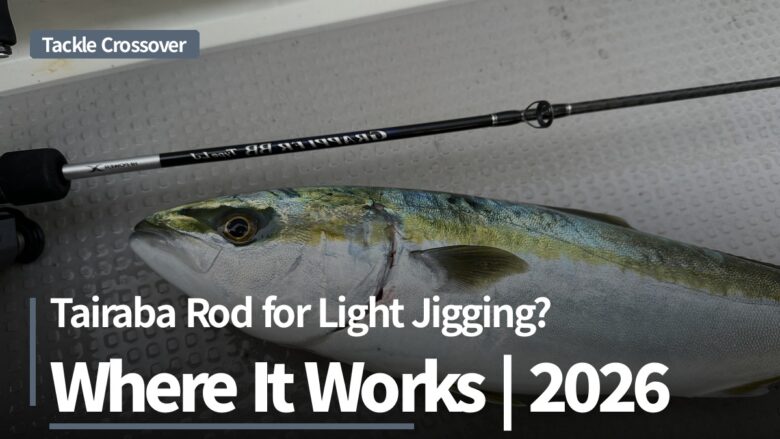
You’ve got a tairaba rod in the rack, the boat’s marking bait, and someone hands you a metal jig. The obvious question: can you just use what you’ve already got? It’s a fair thing to ask. JDM tackle isn’t cheap, and buying a dedicated rod for every Japanese technique adds up fast.
Tairaba (鯛ラバ / タイラバ) is a Japanese bottom-fishing method built around a sliding rubber-skirted jig head, originally developed for madai (red sea bream). Light jigging (ライトジギング, often shortened to “LJ”) is a scaled-down version of offshore jigging, worked with metal jigs and a rhythmic rod-and-reel cadence. They look similar from a distance, both fished vertically from a boat on light tackle, but the rods are tuned for very different jobs. The crossover lives in that overlap, and it’s narrower than it first appears.
I fish both styles from a small boat in Japanese coastal waters, and I’ve grabbed the wrong rod plenty of times, so here’s the honest verdict. Can you use a tairaba rod for light jigging? Yes, within limits. In shallow to mid water, light current, and jigs under about 80g, a firmer tairaba rod will catch you fish and let you skip buying a second rod for the occasional jigging drift. It’s a smart way to stretch one piece of tackle, especially if light jigging is a “sometimes” thing for you rather than your main game. Push into heavy jigs, fast current, or hard-running amberjack, though, and the soft blank runs out of the backbone the job needs. The rest of this guide is the why, and how to stay on the right side of that line.
A tairaba rod is a specialist. The whole design serves one core idea: let a madai eat the lure without feeling resistance, then load up and pin the hook on its own. To do that, the blank runs soft and progressive, with a tip that bends deeply on the lightest pressure. When a madai bites the small assist hooks, you’re meant to keep reeling at a steady speed and let the rod fold into the fish, rather than swinging a hookset. A stiff rod would pull the lure away before the fish commits.
That softness comes in two broad flavors. “Nose-ji” or load-style blanks (乗せ調子) are the classic forgiving tairaba action, all parabolic give. “Kake-ji” or strike-style blanks (掛け調子) keep the soft tip but add more backbone for quicker hooksets and lure control. Either way, these rods are short and light. Looking at JDM lineups for reference, models cluster around the 5’5″ to 6’9″ range and weigh roughly 80 to 130 grams. Jackall’s Bin Bin Stick series, for example, runs from a 5’5″ Switch Stick up to 6’9″ deep-water models, mostly in ultra-light to medium-light powers.
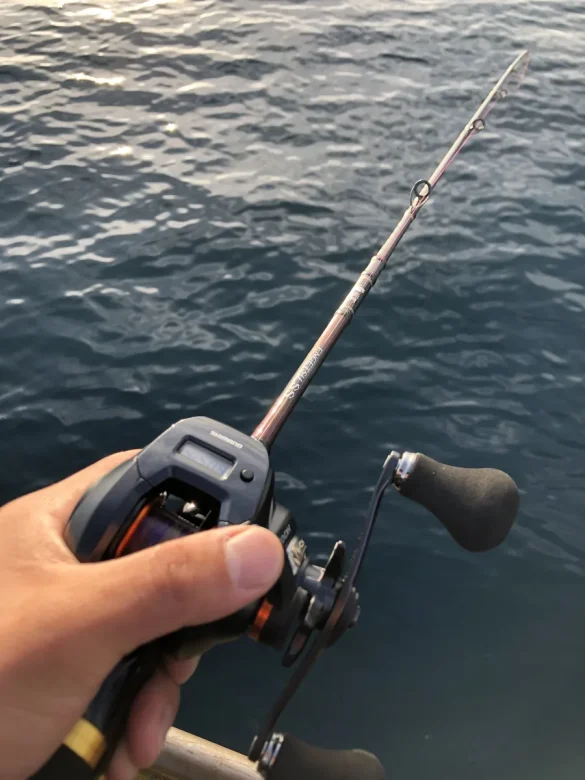
Power ratings tell the same story. Tairaba rods are usually marked in the unusual JDM scale of UL, SUL, even XSUL (extra super ultra light), and the lure ratings stay modest, often a vertical max around 120 to 160g. Most are baitcasting (overhead) rods, because tairaba is a steady-retrieve game where a low-profile reel and a deep-loading tip do all the work. There are spinning versions, but they’re built for casting the head out and swimming it back, not for snapping a jig.
Light jigging asks for almost the opposite blend. Here you’re imparting action, not waiting for the fish to do the work. The standard move is the one-pitch jerk: one sharp lift of the rod for every turn of the reel handle, repeated in a rhythm that makes the jig dart up and flutter on the slack. To pull that off cleanly, the rod needs a tip that’s responsive but not mushy, and a butt section with enough spine to move a 100g jig and then stop a hard-running fish.
The targets are different too. Light jigging chases aomono (青物), the running fish: buri and hamachi (Japanese amberjack / yellowtail), kanpachi (greater amberjack), and sawara (Japanese Spanish mackerel), plus tachiuo (タチウオ, hairtail) and others. These fish run hard and dig, so a light jigging rod has fighting power tucked into the lower blank. Dedicated rods sit in a similar size bracket to tairaba, roughly 6 to 6 and a half feet, but the action is faster and the lure ratings climb higher.
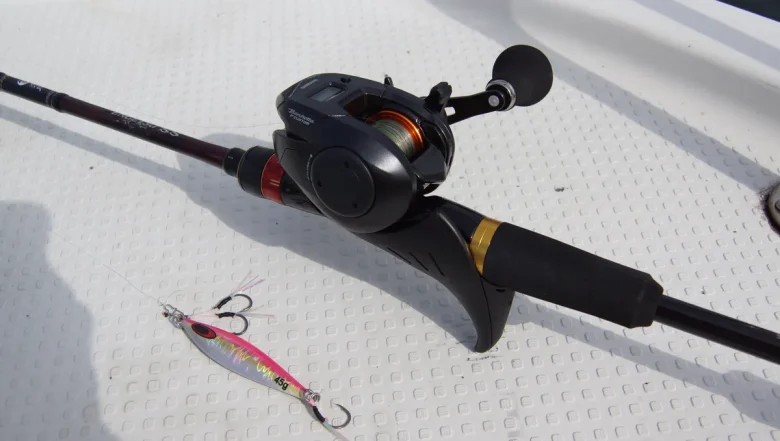
Look at a purpose-built series and the numbers line up with the job. Tenryu’s Horizon LJ, a popular near-shore light jigging lineup, rates its models for jigs from roughly 40g up to 230g across the range, with PE line ratings of 1.5 to 2.5. The bait models use a glass tubular tip that bends to load the jig, backed by a carbon-reinforced butt for lifting power. That’s the key combination: a tip that animates the jig and a backbone that handles a fish twice the size a madai usually runs. A tairaba rod has the first half of that equation and a softer version of the second.
Strip both rods down and they share more than you’d think. Both are short, both load through the tip, both fish vertically on light braid, and both pair naturally with a small overhead reel. A tairaba rod’s deep-loading tip can actually impart a soft, gentle jig action, and its forgiving blank cushions head-shakes beautifully. For a slow, subtle presentation in calm water, that softness is a feature, not a bug. This is exactly why the crossover is even a question.
So when does it genuinely work? A tairaba rod makes a passable light jigging rod when conditions stay gentle: shallow to mid depths, light current, and lighter jigs in the 40 to 80g window. If you’re targeting smaller aomono, tachiuo, or doing a slow, lift-and-flutter style rather than aggressive high-pitch jerking, the soft blank does fine. It even shines for one thing, a slow fall presentation, because the loaded tip telegraphs the lightest tap on the drop. Plenty of Japanese anglers fish a single tairaba rod and casually jig small jigs with it on the same trip.
Now the limits, and they’re real. A tairaba rod runs out of backbone fast. Try to work a 100g-plus jig in current and the soft tip just collapses, robbing your jerk of the crisp pop that triggers strikes. The same softness that’s perfect for a madai becomes a liability against a hard-charging amberjack: you’ll struggle to turn the fish, the fight drags on, and you risk pulling hooks or getting buried in structure. Toothy fish like sawara and tachiuo add another headache, because a tairaba rod isn’t built around the heavier jigs and bite leaders those species call for.
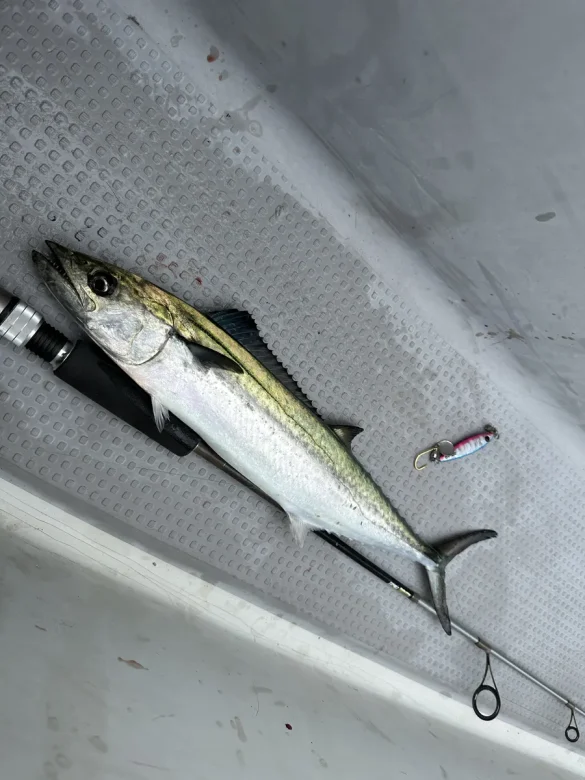
There’s also the lure rating to respect. A tairaba rod marked for a vertical max around 120g isn’t lying to you. Push past it with a heavy jig in fast water and you’re loading the blank beyond its design, which kills action and, over time, risks the rod. The crossover works inside the rod’s envelope, not outside it.
Say you’ve decided to jig with the tairaba rod already in your hand. A few small choices keep it inside its comfort zone and out of trouble.
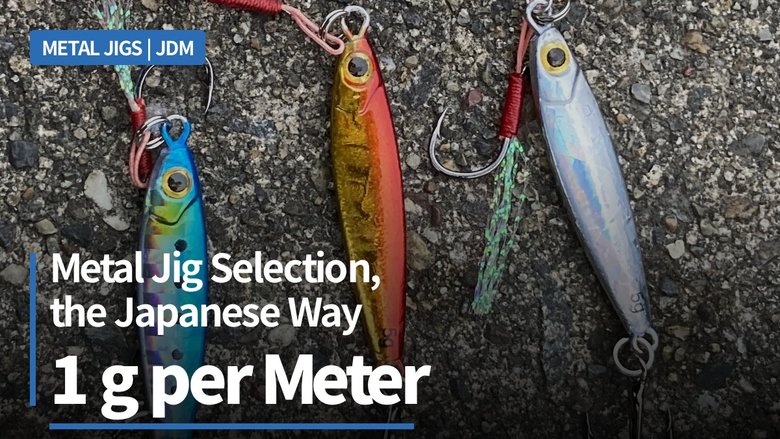
Keep jigs in the 40 to 80g range and your tairaba rod stays in its happy zone. A handy Japanese rule of thumb is to match jig weight to roughly twice the water depth in meters, then adjust for current, so a soft-tipped rod naturally suits shallower spots and calmer days. Reach for semi-long or flat-fall jigs that swim with little input, since they suit a slower cadence and don’t fight the soft blank. Save the heavy, fast-sink jigs for a dedicated rod.
Fish the rod the way it wants to be fished. Use a slower, softer jerk rather than a sharp high-pitch snap, and let the loaded tip do the work on the lift and the fall. Lean on the slow-fall and lift-and-drop presentations that the soft blank reads so well. Drop the drag a notch and fight with the reel, not the rod, so the soft blank cushions runs instead of trying to muscle the fish. If something big eats, take your time. A patient fight on a forgiving rod often lands fish that a stiff rod would tear off.
Your existing tairaba reel and line will mostly carry over. Both methods run thin braid, so PE 0.8 to 1.5 with a fluorocarbon leader of about 20 to 30 lb covers both jobs. A small high-gear baitcasting reel, the kind you’d already pair with a tairaba rod, picks up line fast when a fish charges the boat. The one tweak: if you might tangle with sawara or tachiuo, add a short, thicker fluorocarbon bite section or a light wire so you don’t lose jigs to cut-offs.
For the bigger picture on either method, our light jigging from a boat guide walks through the full technique, and the complete guide to tairaba fishing covers the load-and-reel mindset in depth. If you decide a true light jigging rod is worth it, pair it with one of the affordable JDM options in our best JDM light jigging reels under $300 roundup.
If you want to fish light jigging on a tairaba rod, set yourself up to play to its strengths. Start with the rod itself. A slightly stiffer tairaba model, a “kake-ji” strike-style blank or one rated medium-light to medium, will jig far better than a noodly ultra-light tuned purely for load. If you’re choosing among tairaba rods with one eye on jigging, lean toward the firmer end of the lineup and a length around 6 to 6’6″ for leverage.
But if you’re serious about light jigging, the right tool wins. A dedicated light jigging rod gives you the backbone and crisp action a tairaba blank can’t. Once you’re working heavier jigs in current, or chasing amberjack that pull like a truck, that extra spine stops being a luxury and starts being the thing that lands the fish. My honest take: keep the tairaba rod for the days conditions are kind, and treat a real light jigging rod as the next upgrade when you find yourself reaching for jigs more than rubber heads.
Here’s how the two rods stack up on the points that actually decide whether the crossover holds. Read it as a map of where a tairaba blank keeps pace and where a dedicated rod pulls ahead.
| What to compare | Tairaba rod | Light jigging rod |
|---|---|---|
| Blank action | Soft and parabolic, deep-loading tip (nose-ji, or firmer kake-ji) | Faster, responsive tip with more spine |
| Backbone | Limited; the blank folds into the fish by design | Carbon-reinforced butt for lifting power |
| Typical length | 5’5″ to 6’9″ | About 6 to 6.5 feet |
| Jig / lure rating | Vertical max around 120 to 160g | Roughly 40g to 230g across a range |
| Comfortable jig window | 40 to 80g | Up to 100g-plus in current |
| Line (PE) | PE 0.8 to 1.5 for the crossover | PE 1.5 to 2.5 on dedicated models |
| Retrieve style | Steady load-and-reel, no hookset | One-pitch jerk, work the jig |
| Main targets | Madai (red sea bream) | Aomono: buri, hamachi, kanpachi, sawara, tachiuo |
Yes, within its limits. In shallow to mid water, light current, and jigs under about 80g, a firmer tairaba rod jigs well enough to catch fish. It shines on a slow-fall presentation, where the loaded tip telegraphs the lightest tap on the drop.
Backbone. Work a 100g-plus jig in current and the soft tip collapses, robbing your jerk of the crisp pop that triggers strikes. Against a hard-running amberjack, that same softness makes the fish hard to turn.
Keep jigs in the 40 to 80g range. A handy Japanese rule of thumb is to match jig weight to roughly twice the water depth in meters, then adjust for current, so a soft-tipped rod suits shallower spots and calmer days.
No. Both methods run thin braid, so PE 0.8 to 1.5 with a 20 to 30 lb fluorocarbon leader covers both, paired with a small high-gear baitcasting reel. If sawara or tachiuo are around, add a short, thicker bite section so you keep your jigs.
The good news is these methods share so much DNA that learning one makes you better at the other. Drop a lure to the bottom, stay in contact, and read what the rod’s telling you. A madai sliding onto the hooks or a hamachi crushing a jig on the fall, the feel you build crosses right over. For more on choosing between the two styles, see our breakdown of the best tairaba rods for offshore bottom fishing and decide where your money’s best spent.