How to Buy JDM Tackle Overseas: Proxy, Shipping & Import Guide
ちゃんま
マイボ!

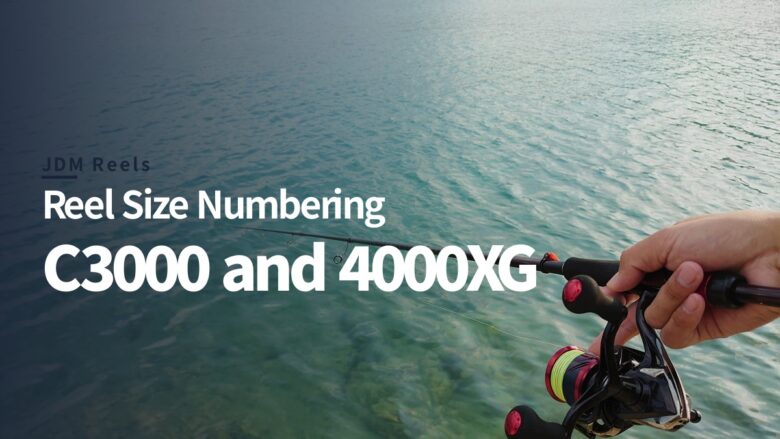
Here’s the whole system in one sentence: The numbers tell you the size and line capacity; the letters tell you the features. Shimano and Daiwa both build their model names that way, so once the pattern clicks you can read a reel’s size, spool, gear ratio and handle straight off the box.
It doesn’t feel that orderly at first. You’ve found the perfect JDM reel, and then you hit the model name: Stella C3000SDHHG. It reads like a password, not a fishing reel. If you’ve ever stared at a string like that and wondered what half of it means, you’re in good company, because almost every angler importing Japanese tackle runs into this wall.
So the rest of this is the questions anglers actually ask about those codes, answered from a Japanese angler’s point of view, with two real model names pulled apart at the end.
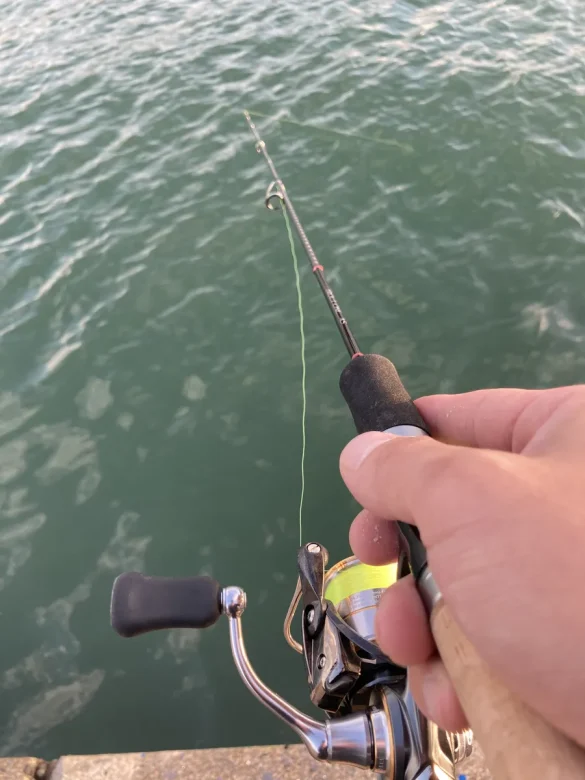
The four-digit number on a spinning reel, 1000, 2500, 3000, 4000, 5000 and up, describes the size of the reel and roughly how much line it holds. Smaller numbers mean a smaller, lighter reel with less capacity, built for finesse work. Bigger numbers mean a larger, heavier reel that holds more line and handles bigger fish. At the core it really is that simple.
What the number doesn’t give you is a fixed line capacity in pounds, because that depends on the line type and the exact model. Treat the size as a class, not a precise spec. The table below lines up the common spinning sizes with the kind of fishing they suit. Use it to land in the right ballpark, then check the maker’s capacity rating for the model you want.
| Spinning size | Typical use | Rough target |
|---|---|---|
| 1000–2000 | Ultralight finesse, light braid | Trout, ajing, small panfish |
| 2500–C3000 | Light all-round inshore and lure work | Bass, light rockfish, light squid jigging |
| 3000–4000 | Medium inshore and light offshore | Sea bass, snapper, light jigging |
| 5000–6000 | Heavier inshore, shore casting, light tuna | Kingfish, larger pelagics |
| 8000 and up | Heavy offshore and shore jigging | Tuna, big amberjack, GT |
One warning before you lean too hard on the number. Sizes aren’t standardized across brands, so a Shimano 3000 and a Daiwa 3000 aren’t always an exact match, and neither is identical to a third brand. The number is a guide within a maker’s own range first, and a rough cross-brand comparison second.
No, they run on their own scale. Low-profile and round baitcasters use a hundred-series: 100, 150, 200, 300 and up, where bigger numbers again mean a beefier reel with more capacity and power. A 100 is the compact, close-quarters size for lighter lures and finesse work. A 300 is a heavy-duty reel built for big fish and serious line capacity.
The feature letters carry straight over, and they’re the ones covered in the sections below: HG and XG for gear ratio, plus an L on the end for a left-hand retrieve, since many JDM baitcasters default to right-hand. A handful of round baitcasters even borrow the spinning scale and run from 1000 up. Cross-brand sizing is looser still on baitcasters, and some makers label a 200 as “20” or a 400 as “40,” so always check the actual line capacity rather than trusting the number alone. For matching a baitcaster size to a technique like tairaba or light jigging, our gear guides go into the specifics.
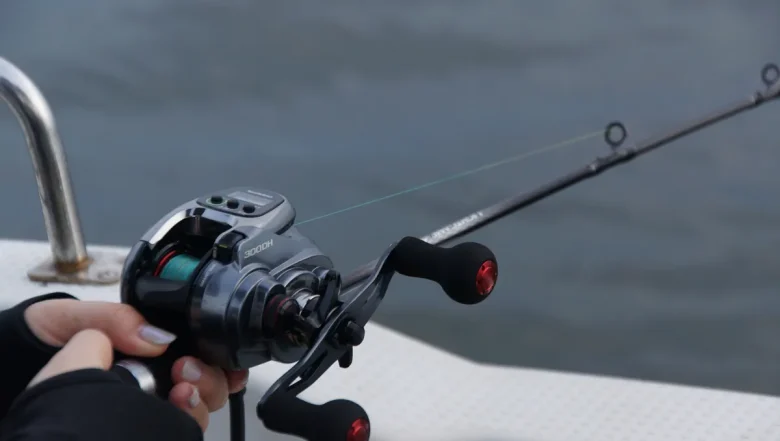
That “C” in front of a Shimano size, as in C3000 or C5000, stands for Compact. It means the reel uses a smaller, lighter body than the size number suggests, while keeping the spool of the larger size. You get the line capacity of the bigger reel in a lighter, more comfortable package. For lure anglers who hold the rod all day, that’s a real advantage.
The pattern is consistent. A Shimano C3000 is typically a 2500-size body fitted with a 3000 spool, and a C5000 is usually a 4000 body with a 5000 spool. So a C3000 weighs about the same as a 2500 but holds 3000-class line. If you want capacity without the extra heft, the C models are exactly what you’re after. Daiwa uses a “C” in its LT range the same way, which comes up further down.
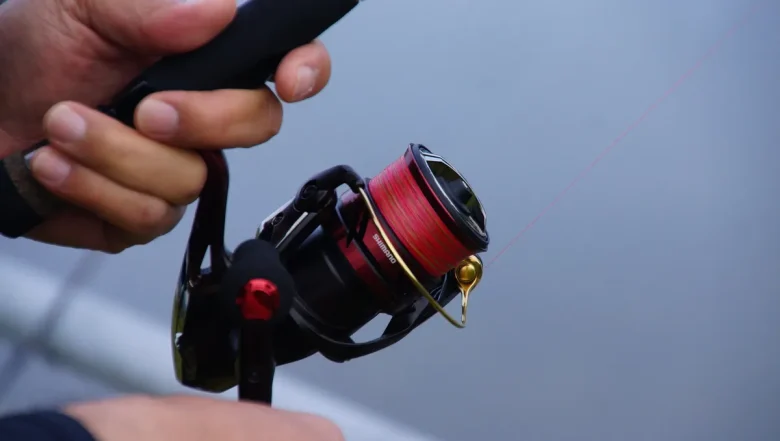
After the size number, gear ratio is the code you’ll meet most often, and it controls how much line the reel picks up per handle turn. Two reels can be the same size but retrieve at very different speeds, and that changes how they fish. Shimano uses a clear ladder of codes, running from slow and powerful up to very fast.
So a 4000XG is a 4000-size reel with an extra-high-speed retrieve, while a 4000PG is the same size built for slow, strong cranking. Daiwa runs a similar idea with its own letters: H for high gear and XH for a ratio of roughly 6.0 or higher. Pick the gear ratio to suit your technique, not just out of habit: speed for fast lures, power for heavy or deep work.
Spool depth and handle. Depth matters because it sets how much line you can fit, and the right depth means you don’t waste backing or run short. The codes are easy to remember once you see them spelled out.
String a few of these together and a long model name starts to make sense. They’re just stacked features, read left to right after the size. Shimano and Daiwa share most of this shorthand, which is why learning one brand gives you a big head start on the other.
Hardly at all. If you’re shopping Daiwa, you’ll see “LT” everywhere. It stands for Light Tough, the design concept Daiwa rolled out to make its reels lighter and tougher at the same time. For decoding purposes, the key thing LT did was standardize the spool diameters across the range, so the size numbers progress in a logical, consistent way.
An LT3000 uses a spool around 48mm in diameter, and an LT4000 steps up to about 51mm. The same suffix logic applies: in a Daiwa LT name, C means a compact body, S means a shallow spool, and XH means a high gear ratio of about 6.0 or more. So an LT3000-CXH is a Light Tough reel in the 3000 class, with a compact body and an extra-high gear ratio. Once you spot the pattern, Daiwa’s names read just like Shimano’s.
Mostly, with one wrinkle that catches importers out. The same model can carry slightly different names in Japan versus the global market, and capacities on the box are often listed in Japanese line ratings (号, or “go” for nylon, and PE numbers for braid) rather than pounds. The size code itself usually carries over, but the line numbers on a JDM spool won’t read in pounds.
If a JDM capacity chart looks unfamiliar, that’s why. We’ve got a separate guide to Japanese PE line ratings that translates those numbers, and it pairs perfectly with this one when you’re sizing up a reel and the line to fill it. The reel code tells you the body and spool; the line rating tells you what to put on it.
Every letter above stacks into the names you meet on the shelf, and they always read the same way: size first, then the feature letters, one at a time. Here are two real-world examples broken down piece by piece.
| Full code | What each part means |
|---|---|
| Stella C3000SDHHG | Stella series, C = compact body, 3000 spool, S = shallow spool, DH = double handle, HG = high gear |
| Daiwa LT3000-CXH | Light Tough concept, 3000 size, C = compact body, XH = extra-high gear ratio |
That’s all there is to it. Whenever you meet a new model name, chop it into size and letters, then translate each letter using the codes above. The system rewards a little memorization with the ability to read any reel in the catalogue.
Codes are only useful if they help you choose. Work backwards from your fishing. Decide the target species and technique, which sets the rough size class, then pick the gear ratio for your lure speed, and finally the spool depth for your line. Three quick decisions and you’ve narrowed a huge catalogue down to a few models.
For finesse inshore lure fishing, a 2500 to C3000 in HG is a brilliant all-rounder. For light jigging or sea bass, a 3000 to 4000 covers it, leaning to XG if you’re chasing fish that swim at you. For tairaba and bottom techniques, a small baitcaster in the 100 to 150 range with the right gear ratio is the standard. Choose the size for the fish, the gear ratio for the technique, and the spool for the line, and the code does the rest.
From a lot of time on the water in Japan, the most common mistake I see is buying too big “to be safe.” An oversized reel is heavier, kills lure feel, and makes a long session tiring. Match the size honestly to your fishing and you’ll enjoy the reel far more. If you want concrete model picks, our reel guides for light jigging and tairaba put these codes into practice.
Meet a name like C3000SDHHG now and it should read straight through: compact 3000, shallow spool, double handle, high gear. No blinking. That fluency is what lets you shop the full JDM catalogue with confidence instead of guessing.
The recap is short. The number is the size and capacity. The “C” means a compact body. PG, HG and XG climb from slow and strong to fast. S, SS, D and DH cover spool depth and handle, Daiwa’s LT range follows the same shorthand, and baitcasters swap to a 100-to-300 scale while reusing the feature letters. Here’s where to go next as you put it to work.