Free-Slide vs Fixed Tairaba: Which Rig Should You Buy?
ちゃんま
マイボ!

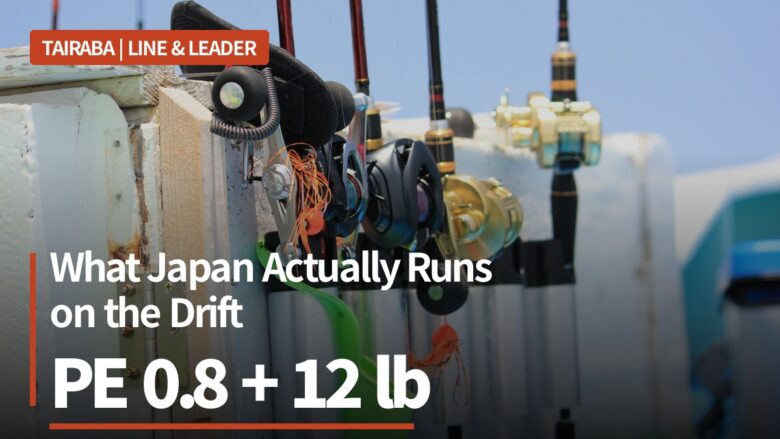
The rig hits bottom, you start winding, and nothing happens for two hours. Then the boat moves to a spot with real tide running through it, everyone else hooks up, and your line is the one sitting at a lazy forty-degree angle with a head that never quite finds the bottom. Nine times out of ten that’s not the head weight. It’s the line and leader you spooled up before you left the dock.
Tairaba (鯛ラバ / タイラバ) is a Japanese bottom technique for madai, red sea bream, built around a skirted head that you wind back at a dead constant speed. The technique is forgiving. The line setup is not, because thin braid is what lets a 100 g head stay under the boat in current, and the leader is what survives a madai’s grinding teeth and the rocks it dives into. This guide goes situation by situation: the flat, easy day, the long sideways drift, the trip where you keep hearing your line whistle, and the deep drops past 100 meters. Each one gets a spool that suits it, with numbers taken from the makers’ own spec pages.
If the Japanese numbering on those spools is new to you, read our explainer on JDM PE line and leader ratings first. This article assumes you already know that 号 (gou) is a diameter scale, not a pound test. Prices for JDM products are shown in JPY excluding tax, with approximate USD at about ¥157 to the dollar in August 2026.
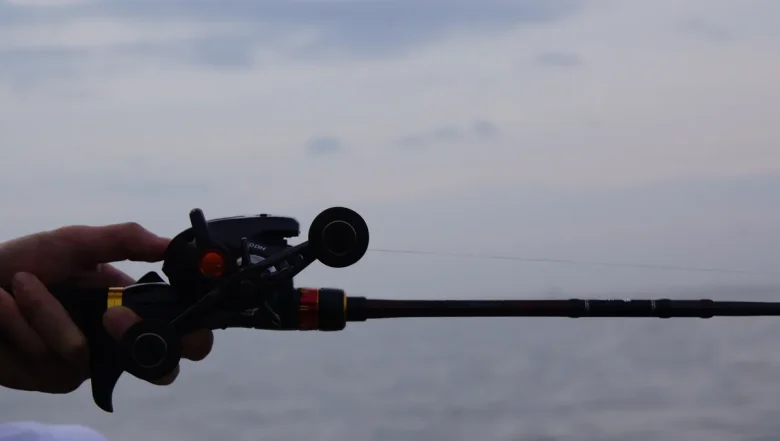
This is the day most people learn on. Light wind, the skipper holds position, and your line hangs close to vertical. Bottom is 25 to 40 meters and an 80 to 100 g head gets there without an argument. Here you can fish thin, and thin is the point: PE 0.8 with a 3号 fluorocarbon leader (about 12 lb) is the setup most Japanese charter boats will tell you to bring. Leader length is roughly three hiro. A hiro (ヒロ) is one arm span, near enough to 1.5 meters, so three of them puts about 4.5 m of fluoro between your braid knot and the rig.
The reason for that much leader isn’t abrasion at the hook. It’s the length of clear, sinking material ahead of a lure that a fish inspects at close range in daylight, plus a shock buffer for the moment a big madai turns and runs at the boat. Anything shorter starts loading the braid knot directly.
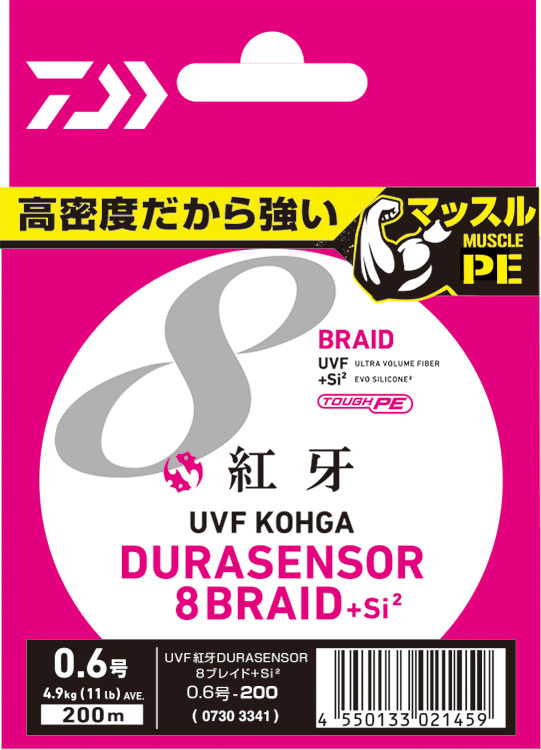
Daiwa’s Kohga (紅牙) line is its madai-only brand, and the UVF Kohga Dura Sensor ×8+Si2 is the braid built for it. Daiwa rates the Si2 silicone treatment plus the TOUGH PE fiber at over 300% the abrasion resistance of its previous line, which matters more in tairaba than in most styles because your braid spends the whole day sawing across the same short stretch of guide and rod tip. Five colors with double marking give you a depth read without a counter, and the 400 m spool exists for exactly the deep-drift problem covered further down.
| Technology | What Daiwa claims it does |
|---|---|
| TOUGH PE | A new base fiber, thicker and rounder per strand, braided into 4, 8 or 12 carriers for higher strength, abrasion resistance and durability |
| UVF (Ultra Volume Fiber) | Daiwa’s method of compressing the fibers while braiding, for abrasion resistance and strength |
| EvoSilicone2 (+Si2) | Silicone treatment for abrasion resistance, slickness through the guides and longer spool life |
| 5-color double marking | Color changes plus secondary marks so you can read depth off the spool, not just off the counter |
| Model | Strength | Spool lengths | RRP excl. tax |
|---|---|---|---|
| 0.6号 | 11 lb / 4.9 kg | 200 m, 300 m | ¥3,100 / ¥4,150 (about $20 / $26) |
| 0.8号 | 15 lb / 6.8 kg | 200 m, 300 m, 400 m | ¥3,100 / ¥4,150 / ¥5,400 |
| 1号 | 18 lb / 8 kg | 200 m, 300 m, 400 m | ¥3,100 / ¥4,150 / ¥5,400 |
| 1.2号 | 21 lb / 9.6 kg | 200 m, 300 m | ¥3,100 / ¥4,150 |
| 1.5号 | 26 lb / 12 kg | 200 m, 300 m | ¥3,100 / ¥4,150 |
Buy the 0.8 in 300 m and you’ve covered vertical days and most drifts on one spool.
Dotera nagashi (ドテラ流し) is the Japanese drift style where the skipper lets the boat run beam-on to the wind and everyone fishes down-current. It covers ground and it catches fish, and it changes your rig completely. Your line leaves the rod at an angle, you pay out far more of it than the depth sounder says, and the leader drags across structure at a shallow angle instead of hanging clear of it. Two things follow.
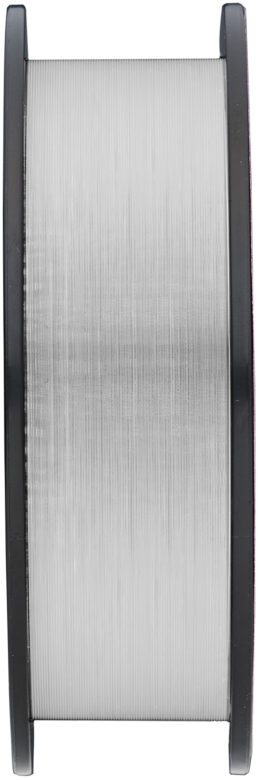
| Model | Spool | Color | RRP excl. tax |
|---|---|---|---|
| #2.5 | 35 m | Stealth pink | ¥1,500 (about $9.5) |
| #3 | 35 m | Stealth pink | ¥1,500 |
| #3.5 | 35 m | Stealth pink | ¥1,500 |
| #4 | 35 m | Stealth pink | ¥1,500 |
| #5 | 35 m | Stealth pink | ¥1,500 |
| #6 | 35 m | Stealth pink | ¥1,500 |
| Feature | Detail from Daiwa |
|---|---|
| High-strength fluorocarbon 100% | Built for knot strength, which is where a leader normally fails |
| Medium-soft finish | Enough tension to handle cleanly, soft enough to seat an FG knot without fighting it |
| Specific gravity 1.78 | Sinks, so the leader doesn’t bow up above the head in current |
| DPLS parallel winding | Level winding on the spool to keep memory and surface unevenness down |
| Size-colored spool band | Included band stops the spool unravelling in a tackle bag and tells you the size at a glance |
The one thing to know before you order: 35 m is a small spool. Rig up at 5 m and re-tie a couple of times a day and you’ll finish it inside two or three trips. Anglers who fish a lot of drift days tend to keep this for the sizes they use most and buy a bulk 50 m spool for the rest.
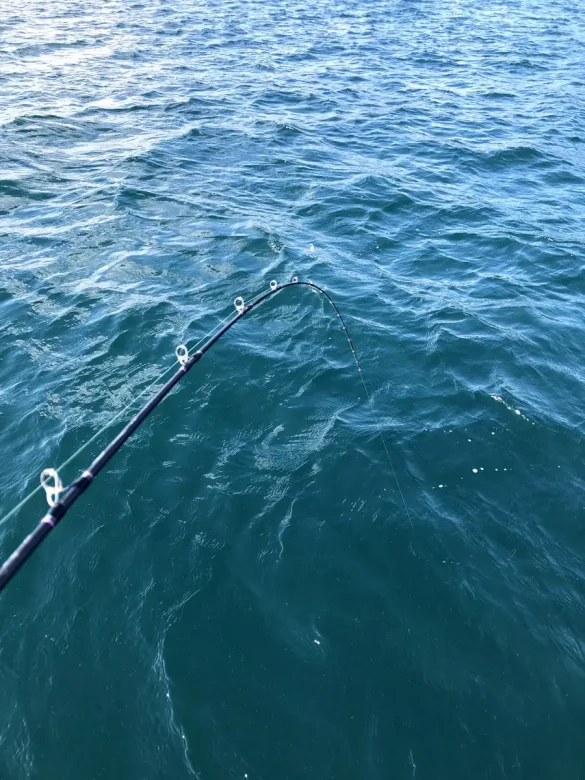
Japanese anglers call it ito-nari (糸鳴り), line squeal: the thin whistle you get when braid runs across the guides under load. It’s a symptom, not a fault in itself, and it usually means one of three things. The line has gone flat and fuzzy in the section that takes the most work. The guide frames have salt on them. Or the braid was never very round to begin with, which is common on cheap four-carrier line.
The break-offs that come later are the part worth taking seriously. They almost never happen mid-spool. They happen in the top 5 to 10 m, right where a wind knot pulled tight or where the braid got sanded down on a rod tip. Strip and re-tie that section every few trips and most of the mystery losses stop.
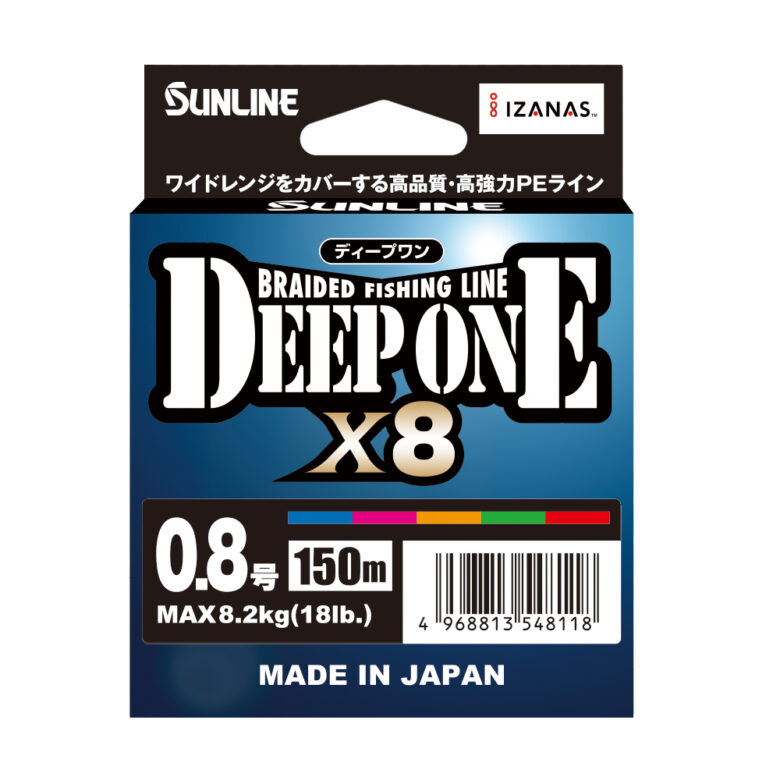
Sunline released the Deep One ×8 in April 2025 and makes the roundness claim explicitly: an 8-carrier construction pushed closer to a true circle, which the company says cuts guide resistance and holds down the squeal. It’s also a domestically made line sold at a price that undercuts most Japanese 8-braids, and the strength ratings back it up. At 0.6号 Sunline rates it 14 lb where Daiwa’s tairaba braid is 11 lb at the same diameter, so if you like fishing thin, this is the one that gives you the most margin for it.
| Technology | What Sunline claims it does |
|---|---|
| HQ-PE production process | A manufacturing method that cuts cost without dropping quality or strength, for a domestically made line at a lower price |
| True-circle 8-carrier braid | Rounder cross-section, less guide resistance, less of the line squeal that comes with it |
| Multicolor rotation | Color changes for depth reading across light game, boat fishing and heavy work |
| Model | Reference lb | Max kg | Spool lengths (RRP) |
|---|---|---|---|
| 0.6号 | 14 lb | 6.4 kg | 150 m ¥2,260 / 300 m ¥4,160 |
| 0.8号 | 18 lb | 8.2 kg | 150 m / 200 m / 300 m |
| 1号 | 21 lb | 9.5 kg | 150 m / 200 m / 300 m |
| 1.2号 | 26 lb | 11.8 kg | 150 m / 200 m / 300 m |
| 1.5号 | 32 lb | 14.5 kg | 150 m / 200 m / 300 m |
What it won’t do is stop a wind knot. No braid does. It is a general-purpose boat line rather than a madai-specific one, so you don’t get the tairaba-tuned color scheme Daiwa builds into the Kohga spool.
Deep tairaba is an arithmetic problem before it’s a tackle problem. At 100 m of water on a drift you can easily have 150 to 200 m of braid out, and if a fish takes 30 of it you want line left on the spool. That’s the honest argument for the 300 m and 400 m spools: not the depth, the angle. A 200 m spool on a small counter reel is fine down to about 60 m and starts feeling thin below that.
Leader choice splits here. Deep water is usually darker water, so the finesse argument for thin fluoro weakens, and the fish tend to run bigger. Most Japanese deep-tairaba anglers sit at 4 to 5号 (16 to 20 lb) and go to 6号 over sharp reef. A 50 m bulk spool makes more sense than a 35 m one at that rate of use.
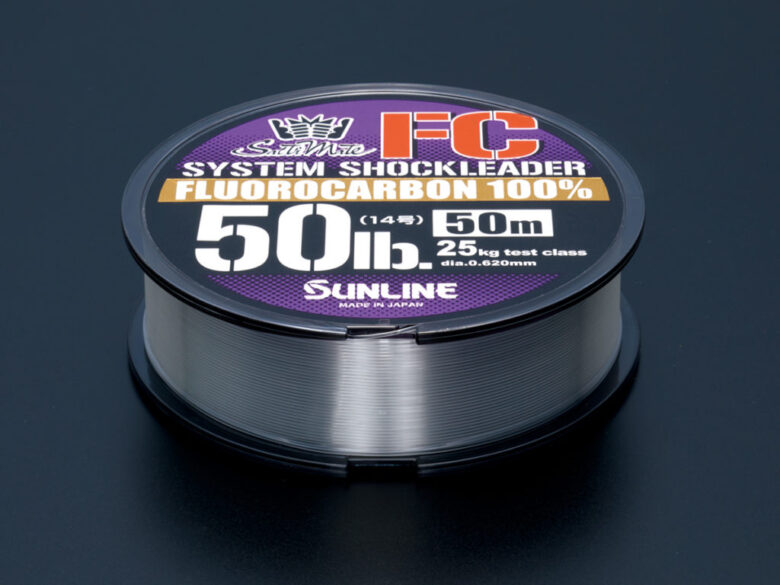
| Model | Reference gou | Diameter | Spool |
|---|---|---|---|
| 12 lb | 3号 | 0.285 mm | 50 m |
| 16 lb | 4号 | 0.330 mm | 50 m |
| 20 lb | 5号 | 0.370 mm | 50 m |
| 25 lb | 7号 | 0.435 mm | 50 m |
| 60 lb | 18号 | 0.700 mm | 30 m |
| Feature | What Sunline claims it does |
|---|---|
| Abrasion-resistant fluorocarbon | Built to resist damage from teeth, reef and long fights, which is the job description for deep tairaba |
| Low initial stretch | Transmits rod movement and hook-up power through a long line, where stretch normally eats it |
| Supple, tough line quality | Absorbs shock and improves how cleanly a knot seats, despite being fluorocarbon |
| Triple Resin Processing | Three-layer coating with resin baked between molecules, for water resistance, slickness and abrasion resistance |
| Parallel winding | Level spooling to reduce surface unevenness and line memory |
Everything above is decided by the one connection you tie by hand. In Japan the default for tairaba is an FG knot, and there’s a practical reason beyond strength: it’s slim, so it passes through the guides without knocking on every drop and retrieve. Over a full day of dropping and winding, a bulky connection is a rod tip that ticks constantly and a knot that slowly abrades itself.
| Connection | Use it for | Watch out for |
|---|---|---|
| FG knot (braid to leader) | The standard for tairaba, light jigging and eging in Japan | Needs tension and practice. Tie it at home, not on a rolling deck |
| PR knot (braid to leader, bobbin) | Heavier leaders, deep drops, anyone who struggles with FG on a boat | Requires a bobbin winder, and it’s bulkier through small guides |
| Improved clinch or Palomar (leader to rig) | Tying the leader to the head’s ring or a free-slide pipe | Wet it before you seat it; fluorocarbon burns easily |
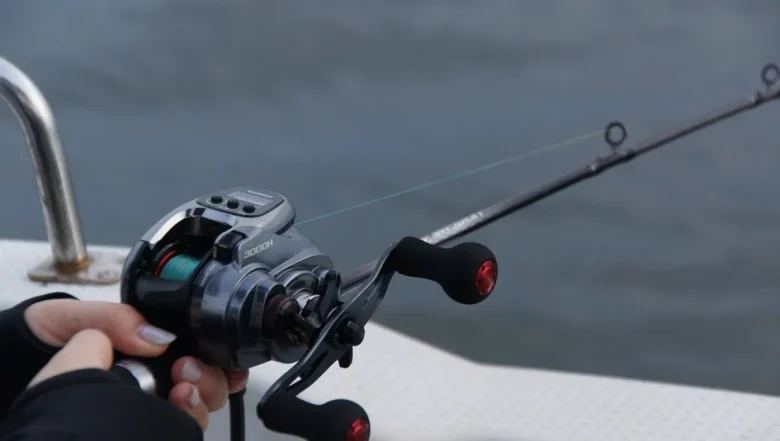
I fish tairaba from my own small boat in Japan, and the size decision gets made on the water rather than in the tackle shop. The first drop of the day is the test. I watch where the braid enters the water while the head is still sinking: near vertical, and whatever is on the reel that morning is fine. When the line is already sliding away flat and I have paid out half again the depth the sounder is showing, I read that as the tide telling me the braid is too thick for the conditions, so the 0.8 spool comes off in favor of the 0.6 before I reach for a heavier head. Adding weight buys the depth back and flattens the fall, and the fall is the part the fish are responding to.
Leader length I treat as the slower call. Three hiro is my default and it stays there on most days. I lengthen it when the boat is running beam-on and I can feel the head ticking along the bottom instead of dropping onto it, because at that angle more clear material ahead of the rig is doing actual work. I shorten it, by about a meter and no more, when the drift is quick enough that a long leader starts lifting the head clear of the bottom by itself. Neither adjustment is one I enjoy making with cold fingers halfway through a session, which is the whole reason I bother reading the first drop properly.
| Model | Type | Tairaba sizes | Price (excl. tax) | Fits best |
|---|---|---|---|---|
| Daiwa UVF Kohga Dura Sensor ×8+Si2 | PE braid, 8-carrier | 0.6 to 1.5号, 200 to 400 m | ¥3,100 to ¥5,400 | The default madai braid, vertical or drift |
| Sunline Deep One ×8 | PE braid, 8-carrier | 0.6 to 1.5号, 150 to 300 m | ¥2,260 to ¥4,160 | Fishing thin, and quieter through the guides |
| Daiwa Kohga Fluoro Leader EX | Fluorocarbon leader | #2.5 to #6, 35 m | ¥1,500 | Vertical days, madai-specific spool |
| Sunline System Shock Leader FC | Fluorocarbon leader | 12 to 25 lb (3 to 7号), 50 m | Open price | Long drifts, deep drops, heavy re-tying |
Fifteen pounds of madai-specific braid with double marking, at about $26 for 300 m. It handles the flat vertical day and the beam-on drift on the same spool, and the abrasion treatment earns its keep in a technique that works one short section of line all day. Pair it with a 3号 leader and carry a 4号 for when the tide picks up. Check the Kohga Dura Sensor ×8 price on Amazon Japan.
The 300 m Deep One at 0.8号 gives you 18 lb and a rounder line for the same money as most 200 m spools, and the System Shock Leader FC in 16 or 20 lb comes on a 50 m spool, which matters when you re-rig several times a trip. This is the pairing for anglers whose home water is over 80 m. Check the Deep One ×8 price on Amazon Japan.
If you’d rather fish this weekend, the US market covers this setup without a parcel from Japan. Daiwa’s J-Braid Grand x8 in 15 lb sits close to the 0.8号 spot on diameter and strength, and Seaguar Blue Label leader at 15 to 20 lb does the leader job on a 25 yard spool. You lose the depth marking and the madai-tuned colors. You keep the fishing.
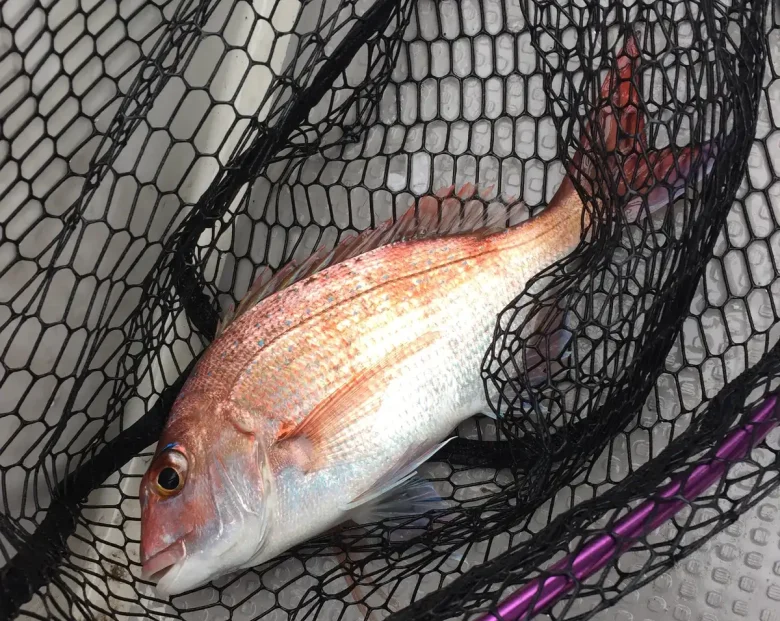
If you take one number away, make it this: PE 0.8 and a 3号 fluoro leader at about 4.5 m covers the majority of tairaba fishing, and almost every adjustment from there is a response to the drift rather than to the size of the fish. Longer and heavier leader when the boat runs beam-on. More spool capacity when the water gets deep. Thinner when the tide is ripping and the water is clear.
The rest is maintenance. Re-tie the top few meters, check the leader with your fingers after every decent fish, and tie your knots before you leave the house.