Free-Slide vs Fixed Tairaba: Which Rig Should You Buy?
ちゃんま
マイボ!

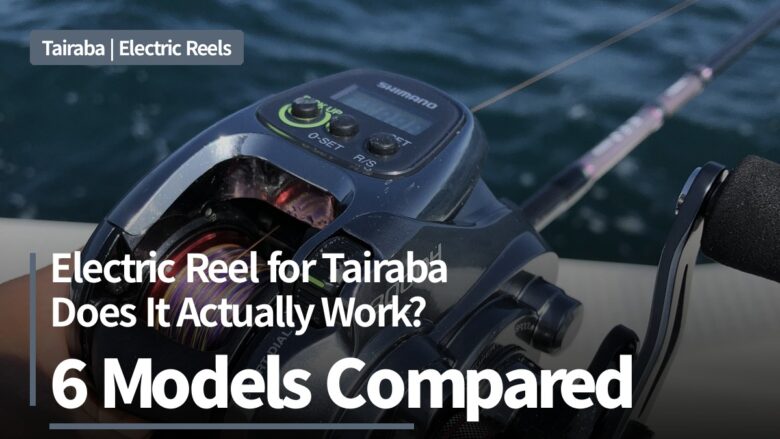
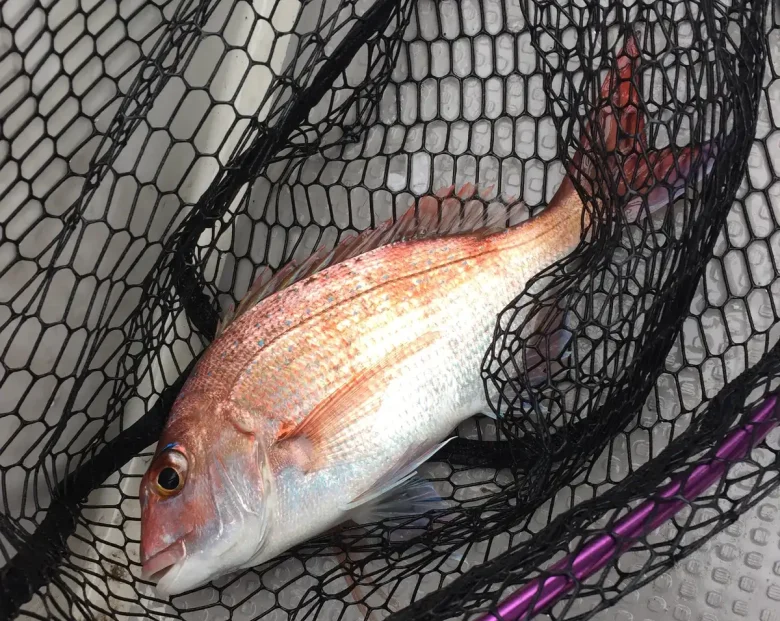
Type “electric reel” into a US tackle site and you get swordfish. Tilefish, 1,500 feet of water, a reel the size of a coffee can. Type the same words into a Japanese one and half the results are about madai (真鯛, red sea bream) in 40 to 120 m of water, on a reel you can palm.
The Japanese name is 電動タイラバ, dendou tairaba, and it isn’t a fringe experiment. Both makers explain the relevant functions in tairaba language in their own product material: Shimano describes its constant-speed mode as reproducing the tairaba retrieve, and Daiwa lists electric slow wind as useful for tairaba and bottom fishing. So the short answer is yes, it works. It works for one narrow reason, not because a motor beats a forearm at everything. Whether that reason is worth the weight, the money and the cord at your feet is a different question, and this article keeps the two apart.
Pricing note: JDM products are shown at maker suggested prices in JPY excluding tax, with an approximate USD conversion at about ¥157 to the dollar in August 2026. JDM links point to Amazon Japan, which ships internationally; check availability and shipping cost at checkout. If the method itself is new to you, our complete guide to tairaba fishing covers the rig first.
Yes. The reason is narrower than most people expect.
Tairaba runs on a single input. Drop the head to the bottom, wind at a constant speed until the lure is well clear of the fish, drop again. Constant is the whole method. And a human forearm is a poor speed controller: ten meters up the lure feels lighter, the boat rolls, your wrist gets tired, and a retrieve that began at one handle turn per second is doing one and a half by the time you think to check.
An electric reel takes that variable off you. Shimano lists 速度一定モード, a constant-speed mode holding the set winding speed whether the load is one kilo or three. Daiwa’s equivalent is 電動スロー巻き, electric slow wind, and the maker specifies the MAGMAX motor as holding usable torque down at lever value 1 with a 50-go tenya weight hanging off it. Slower, in other words, than most people can turn a handle without the rhythm falling apart. Both makers put a counter on the front, so the depth and speed where a bite came are numbers you can go back to.
Shimano’s Touch Drive reads like a convenience feature and isn’t. You set and change speed by touching the screen instead of turning a handle, which means both hands stay on the rod for the entire retrieve. Over a long slow wind, that’s a different way of holding the tackle, not a different way of cranking it.
None of this makes a fish bite. It removes one source of noise from a method that has almost nothing else in it. Most days you won’t notice. On the day when 45 cm per second catches and 60 doesn’t, you will.

Two reasons, and neither of them is about the fish.
The first is depth. Japanese tairaba never stayed in 40 m of water. ディープタイラバ, deep tairaba, is fished at 100 m and beyond with tungsten heads of 150 to 200 g, and a single drift can run twenty minutes. Hand-crank that from dawn to early afternoon and your day ends before the tide does. Somewhere past 80 m an electric reel stops being an indulgence and becomes how you’re still fishing properly after lunch.
The second is the boat. Japanese charter boats are wired for this. A 12 V outlet at the rail is ordinary equipment, not a special request, because whole categories of Japanese boat fishing (deep-water rockfish, squid, hairtail rigs) assume an electric reel from the start. Nobody on the deck thinks it’s odd.
How this looks from a Japanese deck
Electric tairaba isn’t treated as cheating here, and it also isn’t the default. In 30 to 60 m, most people on a Japanese boat are still fishing a conventional counter reel, because at that depth the wind is short and the tackle is lighter and more fun. The electric outfit tends to come out for the deep program, or for a long day, or for anglers who’ve decided that holding one exact speed matters more to them than saving 250 g.
The other thing worth saying: these reels are built around Japanese boat conventions. Shimano’s 探見丸 (Tankenmaru) screen mirrors the sonar repeater system Japanese charter boats install at each seat. Outside Japan there’s nothing for it to talk to.
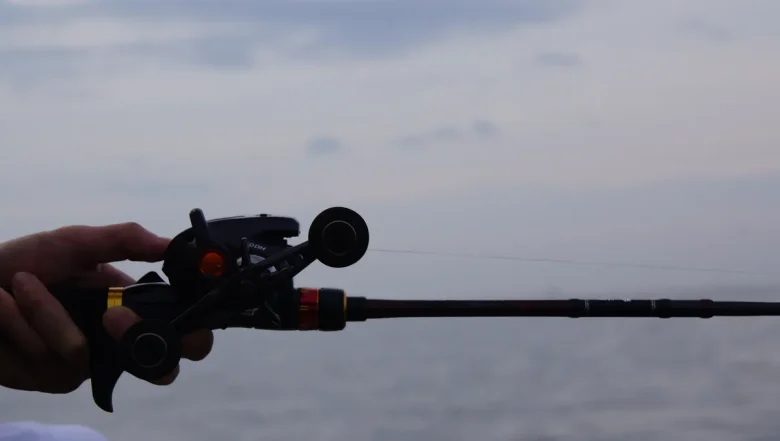
Weight is the honest one. The reels below run 385 to 490 g. A Shimano Engetsu CT 150PG, a conventional counter reel that plenty of Japanese anglers fish tairaba with all season, weighs 230 g and lists at ¥34,800 (about $222). You’re adding roughly 150 to 260 g to a rod you hold in one hand for six hours, and the entry point roughly doubles. Light tairaba rods are designed around conventional reels, and a heavy electric will change how the blank loads and how the tip reads a bite.
Then the cord. It runs from the reel to a battery on the deck, and it’s between you and the gunwale every time you move. Anyone who has fished a crowded rail knows what a trailing cable does there.
Not the big ones. The reels that show up on tairaba boats in Japan sit in the 150 to 600 size range: small conventional-reel bodies with a motor, not deep-drop winches. If those numbers look arbitrary, our guide to JDM reel size numbering unpicks them. Every spec below comes from the maker’s own product data.
At 395 g this is the lightest full-featured electric in the group, and the spec sheet reads like someone wrote it after a tairaba trip. Constant-speed mode, Touch Drive, and a rakuraku mode that trims motor output to hold line tension steady, plus Fire Macha, which starts the powered wind straight out of a fall so you’re not fumbling at the moment of bottom contact. One oddity: the 8.2:1 gear picks up 66 cm per handle turn, which is quick for tairaba. Wind it by hand and you’ll be consciously slowing yourself down.
Line capacity is the limit. PE 1 to 220 m covers tairaba down to about 100 m and is thin past that, and the 5 kg drag doesn’t leave room for a change of plan. There’s no fall lever, so the drop is your thumb’s job.

| Feature | What it does |
|---|---|
| 速度一定モード (constant-speed mode) | Holds the set winding speed as the load changes: the tairaba retrieve, mechanized |
| 楽楽モード (rakuraku mode) | Trims motor output to keep line tension steady, which helps on a fish that swims up |
| Touch Drive | Speed set and locked from the screen, so both hands stay on the rod |
| ファイヤーマッハ (Fire Macha) | Powered retrieve starts straight out of a fall, with no separate clutch step |
| Speed Clutch | One-touch drop back into free spool from a powered wind |
| MUTEKI PLUS motor | Shimano’s uprated motor grade for the small electric class |
| Japanese / English menu | Counter and settings switch to English |
| CI4+ frame | Reinforced resin body: stiff, and a large part of why it’s this light |
| Model | Weight | Gear ratio | Line per turn | Handle arm | Price (excl. tax) |
|---|---|---|---|---|---|
| ForceMaster 200 (right) | 395 g | 8.2:1 | 66 cm | 60 mm | ¥86,600 (~$552) |
| ForceMaster 201 (left) | 395 g | 8.2:1 | 66 cm | 60 mm | ¥86,600 (~$552) |
| ForceMaster 200DH | 385 g | 8.2:1 | 66 cm | 55 mm | ¥86,600 (~$552) |
| ForceMaster 201DH | 385 g | 8.2:1 | 66 cm | 55 mm | ¥86,600 (~$552) |
All four share PE 0.8-270 m / 1-220 m / 1.5-150 m, a 5 kg drag, 3.0 kg of Shimano winding power and 195 m/min. DH means double handle.
Daiwa comes at the same problem from the power side. The Seaborg 200J is 490 g against Shimano’s 395, and it answers with 28 kg of maximum winding power at 13 V, 10 kg of drag, and an aluminium body. Run it off Daiwa’s Super Lithium pack and the figures go to 31 kg and 172 m/min. This is the reel for water where a snagged 200 g tungsten head or an unexpected amberjack is part of the job description.
The JOG power lever is Daiwa’s signature: one thumb lever running speed from a dead crawl to full without your hand leaving the reel. Electric slow wind, ATD drag, Magsealed bearings. The 5.1:1 gear and 55 cm per handle turn make it slow by hand too, which suits the method.
Its weakness is simply that it’s heavier than the fishing needs on a calm 50 m day, and the one-year motor warranty is worth knowing about before it ships across an ocean.

| Feature | What it does |
|---|---|
| JOG power lever | Thumb lever running the full speed range without moving your hand off the reel |
| 電動スロー巻き (electric slow wind) | Keeps motor torque at the lowest lever settings, so dead-slow stays dead-slow under load |
| MAGMAX motor | Daiwa’s magnet-drive motor, rated 12 to 16.8 V |
| ATD | Drag that tracks the fish’s pull instead of stepping up in jumps |
| Magsealed ball bearings | Magnetic-fluid seal keeping salt and grit out of the bearings |
| One-push ON clutch | Clutch on and off by push, and the motor links to the clutch action |
| 電子ドラグサウンド (electronic drag sound) | Audible drag alert in three tones, or off |
| Spec | 22 Seaborg 200J |
|---|---|
| Weight | 490 g |
| Gear ratio | 5.1:1 |
| Line per handle turn | 55 cm |
| PE capacity | 1.5-450 m / 2-300 m / 3-200 m |
| Maximum drag | 10 kg |
| Maximum winding power | 28 kg (31 kg on Super Lithium) |
| Standard winding speed, 1 kg load | 155 m/min (172 m/min on Super Lithium) |
| Bearings | 12 ball / 1 roller, 4 of them corrosion-resistant |
| Body | Aluminium |
| Price (excl. tax) | ¥94,300 (~$601) |
Same family, one size up, different job. PE 2 to 300 m and a 10 kg drag put 100 m-plus tairaba in range, and 490 g is the price of that spool. The addition worth paying for is the fall lever: a thumb wheel that meters the drop instead of leaving it to your thumb on the spool. On a fast drift in deep water, a lot of the bite window happens on the way down.
It also carries the Tankenmaru screen. Outside Japan that’s a sonar repeater display you’ll pay for and never feed.

| Feature | What it does |
|---|---|
| Fall lever | Meters fall speed on a one-way roller bearing, so the drop is controlled rather than free |
| Touch Drive | Screen-set winding speed with a lock, both hands free for the rod |
| 巻上距離アラーム (winding distance alarm) | Beeps at set intervals of retrieve, which is how you keep a rhythm honest |
| 探見丸スクリーン (Tankenmaru screen) | Mirrors a Japanese charter boat’s sonar on the reel display: no use elsewhere |
| Roller level wind bearings | Two bearings in the level wind, cutting friction as line pays out |
| Carbon cross washer drag | Higher-durability drag stack than the plain carbon washers on cheaper models |
| Model | Weight | Gear ratio | Line per turn | Handle arm | Price (excl. tax) |
|---|---|---|---|---|---|
| ForceMaster 600 (right) | 490 g | 6.5:1 | 67 cm | 65 mm | ¥95,200 (~$606) |
| ForceMaster 601 (left) | 490 g | 6.5:1 | 67 cm | 65 mm | ¥95,200 (~$606) |
| ForceMaster 600DH | 495 g | 6.5:1 | 67 cm | 55 mm | ¥95,200 (~$606) |
All three take PE 2-300 m / 3-200 m, with a 10 kg drag and 6.0 kg of Shimano winding power.
Same body size as the Seaborg 200J, ¥12,500 cheaper, and the differences land where you’d guess. BRITZ motor in place of MAGMAX, 25 kg of winding power instead of 28, no Magsealed bearings. You keep the JOG power lever, ATD, the aluminium frame and 480 g. The line capacity is the surprise: PE 1 to 600 m, more at the thin end than the Seaborg carries.
Worth knowing before you buy: Daiwa’s own data doesn’t confirm electric slow wind on this model, so if the dead-slow retrieve is the whole reason you’re shopping, that’s the spec to check with the seller.

| Feature | What it does |
|---|---|
| JOG power lever | The same thumb-lever speed control as the Seaborg |
| BRITZ motor | Daiwa’s standard-grade motor, one step below MAGMAX |
| ATD | Load-following drag |
| AIR cord | Thin, flexible power cord: less of it wrapped around your knee |
| DAIWA CONNECTED | App-based setting of the reel’s electric parameters |
| Spec | 23 Leobritz 200J |
|---|---|
| Weight | 480 g |
| Gear ratio | 5.1:1 |
| Line per handle turn | 55 cm |
| PE capacity | 1-600 m / 1.5-450 m / 2-300 m / 3-200 m |
| Maximum drag | 8.5 kg |
| Maximum winding power | 25 kg (28 kg on Super Lithium) |
| Standard winding speed, 1 kg load | 150 m/min |
| Price (excl. tax) | ¥81,800 (~$521) |
¥57,200, about $364, and a resin frame instead of aluminium or CI4+. No Touch Drive, no speed clutch, no Tankenmaru anything, and the counter menu stays in Japanese. What it does keep is the part that matters here: constant-speed mode and rakuraku mode are both on the spec sheet, so the mechanism that makes electric tairaba work is present at two-thirds the price of a ForceMaster.
Five ball bearings, a 5 kg drag, 3.0 kg of winding power, 155 m/min. It’s slow, plain, and 470 g. If you decide electric tairaba is for you, you’ll outgrow it. If you decide it isn’t, you’ll have found out for ¥37,000 less than a Seaborg would have cost you.

| Feature | What it does |
|---|---|
| 速度一定モード (constant-speed mode) | The tairaba-relevant function, kept at the entry price |
| 楽楽モード (rakuraku mode) | Motor output tracks load to hold line tension |
| Carbon cross washer drag | The durable drag stack, unusual this far down a range |
| SA-RB bearings | Shimano’s anti-rust ball bearings |
| High-strength resin frame | Where the money was saved: lighter than aluminium, and flexes more under load |
| Spec | Plays 600 |
|---|---|
| Weight | 470 g |
| Gear ratio | 5.5:1 |
| Line per handle turn | 59 cm |
| PE capacity | 2-300 m / 3-200 m / 4-150 m |
| Maximum drag | 5 kg |
| Shimano winding power | 3.0 kg |
| Standard winding speed | 155 m/min |
| Price (excl. tax) | ¥57,200 (~$364) |
Daiwa has a 26 Seaborg 150J arriving in September 2026 at 385 g, which the maker states is 21% lighter and 20% smaller in volume than the 200J. PE only, 1.5-300 m, 7.5 kg drag, 18 kg winding power, ¥106,800 (~$680). Daiwa’s own page describes dead-slow winding from lever value 1 with a 50-go tenya weight attached, which is a tairaba claim written in tenya language. The most expensive reel here, and the least proven. Also the first small Daiwa electric that weighs what a conventional tairaba reel used to.
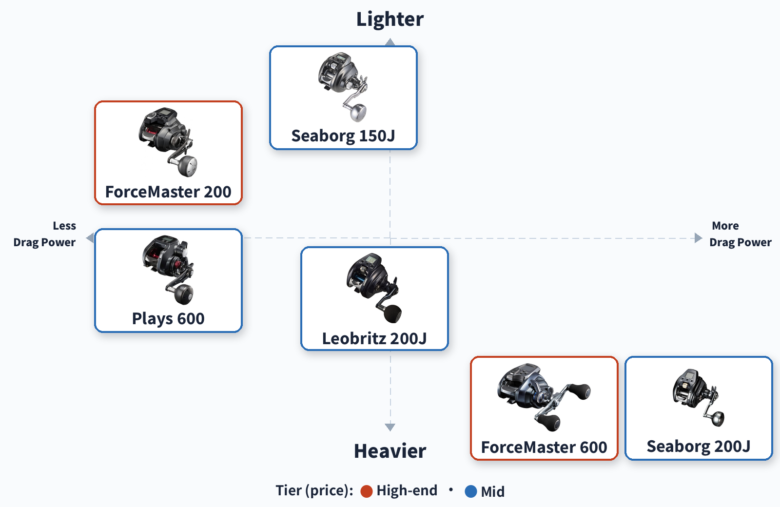
| Reel | Weight | PE capacity | Max drag | Winding power | Price (excl. tax) |
|---|---|---|---|---|---|
| Shimano ForceMaster 200 | 395 g | 1-220 m | 5 kg | 3.0 kg (Shimano) | ¥86,600 (~$552) |
| Shimano ForceMaster 600 | 490 g | 2-300 m | 10 kg | 6.0 kg (Shimano) | ¥95,200 (~$606) |
| Daiwa Seaborg 200J | 490 g | 2-300 m | 10 kg | 28 kg (max haul) | ¥94,300 (~$601) |
| Daiwa Leobritz 200J | 480 g | 2-300 m | 8.5 kg | 25 kg (max haul) | ¥81,800 (~$521) |
| Shimano Plays 600 | 470 g | 2-300 m | 5 kg | 3.0 kg (Shimano) | ¥57,200 (~$364) |
| Daiwa Seaborg 150J (Sept 2026) | 385 g | 1.5-300 m | 7.5 kg | 18 kg (max haul) | ¥106,800 (~$680) |
One caution on the winding power column. The two makers measure it differently: Daiwa quotes maximum haul at 13 V, Shimano its own sustained-load figure. The two brands’ numbers are not comparable to each other, only within a brand.
Every reel here runs on 12 to 16.8 V. A standard 12 V lead-acid battery works and is what most people start with. Daiwa’s Super Lithium packs are lighter, hold voltage better as they drain, and cost real money. The difference is in the specs: the Seaborg 200J goes from 28 kg of haul at 13 V to 31 kg on Super Lithium, and 155 to 172 m/min.
Now the awkward part for a US buyer. A 12 V outlet at your seat is standard fitting on a Japanese charter. On a US charter it isn’t. Plenty of deep-drop boats have one at the transom for a big Daiwa Tanacom, but that’s a different socket at a different station from where tairaba gets fished. Ask the captain before you show up with a reel that doesn’t work without a plug. On your own boat it’s a non-issue, which is much of why this suits private boat owners.
Getting one across the Pacific is its own exercise. Our guide to buying JDM tackle from overseas covers the routes and the cost.
Usually, but check, because the rules aren’t uniform. Florida’s Catch a Florida Memory angler-recognition program allows a removable power accessory only for retrieving a deployed bait or lure all the way to the boat, and specifically not for adjusting its position in the water column. Read that against a method built on controlled retrieves and you can see the friction.
Other states say nothing about them at all, tournament rules and record programs are a separate layer again, and federal rules for highly migratory species are their own layer on top. Check your state’s regulations and your tournament’s rulebook before the money leaves your account.
If you fish deep and drift hard: ForceMaster 600 / 601
PE 2-300 m, 10 kg drag, and a fall lever that meters the drop. Past 80 m, this is the one that changes your day rather than decorating your rod. Check the 600DH on Amazon Japan.
If you want one reel for a normal tairaba day: ForceMaster 200 / 201
395 g, constant-speed mode, and a gear ratio high enough to fish it as a hand-crank reel when the motor isn’t earning its weight. Check the 201DH on Amazon Japan.
If you’re testing the idea: Plays 600
¥57,200, Japanese-only menu, and the constant-speed mode intact. The cheapest honest answer to whether this suits you. Check the Plays 600 on Amazon Japan.
Electric tairaba works, and it works because tairaba is the rare method where the single most important variable is a number a motor can hold better than a hand. That’s the whole case. Everything else on the spec sheets is either about depth, about durability, or about Japanese charter boats.
Whether it’s worth it comes down to three things you already know. How deep you fish, whether you have 12 V at your seat, and how much you mind an extra 200 g on a rod you hold all day. Shallow, no plug, weight-sensitive: stay conventional, and our roundup of the best tairaba reels is the better page. Deep, own boat, tired of a retrieve that creeps faster by the hour: this is a real answer, and almost nobody outside Japan is using it.
One last thing. If retrieve speed is the problem, head weight is the other half of it, and changing that is free. Our guide to choosing tairaba head weight and color covers the cheaper fix first.