Best Slow Pitch Jigging Reels: JDM Models Worth Importing
ちゃんま
マイボ!

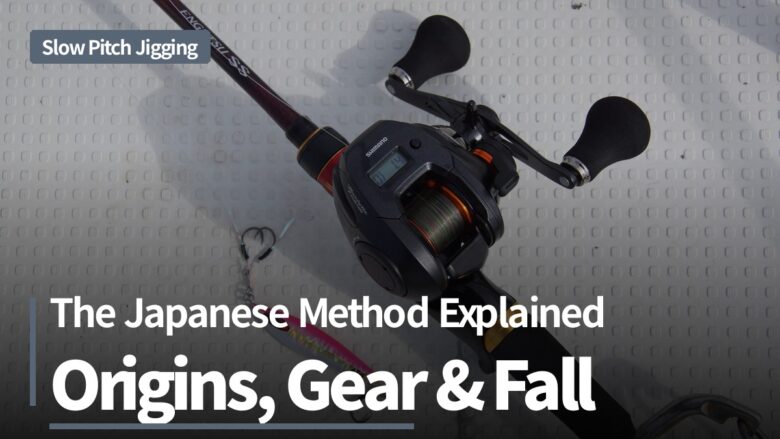
Fish stacked on the sounder, a deep ledge under the boat, and nothing wants the fast jig. That’s the situation slow pitch jigging was built for. A short metal jig drifts down through deep, blue water on a slack line. It doesn’t dive straight. It rocks, kicks sideways, flashes, and flutters like a baitfish that’s lost the plot. Somewhere below, a fish that wasn’t even feeding turns to look. That falling jig is the whole idea behind a method born in Japan that has quietly taken over offshore tackle shops around the world.
Slow pitch jigging (スロージギング / スローピッチジャーク, often shortened to “SPJ”) is a vertical method built around the fall rather than the retrieve. Instead of ripping a jig up the water column to trigger a chase, you work a light, springy rod in a rhythmic pump-and-pause, and the strike usually comes as the jig falls. It looks slow and almost lazy from the deck. It’s anything but, once you understand what the jig is doing down there.
I fish jigging from a small boat in Japanese coastal waters, where this style was invented and where it’s now just part of the furniture. We’ll start with the water you’d actually fish it on: why the method exists, how the drop is worked over a wreck or ledge, the day it beats a fast jig, then the gear and how to get going in the US. It’s a hub, not a buying guide, so I’ll keep gear talk high-level and point to dedicated guides as we publish them.
Slow pitch jigging traces back to Japan and to one angler in particular, Norihiro Sato, who began refining the system in the 1990s. Japan’s waters are deep, structure-rich, and have been fished hard for generations. Sato wanted a way to catch fish that weren’t actively feeding: the pressured, sulking, bottom-hugging fish that ignore a fast-moving lure. His answer was to make the jig itself do the work on the fall, so the fish didn’t have to chase anything.
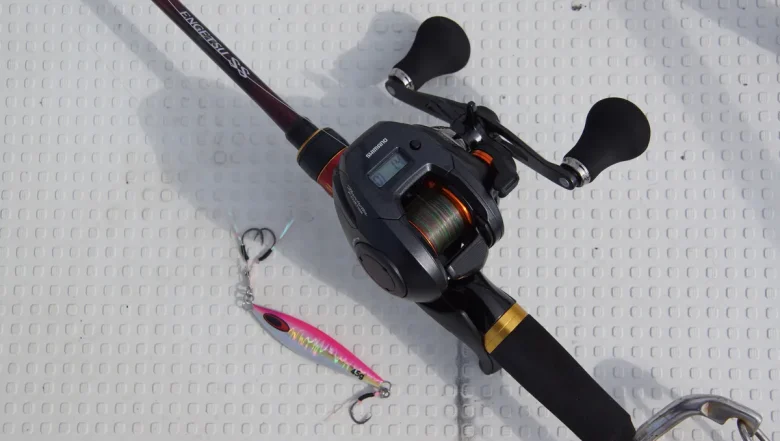
The breakthrough wasn’t just technique. It was tackle and line. Thin PE braid, with almost no stretch, let an angler feel the faintest tick from a jig hundreds of feet down. Pair that with a soft, parabolic rod and a small, narrow-spool conventional reel, and you have a system that turns a single turn of the handle into a controlled flick of the jig. The rod loads, pitches the jig up, then unloads, and the jig falls free and flutters. That’s the heartbeat of the method.
The jig is the other half of the story. A slow pitch jig is short, center-weighted, and keeled, not the long, nose-heavy shape you’d use for speed jigging. On a slack line it doesn’t sink like a dart. It glides, spirals, kicks, and quivers, mimicking a wounded baitfish that’s easy to eat. In Japan the method targets everything from amberjack and grouper to deep rockfish and snapper. In US waters, anglers use it for groupers, snapper, amberjack, rockfish, and plenty of bottom and pelagic species besides.
The motion is simple to describe and rewarding to refine. The goal is to let the rod and jig do the work while you control the fall and read the line. Here’s the basic sequence.
Drop: Free-spool the jig to the bottom, or to the depth where fish are marked. Thumb the spool so the fall stays controlled, and watch your line. If it goes slack early or twitches, a fish has taken the jig on the way down. Slow pitch fish hit the fall constantly, so the drop is fishing, not dead time.
Pitch and pause: The core move is a sharp partial turn of the reel handle that loads the rod and flicks the jig up. Then you stop and give slack, and the jig kicks sideways and flutters down on its own. One pitch, one fall. Find a steady cadence and vary it: a single pitch and a long fall for sluggish fish, a faster series of pitches when they’re switched on. Work the fall, not the lift. The lift just resets the jig.
Read the strike: Bites range from a sharp tap to a sudden weightlessness as the falling jig stops short. Because the line has almost no stretch, you’ll feel even a deep, soft take if you’re paying attention. When you feel weight, wind into it steadily to come tight, then let the reel, not the rod, lead the fight. Slow pitch rods are too soft to muscle a fish, so you crank it up and let the drag and blank absorb the runs.
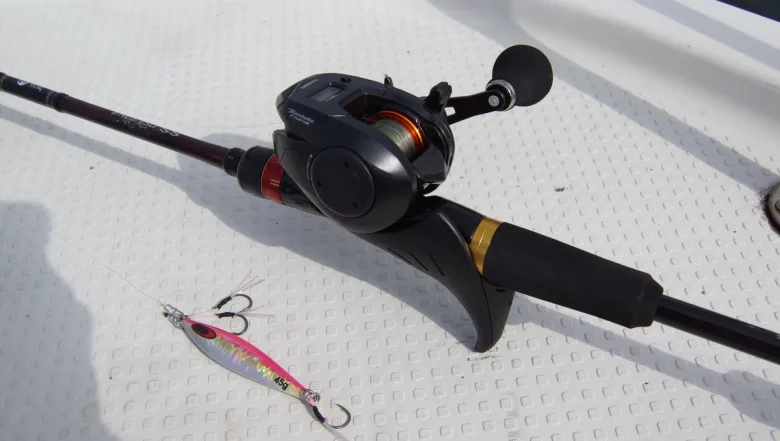
From my time on the water: what won me over to this style wasn’t a banner day. It was a slow one. The fish were down deep and clearly not chasing, and the fast-jigging rods on the boat sat quiet. Slowing right down, letting the jig hang and flutter on a long fall, was the thing that finally drew a bite. That’s the lesson slow pitch keeps teaching me. When fish won’t come up to a fast lure, you bring a slow, helpless-looking one down to them.
If you’ve done conventional vertical or speed jigging, slow pitch will feel like a different sport. Speed jigging is fast and physical. You drop to the bottom and rip the jig up the column on a tight line, working the rod hard to make the jig flee like a panicked baitfish. The bite comes on the way up, and the take is a reaction strike. It catches fish. It also wears you out, and it shuts off when the fish aren’t fired up.
Slow pitch flips that. The action is rhythmic and unhurried, and almost all of it lives in the rod, not in your shoulders. A swift quarter or half turn of the reel handle is enough to load the blank and pitch the jig. Then you give slack and let the jig fall, and that’s when the eat happens. The fall is the presentation, not the retrieve. You can fish it all day without burning out, which matters when the boat’s anchored over a deep wreck or ledge.
The gear splits along the same line. Speed jigging wants a stout rod and a powerful reel. Slow pitch wants a light, full-flex rod that looks closer to a bass rod, and a small, narrow conventional reel with a smooth drag and enough capacity for deep water. The short version: speed jigging triggers a chase on a tight line, slow pitch tempts a fish on a slack one. Many boat anglers carry both, because the right answer changes with the mood of the fish.
Slow pitch is a system, and the pieces have to work together. The jig supplies the action, the rod sets the rhythm, the reel handles the depth, and the line ties it all to your hand. Here’s what each part does, at a high level, starting with the piece the whole method is named for. I’ll keep model talk light and save the deep dives for our dedicated gear guides.
The jig is what makes slow pitch slow pitch. You want center-weighted, keeled jigs designed to flutter and glide on a slack line, not the long, nose-weighted shapes built to sink fast and dart. A handy starting rule is to carry a spread that brackets your depth and current, so you can stay in contact without the jig pinning to the bottom or blowing out in the flow. Silver, blue, pink, glow, and zebra-glow patterns are reliable. One caution: assist hooks at both the head and tail are standard in slow pitch, and they tangle easily on a sloppy fall, so keep your descents controlled.
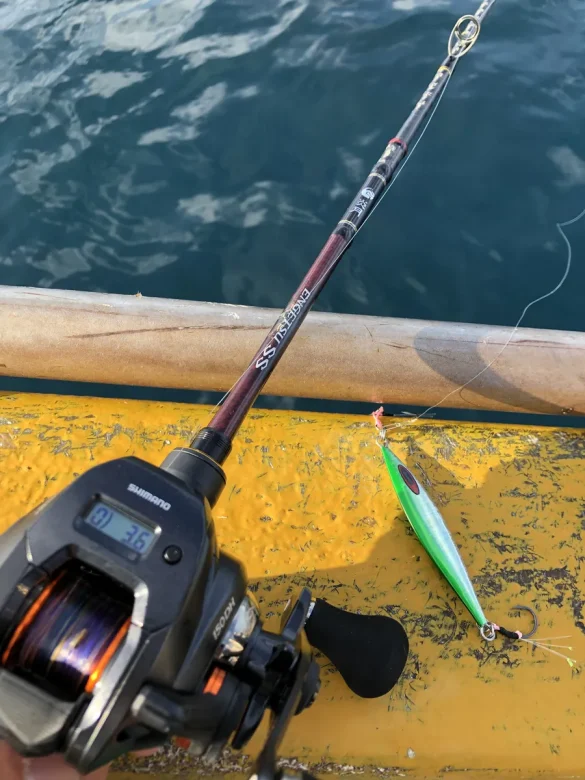
A slow pitch rod is the most specialized part of the kit. It’s light, thin, and parabolic, bending deep into the blank with a slow, even recoil that lifts and then pitches the jig. That flex is what gives the jig its kick and flutter, so you can’t just sub in a stiff jigging rod and expect the same action. Rods are rated by the jig weight they load best, often shown as a max in grams. Japanese makers build deep series for this, and you’ll see names like Shimano Ocea Jigger, Daiwa Saltiga SJ, and Tenryu Horizon SL come up often. Match the rod’s jig rating to the depths and currents you fish, and let the blank do the work.
Slow pitch is a conventional (overhead) game. You want a small, narrow-spool baitcaster-style reel, because a narrow spool keeps line lay even and helps you feel the jig and free-spool a clean fall. Look for a strong, smooth drag, plenty of capacity for thin braid in deep water, and a gear ratio that lets you pick up line without too much effort. Higher gears help when a fish charges the boat; lower gears give more grunt on a heavy fish. Series like the Shimano Ocea Jigger and Daiwa Saltiga in their compact sizes are the usual reference points. We’ll rank specific models in a forthcoming best slow pitch jigging reels guide, so I won’t quote specs here.
Thin, slick PE braid is non-negotiable here, because it’s what lets you feel a deep jig and lets the jig fall freely. Many anglers run PE 1.5 to 3 depending on depth and target size, joined to a fluorocarbon leader of roughly 30 to 50 lb with an FG knot, the slim braid-to-leader connection that’s standard in Japan. Thinner line cuts current, drops faster, and keeps you in touch with the jig at depth. Step the whole system up for bigger amberjack or strong current, rather than under-gunning a hard-pulling fish on line that’s too light.
Slow pitch isn’t the only Japanese boat method worth knowing, and it helps to see where it sits. Light jigging is its more active cousin: smaller metal jigs worked up the column with a rhythmic one-pitch jerk, aimed mostly at mid-water predators like amberjack and yellowtail. The bite there often comes on the lift, and the tackle is a touch firmer. If you want the active, chase-them style, our light jigging from a boat guide covers it start to finish, and our best JDM light jigging reels roundup shows the kind of compact reels that overlap with slow pitch.
Tairaba sits at the gentle end of the spectrum. It’s a Japanese bottom method for madai (red sea bream) using a weighted head with a rubber skirt, fished on a constant, steady wind with no jerking and no hookset at all. Where slow pitch is all about the fall and the pitch, tairaba is about a dead-simple, hands-off retrieve. Our complete guide to tairaba fishing walks through that method, and if you’re wondering how these tackle families overlap, can you use a tairaba rod for light jigging? digs into the crossover. The takeaway: slow pitch is the deep-water finesse option, light jigging is the active mid-water option, and tairaba is the steady bottom option for tai.
Same boat, same water, four different ways to work it. This is the short version of everything above.
| Method | How you work it | When the bite comes | Typical targets |
|---|---|---|---|
| Slow pitch jigging | Pitch and pause on a soft, parabolic rod; the jig falls free on a slack line | On the fall | Amberjack, grouper, snapper, deep rockfish; lingcod on deep US Pacific reefs |
| Speed jigging | Rip the jig up the column on a tight line, fast and physical | On the way up, as a reaction strike | Fish that are fired up enough to chase |
| Light jigging | Rhythmic one-pitch jerk with smaller metal jigs, worked up the column | Often on the lift | Mid-water predators like amberjack and yellowtail |
| Tairaba | Weighted head and rubber skirt on a constant, steady wind, no jerking | On the steady retrieve, with no hookset at all | Madai (red sea bream) |
The good news for US anglers is that slow pitch travels beautifully. Anywhere you can drop a jig over deep structure, reefs, ledges, wrecks, and humps, you can fish it. On the Gulf and Atlantic it shines on groupers, snapper, and amberjack; on the Pacific coast it’s deadly on rockfish and lingcod over deep reefs. A local bottom-fishing or offshore charter is the easiest way to try it, and most skippers know the method by now.
A practical starter approach: a true slow pitch rod rated to the jig weights you’ll fish, a small narrow-spool conventional reel with PE 1.5 to 2 braid and a 30 to 40 lb fluorocarbon leader, and a handful of center-weighted jigs that bracket your depth and current. Don’t try to fake the rod. The blank is what makes the method work. Plenty of the best dedicated rods, reels, and jigs are Japanese models, and JDM-only gear ships internationally from Amazon Japan, so check availability and shipping cost at checkout.
One more thing before you head out: check your local and state regulations. Bag limits, size limits, depth rules, and closed seasons for groupers, snapper, rockfish, and amberjack vary a lot by region, and some bottom species have strict descending-device or venting requirements. Confirm the rules where you fish before you drop a jig.
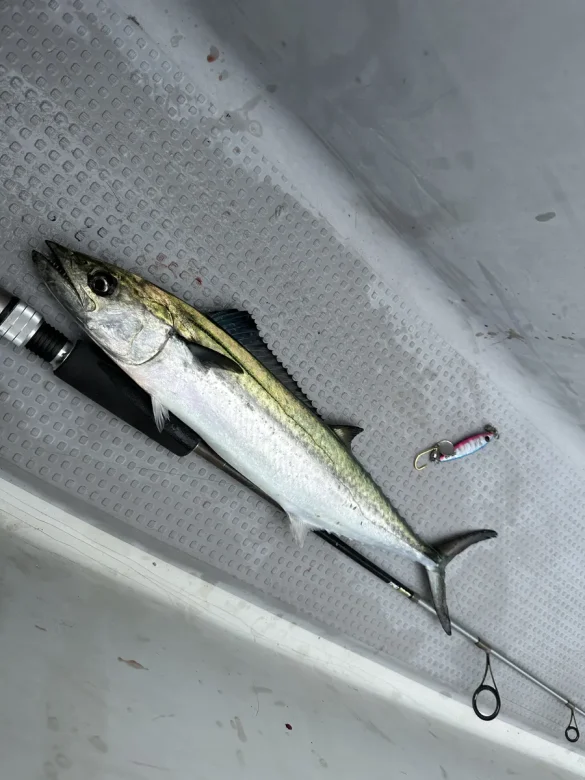
Three things to carry to the boat: the fall is the presentation, the blank is what makes the jig work, and the slow day is this method’s day. Faced with deep water and fussy, pressured fish, Japanese anglers stopped trying to outrun them and started tempting them instead, letting a clever little jig flutter its way to a bite. It’s light on the body, and it works on a genuinely wide range of bottom and pelagic species.
If you fish offshore and you’ve only ever ripped jigs fast, this is well worth slowing down for. This is the hub of our slow pitch coverage, and we’re building it out: a dedicated best slow pitch jigging reels guide is on the way. Until then, here’s where to go next for related Japanese boat-fishing methods: