Best JDM Rods for Bream and LRF in Australia: Five Japanese Series Compared
ちゃんま
マイボ!

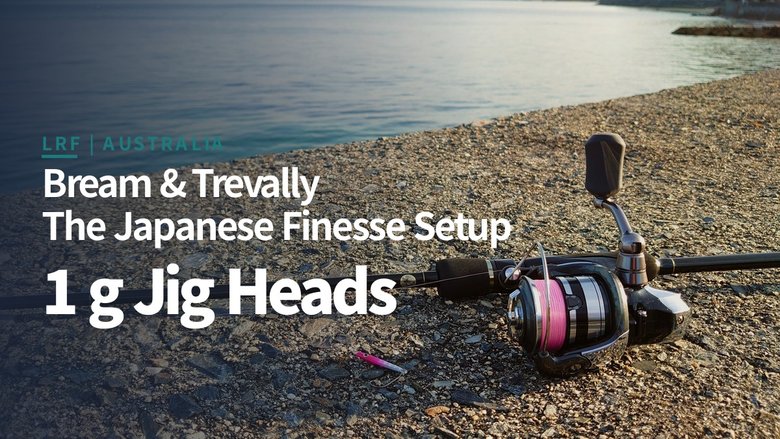
A school of silver trevally will follow a 7 g metal lure right to your feet, turn as one, and sink out of sight. The same school will eat a 1 g jig head drifted at their level without hesitating. Most Australian tackle walls have nothing built for that second lure, and that gap is exactly what Japanese light game gear was designed to fill.
LRF (light rock fishing) is the English name that stuck to the style; in Japan it’s called ajing (アジング), after aji, the Japanese horse mackerel (Trachurus japonicus), with a parallel branch for mebaru (メバル, Japanese rockfish). Twenty years of competition between Japanese makers has refined it into rods weighed in tens of grams, reels with drags that stay smooth under 200 g of pressure, and lines rated in fractions of a pound. Yellowfin bream (Acanthopagrus australis), black bream (A. butcheri) and silver trevally (Pseudocaranx georgianus) sit squarely inside the size and temperament range this tackle was built for.
This guide covers the outfit itself: rod, reel, line, leader and the settings that hold it together. The sharp end, jig heads, worms and long-distance rigs, has its own guide in our JDM ajing jig head and rig comparison, and if your local water calls for small metals instead, our super light shore jigging piece covers that branch.
Every product here is a Japan Domestic Market item. Buy links point to Amazon Japan, which ships internationally (check availability and shipping cost at checkout; orders over A$59 may qualify for free international delivery). Prices are maker list prices in JPY, tax excluded unless noted, with approximate AUD conversion at A$1 = ¥110 (August 2026). Bream and trevally carry size and bag limits that differ between states, so check your local regulations.
If you want a single outfit that handles a suspicious bream under a pontoon and a trevally school pushing bait along a breakwall, this is it: a Yamaga Blanks BlueCurrent III 74, a Daiwa 23 Gekkabijin LT2000S, and 0.25 gou ester line under a 4 lb fluorocarbon leader. The rod’s official jig head range starts at 0.3 g and its rig rating reaches 10 g, so one blank covers everything from a bare jig head to a small caro rig. The reel weighs 165 g and carries Daiwa’s light-game drag. The ester keeps you in touch with a lure you’d otherwise lose track of. Gou (号) is the Japanese line-size standard; a conversion table for it sits further down the page.
The setup: BlueCurrent III 74 + 23 Gekkabijin LT2000S
Rod ¥28,000 (~A$255) + reel ¥31,100 (~A$283), both tax excluded, plus around ¥2,000 for a spool of ester. Yamaga’s own compatibility note for the 74 lists Daiwa LT1000 to LT2500C, so the pairing is by the book, and the combined 236 g outfit fishes a 1 g jig head all night without wearing your wrist out.
The budget version: Gekkabijin AJING 68L-S + Gekkabijin X LT2000S-P
Daiwa’s entry ajing rod at ¥17,500 (~A$159) and entry light-game reel at ¥18,700 (~A$170) cut the outfit cost to roughly A$330 before shipping. You give up the Yamaga blank and about 50 g of combined weight, and you keep the solid tip, the shallow spool and the same drag family.
The rest of this article is the reasoning, the official numbers behind each pick, and the settings page: drag weights, ester versus PE, and the lb-to-gou conversions that make ordering from Japan less of a guessing game.
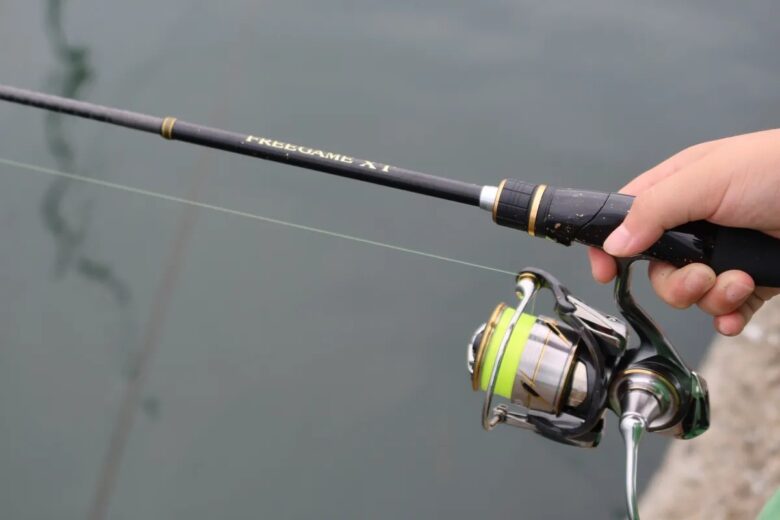
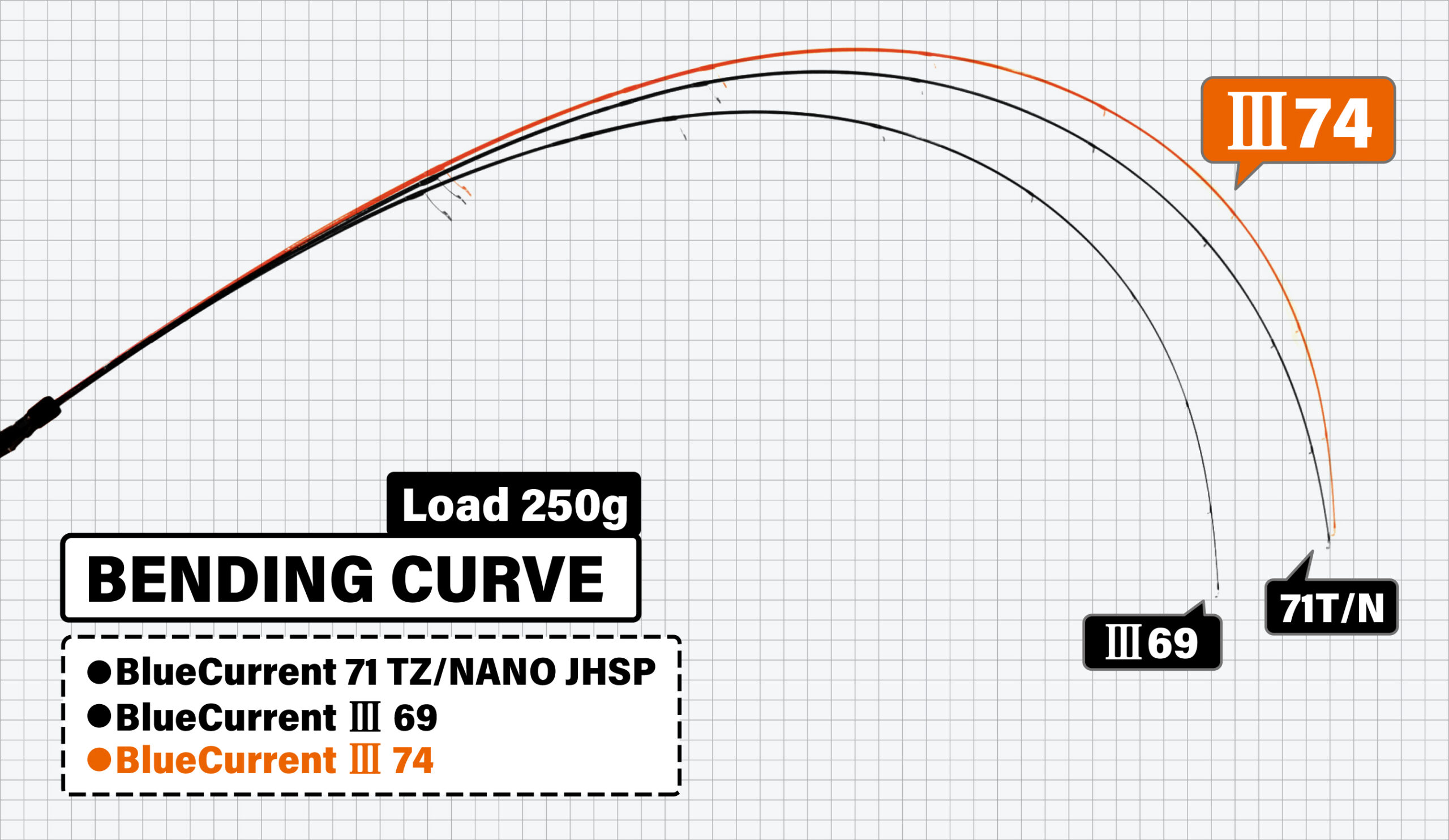
Yamaga Blanks is a rod builder in Kumamoto that rolls its own blanks in-house, which in the Japanese market is the exception rather than the rule. The BlueCurrent series is their light game line, and the III 74 is the model Yamaga themselves describe as the series’ core all-rounder: 2,235 mm long, 71 g, rated for jig heads from 0.3 to 7 g, rigs to 10 g and plugs to 7.8 g. That spread matters more in Australia than it does in Japan. A dedicated aji rod that tops out at 3 g is a beautiful thing until a trevally school shows up at 40 m and you need a 7 g caro to reach it.
The design brief for the III generation was a wider casting release point, a seamless bend that doesn’t let tension drop mid-fight, and faster response, and the 74 carries it on Fuji SiC-S K-frame guides with a Fuji VSS16 seat. Yamaga rates it for fish handling in open language, “aji, mebaru, and whatever else”, and lists harbours, rock ledges, estuaries and surf as intended ground, which reads like a description of Australian bream water written from the other side of the equator.
| Feature | Detail |
|---|---|
| Blank | In-house rolled, 92.1% carbon, 2 pc inverted spigot joint |
| Guides | Fuji SiC-S ring, stainless K-frame |
| Reel seat | Fuji VSS16 |
| Series concept | “Light, casts well, strong”: wide release point, seamless bend, fast response |
| Reel compatibility (official) | Daiwa LT1000 to LT2500C / Shimano 1000 to C2500 |
| Intended ground (official) | Harbours, rocks, estuaries, surf |
| Model | Length / weight | Lure rating | Line rating | Price (JPY, tax excl.) |
|---|---|---|---|---|
| BlueCurrent III 74 | 2,235 mm / 71 g (closed 1,145 mm) | MAX 10 g (JH 0.3-7 g / rig 1-10 g / plug 1.6-7.8 g) | PE 0.1-0.5 / nylon & FC 1-5 lb | ¥28,000 (~A$255) |
| BlueCurrent III 69 | see official page | MAX 7 g (JH 0.3-7 g / plug 1.6-5 g) | PE 0.08-0.4 / nylon & FC 1-4 lb | ¥27,000 (~A$245) |
The catch is the price. ¥28,000 lands around A$255 before shipping, for a rod you can’t put your hands on first, from a brand with no Australian dealer network. If it breaks, warranty means posting a blank section to Kumamoto. Yamaga runs an after-support system and sells replacement sections, but the freight both ways is yours.
Daiwa Australia sells its own light game range, Infeet, through local shops, with rods and reels built for exactly this bream-and-trevally job. The blanks and components differ from the JDM lines on this page, but you get local warranty and a rod you can waggle in a store before paying. Check the current range on the Daiwa Australia site and weigh that against the import saving.
| Model | Length / weight | Lure rating | Line rating | Price (JPY, tax excl.) |
|---|---|---|---|---|
| Gekkabijin AJING 68L-S・R | 2.03 m / 63 g | 0.5-8 g | Nylon 1.5-4 lb / PE 0.1-0.4 | ¥17,500 (~A$159) |
| Gekkabijin AJING 78ML-S・R | 2.34 m / 81 g | 2-15 g | Nylon 2-6 lb / PE 0.15-0.6 | ¥18,500 (~A$168) |
Gekkabijin (月下美人, roughly “beauty under the moon”) has been Daiwa’s light salt brand since 2005, and the AJING line is its entry tier. Numbers first because the numbers are the argument: 63 g at ¥17,500 undercuts most Australian-shelf finesse rods on weight, and Daiwa’s own page describes the 68L-S as the standard first rod for harbour work, happy with jig heads, split shots and small metals from higher platforms. The 78ML-S row is there for a different reader: its 2 to 15 g rating and stronger butt are Daiwa’s stated design for casting caro and float rigs at distance, which maps neatly onto chasing trevally schools that won’t come within a jig head’s range.

| Feature | Detail |
|---|---|
| Blank | HVF carbon: resin reduced, carbon fibre density raised |
| Tip | MEGA TOP carbon solid, bends evenly in any direction |
| Guides | SiC top guide, Alconite runners, one size up for line release |
| Grip | Compact shape carried down from the upper Gekkabijin models |
Where does the extra ¥10,500 for the Yamaga actually go? Blank quality and the fittings: full SiC rings versus Alconite runners, and a lure ceiling of 10 g on a lighter, faster-recovering blank. The 68L-S also gives up casting range at the top end, since 8 g is its limit and a loaded caro rig can pass that quickly. A beginner won’t feel most of this in the first season. Someone fishing three nights a week will feel it within a month.
Light game reels get chosen on drag before anything else. A bream hooked on 1.5 lb line has to be able to take line the instant it lunges, from a standing start, without the drag sticking. Daiwa’s answer in this bracket is ATD TYPE-L, a light-game tune of their Automatic Tournament Drag that starts moving under very small loads, and it sits in both reels below, so the choice between them is really about the body around it.
| Feature | 23 Gekkabijin | 24 Gekkabijin X |
|---|---|---|
| Body | ZAION V monocoque | Standard bolted body |
| Rotor | ZAION V | ZAION V |
| Drag | ATD TYPE-L | ATD TYPE-L |
| MagSealed body | Yes | Yes |
| Line roller bearing | Yes | No |
| Bearings (ball + roller) | 7 + 1 | 5 + 1 |
| Model | Weight | Gear ratio / per crank | PE capacity | Max drag | Price (JPY, tax excl.) |
|---|---|---|---|---|---|
| 23 Gekkabijin LT2000S | 165 g | 5.1 / 67 cm | 0.4 gou – 200 m | 5 kg | ¥31,100 (~A$283) |
| 23 Gekkabijin LT2000S-H | 165 g | 5.8 / 76 cm | 0.4 gou – 200 m | 5 kg | ¥31,100 (~A$283) |
| 24 Gekkabijin X LT2000S-P | 190 g | 4.8 / 63 cm | 0.4 gou – 200 m | 5 kg | ¥18,700 (~A$170) |
| 24 Gekkabijin X LT2000S | 190 g | 5.2 / 68 cm | 0.4 gou – 200 m | 5 kg | ¥18,700 (~A$170) |
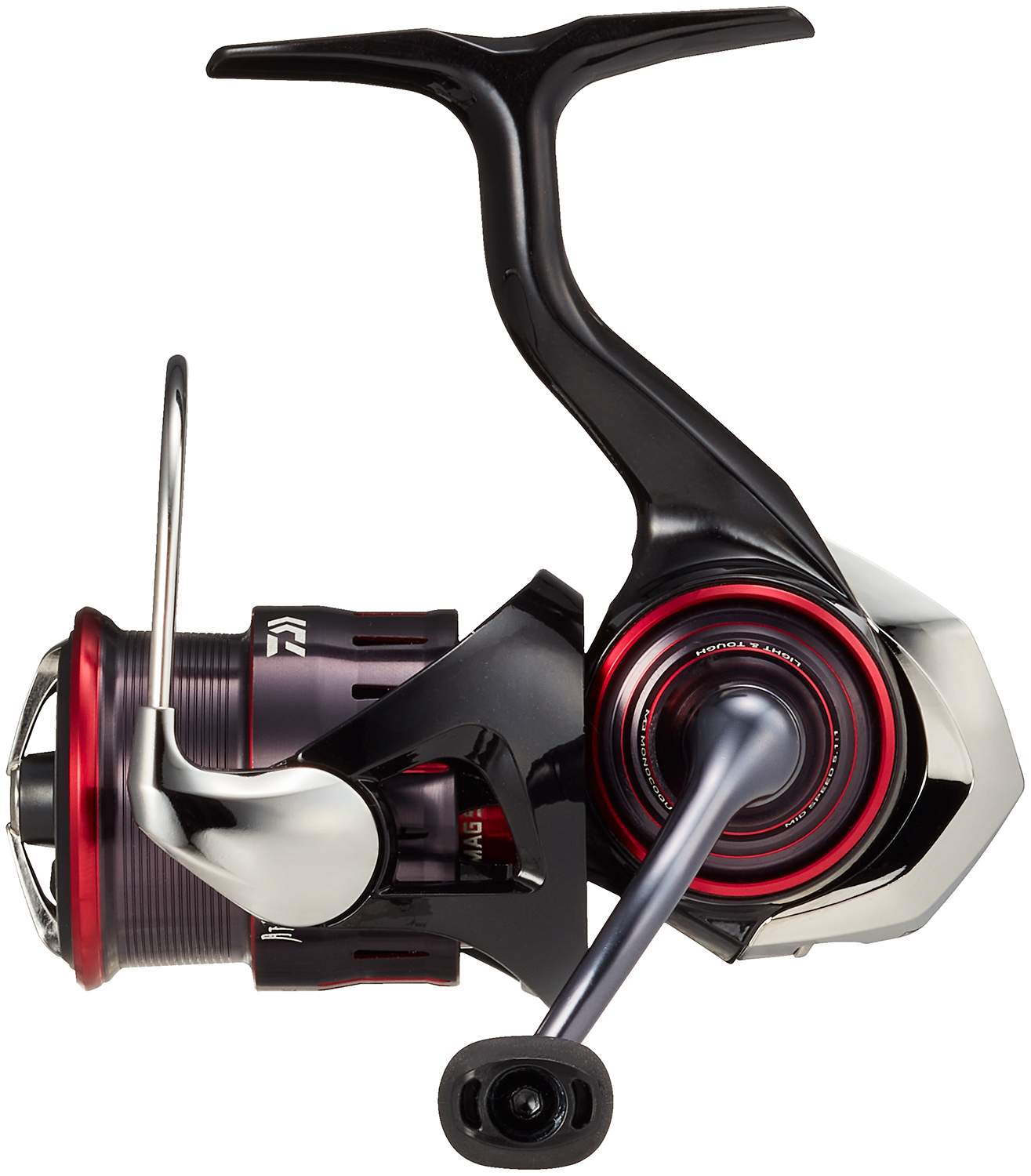
The 25 g between them sounds trivial on paper and isn’t on the water, because a light game outfit lives or dies on tip weight and balance. The monocoque body also seals more rigidly around the gear, and the bearing in the line roller matters specifically for ester, where a rough roller telegraphs noise straight up a line with almost no stretch. Choose the 23 if this will be your main outfit for years. Choose the X knowing the line roller has no bearing, and that it can start to feel gritty with heavy use in salt spray. For more reel options across the JDM light game catalogue, our LRF rod and reel guide goes deeper.
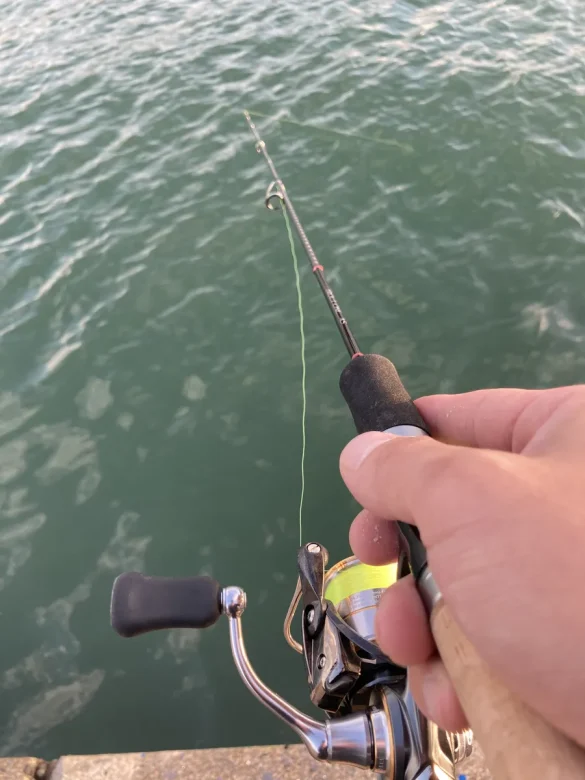
Here’s the rule that decides it. Fishing a bare jig head under about 2 g: ester. Fishing rigs, floats, plugs or metals: PE. Ester (polyester) barely stretches and is denser than water, so it sinks with the lure and transmits the soft tick of a bream mouthing a worm in three metres of water. PE floats, stretches even less, and is far stronger for its diameter, but wind puts a belly in it that eats exactly the small bites ester exists to show you.
Sunline’s Ajinoito Ester Rush Hour is the ester to start with, because it’s built to fix the material’s one big flaw. Ester is stiff and springy, and on a small spool it develops coils that jump off in loops mid-cast. Rush Hour’s supple finish is Sunline’s counter to that, designed, in their words, to stay manageable on 1000 to 2000 size spools and to keep casting sub-gram jig heads without trouble as the sessions add up. The flash yellow colour also does real work at night under wharf lights.
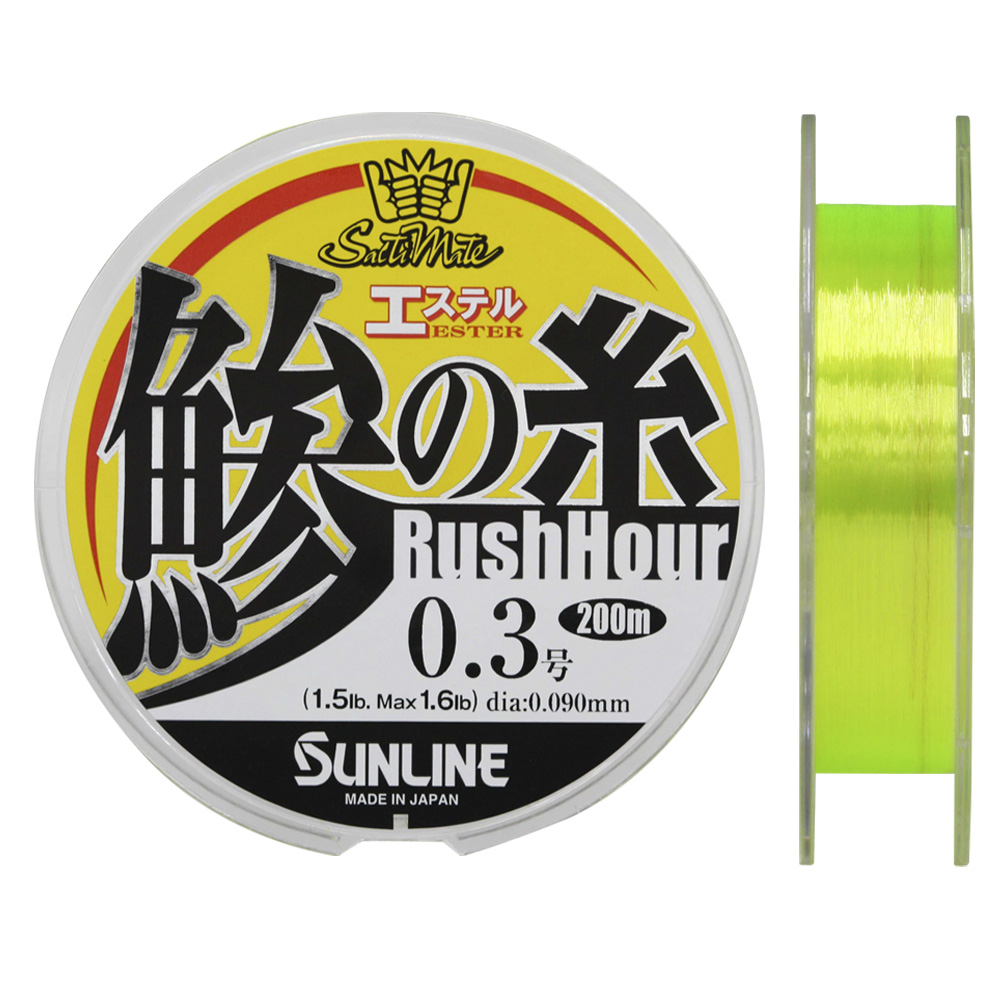
| Size (gou) | Strength | Max strength |
|---|---|---|
| 0.2 | 1 lb | 1.1 lb |
| 0.25 | 1.25 lb | 1.35 lb |
| 0.3 | 1.5 lb | 1.6 lb |
| 0.35 | 1.75 lb | 1.85 lb |
| 0.4 | 2 lb | 2.1 lb |
For the PE side, Small Game PE-HG from the same maker runs a four-strand build in true-to-spec fine diameters, on a 150 m spool sized for casting work. Sunline publish their intended use by size, which saves guessing: 0.15 and 0.2 gou for jig singles, 0.3 and 0.4 as the all-round band for caro rigs and plugs, 0.5 and 0.6 for long casts and bigger bycatch. For Australian trevally work, 0.3 gou at an official 5 lb / 2.1 kg max is the sweet spot: enough to lean on a good fish, thin enough to cast a 5 g caro into wind.
| Size (gou) | Strength | Max strength (kg) |
|---|---|---|
| 0.15 | 2.5 lb | 1.2 |
| 0.2 | 3 lb | 1.6 |
| 0.3 | 5 lb | 2.1 |
| 0.4 | 6 lb | 2.9 |
| 0.5 | 8 lb | 3.3 |
| 0.6 | 10 lb | 4.2 |
One thing ester demands that PE only suggests: a leader is not optional, and neither is a soft drag setting, because low-stretch line at 1.5 lb has no margin for a locked spool. Sunline print that warning on the product page itself.
Japanese line sizing runs on gou (号), a diameter standard, while strength is listed in pounds. Ordering from Japan gets much easier once you stop converting in your head and use the maker’s own table. Sunline’s Small Game Leader FCII is the matching fluorocarbon leader here, soft by design so a falling jig head still gets eaten, and its spec table doubles as the conversion chart for this whole style.
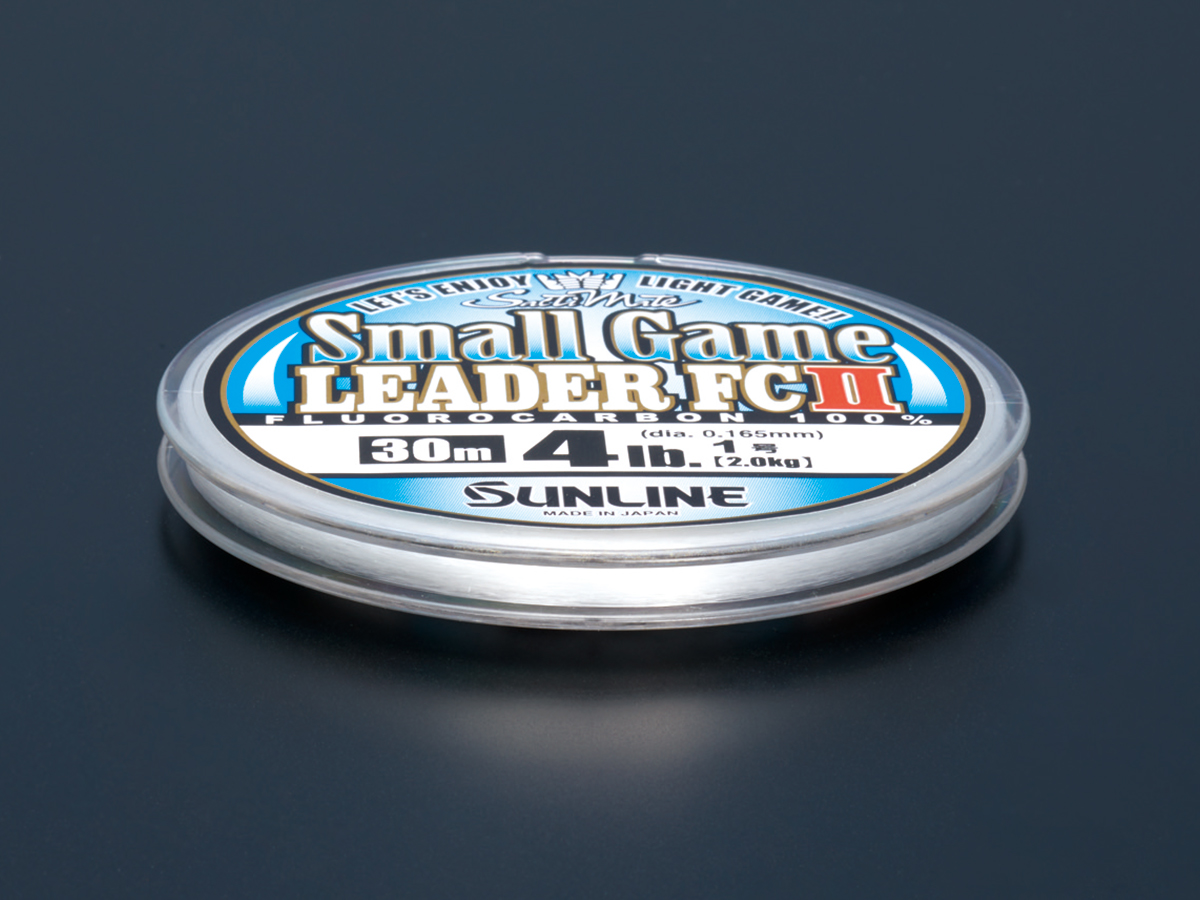
| lb | Max strength (kg) | Equivalent gou |
|---|---|---|
| 1.5 | 0.75 | 0.5 |
| 2 | 1.0 | 0.6 |
| 3 | 1.5 | 0.8 |
| 4 | 2.0 | 1 |
| 5 | 2.5 | 1.25 |
| 6 | 3.0 | 1.5 |
Drag is where imported finesse gear most often gets broken by habit. The Japanese convention is to set it around a quarter to a third of the main line’s breaking strain, then confirm by pulling line off by hand: it should slip with a firm tug, well before the line’s limit. On a 3,000-size snapper outfit that habit is loose. On ester it’s survival.
| Main line | Maker max strength | Drag to set |
|---|---|---|
| Ester 0.25 gou (Rush Hour) | 1.35 lb (approx. 0.6 kg) | 150-200 g |
| Ester 0.3 gou (Rush Hour) | 1.6 lb (approx. 0.7 kg) | 200-250 g |
| PE 0.3 gou (PE-HG) | 5 lb / 2.1 kg | 500-700 g |
| PE 0.4 gou (PE-HG) | 6 lb / 2.9 kg | 700-950 g |
Those numbers look absurdly light against a silver trevally that can pull like a small kingfish. They work because the rod’s full bend and the reel’s start-up smoothness are doing the shock absorption the line can’t. A trevally’s first run against 200 g of drag simply takes line, and the fight becomes a patience exercise rather than a strength contest.
The picks above are one answer, not the only one. Judge any substitute against these four points.
Japanese light game runs on a habit loop you can copy wholesale. Cast, let the jig head fall on a counted sink, and treat the count as data: the same count that produced a bite gets repeated, and a refused lure gets a different count before it gets a different colour. Weight changes come second, worm shape third. The order matters because fall speed is the variable these fish care about most, and it’s the one an angler fresh from heavier tackle almost never adjusts first.
Two more habits from the home water translate directly. Drag gets checked at the start of every session by pulling line off by hand, because temperature and spray change how a small drag stack behaves from one night to the next. And on ester, the last half-metre above the leader knot gets retied after any decent fish, since low-stretch line accumulates invisible damage at the knot. Neither habit costs five minutes. Both cost fish when skipped.
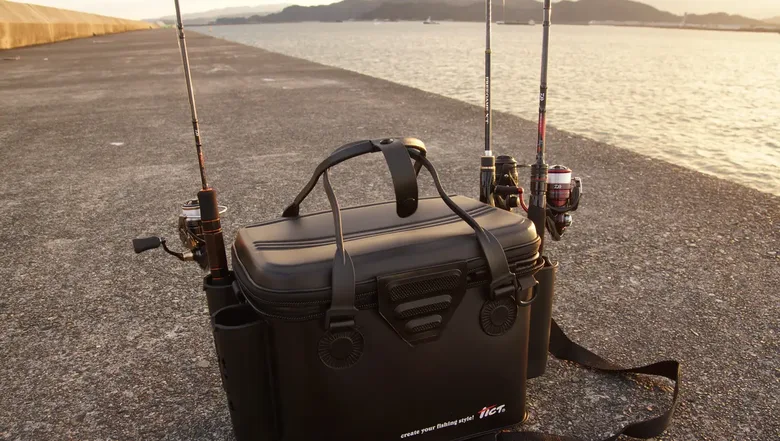
The whole outfit in one view, with the official numbers that separate each pick from its neighbour.
| Product | Role | Key numbers | Price (JPY, tax excl.) |
|---|---|---|---|
| Yamaga Blanks BlueCurrent III 74 | Main rod | 2,235 mm / 71 g / JH 0.3-7 g, rigs to 10 g | ¥28,000 (~A$255) |
| Daiwa Gekkabijin AJING 68L-S・R | Budget rod | 2.03 m / 63 g / 0.5-8 g | ¥17,500 (~A$159) |
| Daiwa 23 Gekkabijin LT2000S | Main reel | 165 g / ATD TYPE-L / monocoque, 7+1 BB | ¥31,100 (~A$283) |
| Daiwa 24 Gekkabijin X LT2000S-P | Budget reel | 190 g / ATD TYPE-L / 5+1 BB | ¥18,700 (~A$170) |
| Sunline Ajinoito Ester Rush Hour | Jig head line | 0.2-0.4 gou / 1-2 lb / 200 m | ¥2,000 (~A$18) |
| Sunline Small Game PE-HG | Rig / distance line | 0.15-0.6 gou / 2.5-10 lb / 150 m | Open price |
| Sunline Small Game Leader FCII | Leader | 1.5-10 lb / 30 m | Open price |
Will an ajing rod really handle a good silver trevally? Within reason, yes, and the drag section above is the reason. The BlueCurrent III 74 is rated for leaders to 5 lb, and Yamaga describe the blank as bending through the whole length to absorb runs. What breaks fish off is locked drags and high rod angles, not the blank. A fish that simply can’t be stopped before the oyster lease was never a target for this outfit.
One spool to start: ester or PE? Ester 0.25 gou if your local water is calm harbours and pontoons and you’ll mostly fish jig heads. PE 0.3 gou if wind, current or distance define your spots. The honest answer is that the second spool follows within a month either way.
What do the rod model numbers mean? Japanese light game codes pack the spec into the name: the leading digits are length in feet and inches (74 = 7 ft 4 in, 68 = 6 ft 8 in), letters after are power (UL, L, ML), and a trailing -S or -T marks solid or tubular tip. Once you can read them, a JDM catalogue stops being a wall of hieroglyphics.
Can I buy any of this without importing? Daiwa Australia’s local Infeet range covers the same style with local warranty, and some Daiwa light game items reach Australian shops. The Yamaga rod and the Sunline lines are Japan-market products, so Amazon Japan is the realistic channel; a thin selection of Japanese light game tackle is also listed on Amazon.com, available with international shipping to Australia, if you’d rather pay in USD. Lines are cheap to post; rods carry real freight, so combining an order makes sense.
Every piece here leans on the others: the light drag setting only works because the rod bends, the ester only works because the leader absorbs shock, and the shallow spool only earns its place because the line it carries is thinner than anything on a local shelf. Swap one part for something heavier and the system quietly degrades back into ordinary light tackle.
Order the outfit, then arm it from our jig head and rig guide. When the same water hands you tailor or salmon instead, the light shore jigging guide is the next step up, and the rest of our Australia fishing guides cover the ground between.
For rod picks, see the best JDM rods for bream and LRF in Australia.
All specifications were taken from the manufacturers’ official product pages (Yamaga Blanks, Daiwa and Sunline), checked in August 2026. Prices are maker list prices in JPY, tax excluded, converted at A$1 = ¥110; Sunline’s Small Game PE-HG and Small Game Leader FCII are open-price items in Japan, so no list price is quoted. Product images are from the makers’ official pages. Affiliate links may earn us a commission at no extra cost to you. Bream and trevally size and bag limits differ between states, so always check your local regulations.