Best Ajing Jig Heads, Worms and Rigs (JDM) for Australian Light Game
ちゃんま
マイボ!

The Australian bream lure conversation is fairly settled. A crab, a small blade, a prawn plastic, a shallow hardbody for the racks. That list catches fish, and nobody needs it rearranged.
Here is the part that gets missed. Japan sells tackle built for a fish in the same genus as yours. Chinu, also written kurodai, is Acanthopagrus schlegelii. Yellowfin bream is Acanthopagrus australis, southern black bream is Acanthopagrus butcheri. Three species, one genus, and near enough in habit that Ecogear’s own English pages translate chinu straight across as “black bream”.
So the question is not whether Japanese lures can be made to work here. It is what Japan already built for the job, and whether it is worth the postage. Eight items from three makers: three soft plastics and a jig head, two hard vibes, two surface baits. Every figure comes from the maker’s own page, and where a maker publishes nothing, the cell says so instead of guessing.
Prices are maker list prices in JPY with approximate AUD conversion at A$1 = ¥114 (23 August 2026). Jackall publishes tax-included prices only, Bassday publishes both, and Marukyu publishes no list price at all for Ecogear items. JDM buy links go to Amazon Japan, which ships internationally: check availability and shipping cost at checkout, and orders over A$59 may qualify for free international delivery. Bream size and bag limits are set state by state, so check your local regulations before you keep anything.
It fishes for them hard. The Japanese version is a shore and estuary game called chinuing, a coined word from “chinu” plus the English “-ing”, and it has been one of the fastest growing categories in Japanese light tackle for a decade. The fish sit on hard bottom, eat crabs and shrimp, refuse anything that looks wrong, and get chased with 1.5 to 3 inch plastics on light heads. Sound familiar?
Ecogear is the lure brand of Marukyu, a Japanese bait company, and its bream range is called Chinu Shokunin. Shokunin means craftsman or specialist, so the series reads as “bream specialist”. Ecogear says the colours were chosen with bream anglers from around Japan and the shapes copy crustaceans and small gobies. Substitute hardyhead for goby and that is a description of the average Australian estuary flat.
The Bug Ants shape has been in Ecogear’s catalogue for years in bass and rockfish versions. The Chinu Shokunin edition is the same body at 60 mm with a colour set picked for wary bream, and Ecogear is explicit about why it stays slim: a bulky profile pressures cautious fish. Five to a pack, which looks thin until you see the packet price.

Eleven colours in the run, and a mix of natural sinking and floating material inside the same range. That matters more than it sounds. The material type is marked on the colour chart with a small icon rather than in the spec table, so it is easy to order a floating body when you wanted a sinker. Ecogear rates it for jig head and Texas rigs.
| Point | What Ecogear says |
|---|---|
| Series intent | A line-up made specifically for the chinu (black bream) angler |
| Colours | Selected in collaboration with bream specialist anglers from across Japan |
| Shape | Looks like the crustaceans and small goby fish black bream mainly feed on |
| Profile | Realistic slim body that does not pressure cautious black bream |
| Rigs | Jig head and Texas rigs |
| Model | Length | Pcs. per pack | Colours | List price |
|---|---|---|---|---|
| Chinu Shokunin Bug Ants 2 in | 60 mm | 5 | 11 | Not published |
A 37 mm crab, which is the one item here that needs no translation at all, because a small crab is what an Australian bream angler reaches for on a rising tide over the racks anyway. Ecogear’s recommended presentation is a jig head on a slide fall: let it swing back to you on a tight line rather than dropping it straight down. Eight to a pack, eight colours.
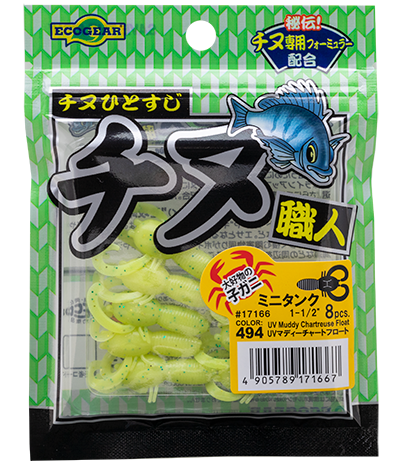
The other use Ecogear puts on the page is as a trailer behind a small rubber jig. At 37 mm it is small enough to trail a 3.5 g head without turning the rig into something a 25 cm fish will not attempt, which is the size class doing most of the biting in a lot of systems.
| Point | What Ecogear says |
|---|---|
| Imitation | Realistically imitates small crabs, the main bait of black bream |
| Best rig | Jig head rig, using a slide fall |
| Second use | Very effective as a small rubber jig trailer for black bream |
| Material | Regular and floating material within the same colour run |
| Model | Length | Pcs. per pack | Colours | List price |
|---|---|---|---|---|
| Chinu Shokunin Mini Tank 1-1/2 in | 37 mm | 8 | 8 | Not published |
Two answers, and Japanese bream anglers use both. One is a jig head, same as you already do. The other is the free rig: a bullet sinker running loose on the main line above a leader knot, worm on an offset hook below. The sinker hits bottom first and the plastic keeps falling behind it on slack line. That delayed, unweighted fall is the point of the rig, and it is why Japan’s chinu plastics have thick tails and hook slits moulded in.
Chibi means tiny, so this is the tiny bream head. It is flat-bottomed and built to be dragged rather than hopped, and Jackall’s instruction is blunt: drag it along the bottom, straight retrieve, done. The flat face stops the head wedging between rocks. The hook is a ring-eye pattern rather than a moulded-in shank, so it pivots at the base, which Jackall credits for hook-up rate and a more natural worm action.
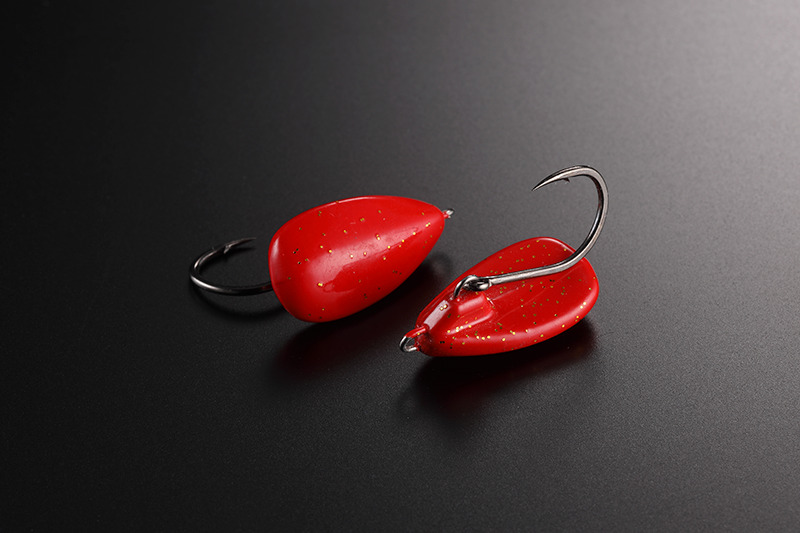
What makes the page useful is that Jackall states a job for each weight instead of leaving you to guess. Two grams is the slow presentation. Five is the all-rounder. Fourteen reaches the far bank.
Two heads per packet at ¥671 works out near ¥336 each, roughly A$2.95, and that is the expensive part of this whole system. The plastics are cheap. The hardware is not.
| Weight | Jackall’s stated job |
|---|---|
| 2.0 g | Gentle, slow presentation |
| 3.5 g | Shallow rocky ground |
| 5.0 g | Broad all-round weight |
| 7.0 g | Grinding across sand |
| 10.0 g | Holding position against current |
| 14.0 g | Long casting |
| Model | Weight | Pcs. per pack | List price (tax incl.) | Approx. AUD |
|---|---|---|---|---|
| Chibi Chinu Head 2.0 g | 2.0 g | 2 | ¥671 | A$5.9 |
| Chibi Chinu Head 3.5 g | 3.5 g | 2 | ¥671 | A$5.9 |
| Chibi Chinu Head 5.0 g | 5.0 g | 2 | ¥671 | A$5.9 |
| Chibi Chinu Head 10.0 g | 10.0 g | 2 | ¥671 | A$5.9 |
Bleeker is Jackall’s bream sub-brand and the Chop Snack is its free-rig plastic. Two sizes, ten to a packet in the small and eight in the large, same price either way. The arms and antennae move at dead-slow speeds, which is what most bream want, and moulded slits mark where an offset hook point exits so you can skin-hook it and still fish hard against structure.
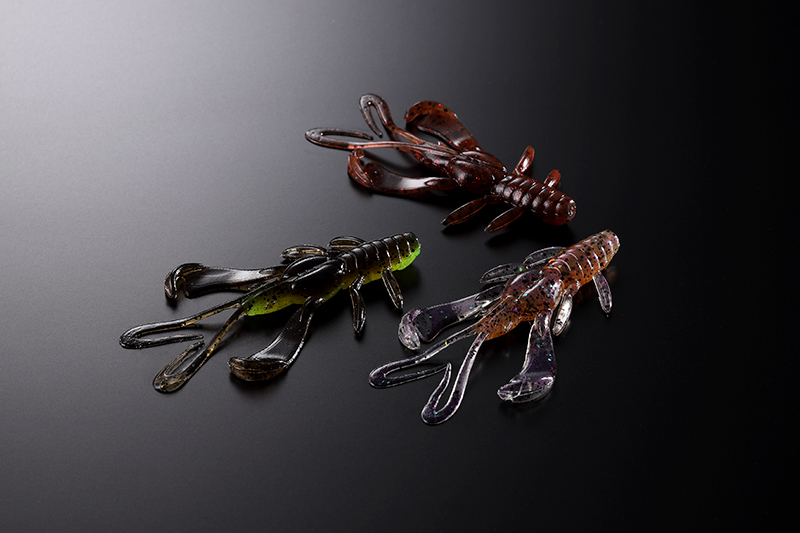
The tail is deliberately thick so the offset hook does not tear out on the cast. Cost per lure is where it gets interesting: ¥77 for the 2.0 in, about 68 Australian cents. Work out cost per lure rather than per packet on every Japanese plastic and the import maths changes shape.
| Point | What Jackall says |
|---|---|
| Intended rig | Free rig chinu fishing, with the elements needed for it condensed into a bite-sized body |
| Retrieve | Straight retrieve while feeling the bottom, no rod work required |
| Action | Arms, antennae and legs move independently to draw fish from a distance |
| Hook slits | Slits at the point where an offset hook exits, with a step matched to each size |
| Durability | Thickened tail improves hook retention and reduces damage in use |
| Model | Length | Pcs. per pack | List price (tax incl.) | Approx. per lure |
|---|---|---|---|---|
| Bleeker Chop Snack 2.0 in | 2.0 in | 10 | ¥770 | A$0.68 |
| Bleeker Chop Snack 2.7 in | 2.7 in | 8 | ¥770 | A$0.84 |
Two of them are built on the assumption that it will not get an easy life. Japanese bream water is oyster beds, harbour rubble and the stone facing along river mouths, which is Port Stephens or the Gippsland Lakes with different rocks. The two makers went at the problem from opposite ends: Jackall moved the weight outside the body, Ecogear changed the hooks.
Worth saying plainly here. The blade most Australians already own, the Ecogear ZX, is not in this list. It is covered in our guide to JDM flathead lures and again in the snapper lure round-up, and repeating it a fourth time would not tell you anything new.
The TN is a bass lipless crank with a long history in Japan, retuned for bream in two ways that matter. It is silent: Jackall uses a purpose-moulded weight instead of rattles, on the stated grounds that pressured chinu spook off noise. And the tungsten weight sits outside the body, a system Jackall calls O.M.S, which drops the centre of gravity and lets the lure skate over rough bottom instead of grabbing it.
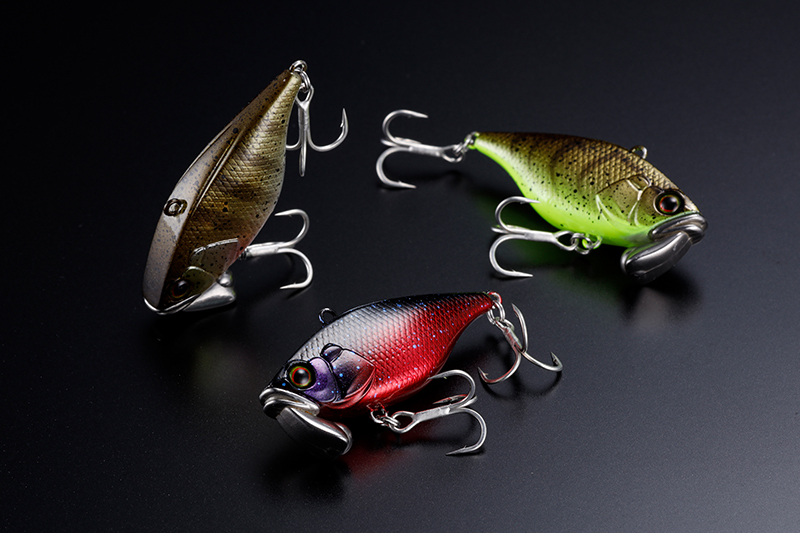
Where it earns its place is the session that has gone dead. Bream that have watched three plastics crawl past will still snap at something quick, and 7.3 g in 38 mm holds a line through current. Think of it as the fast option in a box otherwise full of slow ones, not as a replacement for them.
Exposed metal and trebles still add up to a lure you can lose, and at ¥1,683 that stings more than a 68-cent plastic. Six colours in the bream-specific run.
| Point | What Jackall says |
|---|---|
| Base lure | The TN/38 Trigon, rated for snag avoidance and casting distance in bass fishing |
| O.M.S. | Out Metal System: the tungsten weight is exposed outside the body for a low centre of gravity, stable flight, snag avoidance and bottom feel |
| Silent build | Purpose-moulded weight, no rattle, to avoid pressuring wary black bream |
| Intended use | Reaction bites from fish that have refused a slow worm, traced tight to the bottom |
| Lip | Trigon lip design |
| Model | Length | Weight | Type | List price (tax incl.) | Approx. AUD |
|---|---|---|---|---|---|
| TN/38 Trigon Kurodai Special | 38 mm | 7.3 g | Sinking | ¥1,683 | A$14.8 |
Ecogear files this under jig heads and accessories rather than lures, which tells you how it is built. A 35 mm shrimp-shaped body at 5.5 g, one to a pack, and the feature Ecogear leads with is the hook system rather than the shape: a bream-specific arrangement it credits for more bites and better conversion on short, tentative hits. Straight retrieve by default, lift and fall for a pylon or pontoon leg.

Only four colours, one lure per packet, and no published price. That combination makes it the hardest item here to buy sight unseen, and the one most worth checking a local shelf for first.
| Point | What Ecogear says |
|---|---|
| Body | Small shrimp-imitating body made specifically for black bream, producing characteristically small vibrations |
| Hooks | Original bream hook system, credited with increasing both bite numbers and hook-up rate |
| Retrieve | Straight retrieve as standard, with lift and fall for vertical structure |
| Model | Length | Weight | Pcs. per pack | Colours | List price |
|---|---|---|---|---|---|
| Breamer Vibe 35 | 35 mm | 5.5 g | 1 | 4 | Not published |
Australian bream anglers already know surface works. What is interesting is that two Japanese makers reached nearly opposite answers to the same problem, and both list black bream as a primary target rather than an afterthought.
Plenty of Australians fish the Sugapen without registering it as an import, and the 58F is the size that suits estuary bream. Fifty-eight millimetres, 4.1 g, floating, #10 trebles, #2 split rings. Bassday’s target list for the 58F and 70F reads: seabass, kurodai, meki and kamasu. Kurodai is the black bream. Bassday’s own line is that anglers call it a forbidden bait lure, which is tackle copywriting at its most Japanese, though the claim underneath is measurable: low air resistance for the weight, so it casts further than 4.1 g should.
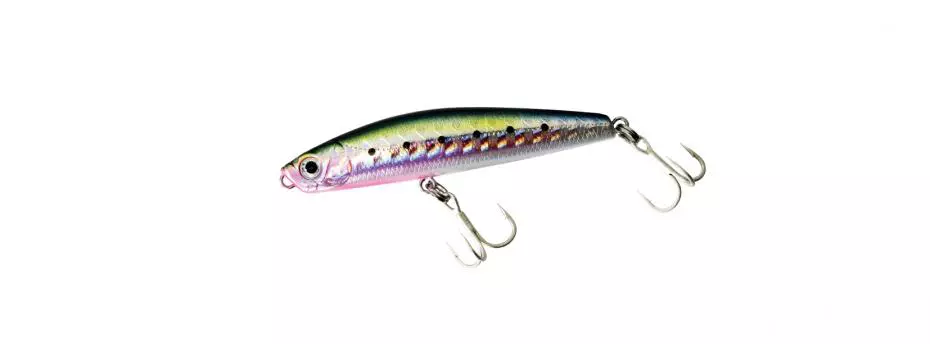
One oddity to record rather than gloss over. Every Sugapen is tagged MZ-19 on the product page and Bassday defines it nowhere on the site. It appears across most of the Bassday hard bait range, so treat it as an internal build spec, not as a feature you can compare between brands.
Sizing up does not mean changing lure. The 70F is only 0.2 g heavier than the 58F but 12 mm longer, so you gain profile without losing the light, easy handling. The 95F and 120F are seabass and pelagic sizes, listed below so you avoid ordering one by mistake.
| Point | What Bassday says |
|---|---|
| Target fish (58F and 70F) | Seabass, kurodai (black bream), meki (juvenile trevally), kamasu (barracuda) |
| When to use it | Essential for fish in feeding mode |
| Casting | Low air resistance, so it casts well despite being light |
| Handling | Light, responsive operation |
| MZ-19 | Marked on every size; no explanation published anywhere on the site |
| Model | Length | Weight | Hook / ring | List price (tax excl.) | Approx. AUD |
|---|---|---|---|---|---|
| Sugapen 58F | 58 mm | 4.1 g | #10 / #2 | ¥1,550 | A$13.6 |
| Sugapen 70F | 70 mm | 4.3 g | #10 / #2 | ¥1,750 | A$15.4 |
| Sugapen 95F | 95 mm | 8.5 g | #6 / #3 | ¥1,850 | A$16.2 |
| Sugapen 120F | 120 mm | 19.5 g | #2 / #4 | ¥2,100 | A$18.4 |
The Toppy goes the other way. Where the Sugapen is a slim pencil, this is a stubby pencil popper with a fin under the chin to sharpen the dog-walk and a fat tail that shortens the slide. Jackall’s reasoning is the most useful sentence on any of these pages: black bream mis-strike lures that slide too far, so the tail brakes the walk to keep the lure in the strike zone. A design decision made from watching fish miss.
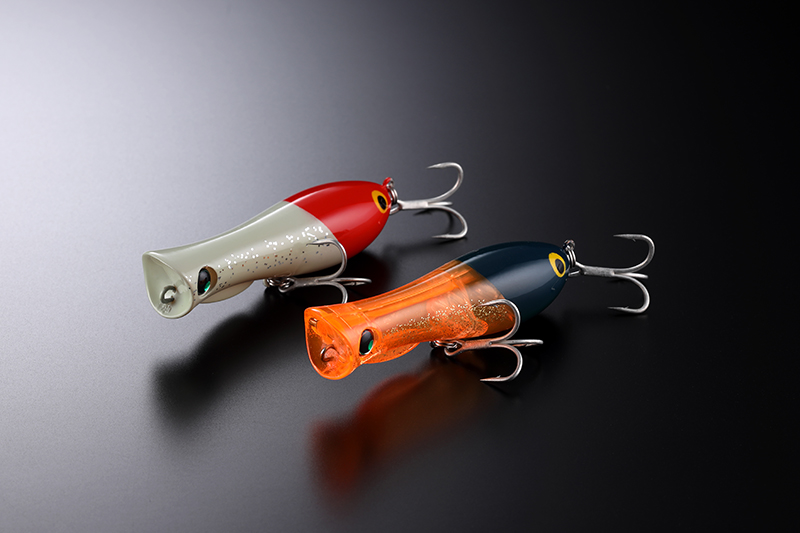
Jackall also publishes a cast distance, which almost nobody does: 52.2 metres average over five casts with PE 0.6, a 10 lb leader and a 7 ft 7 in rod, measured in-house. It is a company figure, not an independent one, but the tackle they used is close enough to a typical Australian bream outfit that the number means something.
Pick by size. The 67F at 9 g searches in wind and chop. The 50F at 5.6 g is the one for shut-down fish and small bait, and it still casts, because the weight sits back in the tail. Jackall lists the 50F hook size as a dash, so that figure is genuinely not published rather than assumed to match the 67F.
| Point | What Jackall says |
|---|---|
| Chin fin | Cuts water sharply during the walk to improve straight-line tracking left and right |
| Fat tail | Carries weight for distance and brakes the slide, because black bream mis-strike lures that slide too far |
| Float posture | Sits with most of the body below the surface, so bites are less easily deflected |
| Line eye | Teardrop shape so a snap threads through cleanly |
| Cast distance | 52.2 m average over five casts, PE 0.6, 10 lb leader, 7 ft 7 in rod, company measurement |
| Model | Length | Weight | Type | Hook | List price (tax incl.) |
|---|---|---|---|---|---|
| Bleeker Toppy 67F | 67 mm | 9 g | Floating | #8 | ¥1,650 |
| Bleeker Toppy 50F | 50 mm | 5.6 g | Floating | Not published | ¥1,595 |
Some of this is already on Australian tackle walls. Ecogear blades and Bassday surface lures have been distributed here for years, so if a shop near you carries them, buy them there. Freight only favours a Japanese order when you want several packets of something nobody stocks locally, which is the case with the Chinu Shokunin plastics and the Bleeker range.
Before you fill a cart, note that Japanese makers publish prices inconsistently, and that consumption tax changes what you are comparing.
| Maker | What the official page publishes | What that means for you |
|---|---|---|
| Jackall | Tax-included price only | Compare against Australian retail directly, no back-calculation needed |
| Bassday | Both tax-included and tax-excluded | Export orders are usually quoted from the tax-excluded figure |
| Ecogear (Marukyu) | No list price at all | Price only becomes visible at a shop or a marketplace listing |
Rough guide from the numbers above: the plastics are the bargain, well under a dollar a lure. The hard baits land near A$14 to A$15 before freight, roughly Australian retail for an equivalent Japanese hardbody, so you are paying for access rather than savings. If the rod and reel side needs sorting first, the light rock fishing outfit guide for bream and trevally covers a setup that handles every lure here.
We fish out of a small boat in Japan, mostly offshore, and chinu are the fish that turn up when you are not trying. Under the pontoons in the harbour on the way out. In the river mouth on the way home. For years that was all they were to most Japanese boat anglers: a nuisance around the mooring lines.
What changed was the shore game. Chinuing became a category because you could catch a cautious, hard-fighting, widely distributed fish on a A$7 packet of plastics and a rod you already owned, without a boat, at a time that fits around work. Every maker here followed that demand rather than creating it.
That is why the transfer to Australia works, and it is a better reason than “Japanese tackle is well made”. This gear is aimed at an angler standing on rocks in dirty water, in front of oysters, dealing with a fish that inspects and refuses. Whether it is called kurodai or yellowfin bream barely matters.
| Lure | Type | Size | Weight | Pcs. | List price | Approx. AUD |
|---|---|---|---|---|---|---|
| Ecogear Chinu Shokunin Bug Ants 2 in | Soft plastic | 60 mm | Not published | 5 | Not published | Not published |
| Ecogear Chinu Shokunin Mini Tank 1-1/2 in | Soft plastic crab | 37 mm | Not published | 8 | Not published | Not published |
| Jackall Bleeker Chop Snack 2.0 in | Soft plastic craw | 2.0 in | Not published | 10 | ¥770 incl. | A$6.8 |
| Jackall Chibi Chinu Head 5.0 g | Jig head | Not published | 5.0 g | 2 | ¥671 incl. | A$5.9 |
| Jackall TN/38 Trigon Kurodai Special | Silent lipless vibe | 38 mm | 7.3 g | 1 | ¥1,683 incl. | A$14.8 |
| Ecogear Breamer Vibe 35 | Shrimp vibe | 35 mm | 5.5 g | 1 | Not published | Not published |
| Bassday Sugapen 58F | Surface pencil | 58 mm | 4.1 g | 1 | ¥1,550 excl. | A$13.6 |
| Jackall Bleeker Toppy 50F | Pencil popper | 50 mm | 5.6 g | 1 | ¥1,595 incl. | A$14.0 |
Top pick: Ecogear Chinu Shokunin Mini Tank 1-1/2 in
A 37 mm crab, eight to a packet, from a series colour-matched for black bream by anglers who fish for them. It suits a 3.5 g or 5 g head, it trails behind a rubber jig, and it needs the least translation between a Japanese oyster bed and an Australian one. Marukyu publishes no list price, so budget from a shop or marketplace listing.
Budget pick: Jackall Bleeker Chop Snack 2.0 in
Ten craws for ¥770 including tax, about A$6.80, or roughly 68 cents a lure. Drawn for the free rig, the arms work at dead-slow speeds, and the thickened tail holds an offset hook through repeated casts. To test Japan’s bream plastics in your system without committing much, start here.
On the surface lures, yes. The 58F Sugapen carries #10 trebles at 58 mm and the 67F Toppy carries #8 at 67 mm, finer than a typical Australian hardbody of the same length. Light wire penetrates on a soft, short bite. It also bends. If your water holds decent flathead or the odd mangrove jack, upgrade the trebles and accept a change in action.
Jackall’s cast test used PE 0.6 with a 10 lb leader, which is a fair indication of the tackle these lures are drawn for. PE 0.6 is roughly 12 lb braid here: lighter mainline and slightly heavier leader than many Australian bream anglers run, reflecting fishing tight to oysters where the leader takes the abrasion.
Because the maker does not publish it, and filling the gap with a retailer’s number would make the table look complete while being wrong. Marukyu publishes no list price for any Ecogear product, Jackall lists the 50F Toppy hook size as a dash, and neither publishes a weight for soft plastics. Those are the holes, and they stay holes.
Amazon Japan ships internationally on most tackle items, with availability and freight shown at checkout, and orders over A$59 may qualify for free international delivery. Soft plastics weigh nothing, which is why a plastics order beats a hard bait order. Jackall and Bassday have some US presence too, so check what Amazon.com currently lists for Jackall and for Bassday before committing to a Japanese order.
Set by each state and territory, and they differ, in some jurisdictions between yellowfin and southern black bream. Check your local regulations before you keep a fish, and check again each season.
Japan did not adapt bass gear for bream. It built a category around Acanthopagrus and published the numbers, and that category maps onto an Australian estuary with very little adjustment. The cheapest way in is a packet of plastics and a couple of heads. The honest caveat is the gaps: three of the eight have no published price and two have no confirmed single-product listing, so this is not a category you can order blind.
Related reading: the bream and trevally light rock fishing outfit for the tackle that fishes all of this, Japanese jig heads and lures for ajing if you go lighter than 2 g, and JDM soft plastics for snapper when the same estuary throws up something bigger.