Best JDM Area Trout Reels: Daiwa 25 Iprimi vs Shimano 26 Vanquish CE, and Is the New US Iprimi LT the Same Reel?
ちゃんま
マイボ!

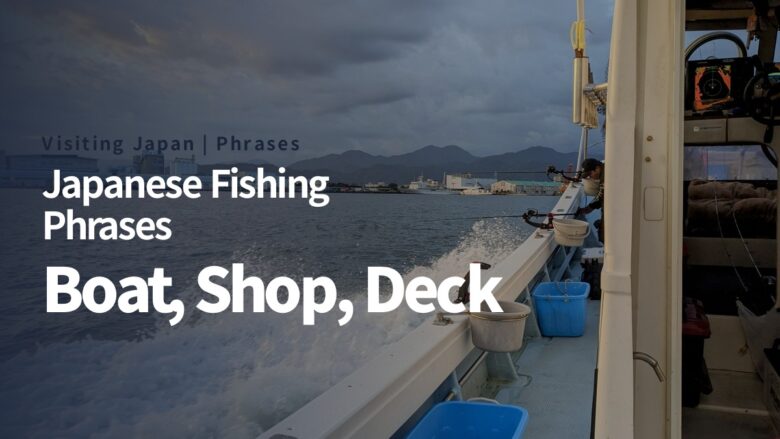
Most Japanese party boats, harbor bait shops and tackle stores do business in Japanese. That’s less of a wall than it sounds. Fishing talk is narrow: a date and a headcount when you book, a size and a weight in the shop, and a handful of calls on the deck. A couple of dozen of the phrases below will get you through most of a fishing day without a guide, with a translation app for anything longer.
Licenses, what you can’t take from the sea and how party boats work are in our guide to how to go fishing in Japan as a visitor. This page is only the language: what to write, what to say and what you’ll hear. Every phrase comes in Japanese script, in romaji (Japanese written in the Latin alphabet) and in plain English. A line over a vowel, as in dōzo, means you hold that vowel a beat longer.
If you only memorize eight, make it these. They’re polite enough for a captain you’ve never met and short enough to say with a rod in your hands.
| Japanese | Romaji | What it means |
|---|---|---|
| すみません | sumimasen | Excuse me; sorry; thanks for the trouble |
| ~をお願いします | … o onegai shimasu | … please (when you ask for something) |
| ~はありますか? | … wa arimasu ka? | Do you have …? |
| 初めてです | hajimete desu | It’s my first time |
| 日本語はほとんど話せません | nihongo wa hotondo hanasemasen | I speak almost no Japanese |
| もう一度お願いします | mō ichido onegai shimasu | Once more, please |
| 書いてもらえますか? | kaite moraemasu ka? | Could you write it down? |
| ありがとうございました | arigatō gozaimashita | Thank you (for what you’ve done) |
Sumimasen does more work than any other word here. It gets a shop assistant’s attention, apologizes for a tangled line and thanks the deckhand who unhooked your fish. Kaite moraemasu ka? saves the most confusion: numbers, times and meeting points are much easier to read than to catch by ear, and people are usually glad to write them down or type them into your phone.
If the boat takes bookings by message or web form, write. A short message in Japanese gets a clearer answer than a phone call in English, and the reply stays on your screen. The questions to ask and what the fare tends to cover are in our Japan party boat booking guide. Below is the wording itself: seven lines you can copy, fill in and send.
| Japanese | Romaji | What it says |
|---|---|---|
| はじめまして。(名前)と申します。 | Hajimemashite. (Name) to mōshimasu. | Nice to meet you. My name is (name). |
| 11月20日(金)のアジ船を2名で予約したいです。 | Jūichi-gatsu hatsuka (kin’yōbi) no aji-bune o ni-mei de yoyaku shitai desu. | I’d like to book the horse mackerel trip on Friday 20 November for two people. |
| 二人とも船釣りは初めてです。 | Futari tomo funazuri wa hajimete desu. | It’s the first boat-fishing trip for both of us. |
| 貸し竿を2本お願いできますか。 | Kashi-zao o ni-hon onegai dekimasu ka. | Could we rent two rods? |
| 日本語があまり話せないので、メッセージでのやりとりだと助かります。 | Nihongo ga amari hanasenai node, messēji de no yaritori da to tasukarimasu. | I don’t speak much Japanese, so messages would help a lot. |
| 集合時間と集合場所を教えてください。 | Shūgō jikan to shūgō basho o oshiete kudasai. | Please tell us the meeting time and place. |
| よろしくお願いします。 | Yoroshiku onegai shimasu. | Thank you in advance (the standard sign-off). |
The second line carries the booking. A date, a target and a headcount are what the boat needs to say yes or no, and writing the numbers as digits keeps them safe from mistranslation. Keep the rest short. A translation app can turn a long, chatty English message into Japanese that’s polite but hard to answer, while seven plain lines get a plain reply.
Japanese writes dates month first: 11月20日 is 20 November, with 月 (gatsu) for month and 日 for day. The day of the week goes in brackets as one character: 月 Monday, 火 Tuesday, 水 Wednesday, 木 Thursday, 金 Friday, 土 Saturday, 日 Sunday. People are counted with 名 (mei) in bookings, so 1名, 2名, 3名 read ichi-mei, ni-mei, san-mei. Times use the 24-hour clock or 午前 (gozen, a.m.) and 午後 (gogo, p.m.): 午前5時 is 5 a.m.
Saying dates aloud is harder than writing them, because the first ten days and a few others have their own readings. The 1st is tsuitachi, the 2nd futsuka, the 3rd mikka, the 4th yokka, the 5th itsuka, the 6th muika, the 7th nanoka, the 8th yōka, the 9th kokonoka, the 10th tōka and the 20th hatsuka. If you’re booking by phone, have the date written down to read from, or ask the other side to repeat it back.
Practice the weather question. Whether a trip sails is often decided late, and shussen shimasu ka? gets you a yes or a no without a long conversation. If the answer is 中止 (chūshi) or 欠航 (kekkō), the trip is off.
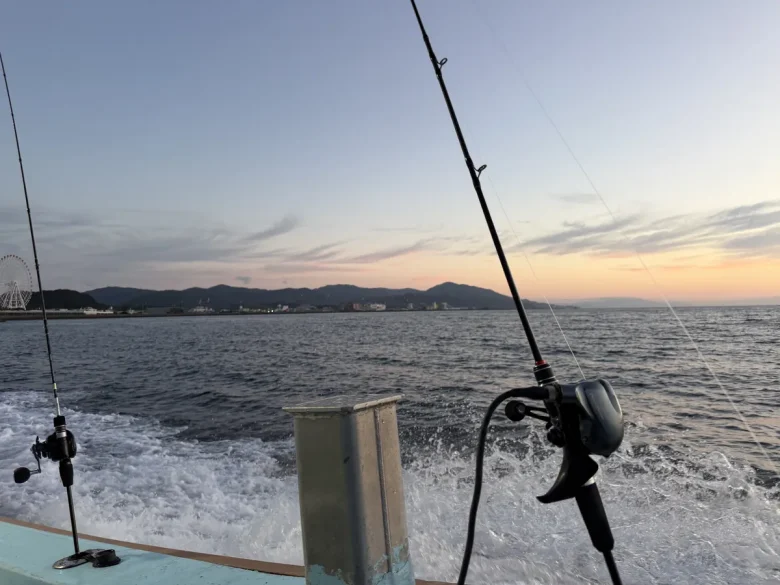
A tackle shop is the easiest place to be understood, because most of what you’re asking for is a loanword. A reel is rīru, a lure is ruā, a jig is jigu. Say the English word slowly with Japanese vowels and you’re halfway there. The harder part is that sizes are often printed in Japanese units, so the useful phrases are the ones that pin down a number.
| Japanese | Romaji | What it means |
|---|---|---|
| ~はどこですか? | … wa doko desu ka? | Where is (are) …? |
| これと同じものはありますか? | Kore to onaji mono wa arimasu ka? | Do you have one the same as this? (show a photo) |
| 船で使います | Fune de tsukaimasu | I’ll use it on a boat |
| PEラインの1.5号はありますか? | PE rain no itten-go-gō wa arimasu ka? | Do you have PE braid in size 1.5? |
| 80グラムのジグはありますか? | Hachijū-guramu no jigu wa arimasu ka? | Do you have an 80 g jig? |
| 左ハンドルはありますか? | Hidari handoru wa arimasu ka? | Do you have the left-hand-wind version? |
| 今、何が釣れていますか? | Ima, nani ga tsurete imasu ka? | What’s being caught at the moment? |
| オキアミをください | Okiami o kudasai | Krill, please (bait) |
| 免税できますか? | Menzei dekimasu ka? | Can I buy this tax-free? |
| 袋はいりません | Fukuro wa irimasen | I don’t need a bag |
The photo trick beats any phrase. Save a picture of the rig, lure or reel you want, show it with kore to onaji mono wa arimasu ka? and let the assistant walk you to the shelf. In the small bait shops near the water, ask ima, nani ga tsurete imasu ka? as well; the answer tells you which rig to pick up for tomorrow. If you’re buying gear to take home, our guide to buying fishing tackle in Japan tax-free explains what to ask before you pay.
On baitcasters, ask about the handle before the box goes in the bag. Daiwa’s beginner pages call the versions 右ハンドル and 左ハンドル (migi handoru, hidari handoru), and on most baitcasters the hand that winds is fixed when you buy it, unlike a spinning reel.
Once the boat stops, the talking gets short. The captain gives instructions over a speaker, the deckhand moves along the rail, and everyone else is busy with their own line. You don’t need conversation here. You need to recognize a few calls and be able to ask for help quickly.
| You’ll hear | Romaji | What it means |
|---|---|---|
| はい、どうぞ | hai, dōzo | OK, go ahead (drop your rig) |
| 底から~メートル | soko kara … mētoru | … meters up from the bottom |
| タナは~メートル | tana wa … mētoru | The fish are at … meters |
| 上げてください | agete kudasai | Reel up (the boat is about to move) |
| 移動します | idō shimasu | We’re moving to another spot |
| 最後の一流しです | saigo no hito-nagashi desu | This is the last drift |
Listen hardest for agete kudasai. A boat that moves off with lines still down drags rigs into each other, so when you hear it, wind up straight away. If a number goes past too fast, mō ichido onegai shimasu works on deck too, and so does holding up fingers and pointing at the water.
| Japanese | Romaji | What it means |
|---|---|---|
| 来ました! | kimashita! | Fish on! |
| タモをお願いします | tamo o onegai shimasu | Net, please |
| オマツリしました、すみません | omatsuri shimashita, sumimasen | Our lines are tangled, sorry |
| 根掛かりしました | negakari shimashita | I’m snagged on the bottom |
| 仕掛けが切れました | shikake ga kiremashita | My rig broke off |
| バラしました | barashimashita | I lost the fish |
| これは何という魚ですか? | kore wa nan to iu sakana desu ka? | What fish is this? |
| これは食べられますか? | kore wa taberaremasu ka? | Is this one good to eat? |
| 逃がしてもいいですか? | nigashite mo ii desu ka? | Can I let it go? |
| 船酔いしました | funayoi shimashita | I’m seasick |
| トイレはどこですか? | toire wa doko desu ka? | Where’s the toilet? |
Tamo is the landing net, listed under that name in Daiwa’s glossary, and tamo o onegai shimasu is the phrase to have ready before a big fish reaches the surface. On a busy boat the deckhand may be at the far end, so say it early and loudly. Negakari is also worth knowing by name, because the crew would rather hear “snagged” than watch you heave on a rod that’s bent into the seabed.
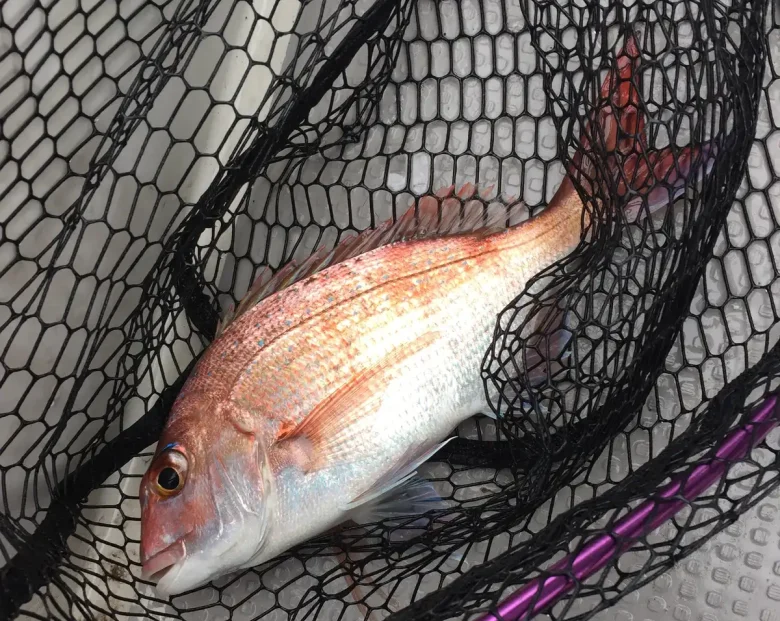
Kore wa taberaremasu ka? has a serious use. Pufferfish (フグ, fugu) are a hazard Japan’s health ministry addresses to anglers by name. It says food poisoning from pufferfish that people caught themselves, or were given by someone who did, and then prepared at home happens every year. Its advice is never to prepare one yourself, and it notes that heating and other cooking don’t make the toxin safe. If you aren’t sure what a fish is, ask kore wa fugu desu ka? and don’t take it back to the kitchen.
Japan has a dedicated emergency number for the sea: 118, which connects to the Japan Coast Guard’s operations center. The government’s public relations office lists it alongside 110 for police and 119 for fire and ambulance, and tells callers to say calmly when, where and what happened, with the phone’s GPS switched on. On a party boat, shout to the captain first; on a pier or a beach, call.
Japanese uses three scripts, and tackle uses all of them. Katakana, the angular one, spells out loanwords, so a large share of a tackle label is English in disguise: リール is rīru, reel, and ドラグ is doragu, drag. Kanji carry the older native words like 竿 (rod), 糸 (line) and 仕掛け (rig). The third script, hiragana, mostly fills in grammar between them.
A few things trip up visitors. Some items have two names: Daiwa’s beginner pages note that ベイトリール (baitcaster) is what lure anglers say, while the general name is 両軸リール (ryōjiku rīru). Leader is リーダー to a lure angler and ハリス (harisu) to a bait angler. And numbers followed by 号 (gō) aren’t pounds or ounces. They’re Japanese size numbers for line and sinkers, and a 号 number on a spool of braid tells you its thickness, not its breaking strain. Our guide to JDM PE line and leader ratings has the conversions.
| On the label | Reading | English |
|---|---|---|
| ロッド / 竿 | roddo / sao | Rod |
| リール | rīru | Reel |
| スピニングリール | supiningu rīru | Spinning reel |
| ベイトリール / 両軸リール | beito rīru / ryōjiku rīru | Baitcaster; conventional reel |
| 電動リール | dendō rīru | Electric reel |
| 右ハンドル / 左ハンドル | migi handoru / hidari handoru | Right-hand wind / left-hand wind |
| ドラグ | doragu | Drag |
| ライン / 道糸 | rain / michiito | Line; main line |
| PEライン | pī-ī rain | Braid |
| フロロカーボン | furoro kābon | Fluorocarbon |
| ナイロン | nairon | Nylon monofilament |
| リーダー / ハリス | rīdā / harisu | Leader |
| ハリ | hari | Hook |
| オモリ | omori | Sinker |
| 仕掛け | shikake | Rig (hooks, line and sinker made up) |
| サビキ | sabiki | Multi-hook rig with flies, for small fish |
| ジグ | jigu | Metal jig |
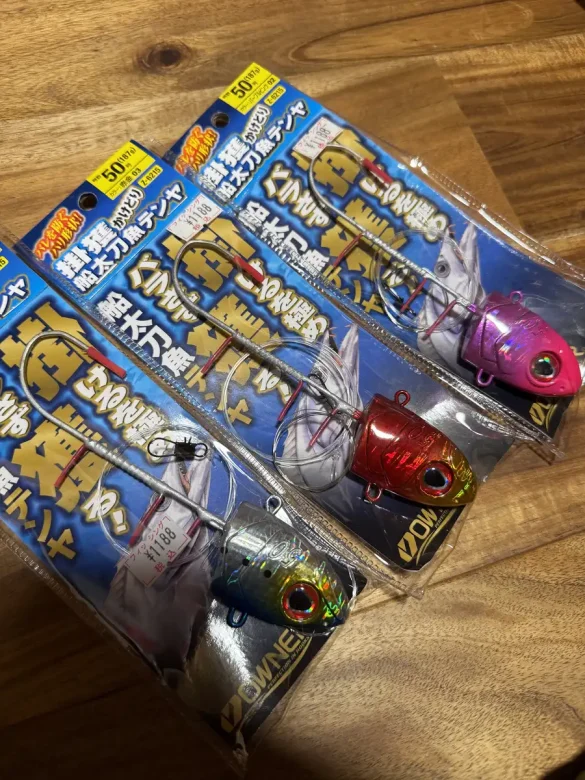
| タイラバ | tairaba | Skirted lure for sea bream |
| エギ (餌木) | egi | Squid jig |
| スナップ / スイベル / サルカン | sunappu / suiberu / sarukan | Snap / swivel / swivel |
| タモ / 玉網 | tamo / tama-ami | Landing net |
| クーラーボックス | kūrā bokkusu | Cooler |
| ライフジャケット | raifu jaketto | Lifejacket |
| エサ / オキアミ | esa / okiami | Bait / krill |
| 号 | gō | Japanese size number for line and sinkers |
Anglers on the deck also use a small set of words about the day itself. アタリ (atari) is a bite. 時合 (jiai) is the spell when the fish switch on. 入れ食い (iregui) means a bite on every drop. 外道 (gedō) is any fish that isn’t the one you came for, and ボウズ (bōzu) is going home with nothing. 凪 (nagi) is a flat calm, 時化 (shike) is rough sea, and 納竿 (nōkan) is putting the rods away at the end.
Not much. The eight phrases at the top, a booking written in Japanese and a translation app will carry most visitors through a day. VoiceTra, the speech translation app from Japan’s National Institute of Information and Communications Technology, is free and translates between 33 languages, though it needs a data connection. Use any app for the long questions and keep your own Japanese for the quick ones on deck.
Send it in Japanese script. Romaji is for you to read aloud, and a full message in it is slower for a Japanese reader to take in than the same message in kana and kanji. Copy the lines above, change the date and the numbers, and keep the romaji for the phone.
The desu and masu endings used throughout this page are polite enough for any captain or shop. Visitors aren’t expected to use honorific Japanese, and a clear, short sentence with onegai shimasu on the end beats a long one you can’t finish.
Arigatō gozaimashita to the captain and crew as you step off. You’ll also hear お疲れさまでした (otsukaresama deshita), roughly “well done today”, passed between anglers and crew at the end of a long day. Saying it back is a nice touch.
Write the booking, learn the eight phrases, and keep tamo o onegai shimasu and agete kudasai close to hand for the deck. If the boat you’ve booked is after red sea bream, our guide to tairaba fishing in Japan for visitors covers the method and the tackle for that trip.