How to Buy JDM Tackle Overseas: Proxy, Shipping & Import Guide
ちゃんま
マイボ!

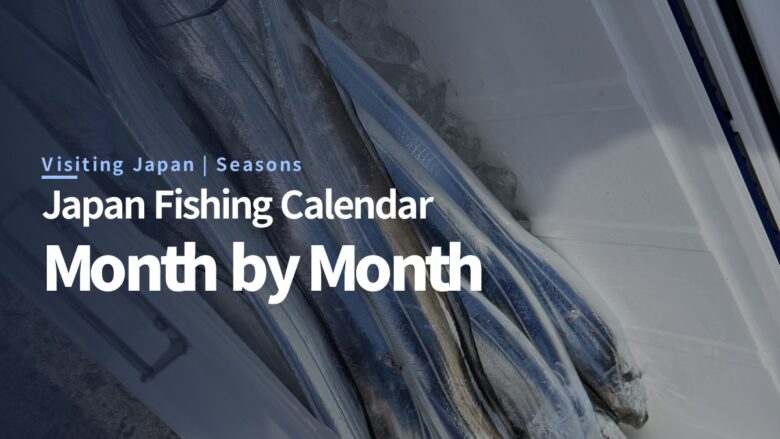
Your flights are booked. The fish didn’t get a say. That’s the real problem with planning a fishing day in Japan: the trip dates are fixed, and what the boats are chasing changes every few weeks. A party boat that ran for tachiuo last month might be sailing for something else entirely by the time you land.
This calendar is a set of tendencies, not a timetable. Japan runs from drift ice off Hokkaido to the subtropical south, and a peak month on the Japan Sea coast won’t line up exactly with Tokyo Bay or the Seto Inland Sea. Use it to know what to ask for, then ask the boat or the local shop what’s actually biting that week. For licenses, the co-op ticket for rivers and what you’re not allowed to take, see how to go fishing in Japan as a visitor.
Three things move the dates. The first is simply where you are. Water temperature, currents and the shape of the coast differ between regions, so the same fish can peak a month apart in two prefectures.
The second is salt versus fresh water. At sea, seasons are mostly natural: the fish arrive, feed, spawn and move on. Fresh water adds a legal layer. Trout and ayu have legal closed seasons written into each prefecture’s fishing rules, and the local co-op can set its own dates on top. A river can be full of fish and still be closed.
The third is the year itself. A warm autumn or a late spring shifts everything by a few weeks. Japanese party boats are booked by named fish, so the boats’ own trip listings are the most up-to-date calendar there is.
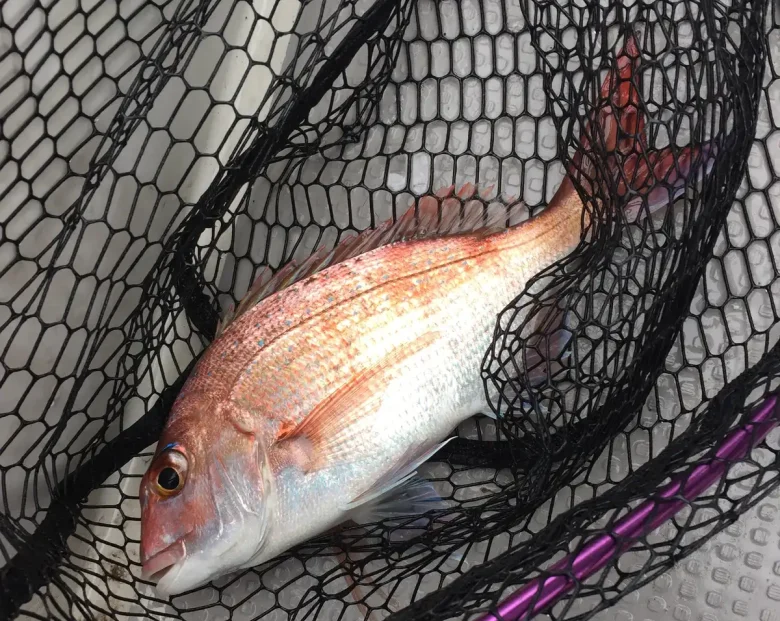
Spring is red sea bream season. Madai spawn in spring, and in Japan the spawning-season fish even have a name, sakura-dai (桜鯛), cherry-blossom bream, which Shimane Prefecture’s fisheries office describes as the peak. On the Toyama coast, the commercial madai catch peaks from April to July, with May the biggest month.
For a visitor, that usually means a tairaba boat. Tairaba (タイラバ) is the Japanese method of slowly winding a weighted head with rubber skirts up from the bottom, and spring is when a lot of anglers here start thinking about it. The tairaba fishing guide explains how it works. Madai are caught well beyond spring, so a June or October tairaba trip isn’t a lost cause.
Mebaru (メバル), the Japanese rockfish, is another spring fish. A safety column on the Japan Coast Guard’s site notes that the shallow-water mebaru species come into their fishing season in spring, and that they live close enough inshore for even a small boat to reach them.
In the Seto Inland Sea and Kansai area where I fish, I take the boat out with sabiki rigs for mebaru and madai (a sabiki is several small dressed hooks on one line). Personally, I only go in April and May. That’s my habit, not a rule that the fish stop afterwards. From the shore, mebaru for me is more of a February-to-April thing, roughly. Whichever you plan around, spring is the window where both overlap.
Stream trout such as yamame and iwana have a closed season over winter. In Yamanashi, for example, the prefecture’s rules close trout (rainbow trout excepted) from October 1 to the end of February, so March is the reopening. Other prefectures and individual co-ops set different dates, and each river has its own day ticket. Check the co-op for the exact river before you plan around opening day.
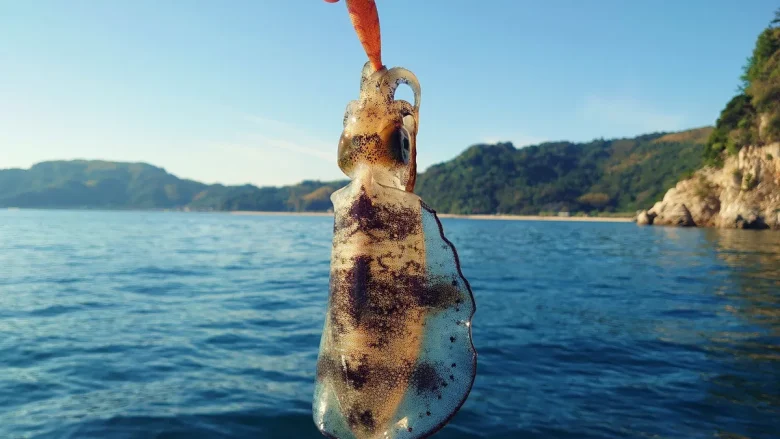
Aori-ika (bigfin reef squid) move inshore to spawn from spring. Nagasaki’s fisheries research center gives the spawning season as April to September, peaking in May and June there. Shimano’s beginner guide adds that the big spring-to-early-summer squid are wary and hard to catch.
Ayu, the small sweetfish that Japanese rivers are famous for, can only be fished in an open season. Japan’s Ministry of Foreign Affairs puts the start of ayu season around June, with dates that differ by area and a finish anywhere from September to as late as December. The closures make the point: Yamanashi keeps ayu closed until the end of May (May 15 on the Fuji River system), and Niigata closes ayu in both the sea and rivers from January 1 to June 15.
At sea, early summer is a good time for aji (horse mackerel), the fish of family sabiki trips. On the Toyama coast the commercial aji catch is spread across the year, but June is the biggest month. Toyama’s tachiuo catch also has an early-summer peak in June and July, separate from the autumn one.
The thing to plan around in late summer isn’t a fish. It’s the weather. According to the Japan Meteorological Agency’s 1991 to 2020 averages, about 3.3 typhoons a year come close to Japan in August and the same again in September, against 2.1 in July. Boats don’t sail into that. If your only free day falls in late August or September, keep a backup day if you can and ask the boat how it handles cancellations when you book.
If you can choose when to come, autumn is a strong choice. A lot of what visitors want to catch overlaps here.
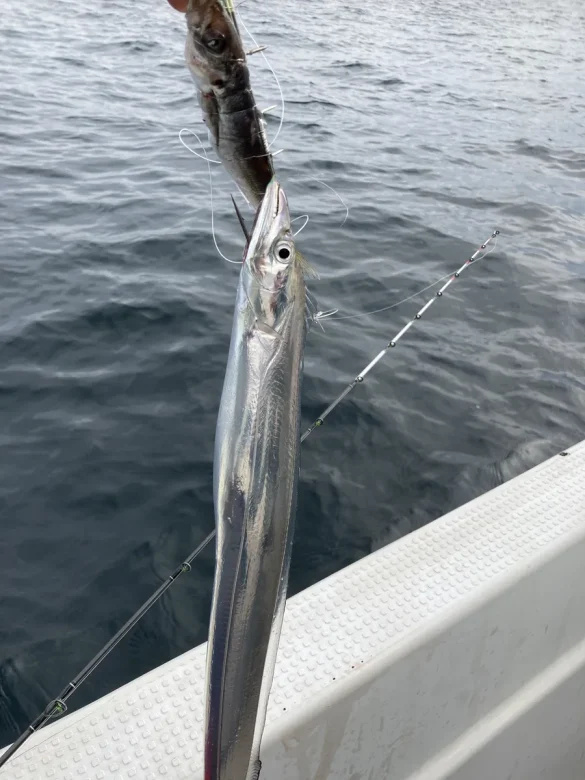
Tachiuo (太刀魚) is the largehead hairtail, a long silver fish with a mouthful of teeth, fished in Tokyo Bay, Osaka Bay and plenty of other waters around Japan. In Hyogo’s October fisheries report for the Akashi Strait area, tachiuo is listed among the main catches of the commercial line fishery. Toyama’s commercial catch peaks in October too. Boats fish for it with metal jigs or with a tenya, a weighted hook rig with a sardine tied on.
I fish for them from the shore with a tenya, and for me that’s September to November every year. You don’t have to guess the start. Let the first catch reports come out and go after them, because a run that’s begun usually doesn’t vanish the following week. Whether that’s one school sitting in the area, I can’t say for sure, but they mostly keep biting, and it’s mostly a safe bet. On the day, the bite tends to switch on the moment it gets dark.
The squid that hatched in spring and summer are what fill autumn. Nagasaki’s researchers note they reach roughly 300 g to 1 kg by October to December, and Shimano’s guide calls autumn the season for numbers, with smaller squid that are easier to catch. On the Toyama coast, the aori-ika catch peaks in October and November. For a first try at eging (squid fishing with a shrimp-shaped lure called an egi), this is the friendliest time of year.
Japanese yellowtail (buri) change name as they grow, and the young ones are the autumn fish. On the Toyama coast, the youngest size class peaks from September to December. These are what light jigging boats chase with metal jigs, and light jigging from a boat covers the gear. Madai have an autumn season of their own as well: Shimane calls it the second, “back” season after spring.
On the rivers, autumn is closing time. Stream trout close from October 1 in Yamanashi, and other prefectures set their own dates.
Winter yellowtail, kan-buri (寒鰤), is the big fish of the Japan Sea side. Toyama’s commercial buri catch runs from November to January and peaks in January.
The visitor-friendly winter option is on the ice. Wakasagi (Japanese smelt) are caught through holes drilled in frozen lakes, and JNTO, Japan’s national tourism organization, points to Lake Akan in eastern Hokkaido for wakasagi fishing from January to March, with guided tours and rental tents and gear. Lake Abashiri is another Hokkaido lake it mentions. Whether the ice is safe to stand on depends on that winter, so check with the operator or the lake’s tourist office close to your dates. On the rivers, stream trout stay closed until the end of February in prefectures such as Yamanashi.
| Month | Sea: what to ask about | Rivers and lakes |
|---|---|---|
| January | Kan-buri on the Japan Sea side | Wakasagi on Hokkaido ice; stream trout closed |
| February | Mebaru from the shore in some areas | Wakasagi; stream trout closed |
| March | Mebaru | Stream trout reopen in prefectures such as Yamanashi; wakasagi into March on Lake Akan |
| April | Madai and tairaba; sabiki boats; big aori-ika arriving | Stream trout |
| May | Madai (sakura-dai season); sabiki boats | Stream trout; ayu still closed in places |
| June | Aji; madai | Ayu season opening in many areas |
| July | Aji; early tachiuo in some areas | Ayu |
| August | Check typhoon forecasts | Ayu |
| September | Tachiuo starting; young yellowtail; typhoons possible | Ayu; last weeks of stream trout in Yamanashi |
| October | Tachiuo; young aori-ika; young yellowtail; autumn madai | Stream trout closed in prefectures such as Yamanashi; ayu in some rivers |
| November | Tachiuo; aori-ika; buri arriving on the Japan Sea side | Ayu only where the season runs late |
| December | Buri; young yellowtail | Stream trout closed |
Start from your dates, not the fish. Look at the column for your month, pick the one or two fish that appeal, and then search for boats in the region you’ll be in that are running trips for that fish. The fish names in Japanese help: madai, tachiuo, aji and so on are what the trip listings use.
If a fish isn’t on any boat’s schedule for your week, it’s probably out of season there, even if this calendar says otherwise. Go with what’s running. Some of the most interesting fishing in Japan is a method you can’t do at home, and the Japanese boat techniques that haven’t caught on abroad are worth a look before you choose. And if a good day ends with you wanting your own gear, buying fishing tackle in Japan explains the shops and the tax refund.
River seasons and some sea rules change from year to year. Check the prefecture’s fisheries page or the river co-op close to your travel dates.