Best JDM Fluorocarbon Shock Leaders: Japanese Leader Lines by Gou, Pounds and Price
ちゃんま
マイボ!

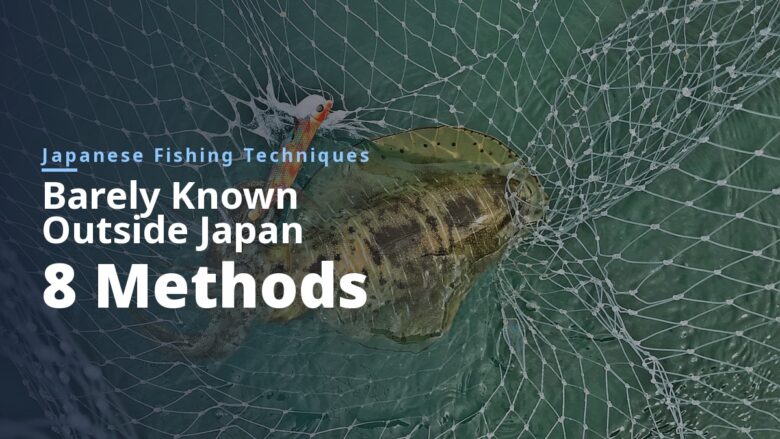
Slow pitch jigging started on Japanese boats and is now sold in American tackle shops. Tai rubber made the trip too, under other names. So it’s fair to ask what else is sitting on this side of the Pacific. Quite a lot, as it turns out. Some of the busiest boat fisheries in Japan have almost no English how-to written by an American or British angler.
That doesn’t mean nobody fishes them. Search in English for the eight techniques below and what comes back is mostly Japanese makers’ export pages and exporter listings. Somebody in New Jersey or Devon may well be fishing these quietly. They just haven’t written it up where a search can find it.
Ika metal (イカメタル) is squid fishing straight under the boat with a lead-bodied squid jig called a namari sutte. The sutte is the weight and the lure at once. Above it, a triple swivel carries a short branch with a second, floating lure, the uki sutte. You drop the pair to the depth the squid are holding, work the rod up and down, and stop. Sunline’s English guide describes the classic bite: the lure simply stops partway through its fall. Reel slowly after the first squid and a second one often grabs the other lure.
The omori rig (オモリグ) rearranges the same parts. A plain sinker, the omori, goes on first, and a long leader trails behind it to a light egi or sutte. With the weight out of the way, the lure drifts and sinks on its own.
American squid anglers are closer to this than they might think. A Cape Cod guide’s write-up of the spring loligo run describes a bank sinker of 1 or 2 oz under a fluorocarbon leader with two dropper loops, and says small Japanese-style jigs significantly outperform the traditional ones in shallow, clear water. That’s close to an ika metal layout, with a plain sinker where the weighted lure would be. The term itself hasn’t travelled. Neither side of the Atlantic turned up a local guide that uses it.
Gear is the easy part. Japanese exporters such as Maguro Pro Shop list Yamashita ika metal leaders and Major Craft ika metal rods, and complete sets show up on eBay.
Opens eBay search results for ika metal sutte; listings come from independent sellers.
Hitotsu tenya (ひとつテンヤ) is the red sea bream method that sits next to tairaba on Japanese boats. The tenya is a weighted head with a fixed hook and a small trailing hook, and a whole shrimp is threaded onto it. Fished on spinning tackle and very thin PE, it’s dropped to the bottom, lifted, and allowed to fall again. Most bites come on the way down.
Australia has the hardware. Several tackle shops there stock Catch-brand tenya heads, though a how-to written by an Australian didn’t surface. In the US and UK there’s even less: no local guide, no forum thread from someone who has tried it. The English-language instructions that exist come from Singapore, France and Japan.
We’ve covered this one in depth already. The hitotsu tenya guide explains the tackle, the technique article goes through the fall and the strike, and tenya vs tairaba is the one to read if you already own a tai rubber rod.
Shore eging is no secret anymore, and in the UK it’s an established way to catch squid. Tip-run (ティップラン) is its boat version, and it works differently. The boat drifts. A heavier egi goes down near the bottom and gets carried sideways by that drift. After a few jerks you hold the rod dead still and watch the tip. A squid shows up as the tip being pulled down, or springing back straight, not as a pull you feel in your hand.
Of the three countries, only Australia turned up local writing on it. A Melbourne squid shop sells its own 26 g tip-run egi and has published a guide to fishing it in Victoria. Our Australian section has a full piece on tip-run eging gear. For the US and UK, no locally written article came up at all.
Tachiuo (タチウオ) is the cutlassfish, the same long silver fish Americans call ribbonfish. In Japan it’s a boat target in its own right, and there are two ways to fish it. Tachiuo tenya uses a heavy lead head with a long hook, and a baitfish is bound onto the shank with wire. Tachiuo jigging swaps that for a metal jig. Both are dropped straight down and worked back up from the bottom.
The American view of this fish is very different. Florida Sportsman treats ribbonfish mainly as a sleeper bait for big king mackerel, caught on chunks of fresh mullet, and adds almost in passing that a large one fried fresh tastes like top-tier calamari. On a Northeast forum back in 2008, a poster asking about jigging for them said he’d never heard of anyone doing it. For the UK, nothing came up to suggest the fish is targeted at all.
I fish both styles in Osaka Bay. Tenya, to me, feels a lot like tip-run. I think that’s why, in these two fisheries more than in others, the quality of the rod shows up in the catch. It’s an impression, not something I’ve tested side by side.
Dedicated rods do get exported. Asian Portal Fishing lists an Alpha Tackle tachiuo tenya rod, and Yamashita has an English product page for a luminous tenya with a bait stopper, that one built for pier fishing.
A tako egi (タコエギ) is an egi built for octopus: a chunky body, big upturned hooks, and a snap for a sinker. Boat anglers clip one or two of them to a heavy weight, lower the lot to the seabed and keep it there, shaking the rod so the lures dance on the spot. An octopus doesn’t bite. It climbs on, and the hard tap of the sinker on the seabed goes dull. Then you set the hook and keep winding.
No American or British how-to came up for this one. The lures themselves are on eBay, and tackle shops in Italy and Greece now carry Daiwa’s tako egi, so the Mediterranean seems to be picking it up first. Octopus rules differ a lot from place to place. Check your local regulations before you try it.
Opens eBay search results for tako egi; listings come from independent sellers.
Slow pitch is all rod work. Blade jigging is the opposite. The jig is short and dense, with a small spinning blade and the hook at the tail. You cast it away from the boat, let it reach bottom, and wind fast without a single pause. No jerks. A Japanese guide writing in English about Tokyo Bay puts it plainly: fast winding is the basic method, and you just keep reeling. The target there is Japanese Spanish mackerel in autumn.
It has its own tackle category now. Major Craft Europe sells a rod labelled for blade jigging, and one JDM exporter lists Shimano’s Grappler BB Type Blade. What’s missing is anyone abroad writing about using it on their own mackerel species.
British LRF anglers already know ajing, the ultralight game for aji (horse mackerel) with tiny jig heads and soft worms. Bachikon (バチコン) is what happens when the fish are too deep for a one-gram jig head. The name is short for “vertical contact.” A sinker hangs at the very end of the rig. Above it, a branch line carries the same tiny jig head and worm, so a lure that light can be fished deep. It’s fished straight down from a boat.
In English this exists only as export listings: Daiwa Gekkabijin bachikon sets on eBay, ready-made rigs at a New Zealand shop. No how-to, no reports from anyone trying it on local fish.
Check Daiwa Gekkabijin bachikon on eBay
Opens eBay search results for Daiwa Gekkabijin bachikon gear; listings come from independent sellers.
Otoshikomi (落とし込み) means “dropping in,” and it’s the strangest idea on this list. The rig looks like a sabiki with far stronger hooks and line. You lower it through a school of sardines or small horse mackerel until one hooks itself. Then you don’t reel up. You send the rig, live bait still attached, on down toward the bottom, where something much bigger is waiting under the school. The same hook that caught the bait has to hold the predator.
All of it depends on step one. I’ve fished otoshikomi many times around the Seto Inland Sea. You can do it with a light jigging rod, but if there’s no bait, there’s no fishing. There are days we’ve left the dock on reports that sardines and aji were biting, and on the day itself: nothing. No bait on the rig, so nothing to fish with. A softer rod, the sabiki or rockfish kind, might have picked up a few. Maybe. But I’m not going to bring one along just for that.
Abroad, the trail is thin. A few Japan-based blogs were the only English mentions that came up.
Plenty of Japanese methods have already crossed over.
Most of this tackle is made for the Japanese market, so you’ll usually be buying from Japan. Specialty exporters and eBay sellers cover the lures and rigs. How to buy JDM tackle from overseas compares the routes.
The quickest way to try any of these is on a Japanese party boat, and our visitor’s guide to fishing in Japan explains booking, rental tackle and what you can’t take.
Some links in this article are affiliate links that support the site at no extra cost to you. As an eBay Partner Network affiliate, we may also earn from qualifying purchases made through eBay links.