JDM LRF Gear for UK Rock Marks: Three Rods, Two Reels and the Rigs for Kelp
ちゃんま
マイボ!

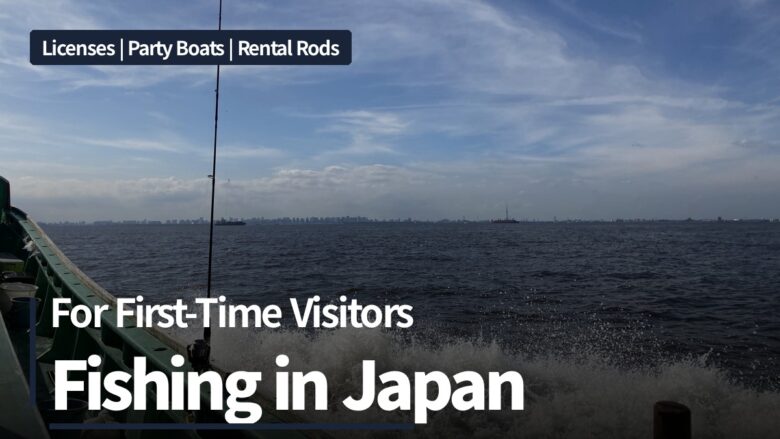
You’ve got a free day in the middle of a Japan trip, there’s salt water at the end of the train line, and you’d rather hold a rod than queue for another temple. The fishing part is easy. Japan is full of boats that take walk-up anglers, and many of them hand you a rod at the dock. The paperwork is lighter than most visitors expect, and the list of things you can’t take is longer.
I live in Japan and fish from my own small boat, so the rules below are the ones I fish under. How much of this applies to you depends on where you’ll be standing: on a harbor wall, on the deck of a party boat, or knee-deep in a river. Each has its own answer.
For a rod and line in the sea, the Fisheries Agency’s rules for recreational anglers don’t describe a license to buy. They list rod-and-line and handline fishing among the methods open to the public, and then spend the rest of the page on what, where and how. Local rules, closed areas and fishing rights still apply, and they differ by prefecture. On a party boat you pay the fare and fish.
Rivers and lakes are different. Most are managed by a local fisheries cooperative, and fishing for the species that co-op manages means buying its ticket first. That’s the “permit” travel sites mention when they say Japan requires one.
| Where you’re fishing | What you need | What to check |
|---|---|---|
| Sea, from shore | No national license is listed for rod and line | Prefecture rules on gear, sizes, closed seasons and closed areas; no shellfish, seaweed, lobster or octopus |
| Sea, on a party boat | A booking and the fare | Rental tackle, sinker weight, what’s included |
| River or lake | The local co-op’s fishing ticket (yugyo-ken) | Season dates, permitted methods, where tickets are sold |
Most of Japan’s coast is covered by fishing rights (gyogyo-ken, 漁業権) held by local cooperatives. The right doesn’t close the water to you. It reserves certain things that live there. The Fisheries Agency spells them out: shellfish such as abalone and turban shell, seaweed such as wakame and kombu, and settled animals such as shrimp, lobster and octopus. Take those where a right is in force and you’ve infringed it, and the fine can run up to ¥1,000,000.
Three species sit in a harsher category. Abalone, sea cucumber and glass eels carry a penalty of up to three years in prison or a fine of up to ¥30,000,000 for anyone taking them without a license or a fishing right. The agency’s page on poaching says it isn’t only organised gangs: ordinary people taking a few for their own table are part of the problem it describes. If it’s stuck to a rock or crawling on the bottom, leave it there.
Recreational fishing by foreign nationals in Japanese waters is regulated under its own law, and it’s limited to what the agency calls minor methods. In territorial waters, rod and line or handline is allowed from the shore and from boats under 3 tons, along with a landing net, a scoop net, a hand spear and simple shore-gathering tools. A cast net is allowed only without a boat. On a boat of 3 tons or more, the same rod-and-line fishing is allowed only on a Japanese vessel run by Japanese fishing professionals, meaning a party boat or a fishing boat. Trolling has extra conditions of its own. Prefecture rules apply on top. Permanent residents and people on similar statuses aren’t counted as foreigners for this purpose.
A rod on a Japanese party boat fits that. Spearguns and diving gear aren’t on the list for anybody: the agency names both as banned for recreational use.
Everything finer than that is set by each prefecture, and the details change at the border. One prefecture publishes a minimum size and a summer closed season for spiny lobster. Another caps the chum cage on a boat rig at 5.5 cm across and 16 cm long, one per rig. Chumming, lights at night and trolling are restricted in some prefectures. You don’t have to memorise 47 rulebooks. On a party boat, use the rig the boat tells you to use and ask the crew before keeping anything you’re unsure of. From shore, look up the prefecture’s fisheries page before you go.
Pacific bluefin has national rules written for recreational anglers. Fish under 30 kg can’t be taken at any time of year, from a boat or from shore, catch-and-release included, and one hooked by accident has to go back immediately. Fish of 30 kg and over come with a strict per-person bag limit and every fish kept has to be reported. The fishery for big fish also closes for set periods and when the catch runs high, and during a closure catch-and-release is banned too. From April 2026, anyone fishing for bluefin has to file a notification in advance. The bag limit and the closure dates have changed from season to season, so if tuna is why you’re coming, book with an operator who targets them and ask what the rules are that week.
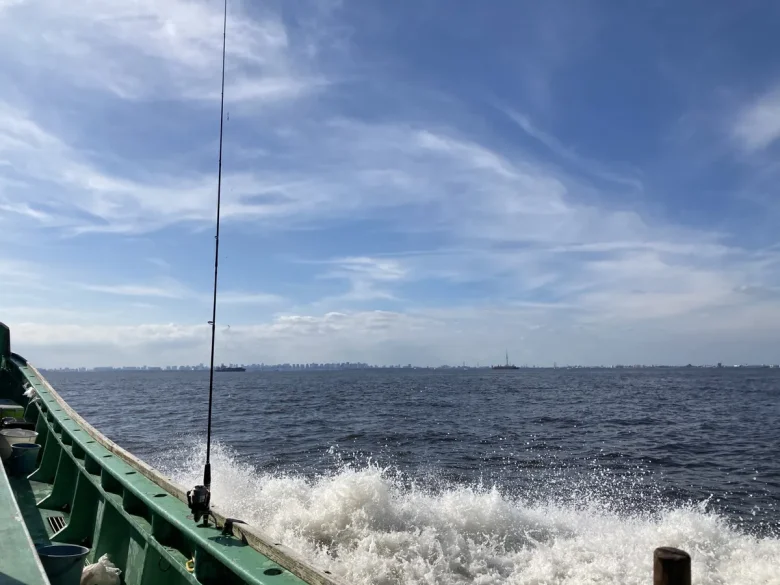
The Japanese party boat is the noriai-sen (乗合船): you buy one place on a boat that’s going out for a named fish, alongside a dozen or so strangers. Hiring the whole boat for your group is a shitate (仕立て) charter. Both are run by a funayado, a boat operator that takes the bookings, sells the ice and bait, and often has a few rods to rent.
These are regulated businesses. Operators register with the prefecture, and since April 2024 the law has asked more of them: the registration is normally posted online, operators have to set clear criteria for cancelling a trip in bad weather, and liability cover has to be at least ¥50,000,000 per passenger seat. A boat with its registration on its website is the easy first filter.
Booking is by phone or a web form, and most of it is in Japanese. A translated message sent a few days ahead works better than a call. Say how many of you there are, which trip you want, and whether you need rental tackle. Ask what the fare covers, because bait and ice are sometimes in the price and sometimes not, and ask what time to be at the dock. Many boats take cash only, so bring some.
Rental tackle is called kashi-zao (貸し竿). It’s usually a plain rod and reel matched to that day’s fish, already spooled, sometimes with the first rig thrown in. It won’t be light and it won’t be pretty.
It will catch fish. A party boat goes where the fish have been biting that week, in the months when they bite, and under those conditions the rod in your hands matters less than you’d think. Your own outfit, built for that one fish, would catch more and feel better doing it. I’m not going to pretend otherwise. But for a single day of a kind of fishing you’ve never tried, the rental is plenty to enjoy it. If you step back onto the dock already wanting another go at the same fish, that’s the point where I think buying your own starts to make sense.
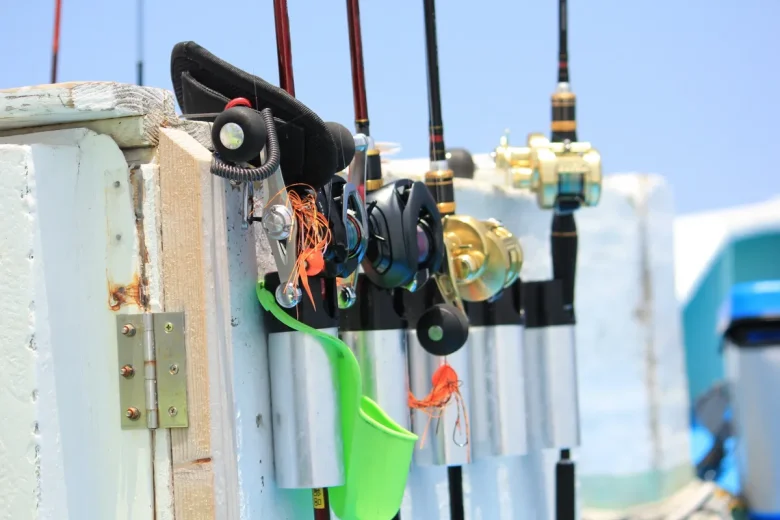
Most boats set a sinker weight for the trip, given in go (号). One go is 3.75 g, so a 40-go sinker is 150 g. Everyone fishes the same number so that all the lines sink at the same angle. Go lighter to feel more bites and your line drifts across your neighbor’s, and the two of you spend the next five minutes untangling. The tangle has a name, omatsuri, and the custom is a quick apology and no fuss, whoever caused it.
On most boats the captain also calls the depth over the speaker, either from the surface or up from the bottom. A reel with a line counter makes that easy, which is why so many Japanese boat reels have one. On a rental without a counter, boat braid is usually dyed a new color every 10 m, and you count colors.
On small vessels in Japan, the skipper is legally required to have everyone outside the cabin wearing a lifejacket that has passed the transport ministry’s approval test. Approved jackets carry a cherry-blossom stamp, the sakura mark. A skipper who lets it slide takes two penalty points on his license, and enough of those suspends it for up to six months. Party boat operators now write the same thing into their own operating rules: jacket on before you board, jacket on whenever you’re out on deck. Most party boats lend them, so ask when you book.
I don’t treat it as a formality. I went into the water once, off a small boat. I’d stood up, my mind was elsewhere for a second, and the boat rolled. The auto-inflating jacket fired the way it’s meant to, and the shape of the inflated bladder kept me steady in the water. It got a new gas cylinder afterwards and I still wear it.

If you’d rather bring your own, or you’re staying long enough to fish often, sakura-mark inflatables are easy to find in Japan. You can browse sakura-mark inflatable lifejackets on Amazon Japan. Check the airline’s rules on gas cylinders before you fly home with one.
Fresh water runs on a ticket system. The co-op that holds the rights to a river stocks it, with ayu and carp among the usual species, and in return it’s allowed to set rules for everyone else and charge a fee. The ticket is the yugyo-ken (遊漁券). Its rules cover the fee, the season and the methods allowed, and each co-op writes its own with the prefecture’s approval.
Day and season tickets are priced differently. You buy from the outlets the co-op has appointed, or from a warden on the bank, and the bankside price can carry a surcharge. So buy before you rig up. Because the rules belong to the river, a ticket for one doesn’t cover the next valley over, and opening dates differ from co-op to co-op. The co-op or the prefecture’s fisheries office is the place to ask.
A day on a rental rod has a way of ending in a tackle shop. Before you go in, it helps to know that Japanese rods are labelled in go and PE numbers, not ounces and pound-test. Our guide to reading Japanese rod specs decodes the blank markings, and JDM PE line and leader ratings does the same for the spool.
If the boat you fished was after red sea bream with a skirted lure, that was tairaba, and the tairaba fishing guide covers the whole system. If it was metal jigs for yellowtail or cutlassfish, start with light jigging from a boat. And when the rod you want won’t fit in a suitcase, how to buy JDM tackle from overseas compares the ways to have it shipped after you’re home.
For a rod in the sea, the national rules list no license to buy. Leave the shellfish, seaweed, lobster and octopus alone and check the prefecture’s rules and closed areas. On a river, buy the co-op’s ticket first. On a party boat, book ahead, use the sinker the boat sets and keep the lifejacket on. Rules here get revised, tuna most of all, so check the Fisheries Agency and the prefecture close to your travel dates.
Some links in this article are affiliate links that support the site at no extra cost to you.