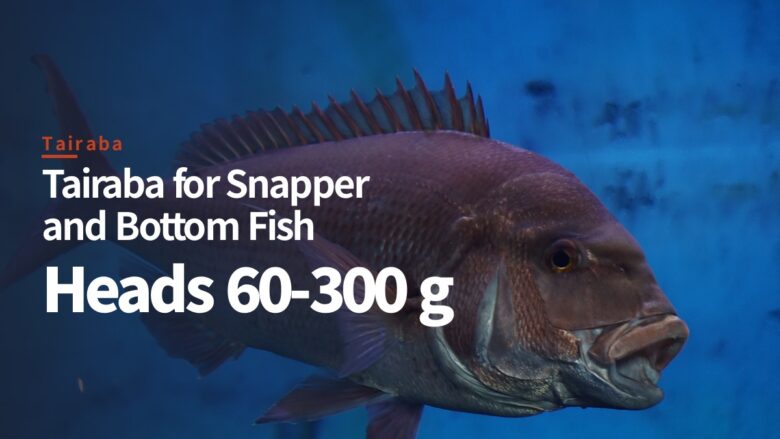
Free-Slide vs Fixed Tairaba: Which Rig Should You Buy?
ちゃんま
マイボ!


Nothing about tairaba (鯛ラバ, the Japanese sea bream jig) looks difficult. Drop a weighted skirt to the bottom, wind it up at a steady speed, drop it again. That simplicity is what hides the problem. The rig keeps doing its job perfectly while you do the wrong thing with it, and nothing on the boat tells you which part you got wrong.
I fish tairaba from my own boat in Japan, and every error below is one I made before I learned to make it less often. This is about handling and judgment rather than which head color is hot this month. If the method itself is new to you, our complete guide to tairaba fishing covers how the rig works first.
Pricing note: Japanese products are shown at maker suggested prices in JPY excluding tax, with an approximate USD conversion at about ¥157 to the dollar in August 2026. JDM links point to Amazon Japan, which ships internationally. Check availability and cost at checkout.
Two habits account for most of the fish a beginner never gets to see. Striking when you feel the first tap pulls the lure out of the fish’s mouth, because a madai (真鯛, red sea bream) chews at a tairaba before it commits to it. The second is speed. Almost everyone winds faster than they believe they do, and a lure climbing away at that pace gets followed instead of eaten.
Fix these two before you buy anything
1. Keep winding through the bite. Same handle speed, same rod angle, no swing. Wind until the weight stays on and the fish is taking line, then lean into it.
2. Halve your retrieve speed. Count handle turns out loud for a few drops. One turn per second is slower than most beginners fish, and it catches.
Everything else on this page matters less than those two. Bottom contact, drag, leader length, head weight: real variables, all of them. None of them rescues a session spent snatching at bites and grinding the handle.
A madai eats in stages. First contact comes through the blank as light taps, sometimes one knock, sometimes a run of them, and at that moment the fish is nipping at the tail of the nectie: the thin rubber strip trailing behind the skirt. Nothing is hooked yet. Then the fish turns with the lure, and the hook sets itself against the weight of the head and the load already in the rod.
Which means the correct response to a bite is to change nothing at all. The taps turn into weight, the rod bends further, and you keep winding until the fish is genuinely pulling line. Then you lift. Lift, not swing: a low steady lean that keeps everything loaded.
Rod makers assume you’ll do exactly this. Daiwa specifies a carbon solid tip on the Kohga X so the lure doesn’t thrash around and so the fish takes it more deeply, and Shimano puts a Taftec α carbon solid in the same place on the Engetsu BB. A soft solid tip is hookset hardware, not a sensitivity gimmick. Yank against it and you cancel out the one part of the rod that was working in your favor.
From my own boat, in Japan
Striking was the habit that took me longest to kill, and it came from years of lure fishing where the hookset is yours to make. The tell was always the same: taps, an instinctive lift, then slack. What finally worked wasn’t willpower. I started saying the handle count out loud on every drop, and with my mouth busy counting, my hands stopped freelancing. The strike went away as a side effect of concentrating on something else. Anyone I’ve had aboard who fishes bass or jigs has the same reflex, and the same cure works on them.
Drag belongs to the same idea. A drag tightened until it feels safe turns every head shake into a lever working on a small hook hold. Set it light enough that a firm pull on the line above the lure slips the spool, and let the fish take line on that first surge. Entry tairaba reels are rated around 5 to 6 kg of maximum drag, which is far more than you’ll ever want here.
Retrieve speed has no gauge. On a boat with three anglers, all three are convinced they’re winding slowly, and one of them is right. The only cures are counting and gearing.
Counting is free. Pick a rhythm, say one handle turn per second, and hold it from the bottom all the way up. Say the numbers under your breath, because silent counting drifts. When a bite comes, you’ll know both the speed and the turn count where it happened, and that pair of numbers is the whole feedback loop. Repeat the depth, repeat the speed.
Gearing does the rest. A low-ratio reel makes slow effortless: the Daiwa Kohga X IC runs 4.9:1 and takes 54 cm of line per handle turn, so a comfortable cranking rhythm is already a slow lure. Swap to a 7.2:1 high-gear reel at 72 cm per turn and the same hand speed moves the tairaba a third faster. If you fish one reel, make it a power-gear model. Japanese makers label these PG, and the high-speed versions HG.
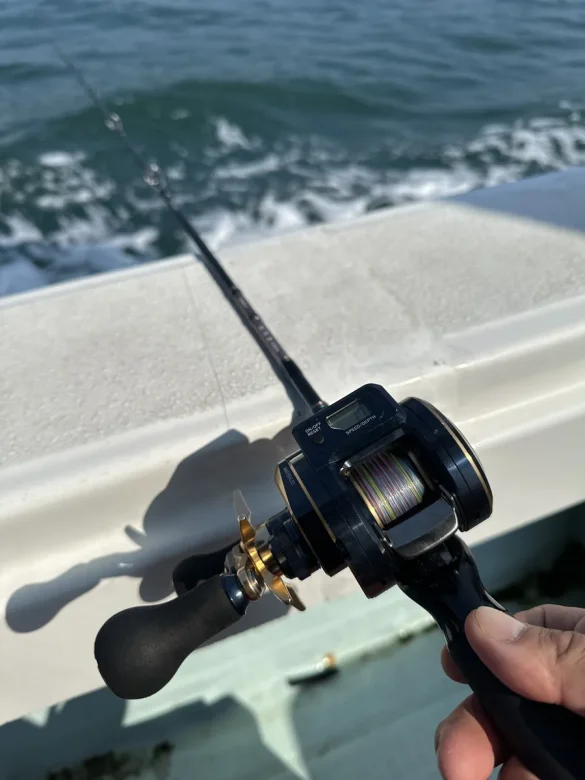
Fix the hookset and the retrieve, and a second layer of problems becomes visible. These are smaller, and they don’t all cost you the same amount.
This one is worth more than the other four put together. Under a drifting boat the line angles away from vertical, the head planes, and the thump you’re waiting for never arrives, so you start winding from three meters up without knowing it. Watch the line angle rather than the rod tip. Once the braid leaves the water at much past 45 degrees, go heavier, feather the spool with your thumb through the drop so you feel the moment the line goes slack, and re-drop more often than feels necessary. Our guide to choosing tairaba head weight and color works through the depth and current math properly.
Set it in the morning, forget it all day, and lose the good fish. Check it after every landed fish and every snag.
Lifting, twitching and pausing feels productive, and it destroys the thing that makes a tairaba work: an unvarying speed that a madai can track and time its approach to. The skirt and nectie generate all the action you need from the water flowing past them. Anglers arriving from slow-pitch jigging struggle hardest with this, because their hands have been trained to do the opposite for years.
Ten minutes without a touch, so off comes the head and on goes a different color. Then again. Now you’ve fished four lures badly instead of one lure well, and you’ve learned nothing, because two variables moved at once. Change speed first and give it a full drift. Change how far up you wind before dropping. Color is the last dial you should reach for, not the first.
A meter of fluorocarbon tied on because that’s what was on the spool. Tairaba leaders run long by lure-fishing standards, and the length is doing shock absorption as much as invisibility. Our tairaba line and leader setup guide has the numbers.
| What you notice | What’s actually happening | The fix |
|---|---|---|
| Taps, then nothing | You lifted, and the nectie came out of the fish’s mouth | Keep winding at the same speed until the weight stays on |
| Follows but no bites | Retrieve too fast for the fish to time its approach | Count handle turns; hold one per second for a full drift |
| No bottom thump | Line angled off vertical, head planing under the drift | Heavier head, thumb the spool, re-drop more often |
| Fish lost mid-fight | Drag too tight, hook hold levered open on the head shake | Reset drag light enough to give line on the first surge |
| Bites stop after a good start | Lure changed four times, speed never changed once | Move one variable per drift, speed before color |
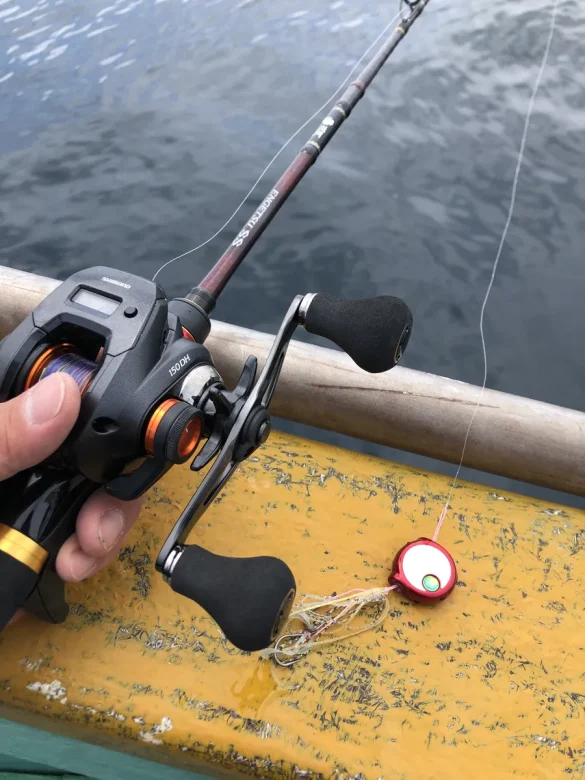
Plenty of beginners are fighting their tackle rather than their technique. A stiff jigging rod punishes a soft bite, a fast reel makes slow winding a chore, and a reel with no counter leaves you guessing at depth all day. The list of what actually earns its money is short: a carbon solid tip, a low gear ratio, and a depth counter. Spend above that and you’re buying comfort and durability.

Daiwa’s brief for this rod, in the words of its own tester, was that anyone should be able to catch madai with it. The blank is deliberately soft through the tip and keeps power in the butt, and the whole series is one length, 6 ft 9 in, in a two-piece center-cut that fits in a suitcase.
The detail I’d point a beginner at isn’t the blank at all. Every model uses guides of 5 mm or larger, including the tip, because Daiwa got tired of spring jellyfish and weed jamming in small rings. A guide that sheds debris keeps you fishing while the rest of the boat picks at their tip rings. The bait models also run a spiral guide layout, which keeps line from slapping the blank on a slow retrieve.
At ¥16,500 excluding tax across the whole range, roughly $105, there’s no reason to start on a borrowed jigging stick.
| Feature | What it does |
|---|---|
| BRAIDING X (ブレーディングX) | Carbon tape wrapped in an X pattern around the outermost layer of the butt section, suppressing the twist that bleeds power out of the blank under load |
| Carbon solid tip | Soft solid section chosen so the lure doesn’t thrash on the retrieve and the fish keeps eating rather than dropping it |
| Large-diameter K guides, spiral setting | All guides 5 mm or larger to shed weed and jellyfish; spiral layout on bait models keeps the line off the blank |
| Model | Length | Weight | Lure range | PE | Price (excl. tax) |
|---|---|---|---|---|---|
| Kohga X 69MB-S | 2.06 m, 2 pc | 100 g | 30 to 120 g | 0.5 to 1.0 | ¥16,500 (~$105) |
| Kohga X 69MHB-S | 2.06 m, 2 pc | 104 g | 40 to 150 g | 0.5 to 1.2 | ¥16,500 (~$105) |
| Kohga X 69HB-S | 2.06 m, 2 pc | 109 g | 45 to 200 g | 0.6 to 1.5 | ¥16,500 (~$105) |
The cheapest way to stop guessing. Daiwa’s entry counter reel is a 4.9:1 low-gear design that the maker openly describes as easy-winding, which is precisely what a beginner needs: the rhythm your hand naturally settles into produces a lure speed that catches. The digital counter shows depth in real time, so “the bite came 12 turns off the bottom in 40 m” becomes something you can repeat instead of something you half remember.
At 240 g it is not a light reel, and the 5 kg maximum drag and single-model lineup mean you’ll outgrow it if you get serious. For a first season it does the two jobs that matter. If you want the step-up options, we ranked them in our guide to the best tairaba reels.

| Model | Weight | Retrieve per turn | Gear ratio | Line capacity (PE) | Max drag | Price (excl. tax) |
|---|---|---|---|---|---|---|
| Kohga X IC | 240 g | 54 cm | 4.9:1 | 0.8 to 300 m / 1.0 to 200 m | 5 kg | ¥16,000 (~$102) |
| Feature | What it does |
|---|---|
| IC counter (ICカウンター) | Digital line counter showing lure depth in real time, so a productive depth can be repeated rather than guessed |
| Super Metal frame | Metal frame that resists flex under load, so the gears stay meshed when a good fish loads the reel |
| Shallow PE spool, no backing | Spooled straight with PE 1.0 to 200 m; the counter is calibrated for that fill from the factory |

Shimano’s 2025 counter reel solves the speed problem with electronics rather than discipline. The display reads retrieve speed as you wind, and a winding-distance alarm beeps at whatever interval you set, which turns the counting exercise earlier in this article into something the reel does for you. There’s a fall lever as well, so the drop speed is adjustable without thumbing.
It’s ¥34,800 excluding tax, around $222, roughly double the Kohga X IC, and it weighs 230 g. Low-gear versions take 58 cm per handle turn and high-gear versions 73 cm. Buy it if you know you’ll keep fishing tairaba, and skip it if you’re still deciding whether the method suits you.
| Feature | What it does |
|---|---|
| Speed display (速度表示) | Shows retrieve and fall speed on the counter screen in real time, so a constant retrieve becomes a number instead of a feeling |
| Winding-distance alarm (巻上距離アラーム) | Sounds every time a set winding distance is reached, keeping the retrieve rhythm honest over a long day |
| Fall lever (フォールレバー) | Lever control of drop speed with a one-way roller bearing, so the lever freewheels on the retrieve and adds no resistance |
| Model | Weight | Retrieve per turn | Gear ratio | Line capacity (PE) | Max drag | Price (excl. tax) |
|---|---|---|---|---|---|---|
| Engetsu CT 151PG | 230 g | 58 cm | 5.8:1 | 0.8 to 400 m / 1.0 to 330 m | 6 kg | ¥34,800 (~$222) |
| Engetsu CT 150HG | 230 g | 73 cm | 7.3:1 | 0.8 to 400 m / 1.0 to 330 m | 5 kg | ¥34,800 (~$222) |
| Model | Type | The number that matters | Price (excl. tax) | Best for |
|---|---|---|---|---|
| Daiwa Kohga X 69MHB-S | Rod | 40 to 150 g lures, 104 g | ¥16,500 (~$105) | A first tairaba rod that covers most depths |
| Shimano Engetsu BB B69M-S/2 | Rod | 40 to 150 g lures, 141 g | ¥20,700 (~$132) | Traveling anglers who want a centre-cut two-piece |
| Daiwa Kohga X IC | Reel | 4.9:1, 54 cm per turn, counter | ¥16,000 (~$102) | The cheapest way to fish with a depth counter |
| Shimano Engetsu BB 100HG | Reel | 7.2:1, 72 cm per turn, no counter | ¥17,500 (~$111) | Anglers who already read depth off a sounder |
| Shimano Engetsu CT 151PG | Reel | 5.8:1, 58 cm per turn, speed display | ¥34,800 (~$222) | Anyone who wants the reel policing their speed |
Rod and reel together, the Kohga X pairing lands at about ¥32,500, near enough $207 before shipping and duties. That’s a complete tairaba setup for less than one flagship reel, and it will not be the reason you go home empty. For the tier above, see our picks for the best tairaba rods.
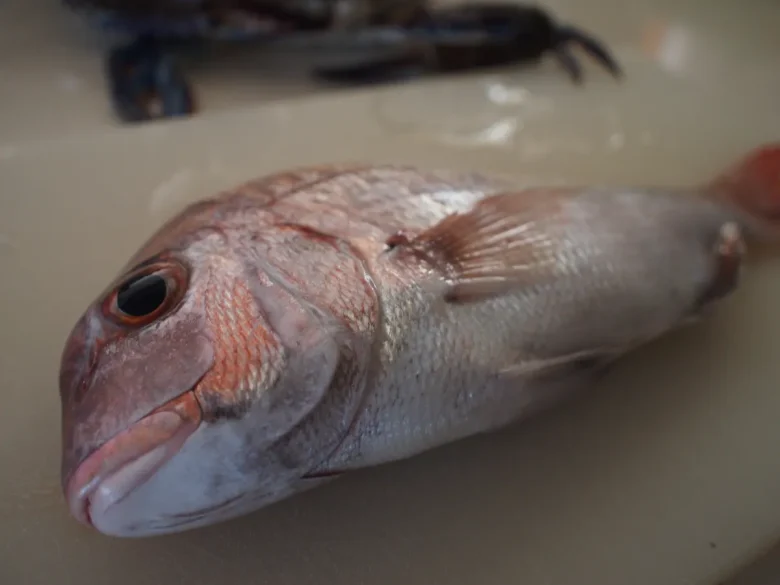
Never in the way you’d set on a bass or a tuna. Once the fish has taken line and the rod is fully loaded, a firm lift to drive the hook home is fine and often useful. The rule is about timing, not about force: no reaction to the taps, everything after the weight arrives.
You can drop a tairaba on almost anything and it will sink. Hooking fish is the problem. A tubular jigging tip is stiff enough that the fish feels the resistance and lets go before the hook finds a hold, and a bass rod usually lacks the length to keep the lure away from the hull on the drop. A slow-taper light jigging rod is the closest useful substitute.
Start at one handle turn per second and let the fish correct you. On a low-gear reel that’s roughly half a meter of line per second. Some days a faster wind out-fishes it, particularly on aggressive shallow-water madai, but that’s a discovery you make after establishing the baseline, not instead of it.
Three usual suspects: drag too tight, pumping the rod during the fight, and lifting the fish’s head out of the water instead of leading it into the net. Madai have soft mouths and the hooks are small. Keep the rod loaded, keep winding, and let the net do the last meter.
No. Shimano sells the Lucanus Jig in the US as its own take on the method, and it arrives rigged and ready. Fish it exactly as described above over structure holding snapper, grouper or lingcod, and the technique transfers even where madai don’t swim.
Keep winding through the bite. Wind slower than feels right. Those two changes cost nothing and account for most of the gap between a blank day and a decent one. Bottom contact comes next, then drag discipline, then the smaller habits.
When gear does become the limiting factor, a soft solid tip and a low-geared counter reel are the two purchases that change outcomes. Everything above that price point buys refinement. From here, the tairaba fishing guide is the place to fill in the rest of the system.